 @LorenAmelang@vivaldi.net
2026-09-27 16:18:37
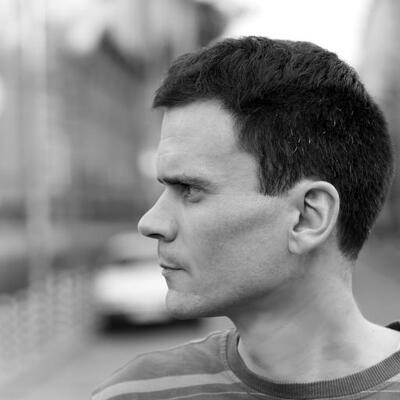
@… I crop photos, then use GIMP levels to expand the range of the actual image and get maximum contrast on the details I want to emphasize. Then Sharpen -> Unsharp Mask, Resize, and Export As.
 @cellfourteen@social.petertoushkov.eu
2026-10-20 21:38:48
Hackers release 421,000 emails linked to Germany’s far-right AfD | DW News
https://www.youtube.com/watch?v=mS3nanKsZb0
 @peter_mcmahan@mas.to
2026-10-07 01:15:29
My department (Sociology) is hiring for a *second* tenure-track position, this time jointly with Jewish Studies. Apply to come work with amazing colleagues and students in a fantastic city!
#academicjobs #sociology #jewishstudies
 @digitalnaiv@mastodon.social
2026-10-22 09:19:02
Hinter der Onlinemaske fährt die digitale Verwaltung auf zwei Schienensystemen: der alten Dampfeisenbahn OSCI und der Magnetschwebebahn FIT-Connect. Dazu 375 Register, die nicht verbunden sind. Bei vorausgefüllten Formularen liegt Deutschland in der EU auf dem viertletzten Platz. Im Maschinenraum muss kräftig aufgeräumt werden. #9vor9 #Föderalismus #DigitaleVerwaltung
https://stefanpfeiffer.blog/2026/10/19/digitale-verwaltung-2026/
 @metacurity@infosec.exchange
2026-10-22 12:53:18
In today's Metacurity, I managed to wrestle yesterday's firehose of PHP patch-related news into sixteen paragraphs, in case you're short on time for some reason.
Also in today's issue are tons of other critical infosec developments you should know, including
--Claude flags 493 security gaps across 25 open-source projects,
--OpenAI agents disable safeguards meant to monitor them,
--Interpol operation nets 1.4k arrests and recovers $105m in African cybercrime op,
--Toronto Crime Stoppers halts tips after 1.5m-tip breach,
--LiteLLM supply chain attack steals credentials and plants a backdoor,
--Chinese hackers use AI tool to breach ConnectWise,
--Pentagon builds secret agency for foreign tech sabotage,
--Cybercriminals bypass AI safeguards to automate attacks,
--Meta hit with $25B penalty for misleading users on privacy,
--GitLab patches maximum-severity flaw allowing unauthenticated code execution,
--Cyberattack knocks Richmond schools’ internet, phones and email offline,
--Pentagon faces class action over breach exposing military personnel data,
--Democrats warn of Russian disinformation targeting midterm candidates,
--Federal intelligence center invokes extremism in warning over Flock meeting
https://www.metacurity.com/php2shell-sparks-a-global-patch-panic/
@peter_mcmahan@mas.to2026-09-29 16:34:57
Shoutout to all my students who patiently tolerate my use of @… 's dithered QR code generator every time I want to give them a URL in the slides.
https://www.andrewt.net/dithered-qr-codes/
 @peter_mcmahan@mas.to
2026-09-29 21:27:32
I resolved this year to have my slides for my graduate level stats class do more to engage with the eugenics and elitism that forms the backbone of academic quantitative methods. I think this representation of Fisher in my lecture on logit/probit regressions today turned out nicely.
