Tootfinder

Opt-in global Mastodon full text search. Join the index!

@mgorny@social.treehouse.systems
2025-10-02 19:43:19

"""
[…] Paradoxically, the more a population grew, the more precious it became, as it offered a supply of cheap labour, and by lowering costs allowed a greater expansion of production and trade. In this infinitely open labour market, the ‘fundamental price’, which for Turgot meant a subsistence level for workers, and the price determined by supply and demand ended up as the same thing. A country was all the more commercially competitive for having at its disposal the virtual wealth that a large population represented.
Confinement was therefore a clumsy error, and an economic one at that: there was no sense in trying to suppress poverty by taking it out of the economic circuit and providing for a poor population by charitable means. To do that was merely to hide poverty, and suppress an important section of the population, which was always a given wealth. Rather than helping the poor escape their provisionally indigent situation, charity condemned them to it, and dangerously so, by putting a brake on the labour market in a period of crisis. What was required was to palliate the high cost of products with cheaper labour, and to make up for their scarcity by a new industrial and agricultural effort. The only reasonable remedy was to reinsert the population in the circuit of production, being sure to place labour in areas where manpower was most scarce. The use of paupers, vagabonds, exiles and émigrés of any description was one of the secrets of wealth in the competition between nations. […]
Confinement was to be criticised because of the effects it had on the labour market, but also because like all other traditional forms of charity, it constituted a dangerous form of finance. As had been the case in the Middle Ages, the classical era had constantly attempted to look after the needs of the poor by a system of foundations. This implied that a section of the land capital and revenues were out of circulation. In a definitive manner too, as the concern was to avoid the commercialisation of assistance to the poor, so judicial measures had been taken to ensure that this wealth never went back into circulation. But as time passed, their usefulness diminished: the economic situation changed, and so did the nature of poverty.
«Society does not always have the same needs. The nature and distribution of property, the divisions between the different orders of the people, opinions, customs, the occupations of the majority of the population, the climate itself, diseases and all the other accidents of human life are in constant change. New needs come into being, and old ones disappear.» [Turgot, Encyclopédie]
The definitive character of a foundation was in contradiction with the variable and changing nature of the accidental needs to which it was designed to respond. The wealth that it immobilised was never put back into circulation, but more wealth was to be created as new needs appeared. The result was that the proportion of funds and revenues removed from circulation constantly increased, while that of production fell in consequence. The only possible result was increased poverty, and a need for more foundations. The process could continue indefinitely, and the fear was that one day ‘the ever increasing number of foundations might absorb all private funds and all private property’. When closely examined, classical forms of assistance were a cause of poverty, bringing a progressive immobilisation that was like the slow death of productive wealth:
«If all the men who have ever lived had been given a tomb, sooner or later some of those sterile monuments would have been dug up in order to find land to cultivate, and it would have become necessary to stir the ashes of the dead in order to feed the living.» [Turgot, Lettre Š Trudaine sur le Limousin]
"""
(Michel Foucault, History of Madness)

@midtsveen@social.linux.pizza
2025-10-12 10:15:14

Homelessness is not a moral failure or an accident of fate, it is the direct result of capitalist property relations. Under a system where land, housing, and production are privately owned, the working class is alienated from its means of existence. People are cast into the streets not because scarcity is real, but because profit determines who deserves shelter.
The solution is not charity or state bureaucracy but the abolition of private property in housing and the collective organiza…

@Dragofix@veganism.social
2025-10-08 23:53:57

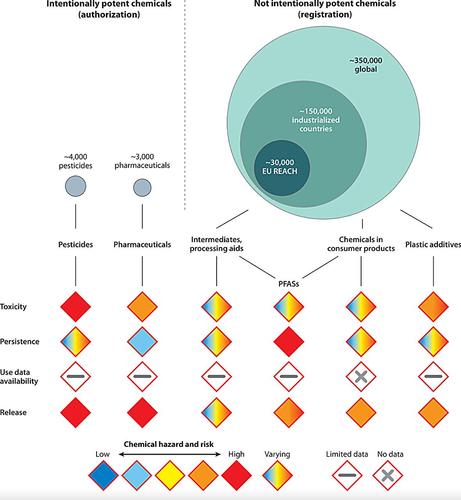
The world's chemical pollution: Current state of research #environment

@blakes7bot@mas.torpidity.net
2025-10-06 18:18:21

Series A, Episode 05 - The Web
NOVARA: Flutonic power cells. As you can see from the registers one of them is totally exhausted. The other almost so.
BLAKE: And you have no means of recharging them.
blake.torpidity.net/m/105/349 B7B5

Claude Sonnet 4.0 describes the image as: "I can see this is a scene from a science fiction television series, showing someone wearing what appears to be a light-colored, military or utilitarian-style jacket or uniform. The setting has the distinctive look of late 1970s/early 1980s television production, with characteristic lighting and background colors typical of that era's sci-fi shows. The person appears to be in some kind of indoor setting, possibly aboard a spacecraft or in a futuristic f…
@midtsveen@social.linux.pizza
2025-10-09 20:36:57

Anarcho-syndicalism is the belief that workers, as the fundamental producers of social value, must seize control of the means of production through direct action and autonomous organization. It rejects both capitalist private ownership and state-controlled systems, arguing instead for a decentralized federation of worker-managed industries. From my perspective, anarcho-syndicalism is not merely an economic strategy but a revolutionary theory of social transformation, one that places the work…

@gedankenstuecke@scholar.social
2025-11-27 01:24:44

«The tech industry is being taken over by merchants of services, and the Open Source community is starting to depend on them. We've seen this coming, with GitHub being a startup, bought by Microsoft which is now pushing AI. They are the means of production.»
And FLOSS would be doing well to divest from the industrial-owened means of production sooner rather than later.
What AI is doing to developers - (not) my ideas
notmyidea.org/what-ai-is-doing

@midtsveen@social.linux.pizza
2025-11-15 21:34:45

#Anarchism #Syndicalism #AnarchoSyndicalism #Activism

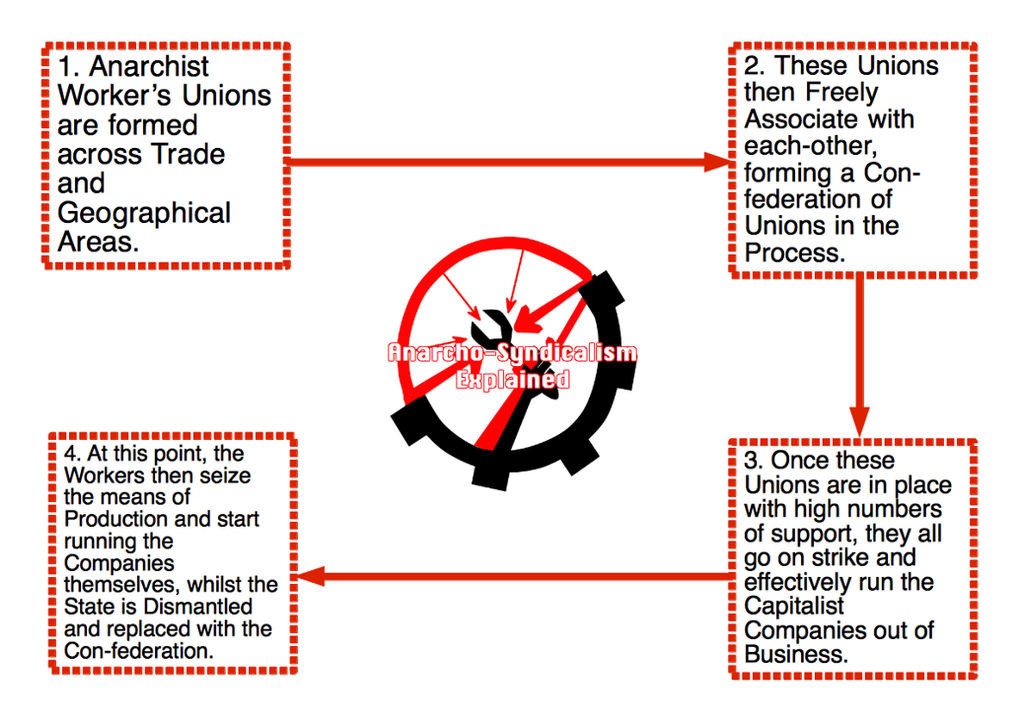
A flowchart explains anarcho syndicalism using four numbered boxes connected by arrows around a central black and red gear and wrench symbol. Box 1 says anarchist workers unions form across trades and geographic areas. Box 2 says these unions freely associate to create a confederation. Box 3 says once numerous and organized the unions strike and force capitalist companies out of business. Box 4 says workers then seize the means of production run companies collectively and dismantle the state re…
@blakes7bot@mas.torpidity.net
2025-12-08 10:07:20

Series C, Episode 06 - City at the Edge of the World
VILA: The air's as fresh as ever. Do you know what that means?
KERRIL: We're going to die of exhaustion.
blake.torpidity.net/m/306/452 B7B2

Claude Sonnet 3.7 describes the image as: "The image shows a scene from what appears to be a science fiction TV production, likely from the classic British series "Blake's 7" based on the futuristic setting. The scene takes place in what looks like a spacecraft or space station interior, with distinctive green circular patterned wall panels providing a technological backdrop.

Two people are shown in the scene. One person is lying down, appearing unconscious or resting, while another person in …
@brian_gettler@mas.to
2025-10-28 19:43:55

Can we get some professional sportsball teams that are worker cooperatives? And why not a whole league? It's motto could be "seize the means of point/goal/run production."