 @mszll@datasci.social
2026-08-17 07:30:48
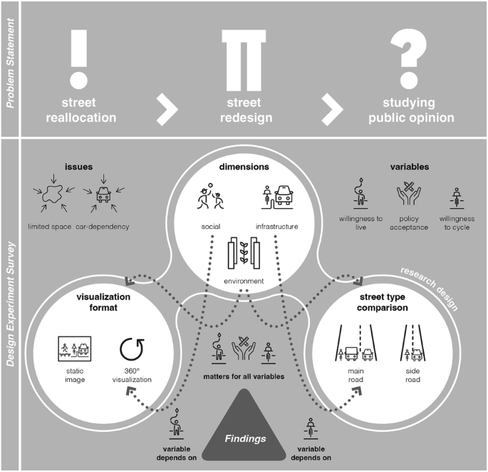
Space for people, not cars: a large-scale visual choice experiment on urban street redesigns
https://www.nature.com/articles/s42949-026-00463-5
 @arXiv_csAR_bot@mastoxiv.page
2026-08-14 07:31:47
Dryas: A Reprogrammable Engine for High-Speed Interconnect Tracing and Analysis
Manuel Br\"ochin, Tom Kuchler, Michael Giardino, David Cock, Timothy Roscoe
https://arxiv.org/abs/2608.12934 https://arxiv.org/pdf/2608.12934 https://arxiv.org/html/2608.12934
arXiv:2608.12934v1 Announce Type: new
Abstract: The proliferation of heterogeneous components in modern computing systems has been accompanied by new higher bandwidth and lower latency interconnects. These interfaces and protocols are enormously complex and the process of developing, debugging, and analyzing FPGA-based implementations requires significant engineering work. Moreover, once a functional implementation is completed, optimization of the controller and associated software requires processing potentially hundreds of gigabytes of trace data.
In this paper, we present Dryas, an open source tool for analyzing such an interconnect. We developed our tool, using minimal hardware resources, alongside an FPGA implementation of a very high speed, low latency (30~GiB/s, 200~ns) interconnect. With our run-time reprogrammable overlay engine we can inspect this interconnect to find rare, complex, or transient events even at full operation. This filtering engine is based on non-deterministic finite automata (NFAs), efficiently implemented using state transition elements (STEs), allowing us to trace events at a cache-line granularity. Moreover we can change the filters in less than a second, without reprogramming the FPGA or interfering with the running application. This data enables not only debugging the implementation of the interconnect itself, but analyzing the behavior of accelerated applications.
We examine the mathematical basis for using NFAs and describe their implementation on a real coherent CPU-FPGA research platform. We then evaluate the scalability of Dryas for various size NFAs, followed by two different use cases: debugging FPGA implementation of the interconnect and analyzing cache behavior.
toXiv_bot_toot
 @memeorandum@universeodon.com
2026-08-07 13:10:55
U.S. economy lost 23,000 jobs in July, a sudden reversal in what had been an otherwise solid labor market (Steve Kopack/NBC News)
https://www.nbcnews.com/business/economy/july-2026-jobs-report-rcna591138
http://www.memeorandum.com/260807/p32#a260807p32
@memeorandum@universeodon.com2026-08-22 21:40:54
Braun tells NIPSCO to move faster in Gary, while clergy says state must do more (Tilly Robinson/The Indianapolis Star)
https://www.indystar.com/story/news/politics/2026/08/22/gary-blackout-hits-11th-day-braun-tells-nipsco-to-speed-up-repairs/91422531007/
http://www.memeorandum.com/260822/p45#a260822p45
 @arXiv_physicsmedph_bot@mastoxiv.page
2026-07-23 07:43:08
PRIME-SVR: Physics-infoRmed Implicit Multi-Echo Slice-to-Volume Reconstruction for Fetal T2 mapping
Busra Bulut, Maik Dannecker, Thomas Sanchez, Sara Neves Silva, Steven Jia, Jean-Baptiste Ledoux, Leo Pomar, Joanna Sichitiu, Yvan Gomez, Meriam Koob, Vincent Dunet, Maria Deprez, Guillaume Auzias, Francois Rousseau, Jana Hutter, Daniel Rueckert, Meritxell Bach Cuadra
https://arxiv.org/abs/2607.20136 https://arxiv.org/pdf/2607.20136 https://arxiv.org/html/2607.20136
arXiv:2607.20136v1 Announce Type: new
Abstract: Slice-to-volume reconstruction (SVR) is the standard method for obtaining high-resolution (HR) 3D fetal brain volumes from motion-corrupted 2D MRI slice stacks acquired in multiple orientations. Existing SVR methods are optimized and validated only for clinical-range echo times (TEs), limiting their use at non-clinical TEs and making them incompatible with quantitative T2 mapping, a protocol- and center-independent biomarker of fetal brain maturation requiring HR reconstructions across multiple TEs. We present PRIME-SVR, the first implicit neural representation (INR) framework for joint HR reconstruction from multi-echo MRI. A single fully connected network models a continuous function from spatial coordinates to signal intensities across TEs, while a second network estimates slice-specific acquisition degradations. Cross-TE coherence is enforced via a Bloch equation-derived regularization penalizing deviations from expected T2 decay, with adaptive weighting that strengthens coupling for degraded stacks. The method is fully self-supervised. We validate PRIME-SVR on 39 in vivo fetal acquisitions (13 subjects x 3 TEs) from two centers, two vendors, and two field strengths (1.5 T and 0.55 T). Compared to state-of-the-art SVR, PRIME-SVR improves reconstruction sharpness by 47%, anatomical accuracy by 30%, and cross-TE structural consistency by 14%. It enables reconstruction at late TEs previously inaccessible to SVR, yielding the first 0.8 mm isotropic T2 maps at 0.55 T and the first T2 maps derived from INR-based SVR. PRIME-SVR also accelerates quantitative imaging by reducing the data needed for multi-TE reconstruction, cutting acquisition from 15 to 10 minutes while keeping T2 accuracy within 1.7% in white and deep gray matter, or to 5 minutes with a mean T2 error of 2.3% for high-quality acquisitions.
toXiv_bot_toot