Tootfinder

Opt-in global Mastodon full text search. Join the index!

@netzschleuder@social.skewed.de

2025-12-24 17:00:04

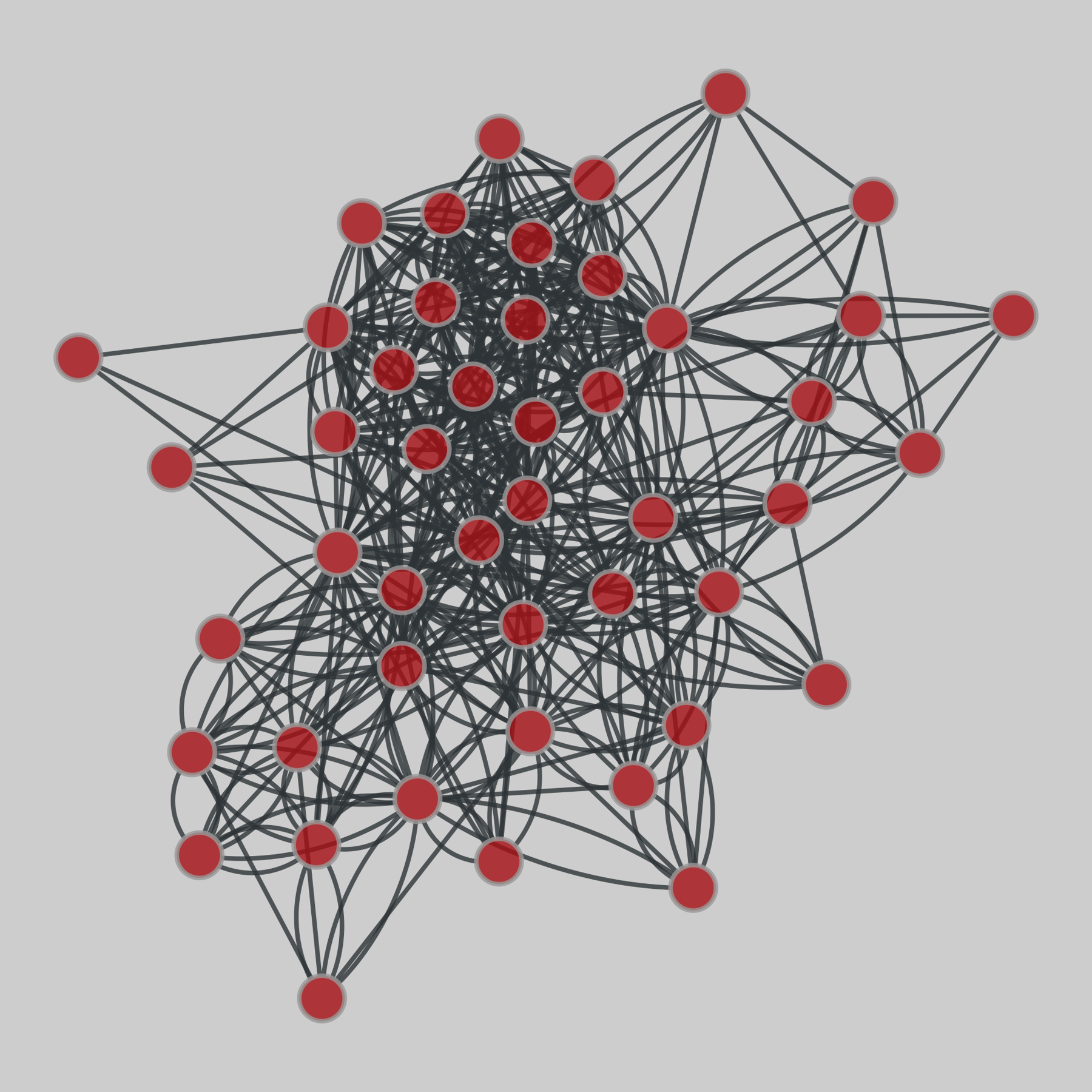
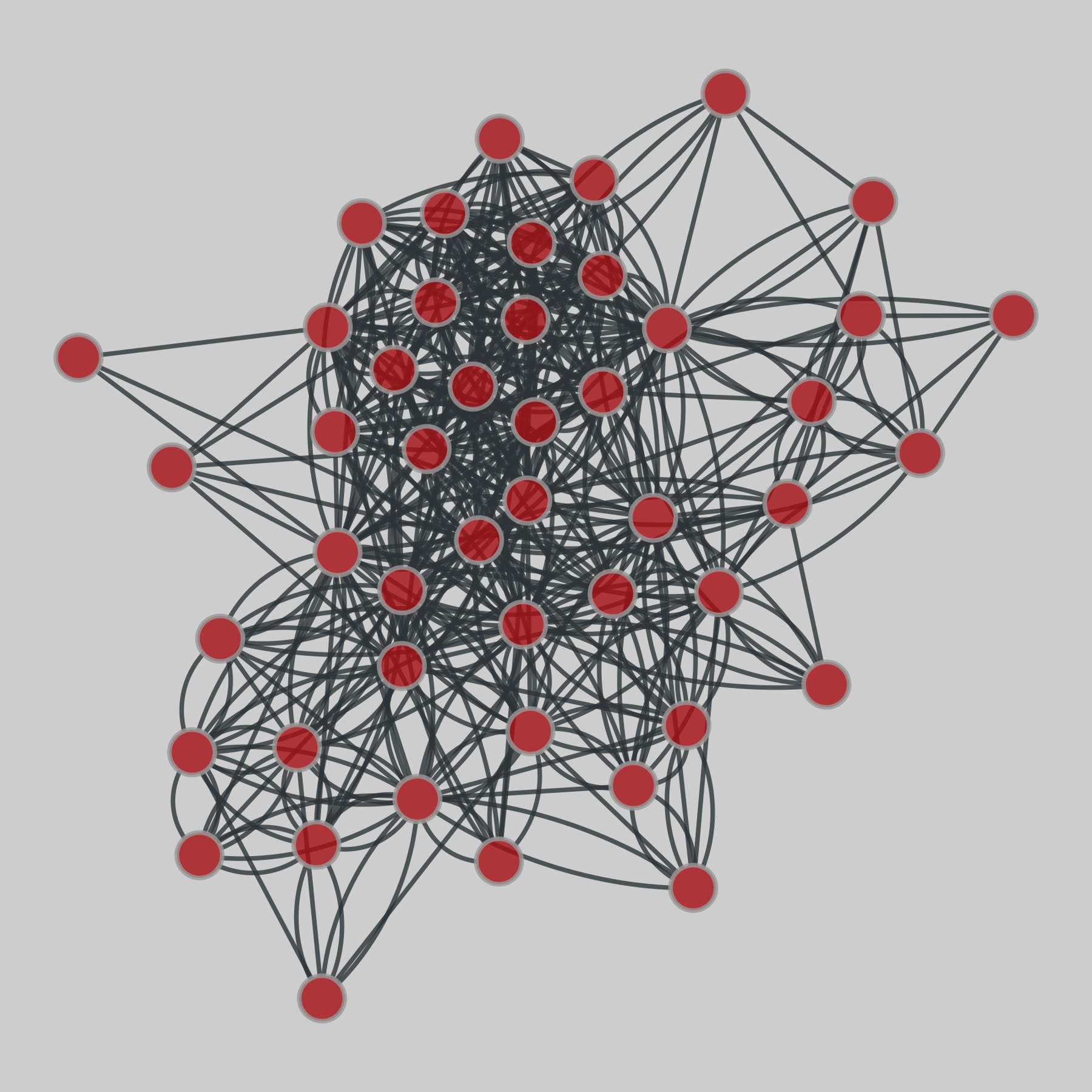
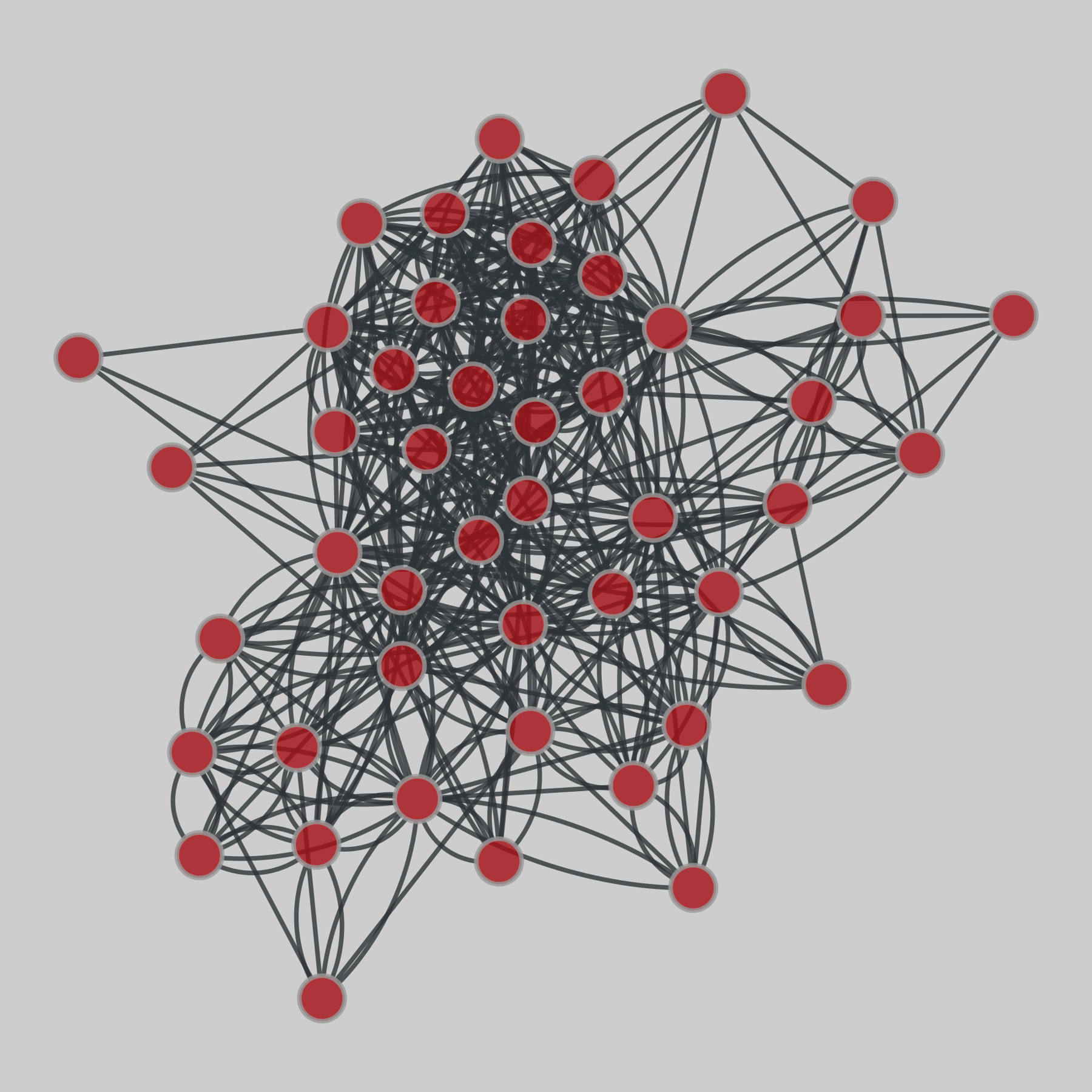
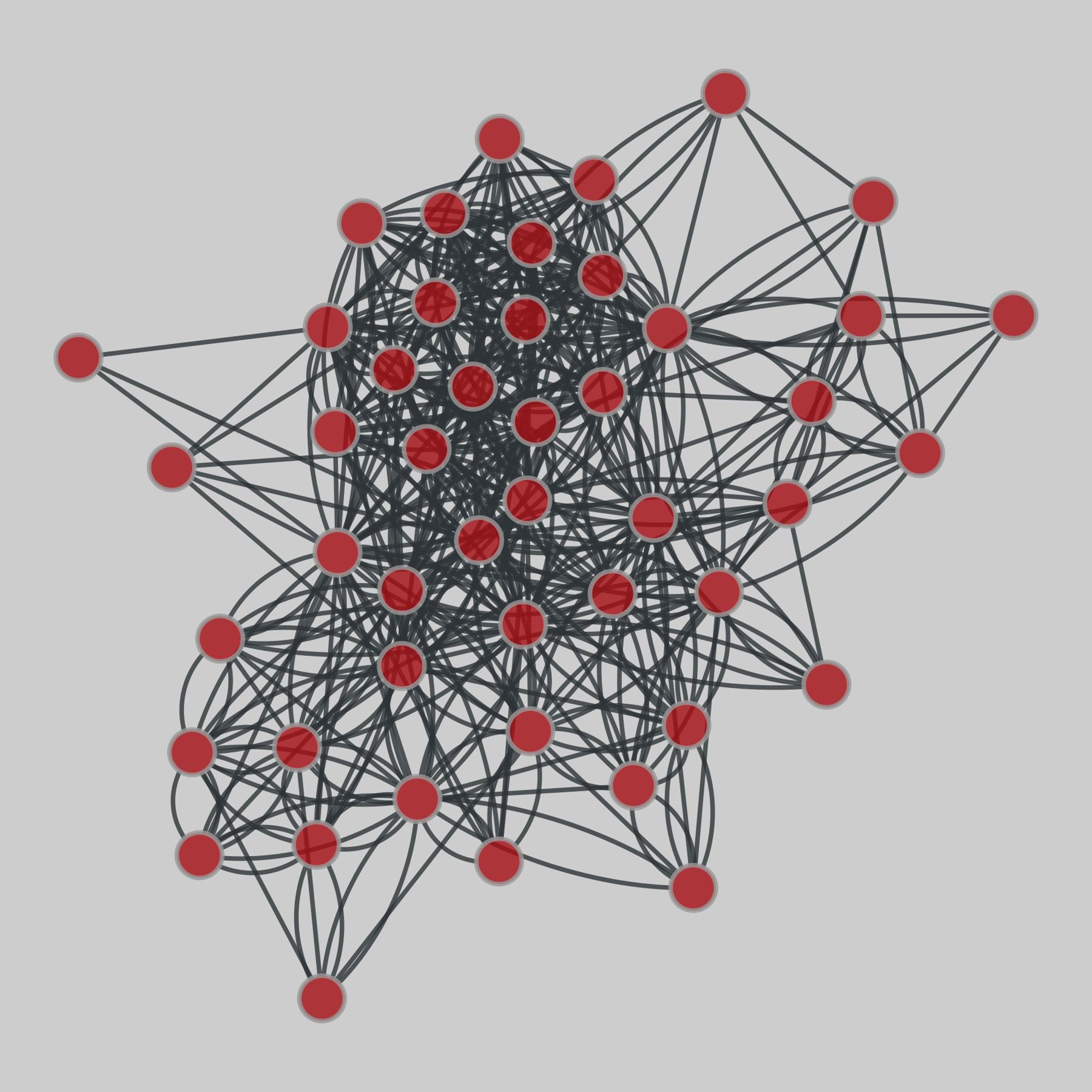
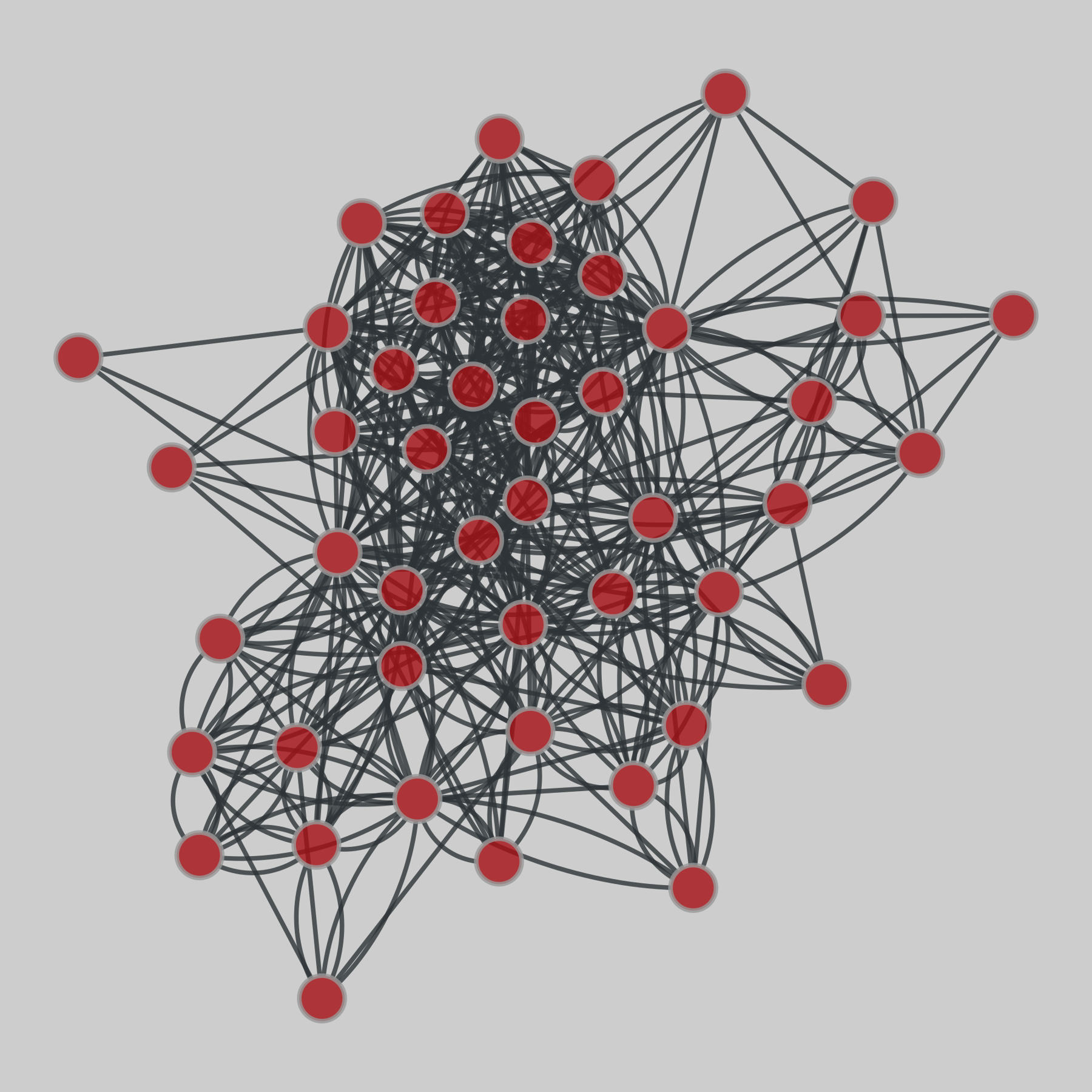
macaque_neural: Macaque cortical connectivity (Young)
A network of cortical regions in the Macaque cortex.
This network has 47 nodes and 505 edges.
Tags: Biological, Connectome, Unweighted
networks.skewed.de/net/macaque
Ridiculogram:

macaque_neural: Macaque cortical connectivity (Young). 47 nodes, 505 edges. https://networks.skewed.de/net/macaque_neural
@netzschleuder@social.skewed.de

2025-12-24 20:00:04

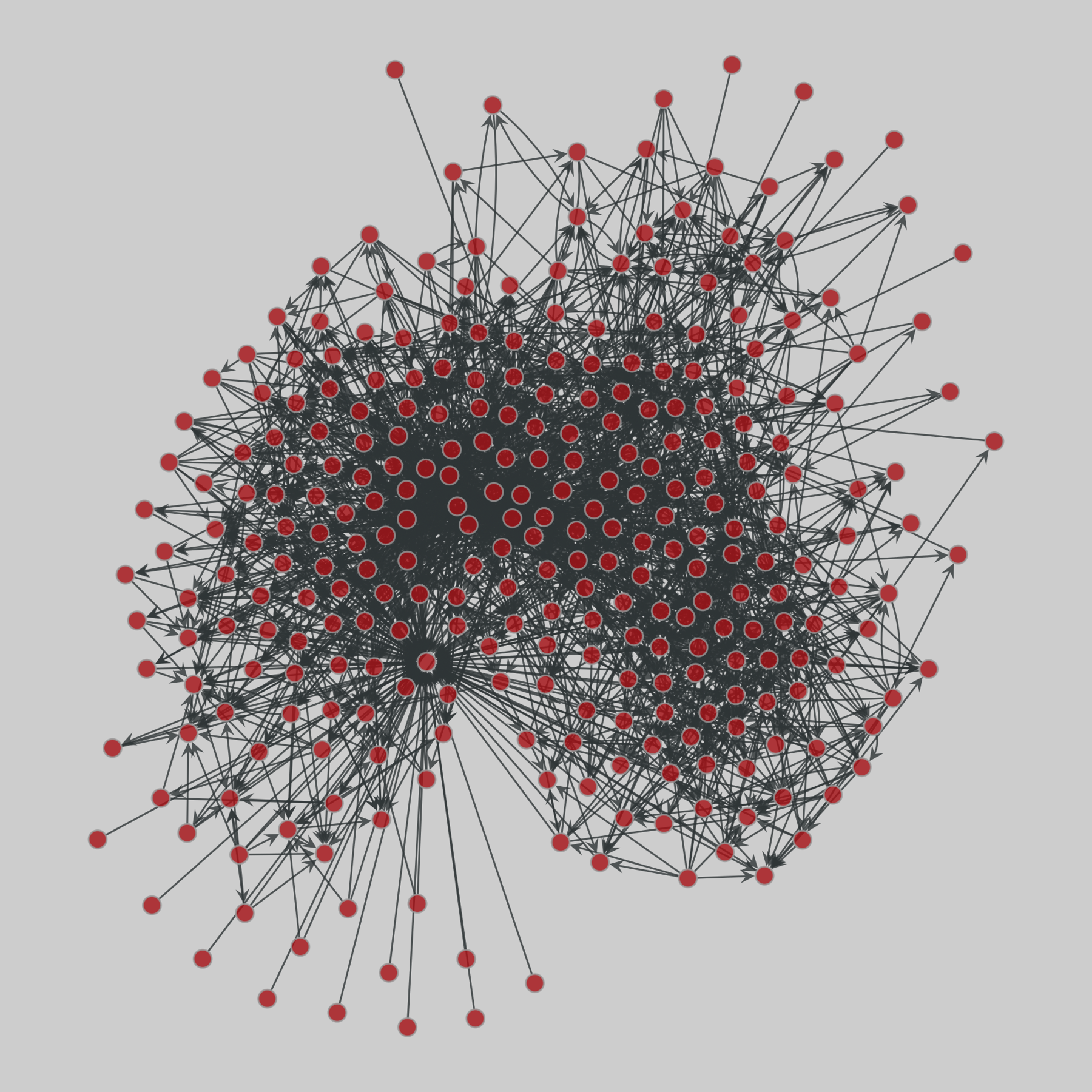
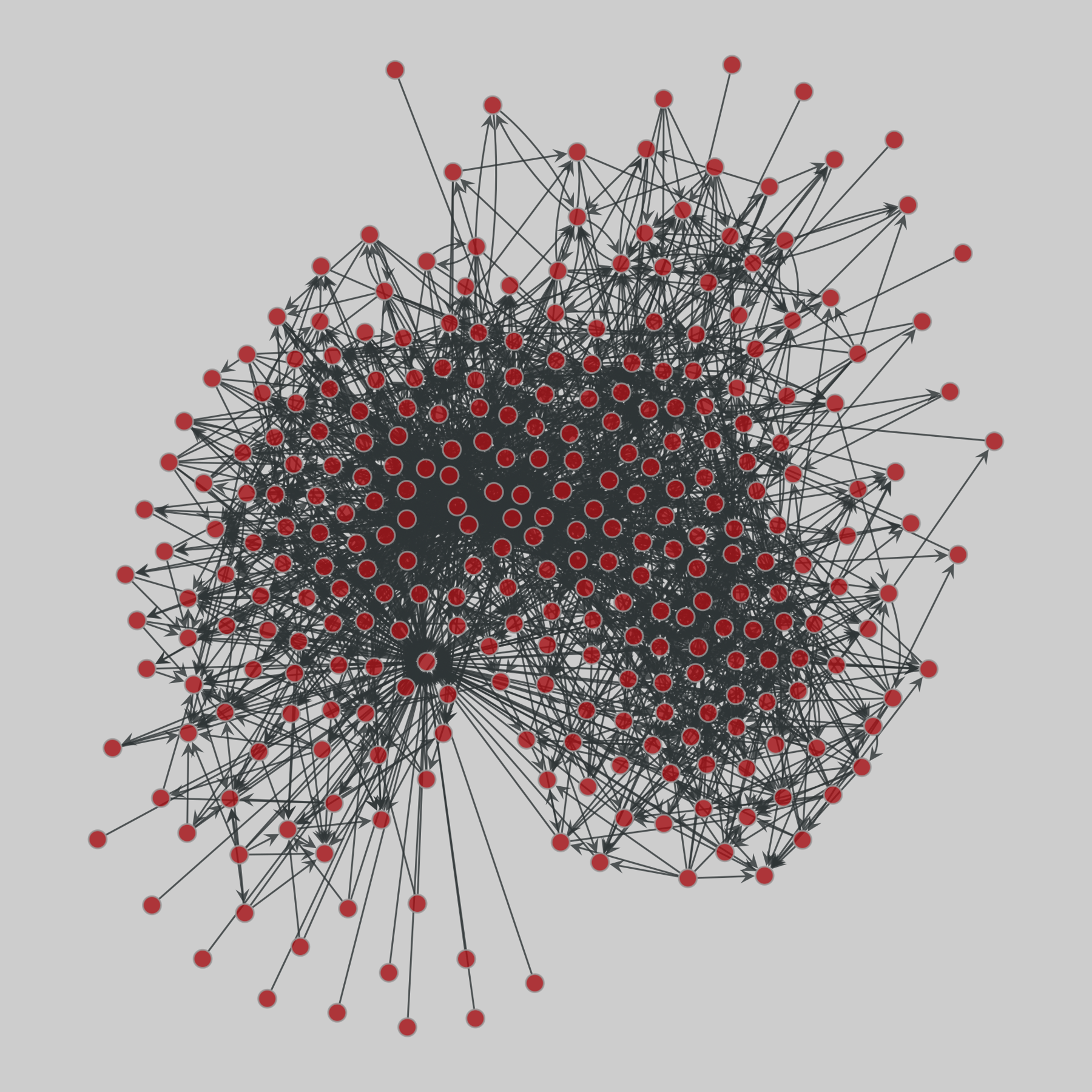
celegansneural: C. elegans neurons (1986)
A network representing the neural connections of the Caenorhabditis elegans nematode.
This network has 297 nodes and 2359 edges.
Tags: Biological, Connectome, Weighted
networks.skewed.de/net/celegan
Rid…

celegansneural: C. elegans neurons (1986). 297 nodes, 2359 edges. https://networks.skewed.de/net/celegansneural
@arXiv_csLG_bot@mastoxiv.page
2025-12-22 10:31:40

Estimating Spatially Resolved Radiation Fields Using Neural Networks
Felix Lehner, Pasquale Lombardo, Susana Castillo, Oliver Hupe, Marcus Magnor
arxiv.org/abs/2512.17654 arxiv.org/pdf/2512.17654 arxiv.org/html/2512.17654
arXiv:2512.17654v1 Announce Type: new
Abstract: We present an in-depth analysis on how to build and train neural networks to estimate the spatial distribution of scattered radiation fields for radiation protection dosimetry in medical radiation fields, such as those found in Interventional Radiology and Cardiology. Therefore, we present three different synthetically generated datasets with increasing complexity for training, using a Monte-Carlo Simulation application based on Geant4. On those datasets, we evaluate convolutional and fully connected architectures of neural networks to demonstrate which design decisions work well for reconstructing the fluence and spectra distributions over the spatial domain of such radiation fields. All used datasets as well as our training pipeline are published as open source in separate repositories.
toXiv_bot_toot

@arXiv_statML_bot@mastoxiv.page
2025-10-13 08:59:00

Distributionally robust approximation property of neural networks
Mihriban Ceylan, David J. Pr\"omel
arxiv.org/abs/2510.09177 arxiv.or…

@netzschleuder@social.skewed.de

2025-11-20 22:00:03

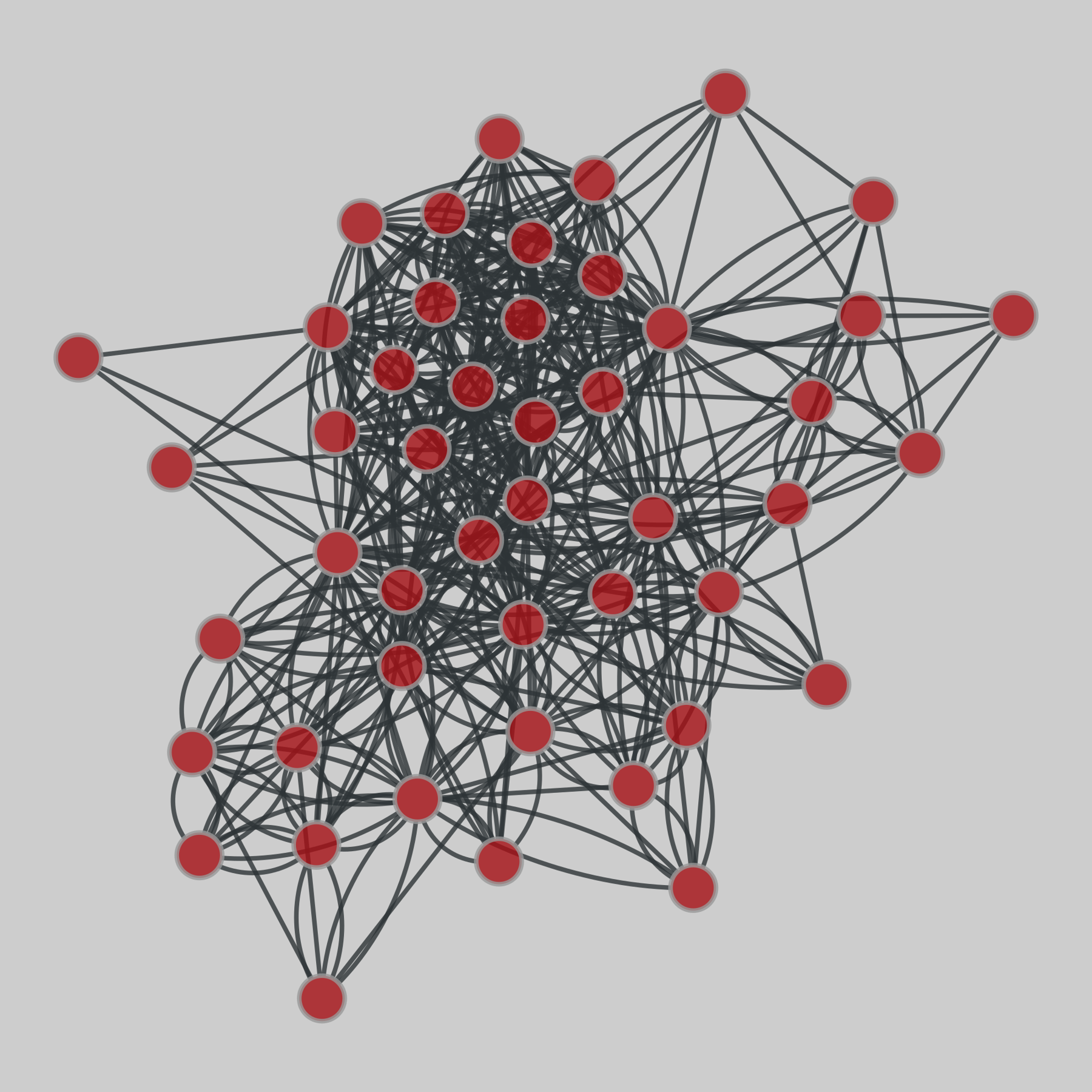
macaque_neural: Macaque cortical connectivity (Young)
A network of cortical regions in the Macaque cortex.
This network has 47 nodes and 505 edges.
Tags: Biological, Connectome, Unweighted
networks.skewed.de/net/macaque
Ridiculogram:

macaque_neural: Macaque cortical connectivity (Young). 47 nodes, 505 edges. https://networks.skewed.de/net/macaque_neural
@arXiv_csLO_bot@mastoxiv.page
2025-10-14 09:27:08

Lecture Notes on Verifying Graph Neural Networks
Fran\c{c}ois Schwarzentruber
arxiv.org/abs/2510.11617 arxiv.org/pdf/2510.11617

@arXiv_mathOC_bot@mastoxiv.page
2025-10-14 10:37:38

Hybrid Ridgelet Deep Neural Networks for Data-Driven Arbitrage Strategies
Bahadur Yadav, Sanjay Kumar Mohanty
arxiv.org/abs/2510.10599 arxi…

@benb@osintua.eu
2025-10-19 17:22:28

🤖 Kremlin and AI: how Russian propaganda attacks neural networks: benborges.xyz/2025/10/19/kreml

@seeingwithsound@mas.to
2025-10-28 18:27:10

Triangular neural synchronization patterns in visual impairment: A comprehensive case series exploring multi-node network dynamics and the Neural Triangle Index (NTI)

@arXiv_csAI_bot@mastoxiv.page
2025-10-15 09:49:11

PromptFlow: Training Prompts Like Neural Networks
Jingyi Wang, Hongyuan Zhu, Ye Niu, Yunhui Deng
arxiv.org/abs/2510.12246 arxiv.org/pdf/251…

@arXiv_csCR_bot@mastoxiv.page
2025-10-09 09:30:11

Unsupervised Backdoor Detection and Mitigation for Spiking Neural Networks
Jiachen Li, Bang Wu, Xiaoyu Xia, Xiaoning Liu, Xun Yi, Xiuzhen Zhang
arxiv.org/abs/2510.06629

@arXiv_csNE_bot@mastoxiv.page
2025-10-13 08:24:30

The Enduring Dominance of Deep Neural Networks: A Critical Analysis of the Fundamental Limitations of Quantum Machine Learning and Spiking Neural Networks
Takehiro Ishikawa
arxiv.org/abs/2510.08591

@arXiv_csCV_bot@mastoxiv.page
2025-10-14 13:47:28

Bayesian Topological Convolutional Neural Nets
Sarah Harkins Dayton, Hayden Everett, Ioannis Schizas, David L. Boothe Jr., Vasileios Maroulas
arxiv.org/abs/2510.11704

@arXiv_physicsinsdet_bot@mastoxiv.page
2025-10-14 10:26:58

Optimised neural networks for online processing of ATLAS calorimeter data on FPGAs
Georges Aad, Raphael Bertrand, Lauri Laatu, Emmanuel Monnier, Arno Straessner, Nairit Sur, Johann C. Voigt
arxiv.org/abs/2510.11469

@arXiv_mathNA_bot@mastoxiv.page
2025-10-13 08:11:10

Augmented data and neural networks for robust epidemic forecasting: application to COVID-19 in Italy
Giacomo Dimarco, Federica Ferrarese, Lorenzo Pareschi
arxiv.org/abs/2510.09192

@arXiv_csIT_bot@mastoxiv.page
2025-10-15 07:54:51

CoNet-Rx: Collaborative Neural Networks for OFDM Receivers
Mohanad Obeed, Ming Jian
arxiv.org/abs/2510.12739 arxiv.org/pdf/2510.12739

@arXiv_eessSP_bot@mastoxiv.page
2025-10-15 07:53:51

Based on Deep Neural Networks: A Machine Learning-Assisted Channel Estimation Method for MIMO Systems
Haoran He
arxiv.org/abs/2510.11891 ar…

@arXiv_csLG_bot@mastoxiv.page
2025-12-22 10:32:50

Spatially-informed transformers: Injecting geostatistical covariance biases into self-attention for spatio-temporal forecasting
Yuri Calleo
arxiv.org/abs/2512.17696 arxiv.org/pdf/2512.17696 arxiv.org/html/2512.17696
arXiv:2512.17696v1 Announce Type: new
Abstract: The modeling of high-dimensional spatio-temporal processes presents a fundamental dichotomy between the probabilistic rigor of classical geostatistics and the flexible, high-capacity representations of deep learning. While Gaussian processes offer theoretical consistency and exact uncertainty quantification, their prohibitive computational scaling renders them impractical for massive sensor networks. Conversely, modern transformer architectures excel at sequence modeling but inherently lack a geometric inductive bias, treating spatial sensors as permutation-invariant tokens without a native understanding of distance. In this work, we propose a spatially-informed transformer, a hybrid architecture that injects a geostatistical inductive bias directly into the self-attention mechanism via a learnable covariance kernel. By formally decomposing the attention structure into a stationary physical prior and a non-stationary data-driven residual, we impose a soft topological constraint that favors spatially proximal interactions while retaining the capacity to model complex dynamics. We demonstrate the phenomenon of ``Deep Variography'', where the network successfully recovers the true spatial decay parameters of the underlying process end-to-end via backpropagation. Extensive experiments on synthetic Gaussian random fields and real-world traffic benchmarks confirm that our method outperforms state-of-the-art graph neural networks. Furthermore, rigorous statistical validation confirms that the proposed method delivers not only superior predictive accuracy but also well-calibrated probabilistic forecasts, effectively bridging the gap between physics-aware modeling and data-driven learning.
toXiv_bot_toot

@arXiv_qbioNC_bot@mastoxiv.page
2025-10-13 09:03:10

Adaptive Decoding via Hierarchical Neural Information Gradients in Mouse Visual Tasks
Jingyi Feng, Xiang Feng
arxiv.org/abs/2510.09451 arxi…

@arXiv_csNI_bot@mastoxiv.page
2025-10-14 09:43:08

Graph Neural Network-Based Multicast Routing for On-Demand Streaming Services in 6G Networks
Xiucheng Wang, Zien Wang, Nan Cheng, Wenchao Xu, Wei Quan, Xuemin Shen
arxiv.org/abs/2510.11109

@arXiv_quantph_bot@mastoxiv.page
2025-10-09 10:48:21

Accelerating Inference for Multilayer Neural Networks with Quantum Computers
Arthur G. Rattew, Po-Wei Huang, Naixu Guo, Lirand\"e Pira, Patrick Rebentrost
arxiv.org/abs/2510.07195

@arXiv_csCE_bot@mastoxiv.page
2025-10-07 07:36:14

A Complement to Neural Networks for Anisotropic Inelasticity at Finite Strains
Hagen Holthusen, Ellen Kuhl
arxiv.org/abs/2510.04187 arxiv.o…

@arXiv_condmatmtrlsci_bot@mastoxiv.page
2025-10-13 08:49:00

Accelerated prediction of dielectric functions in solar cell materials with graph neural networks
Caden Ginter, Kamal Choudhary, Subhasish Mandal
arxiv.org/abs/2510.08738

@netzschleuder@social.skewed.de

2025-11-15 16:00:04

macaque_neural: Macaque cortical connectivity (Young)
A network of cortical regions in the Macaque cortex.
This network has 47 nodes and 505 edges.
Tags: Biological, Connectome, Unweighted
networks.skewed.de/net/macaque
Ridiculogram:

macaque_neural: Macaque cortical connectivity (Young). 47 nodes, 505 edges. https://networks.skewed.de/net/macaque_neural
@arXiv_csDC_bot@mastoxiv.page
2025-09-30 08:32:01

OptimES: Optimizing Federated Learning Using Remote Embeddings for Graph Neural Networks
Pranjal Naman, Yogesh Simmhan
arxiv.org/abs/2509.22922

@arXiv_astrophCO_bot@mastoxiv.page
2025-09-30 09:22:11

Inferring Cosmological Parameters with Evidential Physics-Informed Neural Networks
Hai Siong Tan
arxiv.org/abs/2509.24327 arxiv.org/pdf/250…

@arXiv_csSD_bot@mastoxiv.page
2025-10-13 08:32:30

VM-UNSSOR: Unsupervised Neural Speech Separation Enhanced by Higher-SNR Virtual Microphone Arrays
Shulin He, Zhong-Qiu Wang
arxiv.org/abs/2510.08914

@arXiv_physicsfludyn_bot@mastoxiv.page
2025-10-13 08:31:20

Intelligent backpropagated neural networks application on Couette-Poiseuille flow of variable viscosity in a composite porous channel filled with an anisotropic porous layer
Timir Karmakar, Amrita Mandal
arxiv.org/abs/2510.08745

@arXiv_eessSY_bot@mastoxiv.page
2025-10-07 10:57:32

Data-Driven Adaptive PID Control Based on Physics-Informed Neural Networks
Junsei Ito, Yasuaki Wasa
arxiv.org/abs/2510.04591 arxiv.org/pdf/…

@arXiv_mathFA_bot@mastoxiv.page
2025-10-01 09:23:28

Vector-Valued Reproducing Kernel Banach Spaces for Neural Networks and Operators
Sven Dummer, Tjeerd Jan Heeringa, Jos\'e A. Iglesias
arxiv.org/abs/2509.26371

@seeingwithsound@mas.to
2025-09-25 12:47:05

Triangular neural synchronization patterns in visual impairment cureus.com/articles/409884-tri

@arXiv_astrophIM_bot@mastoxiv.page
2025-10-13 08:46:50

Identification of molecular line emission using Convolutional Neural Networks
Nina Kessler, Timea Csengeri, David Cornu, Sylvain Bontemps, Laure Bouscasse
arxiv.org/abs/2510.09119

@arXiv_mathDS_bot@mastoxiv.page
2025-10-13 08:17:40

Architecture Induces Structural Invariant Manifolds of Neural Network Training Dynamics
Jiajie Zhao, Tao Luo, Yaoyu Zhang
arxiv.org/abs/2510.09564

@arXiv_csLO_bot@mastoxiv.page
2025-10-10 07:45:39

Verifying Graph Neural Networks with Readout is Intractable
Artem Chernobrovkin, Marco S\"alzer, Fran\c{c}ois Schwarzentruber, Nicolas Troquard
arxiv.org/abs/2510.08045

@arXiv_csSE_bot@mastoxiv.page
2025-09-25 09:13:02

Demystifying the Evolution of Neural Networks with BOM Analysis: Insights from a Large-Scale Study of 55,997 GitHub Repositories
Xiaoning Ren, Yuhang Ye, Xiongfei Wu, Yueming Wu, Yinxing Xue
arxiv.org/abs/2509.20010

@arXiv_eessIV_bot@mastoxiv.page
2025-10-09 08:04:51

Stacked Regression using Off-the-shelf, Stimulus-tuned and Fine-tuned Neural Networks for Predicting fMRI Brain Responses to Movies (Algonauts 2025 Report)
Robert Scholz, Kunal Bagga, Christine Ahrends, Carlo Alberto Barbano
arxiv.org/abs/2510.06235

@arXiv_csCR_bot@mastoxiv.page
2025-10-15 10:10:31

PromoGuardian: Detecting Promotion Abuse Fraud with Multi-Relation Fused Graph Neural Networks
Shaofei Li, Xiao Han, Ziqi Zhang, Minyao Hua, Shuli Gao, Zhenkai Liang, Yao Guo, Xiangqun Chen, Ding Li
arxiv.org/abs/2510.12652

@arXiv_csLG_bot@mastoxiv.page
2025-10-10 11:19:09

Who Said Neural Networks Aren't Linear?
Nimrod Berman, Assaf Hallak, Assaf Shocher
arxiv.org/abs/2510.08570 arxiv.org/pdf/2510.08570

@arXiv_csAI_bot@mastoxiv.page
2025-10-08 07:45:59

Lang-PINN: From Language to Physics-Informed Neural Networks via a Multi-Agent Framework
Xin He, Liangliang You, Hongduan Tian, Bo Han, Ivor Tsang, Yew-Soon Ong
arxiv.org/abs/2510.05158

@arXiv_mathOC_bot@mastoxiv.page
2025-10-07 10:40:42

Learning Polynomial Activation Functions for Deep Neural Networks
Linghao Zhang, Jiawang Nie, Tingting Tang
arxiv.org/abs/2510.03682 arxiv.…

@arXiv_csNE_bot@mastoxiv.page
2025-10-10 08:04:49

Learning Neuron Dynamics within Deep Spiking Neural Networks
Eric Jahns, Davi Moreno, Michel A. Kinsy
arxiv.org/abs/2510.07341 arxiv.org/pd…

@arXiv_csCV_bot@mastoxiv.page
2025-09-29 11:23:07

SpikeMatch: Semi-Supervised Learning with Temporal Dynamics of Spiking Neural Networks
Jini Yang, Beomseok Oh, Seungryong Kim, Sunok Kim
arxiv.org/abs/2509.22581

@arXiv_qbioNC_bot@mastoxiv.page
2025-10-09 09:01:21

Diffusion-Guided Renormalization of Neural Systems via Tensor Networks
Nathan X. Kodama
arxiv.org/abs/2510.06361 arxiv.org/pdf/2510.06361…

@arXiv_statML_bot@mastoxiv.page
2025-10-08 09:29:19

On the Theory of Continual Learning with Gradient Descent for Neural Networks
Hossein Taheri, Avishek Ghosh, Arya Mazumdar
arxiv.org/abs/2510.05573

@arXiv_eessSP_bot@mastoxiv.page
2025-10-02 10:18:01

Graph Neural Networks in Large Scale Wireless Communication Networks: Scalability Across Random Geometric Graphs
Romina Garcia Camargo, Zhiyang Wang, Alejandro Ribeiro
arxiv.org/abs/2510.00896

@arXiv_csLG_bot@mastoxiv.page
2025-10-15 10:52:01

Topological Signatures of ReLU Neural Network Activation Patterns
Vicente Bosca, Tatum Rask, Sunia Tanweer, Andrew R. Tawfeek, Branden Stone
arxiv.org/abs/2510.12700

@arXiv_quantph_bot@mastoxiv.page
2025-10-03 10:27:01

HIV-1 protease cleavage sites detection with a Quantum convolutional neural network algorithm
Junggu Choi, Junho Lee, Kyle L. Jung, Jae U. Jung
arxiv.org/abs/2510.01993

@arXiv_eessSY_bot@mastoxiv.page
2025-10-09 08:20:10

Delay Independent Safe Control with Neural Networks: Positive Lur'e Certificates for Risk Aware Autonomy
Hamidreza Montazeri Hedesh, Milad Siami
arxiv.org/abs/2510.06661

@netzschleuder@social.skewed.de
2025-11-06 19:00:04

macaque_neural: Macaque cortical connectivity (Young)
A network of cortical regions in the Macaque cortex.
This network has 47 nodes and 505 edges.
Tags: Biological, Connectome, Unweighted
networks.skewed.de/net/macaque
Ridiculogram:

macaque_neural: Macaque cortical connectivity (Young). 47 nodes, 505 edges. https://networks.skewed.de/net/macaque_neural
@arXiv_csLG_bot@mastoxiv.page
2025-10-08 10:49:39

Are Heterogeneous Graph Neural Networks Truly Effective? A Causal Perspective
Xiao Yang, Xuejiao Zhao, Zhiqi Shen
arxiv.org/abs/2510.05750

@arXiv_csCR_bot@mastoxiv.page
2025-10-07 09:53:52

PrivSpike: Employing Homomorphic Encryption for Private Inference of Deep Spiking Neural Networks
Nges Brian Njungle, Eric Jahns, Milan Stojkov, Michel A. Kinsy
arxiv.org/abs/2510.03995

@arXiv_csNE_bot@mastoxiv.page
2025-10-07 07:42:16

Efficient Training of Spiking Neural Networks by Spike-aware Data Pruning
Chenxiang Ma, Xinyi Chen, Yujie Wu, Kay Chen Tan, Jibin Wu
arxiv.org/abs/2510.04098

@arXiv_qbioNC_bot@mastoxiv.page
2025-12-10 08:57:11

Multi state neurons
Robert Worden
arxiv.org/abs/2512.08815 arxiv.org/pdf/2512.08815 arxiv.org/html/2512.08815
arXiv:2512.08815v1 Announce Type: new
Abstract: Neurons, as eukaryotic cells, have powerful internal computation capabilities. One neuron can have many distinct states, and brains can use this capability. Processes of neuron growth and maintenance use chemical signalling between cell bodies and synapses, ferrying chemical messengers over microtubules and actin fibres within cells. These processes are computations which, while slower than neural electrical signalling, could allow any neuron to change its state over intervals of seconds or minutes. Based on its state, a single neuron can selectively de-activate some of its synapses, sculpting a dynamic neural net from the static neural connections of the brain. Without this dynamic selection, the static neural networks in brains are too amorphous and dilute to do the computations of neural cognitive models. The use of multi-state neurons in animal brains is illustrated in hierarchical Bayesian object recognition. Multi-state neurons may support a design which is more efficient than two-state neurons, and scales better as object complexity increases. Brains could have evolved to use multi-state neurons. Multi-state neurons could be used in artificial neural networks, to use a kind of non-Hebbian learning which is faster and more focused and controllable than traditional neural net learning. This possibility has not yet been explored in computational models.
toXiv_bot_toot

@arXiv_csCV_bot@mastoxiv.page
2025-10-06 10:14:39

MIXER: Mixed Hyperspherical Random Embedding Neural Network for Texture Recognition
Ricardo T. Fares, Lucas C. Ribas
arxiv.org/abs/2510.03228

@arXiv_mathOC_bot@mastoxiv.page
2025-10-07 10:12:12

Achieving Universal Approximation and Universal Interpolation via Nonlinearity of Control Families
Yongqiang Cai, Yifei Duan
arxiv.org/abs/2510.03676

@arXiv_statML_bot@mastoxiv.page
2025-10-15 09:58:02

Compressibility Measures Complexity: Minimum Description Length Meets Singular Learning Theory
Einar Urdshals, Edmund Lau, Jesse Hoogland, Stan van Wingerden, Daniel Murfet
arxiv.org/abs/2510.12077

@seeingwithsound@mas.to
2025-11-14 14:34:53

Advancing credibility and transparency in brain-to-image reconstruction research: Reanalysis of Koide-Majima, Nishimoto, and Majima arxiv.org/abs/2511.07960 by @… et al.;

@arXiv_csLG_bot@mastoxiv.page
2025-10-09 10:53:31

An in-depth look at approximation via deep and narrow neural networks
Joris Dommel, Sven A. Wegner
arxiv.org/abs/2510.07202 arxiv.org/pdf/2…

@arXiv_csCR_bot@mastoxiv.page
2025-10-07 09:54:52

FHEON: A Configurable Framework for Developing Privacy-Preserving Neural Networks Using Homomorphic Encryption
Nges Brian Njungle, Eric Jahns, Michel A. Kinsy
arxiv.org/abs/2510.03996

@netzschleuder@social.skewed.de

2025-11-02 05:00:04

macaque_neural: Macaque cortical connectivity (Young)
A network of cortical regions in the Macaque cortex.
This network has 47 nodes and 505 edges.
Tags: Biological, Connectome, Unweighted
networks.skewed.de/net/macaque
Ridiculogram:

macaque_neural: Macaque cortical connectivity (Young). 47 nodes, 505 edges. https://networks.skewed.de/net/macaque_neural
@arXiv_qbioNC_bot@mastoxiv.page
2025-10-07 08:59:32

Stability of Fractional-Order Discrete-Time Systems with Application to Rulkov Neural Networks and Asymmetric Memristor Synapses
Leila Eftekhari, Moein Khalighi, Saeid Abbasbandy
arxiv.org/abs/2510.03304

@arXiv_csCV_bot@mastoxiv.page
2025-10-09 10:38:11

Bayesian Modelling of Multi-Year Crop Type Classification Using Deep Neural Networks and Hidden Markov Models
Gianmarco Perantoni, Giulio Weikmann, Lorenzo Bruzzone
arxiv.org/abs/2510.07008

@arXiv_csLG_bot@mastoxiv.page
2025-10-14 13:43:38

Adversarial Attacks Leverage Interference Between Features in Superposition
Edward Stevinson, Lucas Prieto, Melih Barsbey, Tolga Birdal
arxiv.org/abs/2510.11709

@arXiv_csNE_bot@mastoxiv.page
2025-10-09 08:14:00

Associative Memory Model with Neural Networks: Memorizing multiple images with one neuron
Hiroshi Inazawa
arxiv.org/abs/2510.06542 arxiv.or…

@arXiv_mathOC_bot@mastoxiv.page
2025-09-29 09:19:17

Spiking Neural Networks: a theoretical framework for Universal Approximation and training
Umberto Biccari
arxiv.org/abs/2509.21920 arxiv.or…

@netzschleuder@social.skewed.de
2025-10-01 22:00:04

macaque_neural: Macaque cortical connectivity (Young)
A network of cortical regions in the Macaque cortex.
This network has 47 nodes and 505 edges.
Tags: Biological, Connectome, Unweighted
networks.skewed.de/net/macaque
Ridiculogram:

macaque_neural: Macaque cortical connectivity (Young). 47 nodes, 505 edges. https://networks.skewed.de/net/macaque_neural
@arXiv_statML_bot@mastoxiv.page
2025-09-29 10:02:18

CausalKANs: interpretable treatment effect estimation with Kolmogorov-Arnold networks
Alejandro Almod\'ovar, Patricia A. Apell\'aniz, Santiago Zazo, Juan Parras
arxiv.org/abs/2509.22467

@arXiv_csLG_bot@mastoxiv.page
2025-12-22 13:54:24

Replaced article(s) found for cs.LG. arxiv.org/list/cs.LG/new
[1/5]:
- Feed Two Birds with One Scone: Exploiting Wild Data for Both Out-of-Distribution Generalization a...
Haoyue Bai, Gregory Canal, Xuefeng Du, Jeongyeol Kwon, Robert Nowak, Yixuan Li
arxiv.org/abs/2306.09158
- Sparse, Efficient and Explainable Data Attribution with DualXDA
Galip \"Umit Yolcu, Moritz Weckbecker, Thomas Wiegand, Wojciech Samek, Sebastian Lapuschkin
arxiv.org/abs/2402.12118 mastoxiv.page/@arXiv_csLG_bot/
- HGQ: High Granularity Quantization for Real-time Neural Networks on FPGAs
Sun, Que, {\AA}rrestad, Loncar, Ngadiuba, Luk, Spiropulu
arxiv.org/abs/2405.00645 mastoxiv.page/@arXiv_csLG_bot/
- On the Identification of Temporally Causal Representation with Instantaneous Dependence
Li, Shen, Zheng, Cai, Song, Gong, Chen, Zhang
arxiv.org/abs/2405.15325 mastoxiv.page/@arXiv_csLG_bot/
- Basis Selection: Low-Rank Decomposition of Pretrained Large Language Models for Target Applications
Yang Li, Daniel Agyei Asante, Changsheng Zhao, Ernie Chang, Yangyang Shi, Vikas Chandra
arxiv.org/abs/2405.15877 mastoxiv.page/@arXiv_csLG_bot/
- Privacy Bias in Language Models: A Contextual Integrity-based Auditing Metric
Yan Shvartzshnaider, Vasisht Duddu
arxiv.org/abs/2409.03735 mastoxiv.page/@arXiv_csLG_bot/
- Low-Rank Filtering and Smoothing for Sequential Deep Learning
Joanna Sliwa, Frank Schneider, Nathanael Bosch, Agustinus Kristiadi, Philipp Hennig
arxiv.org/abs/2410.06800 mastoxiv.page/@arXiv_csLG_bot/
- Hierarchical Multimodal LLMs with Semantic Space Alignment for Enhanced Time Series Classification
Xiaoyu Tao, Tingyue Pan, Mingyue Cheng, Yucong Luo, Qi Liu, Enhong Chen
arxiv.org/abs/2410.18686 mastoxiv.page/@arXiv_csLG_bot/
- Fairness via Independence: A (Conditional) Distance Covariance Framework
Ruifan Huang, Haixia Liu
arxiv.org/abs/2412.00720 mastoxiv.page/@arXiv_csLG_bot/
- Data for Mathematical Copilots: Better Ways of Presenting Proofs for Machine Learning
Simon Frieder, et al.
arxiv.org/abs/2412.15184 mastoxiv.page/@arXiv_csLG_bot/
- Pairwise Elimination with Instance-Dependent Guarantees for Bandits with Cost Subsidy
Ishank Juneja, Carlee Joe-Wong, Osman Ya\u{g}an
arxiv.org/abs/2501.10290 mastoxiv.page/@arXiv_csLG_bot/
- Towards Human-Guided, Data-Centric LLM Co-Pilots
Evgeny Saveliev, Jiashuo Liu, Nabeel Seedat, Anders Boyd, Mihaela van der Schaar
arxiv.org/abs/2501.10321 mastoxiv.page/@arXiv_csLG_bot/
- Regularized Langevin Dynamics for Combinatorial Optimization
Shengyu Feng, Yiming Yang
arxiv.org/abs/2502.00277
- Generating Samples to Probe Trained Models
Eren Mehmet K{\i}ral, Nur\c{s}en Ayd{\i}n, \c{S}. \.Ilker Birbil
arxiv.org/abs/2502.06658 mastoxiv.page/@arXiv_csLG_bot/
- On Agnostic PAC Learning in the Small Error Regime
Julian Asilis, Mikael M{\o}ller H{\o}gsgaard, Grigoris Velegkas
arxiv.org/abs/2502.09496 mastoxiv.page/@arXiv_csLG_bot/
- Preconditioned Inexact Stochastic ADMM for Deep Model
Shenglong Zhou, Ouya Wang, Ziyan Luo, Yongxu Zhu, Geoffrey Ye Li
arxiv.org/abs/2502.10784 mastoxiv.page/@arXiv_csLG_bot/
- On the Effect of Sampling Diversity in Scaling LLM Inference
Wang, Liu, Chen, Light, Liu, Chen, Zhang, Cheng
arxiv.org/abs/2502.11027 mastoxiv.page/@arXiv_csLG_bot/
- How to use score-based diffusion in earth system science: A satellite nowcasting example
Randy J. Chase, Katherine Haynes, Lander Ver Hoef, Imme Ebert-Uphoff
arxiv.org/abs/2505.10432 mastoxiv.page/@arXiv_csLG_bot/
- PEAR: Equal Area Weather Forecasting on the Sphere
Hampus Linander, Christoffer Petersson, Daniel Persson, Jan E. Gerken
arxiv.org/abs/2505.17720 mastoxiv.page/@arXiv_csLG_bot/
- Train Sparse Autoencoders Efficiently by Utilizing Features Correlation
Vadim Kurochkin, Yaroslav Aksenov, Daniil Laptev, Daniil Gavrilov, Nikita Balagansky
arxiv.org/abs/2505.22255 mastoxiv.page/@arXiv_csLG_bot/
- A Certified Unlearning Approach without Access to Source Data
Umit Yigit Basaran, Sk Miraj Ahmed, Amit Roy-Chowdhury, Basak Guler
arxiv.org/abs/2506.06486 mastoxiv.page/@arXiv_csLG_bot/
toXiv_bot_toot

@netzschleuder@social.skewed.de

2025-12-01 12:00:04

macaque_neural: Macaque cortical connectivity (Young)
A network of cortical regions in the Macaque cortex.
This network has 47 nodes and 505 edges.
Tags: Biological, Connectome, Unweighted
networks.skewed.de/net/macaque
Ridiculogram:

macaque_neural: Macaque cortical connectivity (Young). 47 nodes, 505 edges. https://networks.skewed.de/net/macaque_neural
@arXiv_qbioNC_bot@mastoxiv.page
2025-10-15 08:49:02

Non-linear associations of amyloid-$\beta$ with resting-state functional networks and their cognitive relevance in a large community-based cohort of cognitively normal older adults
Junjie Wu, Benjamin B Risk, Taylor A James, Nicholas Seyfried, David W Loring, Felicia C Goldstein, Allan I Levey, James J Lah, Deqiang Qiu
arxiv.org/ab…

@arXiv_csCR_bot@mastoxiv.page
2025-09-26 08:16:11

Defending against Stegomalware in Deep Neural Networks with Permutation Symmetry
Birk Torpmann-Hagen, Michael A. Riegler, P{\aa}l Halvorsen, Dag Johansen
arxiv.org/abs/2509.20399

@arXiv_csCV_bot@mastoxiv.page
2025-10-07 12:41:22

ERDE: Entropy-Regularized Distillation for Early-exit
Martial Guidez, Stefan Duffner, Yannick Alpou, Oscar R\"oth, Christophe Garcia
arxiv.org/abs/2510.04856

@arXiv_csLG_bot@mastoxiv.page
2025-10-02 11:07:11

Random Feature Spiking Neural Networks
Maximilian Gollwitzer, Felix Dietrich
arxiv.org/abs/2510.01012 arxiv.org/pdf/2510.01012

@arXiv_statML_bot@mastoxiv.page
2025-09-30 11:12:51

Quantitative convergence of trained single layer neural networks to Gaussian processes
Eloy Mosig, Andrea Agazzi, Dario Trevisan
arxiv.org/abs/2509.24544

@netzschleuder@social.skewed.de

2025-10-10 21:00:04

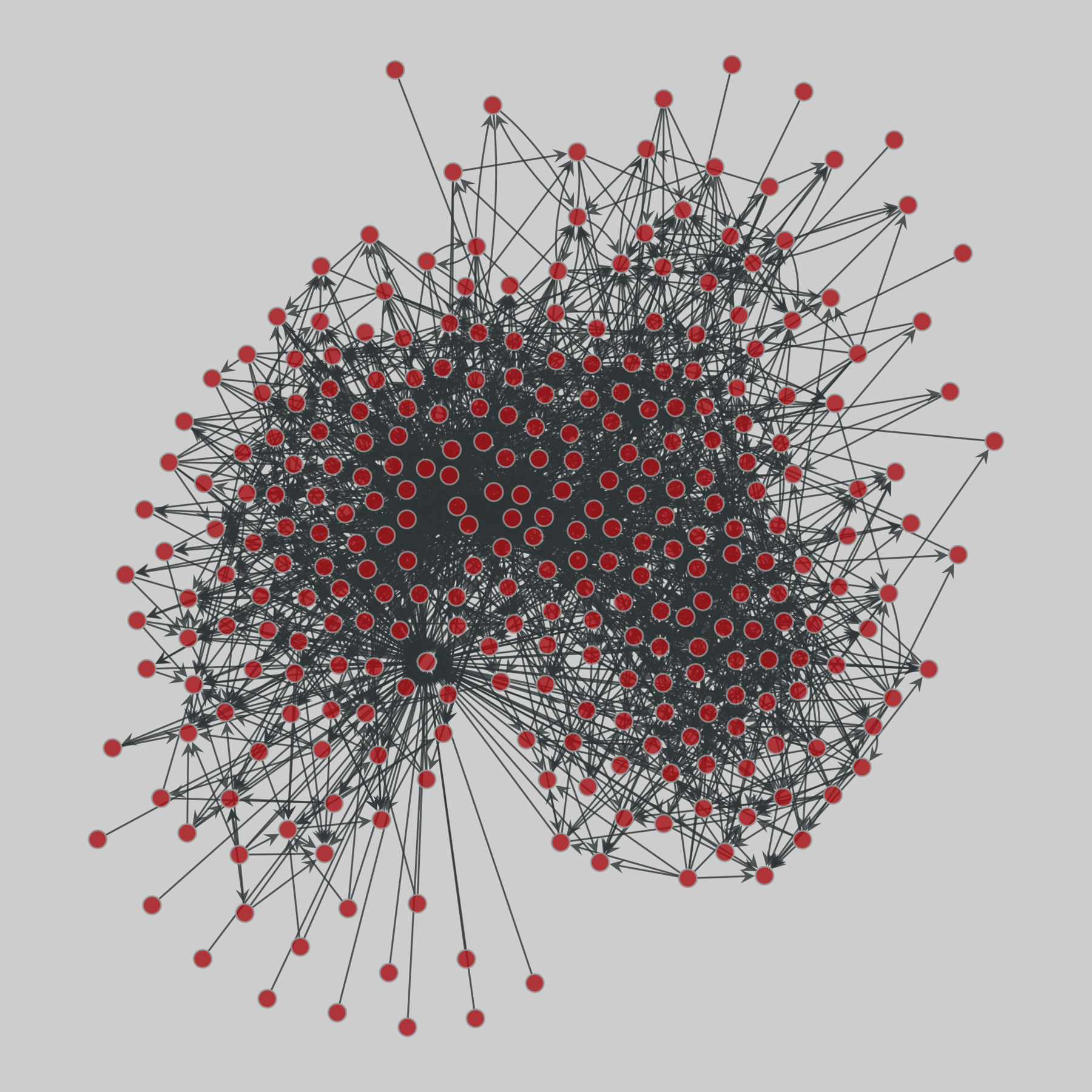
celegansneural: C. elegans neurons (1986)
A network representing the neural connections of the Caenorhabditis elegans nematode.
This network has 297 nodes and 2359 edges.
Tags: Biological, Connectome, Weighted
networks.skewed.de/net/celegan
Rid…

celegansneural: C. elegans neurons (1986). 297 nodes, 2359 edges. https://networks.skewed.de/net/celegansneural
@arXiv_csLG_bot@mastoxiv.page
2025-10-08 10:47:09

QGraphLIME - Explaining Quantum Graph Neural Networks
Haribandhu Jena, Jyotirmaya Shivottam, Subhankar Mishra
arxiv.org/abs/2510.05683 arxi…

@arXiv_csCR_bot@mastoxiv.page
2025-10-01 09:57:38

DeepProv: Behavioral Characterization and Repair of Neural Networks via Inference Provenance Graph Analysis
Firas Ben Hmida, Abderrahmen Amich, Ata Kaboudi, Birhanu Eshete
arxiv.org/abs/2509.26562

@arXiv_csLG_bot@mastoxiv.page
2025-10-06 10:25:09

AdaBet: Gradient-free Layer Selection for Efficient Training of Deep Neural Networks
Irene Tenison, Soumyajit Chatterjee, Fahim Kawsar, Mohammad Malekzadeh
arxiv.org/abs/2510.03101

@netzschleuder@social.skewed.de

2025-11-09 22:00:04

celegansneural: C. elegans neurons (1986)
A network representing the neural connections of the Caenorhabditis elegans nematode.
This network has 297 nodes and 2359 edges.
Tags: Biological, Connectome, Weighted
networks.skewed.de/net/celegan
Rid…

celegansneural: C. elegans neurons (1986). 297 nodes, 2359 edges. https://networks.skewed.de/net/celegansneural
@arXiv_csCV_bot@mastoxiv.page
2025-10-14 13:46:58

FACE: Faithful Automatic Concept Extraction
Dipkamal Bhusal, Michael Clifford, Sara Rampazzi, Nidhi Rastogi
arxiv.org/abs/2510.11675 arxiv.…

@arXiv_csLG_bot@mastoxiv.page
2025-10-08 10:36:19

Fundamental Limits of Crystalline Equivariant Graph Neural Networks: A Circuit Complexity Perspective
Yang Cao, Zhao Song, Jiahao Zhang, Jiale Zhao
arxiv.org/abs/2510.05494

@arXiv_csLG_bot@mastoxiv.page
2025-10-13 10:44:10

Weight Initialization and Variance Dynamics in Deep Neural Networks and Large Language Models
Yankun Han
arxiv.org/abs/2510.09423 arxiv.org…

@arXiv_csLG_bot@mastoxiv.page
2025-10-08 10:56:29

Analyzing the Effect of Embedding Norms and Singular Values to Oversmoothing in Graph Neural Networks
Dimitrios Kelesis, Dimitris Fotakis, Georgios Paliouras
arxiv.org/abs/2510.06066

@netzschleuder@social.skewed.de

2025-11-12 13:00:04

celegansneural: C. elegans neurons (1986)
A network representing the neural connections of the Caenorhabditis elegans nematode.
This network has 297 nodes and 2359 edges.
Tags: Biological, Connectome, Weighted
networks.skewed.de/net/celegan
Rid…

celegansneural: C. elegans neurons (1986). 297 nodes, 2359 edges. https://networks.skewed.de/net/celegansneural
@arXiv_csLG_bot@mastoxiv.page
2025-12-22 13:54:35

Replaced article(s) found for cs.LG. arxiv.org/list/cs.LG/new
[2/5]:
- The Diffusion Duality
Sahoo, Deschenaux, Gokaslan, Wang, Chiu, Kuleshov
arxiv.org/abs/2506.10892 mastoxiv.page/@arXiv_csLG_bot/
- Multimodal Representation Learning and Fusion
Jin, Ge, Xie, Luo, Song, Bi, Liang, Guan, Yeong, Song, Hao
arxiv.org/abs/2506.20494 mastoxiv.page/@arXiv_csLG_bot/
- The kernel of graph indices for vector search
Mariano Tepper, Ted Willke
arxiv.org/abs/2506.20584 mastoxiv.page/@arXiv_csLG_bot/
- OptScale: Probabilistic Optimality for Inference-time Scaling
Youkang Wang, Jian Wang, Rubing Chen, Xiao-Yong Wei
arxiv.org/abs/2506.22376 mastoxiv.page/@arXiv_csLG_bot/
- Boosting Revisited: Benchmarking and Advancing LP-Based Ensemble Methods
Fabian Akkerman, Julien Ferry, Christian Artigues, Emmanuel Hebrard, Thibaut Vidal
arxiv.org/abs/2507.18242 mastoxiv.page/@arXiv_csLG_bot/
- MolMark: Safeguarding Molecular Structures through Learnable Atom-Level Watermarking
Runwen Hu, Peilin Chen, Keyan Ding, Shiqi Wang
arxiv.org/abs/2508.17702 mastoxiv.page/@arXiv_csLG_bot/
- Dual-Distilled Heterogeneous Federated Learning with Adaptive Margins for Trainable Global Protot...
Fatema Siddika, Md Anwar Hossen, Wensheng Zhang, Anuj Sharma, Juan Pablo Mu\~noz, Ali Jannesari
arxiv.org/abs/2508.19009 mastoxiv.page/@arXiv_csLG_bot/
- STDiff: A State Transition Diffusion Framework for Time Series Imputation in Industrial Systems
Gary Simethy, Daniel Ortiz-Arroyo, Petar Durdevic
arxiv.org/abs/2508.19011 mastoxiv.page/@arXiv_csLG_bot/
- EEGDM: Learning EEG Representation with Latent Diffusion Model
Shaocong Wang, Tong Liu, Yihan Li, Ming Li, Kairui Wen, Pei Yang, Wenqi Ji, Minjing Yu, Yong-Jin Liu
arxiv.org/abs/2508.20705 mastoxiv.page/@arXiv_csLG_bot/
- Data-Free Continual Learning of Server Models in Model-Heterogeneous Cloud-Device Collaboration
Xiao Zhang, Zengzhe Chen, Yuan Yuan, Yifei Zou, Fuzhen Zhuang, Wenyu Jiao, Yuke Wang, Dongxiao Yu
arxiv.org/abs/2509.25977 mastoxiv.page/@arXiv_csLG_bot/
- Fine-Tuning Masked Diffusion for Provable Self-Correction
Jaeyeon Kim, Seunggeun Kim, Taekyun Lee, David Z. Pan, Hyeji Kim, Sham Kakade, Sitan Chen
arxiv.org/abs/2510.01384 mastoxiv.page/@arXiv_csLG_bot/
- A Generic Machine Learning Framework for Radio Frequency Fingerprinting
Alex Hiles, Bashar I. Ahmad
arxiv.org/abs/2510.09775 mastoxiv.page/@arXiv_csLG_bot/
- ASecond-Order SpikingSSM for Wearables
Kartikay Agrawal, Abhijeet Vikram, Vedant Sharma, Vaishnavi Nagabhushana, Ayon Borthakur
arxiv.org/abs/2510.14386 mastoxiv.page/@arXiv_csLG_bot/
- Utility-Diversity Aware Online Batch Selection for LLM Supervised Fine-tuning
Heming Zou, Yixiu Mao, Yun Qu, Qi Wang, Xiangyang Ji
arxiv.org/abs/2510.16882 mastoxiv.page/@arXiv_csLG_bot/
- Seeing Structural Failure Before it Happens: An Image-Based Physics-Informed Neural Network (PINN...
Omer Jauhar Khan, Sudais Khan, Hafeez Anwar, Shahzeb Khan, Shams Ul Arifeen
arxiv.org/abs/2510.23117 mastoxiv.page/@arXiv_csLG_bot/
- Training Deep Physics-Informed Kolmogorov-Arnold Networks
Spyros Rigas, Fotios Anagnostopoulos, Michalis Papachristou, Georgios Alexandridis
arxiv.org/abs/2510.23501 mastoxiv.page/@arXiv_csLG_bot/
- Semi-Supervised Preference Optimization with Limited Feedback
Seonggyun Lee, Sungjun Lim, Seojin Park, Soeun Cheon, Kyungwoo Song
arxiv.org/abs/2511.00040 mastoxiv.page/@arXiv_csLG_bot/
- Towards Causal Market Simulators
Dennis Thumm, Luis Ontaneda Mijares
arxiv.org/abs/2511.04469 mastoxiv.page/@arXiv_csLG_bot/
- Incremental Generation is Necessary and Sufficient for Universality in Flow-Based Modelling
Hossein Rouhvarzi, Anastasis Kratsios
arxiv.org/abs/2511.09902 mastoxiv.page/@arXiv_csLG_bot/
- Optimizing Mixture of Block Attention
Guangxuan Xiao, Junxian Guo, Kasra Mazaheri, Song Han
arxiv.org/abs/2511.11571 mastoxiv.page/@arXiv_csLG_bot/
- Assessing Automated Fact-Checking for Medical LLM Responses with Knowledge Graphs
Shasha Zhou, Mingyu Huang, Jack Cole, Charles Britton, Ming Yin, Jan Wolber, Ke Li
arxiv.org/abs/2511.12817 mastoxiv.page/@arXiv_csLG_bot/
toXiv_bot_toot

@arXiv_csLG_bot@mastoxiv.page
2025-10-06 10:24:59

Adaptive Node Feature Selection For Graph Neural Networks

Ali Azizpour, Madeline Navarro, Santiago Segarra

arxiv.org/abs/2510.03096 arxiv.o…

@arXiv_csLG_bot@mastoxiv.page
2025-09-30 14:36:21

Scaling Laws and Spectra of Shallow Neural Networks in the Feature Learning Regime
Leonardo Defilippis, Yizhou Xu, Julius Girardin, Emanuele Troiani, Vittorio Erba, Lenka Zdeborov\'a, Bruno Loureiro, Florent Krzakala
arxiv.org/abs/2509.24882

@arXiv_csLG_bot@mastoxiv.page
2025-10-13 10:41:40

Deep Learning to Identify the Spatio-Temporal Cascading Effects of Train Delays in a High-Density Network
Vu Duc Anh Nguyen, Ziyue Li
arxiv.org/abs/2510.09350

@arXiv_csLG_bot@mastoxiv.page
2025-09-30 14:42:41

Towards generalizable deep ptychography neural networks
Albert Vong, Steven Henke, Oliver Hoidn, Hanna Ruth, Junjing Deng, Alexander Hexemer, Apurva Mehta, Arianna Gleason, Levi Hancock, Nicholas Schwarz
arxiv.org/abs/2509.25104

@arXiv_csLG_bot@mastoxiv.page
2025-09-25 10:51:02

A Recovery Guarantee for Sparse Neural Networks
Sara Fridovich-Keil, Mert Pilanci
arxiv.org/abs/2509.20323 arxiv.org/pdf/2509.20323

@arXiv_csLG_bot@mastoxiv.page
2025-10-08 10:54:49

Out-of-Distribution Detection from Small Training Sets using Bayesian Neural Network Classifiers
Kevin Raina, Tanya Schmah
arxiv.org/abs/2510.06025

@arXiv_csLG_bot@mastoxiv.page
2025-09-29 11:31:47

Neural Feature Geometry Evolves as Discrete Ricci Flow
Moritz Hehl, Max von Renesse, Melanie Weber
arxiv.org/abs/2509.22362 arxiv.org/pdf/2…

@arXiv_csLG_bot@mastoxiv.page
2025-10-06 10:22:39

BrainIB : Leveraging Graph Neural Networks and Information Bottleneck for Functional Brain Biomarkers in Schizophrenia
Tianzheng Hu, Qiang Li, Shu Liu, Vince D. Calhoun, Guido van Wingen, Shujian Yu
arxiv.org/abs/2510.03004

@arXiv_csLG_bot@mastoxiv.page
2025-10-08 10:44:19

When Does Global Attention Help? A Unified Empirical Study on Atomistic Graph Learning
Arindam Chowdhury, Massimiliano Lupo Pasini
arxiv.org/abs/2510.05583

@arXiv_csLG_bot@mastoxiv.page
2025-10-08 10:57:59

The Physics of Data and Tasks: Theories of Locality and Compositionality in Deep Learning
Alessandro Favero
arxiv.org/abs/2510.06106 arxiv.…

@arXiv_csLG_bot@mastoxiv.page
2025-10-03 11:03:01

Fine-Grained Urban Traffic Forecasting on Metropolis-Scale Road Networks
Fedor Velikonivtsev, Oleg Platonov, Gleb Bazhenov, Liudmila Prokhorenkova
arxiv.org/abs/2510.02278

@arXiv_csLG_bot@mastoxiv.page
2025-10-15 10:53:11

KoALA: KL-L0 Adversarial Detector via Label Agreement
Siqi Li, Yasser Shoukry
arxiv.org/abs/2510.12752 arxiv.org/pdf/2510.12752

@arXiv_csLG_bot@mastoxiv.page
2025-10-08 10:27:29

Physics-Informed Machine Learning in Biomedical Science and Engineering
Nazanin Ahmadi, Qianying Cao, Jay D. Humphrey, George Em Karniadakis
arxiv.org/abs/2510.05433

@arXiv_csLG_bot@mastoxiv.page
2025-09-26 10:32:21

No Prior, No Leakage: Revisiting Reconstruction Attacks in Trained Neural Networks
Yehonatan Refael, Guy Smorodinsky, Ofir Lindenbaum, Itay Safran
arxiv.org/abs/2509.21296

@arXiv_csLG_bot@mastoxiv.page
2025-10-06 10:26:59

Superposition disentanglement of neural representations reveals hidden alignment
Andr\'e Longon, David Klindt, Meenakshi Khosla
arxiv.org/abs/2510.03186