 @Dragofix@veganism.social
2026-09-06 02:45:04
Global warming will exceed limit, UN says in a report that maps path to get back below danger zone https://phys.org/news/2026-09-global-exceed-limit-path-danger.html
UN report finds 1.5°C warming limit likely to be exceeded by 2030

 @arXiv_condmatsoft_bot@mastoxiv.page
2026-08-14 08:01:32
Capillary self-folding chains
Megan Delens, Axel Franckart, Martin Poty, Nicolas Vandewalle
https://arxiv.org/abs/2608.13349 https://arxiv.org/pdf/2608.13349 https://arxiv.org/html/2608.13349
arXiv:2608.13349v1 Announce Type: new
Abstract: Mesoscale self-assembly provides a route toward the design of programmable microsystems. Here, we construct flexible chains of floating monomers whose curved branches impose upward or downward deformations of the liquid interface, corresponding to effective positive or negative capillary charges. These geometrically encoded deformations generate local attractive or repulsive interactions along the chain. By tuning the capillary sequence, we obtain distinct folded configurations, including straight lines, zigzag patterns, and loops. For short chains, folding is largely governed by nearest-neighbor interactions and leads to well-defined structures. As the chain length increases and non-neighboring segments come into proximity and interact, however, the folding landscape becomes increasingly complex, with multiple metastable states whose number grows exponentially with chain length. We map these landscapes numerically and demonstrate experimentally that mechanical agitation allows the chains to transition between metastable configurations. Beyond encoding a target geometry, the capillary sequence therefore controls the complexity of the folding landscape as well as the degeneracy and mutational robustness of folded structures. These results establish capillary chains as a controllable mesoscale platform for investigating how local interaction rules give rise to collective folding and complex sequence-to-structure relationships reminiscent of those encountered in biomolecular systems.
toXiv_bot_toot
 @arXiv_csAR_bot@mastoxiv.page
2026-08-13 07:31:17
APEX: Adaptive Expert Prefetching for Memory-Efficient Edge MoE Inference
Alish Kanani, Layan Badawi, Umit Y. Ogras
https://arxiv.org/abs/2608.11688 https://arxiv.org/pdf/2608.11688 https://arxiv.org/html/2608.11688
arXiv:2608.11688v1 Announce Type: new
Abstract: Mixture-of-Experts (MoE) models are attractive for edge deployment because they provide high model capacity while activating only a small subset of parameters per token, improving compute efficiency. However, MoE inference at the edge is fundamentally limited by memory. Expert parameters are large and often reside in off-chip memory due to capacity, cost, and power constraints, putting expert loading to the critical path. We present APEX: Adaptive Expert Prefetching, a predictive resource management framework that overlaps expert loading with useful computation. APEX introduces a lightweight prefetch router that predicts candidate experts before the attention block to dynamically fetch additional experts using a learned confidence model. This adaptive strategy achieves over 99% overlap accuracy, significantly outperforming fixed top-k prefetching techniques. APEX supports two execution modes: a correctness-preserving mode that guarantees exact routing semantics, and a stall-free mode that eliminates residual stalls by operating on available experts with negligible impact on application accuracy. Across multiple MoE models, the correctness-preserving mode reduces per-token latency by up to 26% and improves energy-delay product (EDP) by up to 41% over state-of-the-art baselines, while the stall-free mode provides additional efficiency gains with negligible impact on application accuracy. These results establish adaptive, confidence-driven expert prefetching as an effective approach for efficient MoE inference on edge systems.
toXiv_bot_toot
 @cowboys@darktundra.xyz
2026-10-11 12:01:20
5 Coaches Who Could Take the Cowboys to the Next Level https://insidethestar.com/5-coaches-who-could-take-the-cowboys-to-the-next-level
 @Techmeme@techhub.social
2026-08-27 17:11:09
OpenAI is testing a "Persistent mode" in Codex, designed to let AI agents "continue working until put to sleep" and proactively generate follow-up tasks (Maxwell Zeff/Wired)
https://www.wired.com/story/openai-is-developing-a-persistent-ai-agent/

 @Mediagazer@mstdn.social
2026-09-02 07:50:42
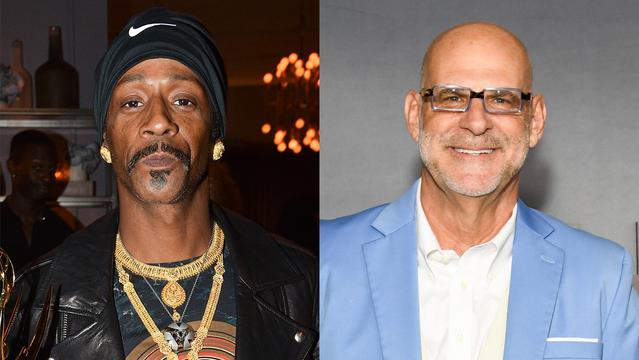
Netflix renews its initial podcast slate, brings in established shows like The Pivot Podcast, and adds new shows from Katt Williams, Stephanie Soo, and more (Alex Weprin/The Hollywood Reporter)
https://www.hollywoodreporter.com/business
 @arXiv_mathCV_bot@mastoxiv.page
2026-08-05 07:48:48
Explicit Estimates for the Bergman Kernel Form on Polarized Riemann Surfaces for General Tensor Powers
Johannes Testorf
https://arxiv.org/abs/2608.03493 https://arxiv.org/pdf/2608.03493 https://arxiv.org/html/2608.03493
arXiv:2608.03493v1 Announce Type: new
Abstract: Let $(L,e^{-\phi})$ be a positive Hermitian holomorphic line bundle over a compact Riemann surface $X$, and put $\omega=\ddbar\phi$. We obtain effective pointwise estimates for the Bergman form of $H^0(X,K_X\otimes L^m)$. If $\Ric\omega\leq\omega$ and the shortest nonconstant closed geodesic has length at least $2\pi$, then \[
K_{m\phi}\geq \frac{2m-1}{4\pi}\,\omega, \] and the constant is sharp on $(\mathbb P^1,\mathcal O_{\mathbb P^1}(2))$. A local version, depending on an upper curvature bound and the injectivity radius, recovers the first two terms of the Bergman expansion when the curvature is constant. Under the two-sided bound $-\omega\leq\Ric\omega\leq\omega$ and the same closed-geodesic hypothesis, we also prove \[ K_{m\phi}\leq \frac{m\omega}{2\pi}
\left(1 \frac{54.8\log(2m)}{m-\frac{1}2}\right). \] The lower estimates use the deformation-to-the-tangent-space form of the Ohsawa--Takegoshi theorem established by He, Wang, and the author, whereas the upper bound combines a weighted submean inequality with quantitative isothermal coordinates which was obtained in recent work by Eilat.
toXiv_bot_toot
 @jorgecandeias@mastodon.social
2026-08-26 20:43:04
RE: https://ciberlandia.pt/@nfabreu/117162964220091023
A estupidez não tem limites.
 @arXiv_csCR_bot@mastoxiv.page
2026-07-24 08:02:32
Classical Acceptance Is Not Hybrid Authentication: Measuring X.509 Verifier Semantics in Post-Quantum Migration
Taesung Kim, Boheung Chung, Keonwoo Kim, Yousung Kang
https://arxiv.org/abs/2607.20800 https://arxiv.org/pdf/2607.20800 https://arxiv.org/html/2607.20800
arXiv:2607.20800v1 Announce Type: new
Abstract: A relying party validating a hybrid X.509 certificate --- carrying both a classical and a post-quantum credential --- must distinguish whether its accepting judgment rests on the post-quantum evidence or only on the classical path. To preserve compatibility, the separable designs place that evidence where classical path validation may ignore it. A verifier can then validate the classical path and accept while the post-quantum evidence never bears on the decision --- a valid classical result silently promoted to a hybrid conclusion it did not establish. We measure this across eight path-validation stacks (seven independent codebases), in nine validation modes, over six certificate schemes. Under a hybrid-required policy, nearly every stack parsing a separable hybrid certificate accepts on the classical path without making the post-quantum evidence outcome-bearing; one enforcing mode instead fractures interoperability over a signature-input encoding not yet interoperably profiled; and stacks that verify post-quantum signatures still do not enforce the binding by default: the gap is structural, not explained by missing primitive capability alone. Under lifecycle desynchronization the downgrade is realized: when a bound post-quantum credential is revoked while the classical certificate stays valid, the default path still accepts, because the bound credential lies outside the decision's scope. Binding success is not authentication success. We contribute a specification-derived verifier model and an executable, policy-parametric reference contract --- what a verifier must recognize, verify, make outcome-bearing, and check before reporting a validation as hybrid --- with a diagnosis of why standards do not require it.
toXiv_bot_toot
@Mediagazer@mstdn.social2026-07-27 17:50:41
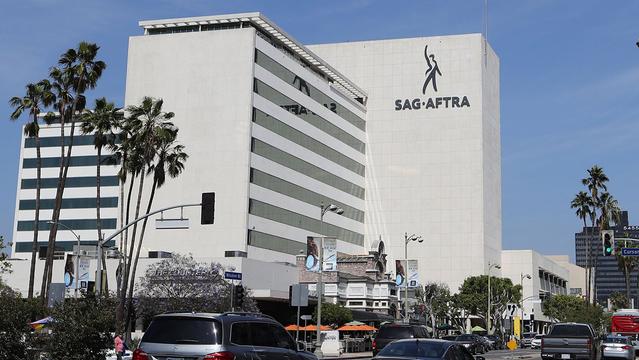
SAG-AFTRA's board adopts a resolution to formally resist the Paramount/WBD merger unless "enforceable safeguards" are established against a drop in production (Katie Kilkenny/The Hollywood Reporter)
https://www.hollywoodreporter.com/business…