Logistics in the technical sense (part of supply chain management) is a subset of logistics in the vernacular sense ("the handling of the details of an operation"). You can explore this second and more general sense, and thereby build an understanding of the first and more technical sense, by iteratively asking the question, "how does one make that happen" and follow questions from there.
A big part of organizing is figuring out the (vernacular) logistics (and helping others figure it out). You want to organize a seed swap? Ok. How does one make that happen? Well, you need seeds, people, a place, and perhaps a time. How does one make that happen? You can forage seeds or you can buy seeds for a garden and swap extras. How do you get people to come? Well, figure out where you want people to come from and choose an accessible place. What's the easiest thing to do? Get people from your neighborhood. How does one make that happen? Well, maybe put up flyers. How does one make that happen? Well, print them on your printer if you have one, or at a library, then go post them up. Etc.
Keep asking questions until you either find a roadblock that you can't find a way around, or you find things you can do yourself (one of those things you can do yourself is asking friends to help).
If you practice the exercise of thinking about how things happen, you can start to find things that you can do yourself. You can start to understand what exists now, and you can imagine what's possible. By thinking about logistics, you can figure out how to replace things when they collapse or are dismantled. You can also identify things that can't easily be replaced, and try to figure out alternatives.
This practice is good for figuring out how to build, but it can also be a valuable practice for figuring out how to resist. Concentration camps and ethnic cleansing also require logistics. Mass displacement means moving people. How does one do that? People are generally going to be moved in planes or buses. How does one do that? Well, people get loaded on to planes or buses in specific places. Planes and buses need fuel. Planes are fueled at their airports, which may well be the same places where people are loaded on to them. There is a fuel depo and a fuel truck that makes flying people out of a specific place possible. How does the fuel get to that fuel depo? Well, that fuel is probably also delivered by truck. Someone drives those trucks. Someone fuels those planes. Someone clears the planes for takeoff. Someone fuels those busses. Someone drives those busses. And so on.
Logistics networks can be highly complex. The more complex the operation, the more possible points of failure and more possible points where pressure can be applied, where operations can be disrupted. Ethnic cleansing is a complicated operation. The logistics of disrupting complicated things tend to be much less complicated than the logistics of the complicated things themselves.
The Right has exploited this fact for a long time. Centralized social services are logistically complex. Public infrastructure is logistically complex. By destroying these things, they can loot public resources by privatizing the infrastructure and functionality.
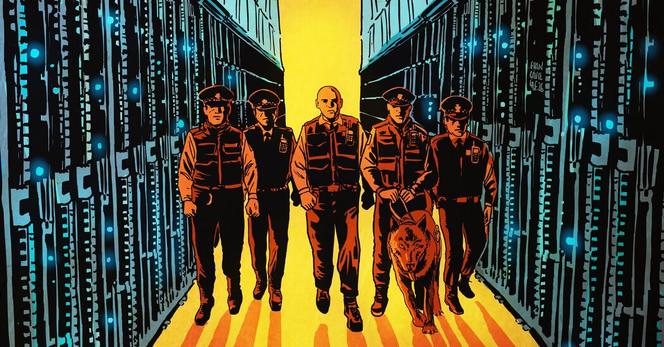
But the things that support the Right are even more logistically complex. Oil, cars, AI data centers, internal paramilitary, these are extremely complicated and fragile. There are numerous pressure points, all of which can respond to numerous strategies.
If we want to win, we should reduce the influence of politics over the things we care about. We should focus on building distributed mutual aid networks that don't rely on state funding and aren't subject to the whims of politicians. This is also known as "dual power." That is, creating counter-institutions outside of the dominant political system. The Right already does this in the form of churches and corporations.
As we reduce our complexity, we can then press our complexity advantage against the things for which the Right *needs* the state: the apparatus of violence needed to maintain capital and enforce the dominant order.
Analysis finds 60 "jacket apps" on the App Store disguised as simple games and utilities that become gambling apps when accessed from Brazilian IP addresses (9to5Mac)
https://9to5mac.com/2026/07/17/investigation-re…
My daughter spotted this 4’ central rat snake on the roof. Whoever did the addition did an absolutely incompetent job on the flashing. There are some gaps on each side where I feared pests could get in as well as the elements. Sealing it has been on my to-do list.
We watched buddy here slither down the gutter and slide on in behind the flashing. RIP to whatever is living within. Going to have to give it a few days for it to egress, fat and happy, and then get that sealed properly.
So in a few months, I'm going to try and cross the Alps on a bike on the Via Claudia. I'll need the very best music to motivate me, so if you want to cheer me on, add your most energetic, fun, cool and awesome favorite songs to this playlist! 😁 https://music.apple.com/de…
Added Power Grips (pedal straps) to my wife's #Brompton. Not going to say it's my nicest work, but I'm hopeful that it'll hold. I only drilled holes through the plastic reflectors; the metal is all intact. I can change that later if needed. #BikeTooter
He's got it wrong on drilling for oil and gas, but it looks like the former minister for ID cards has got it right on scrapping Starmer's digital ID plans.
«Now, by dropping the plans entirely Burnham's spokesperson said, the "time and resource that was going to be spent on a national ID scheme will go instead to where it's most needed, such as helping with the cost of living".»
Sony is hiking the starting price of one-month and three-month PlayStation Plus subscriptions in "select regions", blaming "ongoing market conditions" (Jay Peters/The Verge)
https://www.theverge.com/games/932430/sony-playstation-plus-s…
Oh, here it is (July 2018). It's nice that this report back didn't include any names or initials so I didn't need to sanitize it:
Meeting Notes:
Table-top exercise scenario topic was state and far-right repression.
Responses:
Strong networks require redundancy, so no one person is a social connection, skills, or resource gatekeeper. These people are often targeted by the state, and if they get burned out and leave, it also weakens and jeoprodizes groups.
Ways to strengthen our networks:
Mentoring/sharing responsibility. Creating a culture of mentorship and support so new people learn skills, take on responsibilities, and are introduced to other folks. Reducing burden on a few key people too.
Chaos Monkey exercise: ask central people to step back from communications/organizing to see what happens.
Regular check-ins! & Delegates check-in with new members they sign up
Ask well connected folks to introduce people to build social redundancy.
Gaming (D&D, board games, etc) committee could support a more fun, and socially robust network.
Practical safety tool:
Burner phone. Not everyone needs one, but good to have access to.
TO DO LIST:
Make regular announcements at each meeting for people to check-in with folks they know (especially those they haven’t heard from in awhile!)
Start google doc for disaster preparedness zine
Why you should prepare (ideological argument)
What people should have (the basics)
How to prepare
Frame as questions, so people can find the answer that best suits themselves.
Such as “what are you preparing for?”
Where do you spend most of your time? (home? Office? car?)
Make it as easy as possible for folks to get the basics (list locations for supplies, etc.)
In a town hall, PlayStation studio business CEO Hermen Hulst told staff that the company's narrative single-player games will now be PlayStation exclusive (Jason Schreier/@jasonschreier.bsky.social)
https://bsky.app/profile/jasonschreier.bsky.social/post/3mm5jzsls5s…
Analysis: OpenAI and Anthropic employees are donating to campaigns more heavily and cohesively than Google, Meta, and Airbnb employees did post-IPO (Alexandra Lindsay/The San Francisco Standard)
https://sfstandard.com/2026/07/18/ai-s-…