 @zachleat@zachleat.com
2026-08-20 18:16:18
@… As feed readers have improved over time, it’s just cognitive overhead (a choice!) when someone goes to subscribe. Or me, that has been reviewing my subscriptions lately
@zachleat@zachleat.com@… As feed readers have improved over time, it’s just cognitive overhead (a choice!) when someone goes to subscribe. Or me, that has been reviewing my subscriptions lately
 @lapizistik@social.tchncs.de
Der Overhead, den wir als Gesellschaft betreiben müssen, weil Menschen einfach scheiße zueinander bzw egoistische Arschlöcher sind, ist halt schon gigantisch. Und je weiter oben in der Hierarchie, je mehr Schaden kann das anrichten.
#pol
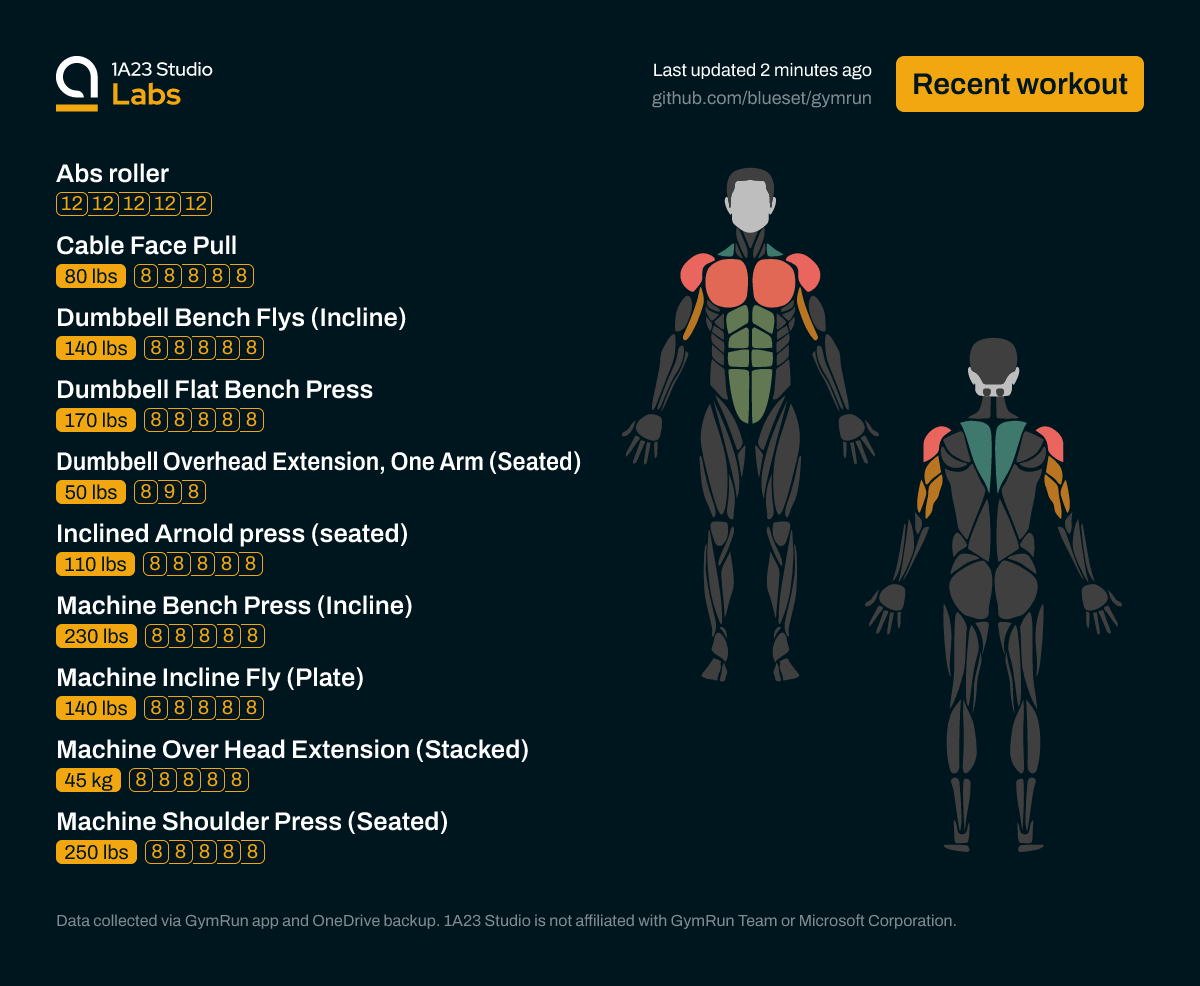
Workout of the day.
 @michabbb@social.vivaldi.net
📊 Prometheus metrics cover requests, errors, latency, tokens and routing overhead
⚠️ Apache 2.0, pre-alpha and evolving fast — the API is expected to change before v1.0 and it is explicitly not meant for production yet
🌐 https://github.com/NVIDIA-NeMo/Switchyard
 @UP8@mastodon.social
Wachusett Reservoir is the largest hand-built dam in the world, assembled from great granite blocks
#photo #photography #dam

 @leftsidestory@mstdn.social
Inside Outside VIII 🔲
中间 VIII 🔲
📷 Pentax MX
🎞️ Fujifilm Neopan F, expired 1993
If you like my work, Support by buying me a coffee or a roll of film from
PayPal https://www.paypal.com/paypalme/ydcdingsite
Wise




 @simon_brooke@mastodon.scot
Today I learned that Alfa Romeo not only used to make trucks, they also used to make a Jeep-like vehicle with dual overhead cams, and double wishbone front suspension.
Sadly, they made very few of them, so they must now be very rare. But what a mad vehicle!
https://en.wikipedia.org/wiki/Alfa_Rom
 @peterhoneyman@a2mi.social
on the river with lynn and max
 @michabbb@social.vivaldi.net
🧠 Lazy discovery is the core trick: instead of dumping every tool definition into context on each request, the gateway advertises 3 meta-tools (toolport_status, toolport_search_tools, toolport_call_tool) and the agent searches on demand.
📊 3 servers with 62 tools cost ~24,000 tokens of definitions up front; via meta-tools it drops to ~660. Benchmarked at up to 91% fewer total tokens at equal task success, 97% less tool-definition overhead per request, 99.6% on a 415-tool catalog.
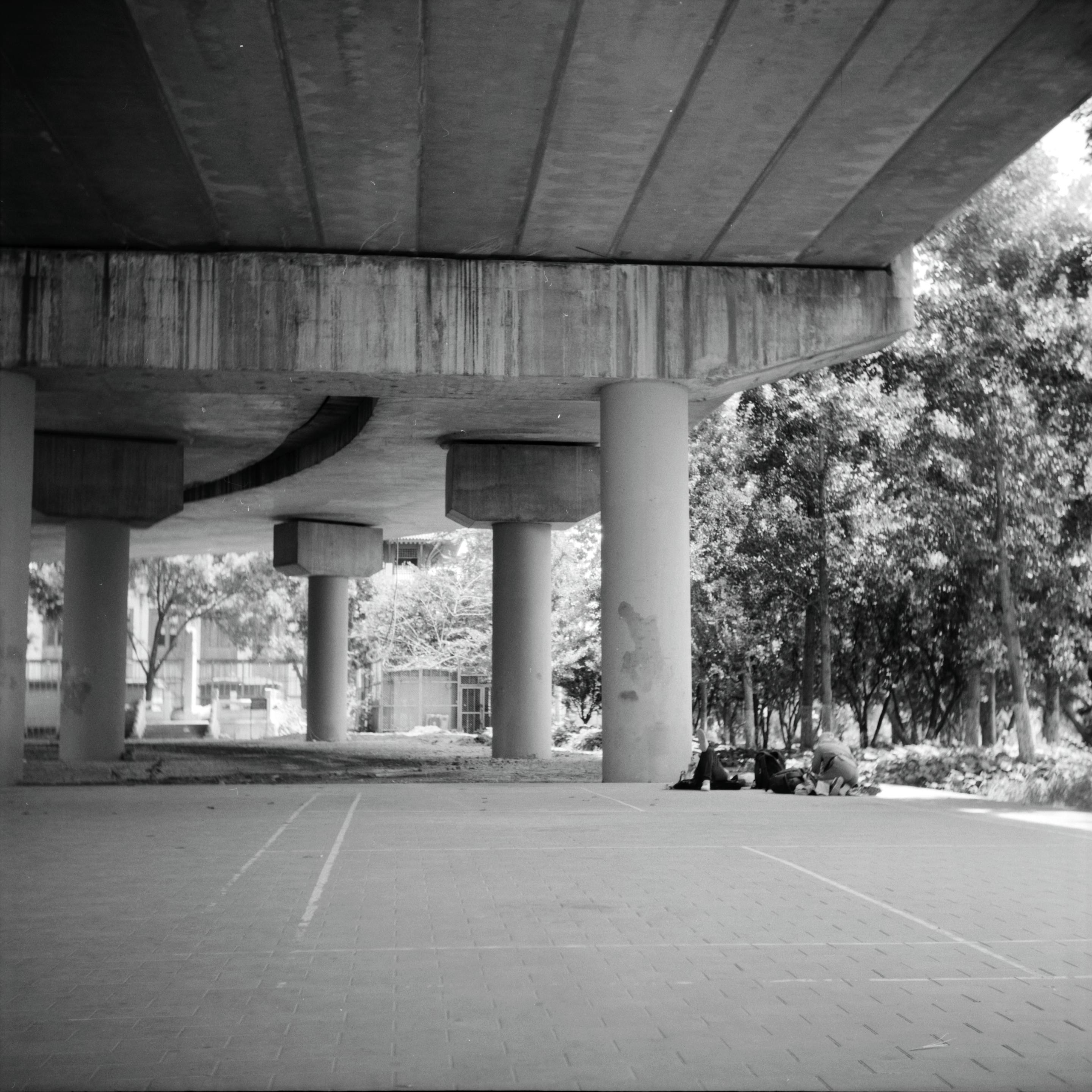
@leftsidestory@mstdn.socialParts II ⚙️
部分 II ⚙️
📷 Yashica 635
🎞️ LUCKY SHD 100 (6x6)
If you like my work, Support by buying me a coffee or a roll of film from
PayPal https://www.paypal.com/paypalme/ydcdingsite
Wise


 @qurlyjoe@mstdn.social
#silentSunday #rainbow #doublerainbow
Colorado, June 2017

 @LillyHerself@Mastodon.social
@… I was looking at these old photos of NYC, and I was struck by there being no overhead "wires" for the streetcars to draw power from. Were they taking it from the rails somehow? From circa 1907.


 @pre@boing.world
Whizz Air have this scam where they have a smaller under-seat-bag test than all the other airlines.
So when you head there with your standard under-seat bag that you use everywhere else, and that fits fine under the seat in reality,, they still make you pay another 70 euros for it to go in overhead just because it won't fit in their super-tiny extra-small testing bay.
The plane was half empty too, so it not like they really super needed to ration the overhead space.
If you're flying Wizz Air, maybe don't, and certainly make sure to note they have this small-bag scam going on.
#whizzAir #scam
 @cdarwin@c.im
It’s the day after Mother’s Day, the first one Elizabeth Soto has spent apart from her three children.
Sitting in jail in Wichita Falls, Texas, her face is washed out by the overhead fluorescent lighting,
and her dingy jumpsuit blends into the cinder block walls surrounding her.
Speaking through a glass separator, she tells me she celebrated the holiday with her children over the jail’s video-call system while they had dinner at their grandmother’s.
“I’ve been a full…
 @datascience@genomic.social
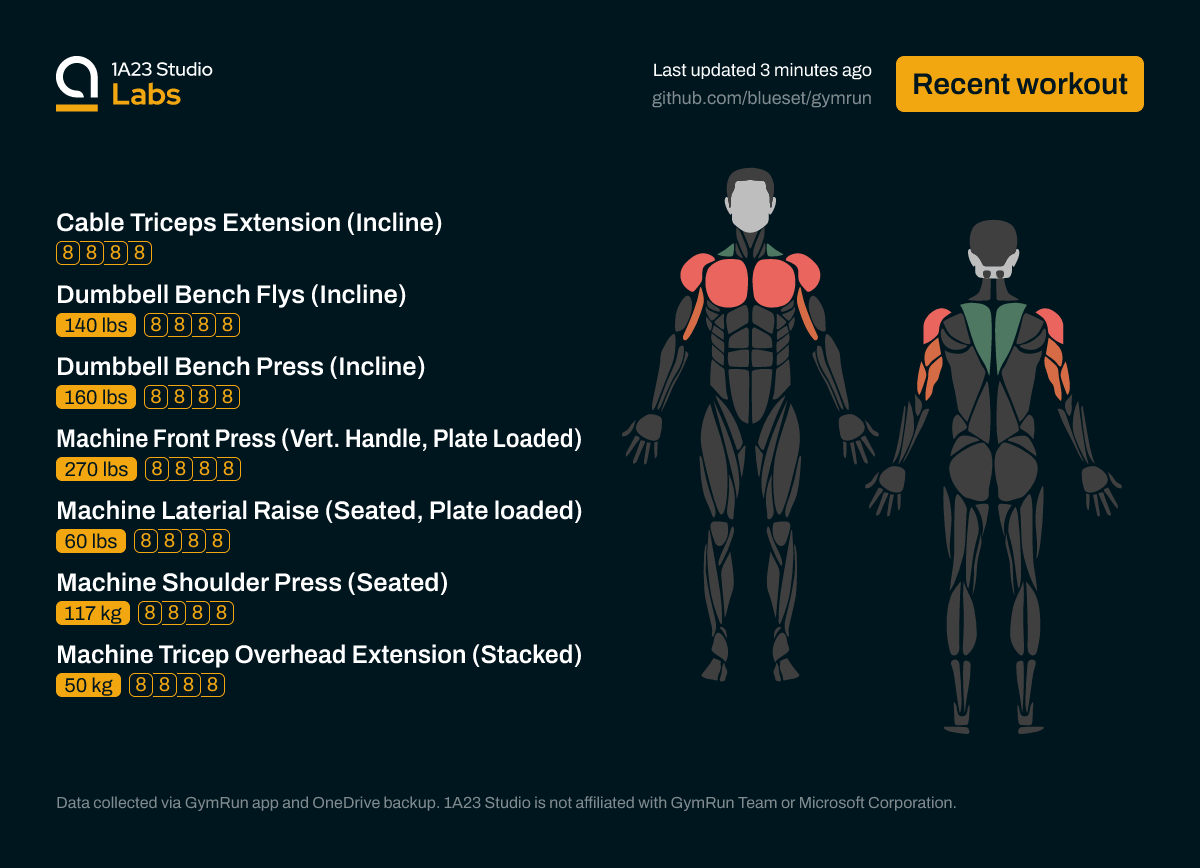
Workout of the day.
 @theodric@social.linux.pizza
I need an overhead projector
 @inthehands@hachyderm.io
(Overhead, shared with permission)
STUDENT 1: This one teacher was trying to get students to use AI to brainstorm topics for their papers
STUDENT 2: omg, that is SO last year
 @harrysentonbury@social.linux.pizza
i managed to catch the sunset tonight.
#sunset

 @fanf@mendeddrum.org
from my link log —
GPU offload in Rust: portable, safe, and fast.
https://arxiv.org/abs/2608.13759
saved 2026-08-22 https://dotat.at/:/SLJVL.html
 @arXiv_csAR_bot@mastoxiv.page
YAVIN: A Unified Architecture for Secure Edge Processing in Memory
Shouzhi Fang, William C. Tegge, Md Omar Faruque, Peipei Zhou, Endadul Hoque, Alex K. Jones
https://arxiv.org/abs/2608.13496 https://arxiv.org/pdf/2608.13496 https://arxiv.org/html/2608.13496
arXiv:2608.13496v1 Announce Type: new
Abstract: Secure, private multi-tenant execution spanning processors, memory, and accelerators remains one of the most significant challenges in modern edge computing systems. Simultaneously, processing-in-memory (PIM) has emerged as an effective approach for reducing the Von Neumann bottleneck by moving computation closer to data. Existing trusted execution environments (TEEs) establish trust only within the processor, protecting data while it traverses untrusted resources such as the memory bus. Consequently, trusted computation cannot be performed directly within memory. We present YAVIN, a unified trusted computing base (TCB) that extends the TEE beyond the processor to encompass both processor execution and a dedicated memory region supporting trusted processing-in-memory execution while treating the memory bus as untrusted. Leveraging the dedicated protected memory regions already established by conventional TEE architectures, YAVIN enables data to be decrypted, processed, and re-encrypted by either processor or PIM execution while remaining within the TEE. To realize this unified TCB, YAVIN presents the first PIM implementations of the LightSaber KEM post-quantum cryptosystem and ASCON-128 authenticated encryption, co-designing both algorithms for efficient DRAM execution to establish and maintain shared cryptographic state. Finally, we demonstrate how cryptography-PIM co-design for tensor-based workloads reorganizes computation to satisfy the ordering constraints imposed by authenticated encryption with minimal performance overhead while simultaneously enabling bit-sliced ordering that limits temporary plaintext exposure. Compared to the latest PIM AES implementation, YAVIN achieves more than a 20x speedup while incurring only 34% and 9.3% overhead when executing INT8 and INT32 quantized edge-class LLMs, respectively, relative to plaintext execution.
toXiv_bot_toot
 @cjust@infosec.exchange
Aome kinda advanced calculus gang seems yo have moved into the hood and is tagging things
#ShitPost #Shitposting

 @tschundler@leds.social @leftsidestory@mstdn.social
Inside Outside V 🔲
中间 V 🔲
📷 Pentax MX
🎞️ Fujifilm Neopan F, expired 1993
If you like my work, Support by buying me a coffee or a roll of film from
PayPal https://www.paypal.com/paypalme/ydcdingsite
Wise




 @cowboys@darktundra.xyz
Spagnola: Camping out to shoo away past ghosts https://www.dallascowboys.com/news/spagnola-camping-out-to-shoo-away-past-ghosts
 @nelson@tech.lgbt
Heard a plane circling overhead, looked online to see which fire this one was spotting and how close it was. Not a fire plane! A Waco, an open cockpit biplane, out giving joy rides to folks at the Nevada County Fair.
 @qurlyjoe@mstdn.social
#Virga is rain that doesn’t reach the ground. It’s a thing here in the US mountain west. Very cool and photogenic and strikingly dramatic to see in the distance, especially depending on where the sun is when you see it. I just stepped out of my house and a bit of virga exceeded expectations and reached the ground around me. So, just rain, but no clouds overhead, sun casting solstice 7 o’clock shadows…
@harrysentonbury@social.linux.pizzafrom a bit earlier.
Goodnight
#night

Workout of the day.
 @theodric@social.linux.pizza
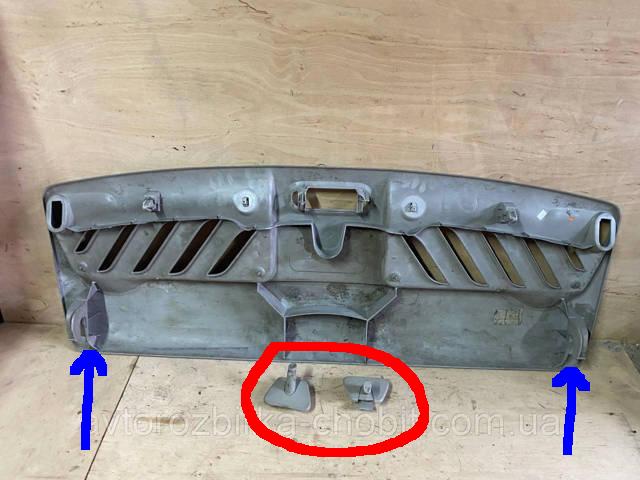
Everybody rips the overhead storage shelf out of Citans/Kangooeaux and doesn't bother to take the posts that hold it up, and then wonders why nobody buys their shelves. C'mon, jack.
 @leftsidestory@mstdn.social
City Clouds V ⛅️
城市云朵 V ⛅️
📷 Yashica 635
🎞️ LUCKY SHD 100 (6x6)
If you like my work, Support by buying me a coffee or a roll of film from
PayPal https://www.paypal.com/paypalme/ydcdingsite
Wise



 @cowboys@darktundra.xyz
Spagnola: Camping out to shoo away past ghosts https://www.dallascowboys.com/news/spagnola-camping-out-to-shoo-away-past-ghosts
Workout of the day.
 @arXiv_csAR_bot@mastoxiv.page
Lonic: Algorithm-Hardware Co-Design for Energy-Efficient Fully Local Online SNN Training with INT4 Precision
Peilin Chen, Xiaoxuan Yang
https://arxiv.org/abs/2608.12500 https://arxiv.org/pdf/2608.12500 https://arxiv.org/html/2608.12500
arXiv:2608.12500v1 Announce Type: new
Abstract: Spiking neural networks (SNNs) have recently attracted increasing attention as an energy-efficient learning paradigm. Existing works also propose temporally and fully local online SNN training algorithms to address memory and computation overhead. However, they do not consider whether the algorithmic advantages can be effectively translated into real-device efficiency. To address this challenge, we present Lonic, an algorithm-hardware co-design for energy-efficient and scalable fully local online supervised SNN learning. On the algorithm side, we implement an INT4 low-precision training algorithm for fully local online SNN learning while maintaining accuracy. On the hardware side, to leverage the benefits of the proposed algorithm, we introduce reconfigurable multiplier-free integer PE arrays, dual-optimization zero-gating strategy, temporal prefix-accelerated local learning dataflow, and low-precision weight movement to significantly improve training efficiency. Compared to Apple M4 and Nvidia V100 GPUs, Lonic achieves average energy efficiency improvements of 17.44x and 66.28x, respectively, along with speedups of 3.25x and 1.02x, respectively. Moreover, Lonic achieves 15.95x (14.64x) and 1.52x (7.28x) energy efficiency (area efficiency) over ASIC TPU-like and H2Learn accelerators, respectively. The code for Lonic is available at https://github.com/peilin-chen/Lonic.
toXiv_bot_toot
 @arXiv_csOH_bot@mastoxiv.page
Circular Economy Synergies and Trade-offs in Data Centres
Vlad C. Coroam\u{a}, Oana Dumbrav\u{a}
https://arxiv.org/abs/2608.04571 https://arxiv.org/pdf/2608.04571 https://arxiv.org/html/2608.04571
arXiv:2608.04571v1 Announce Type: new
Abstract: This report analyses data centre (DC) sustainability and circularity, revealing existing synergies and trade-offs:
The PUE is too coarse, mixing cooling and power provisioning. It wrongly attributes server fan consumption and transformation losses to IT energy. It does not measure compute but infrastructure efficiency, which is already outstanding. Compute energy, however, is exploding. Better energy metrics for DCs would thus cover i) compute efficiency, ii) transformation efficiency, and iii) cooling overhead.
Trade-offs exist between cooling energy and water as well as on-site and upstream water: Consuming water on-site lowers the cooling energy, which also lowers the water consumed upstream in power generation. For 'wet' electricity, there is little competition: It is worth spending more on-site energy to save both electricity and related upstream water. For 'dry' electricity, there is a trade-off.
Waste heat recovery brings energy circularity but has limited uses and is not the same energy quality, a fact not reflected by current metrics. A better metric would consider the avoided energy through heat recovery instead of the amount recovered.
Material circularity can be achieved by interpreting the 9R framework in the context of DCs. Circularity-enhancing measures can be categorised into product design, process design and business models, choice of materials, and operating conditions. Together, they have effects across all circularity levels.
The relation between DCs and the power grid is complex. Modern DCs present new challenges for the grid. Mitigation includes battery storage and onsite generation. These measures have, in turn, further consequences, both beneficial and detrimental. They can offer grid flexibility as well as innovations in the field of energy. But they also bring noise, pollution, and GHGs, and compete with the energy sector for resources.
toXiv_bot_toot
Workout of the day.

Workout of the day.
 @leftsidestory@mstdn.social
Blurry Figures II 🪬
模糊的形象 II🪬
📷 Yashica 635
🎞️ Ilford FP4 Plus 125 (FF), expired 1994
If you like my work, Support by buying me a coffee or a roll of film from
PayPal https://www.paypal.com/paypalme/ydcdingsite
Wise




 @arXiv_physicsfludyn_bot@mastoxiv.page
Hard Guarantees at a Measured Price: Entropy-Stable Learned Finite Volumes for Compressible Flow
Denis Gueyffier (ONERA -- Institut Polytechnique de Paris)
https://arxiv.org/abs/2607.20171 https://arxiv.org/pdf/2607.20171 https://arxiv.org/html/2607.20171
arXiv:2607.20171v1 Announce Type: new
Abstract: Learned solvers for compressible flow are usually compared to classical methods at equal mesh resolution rather than at equal computational cost, and they typically offer no guarantee that their solutions remain physically admissible. We present a learned finite volume scheme for the two-dimensional Euler equations on unstructured meshes, admissible by construction and with an entropy-stable interior flux. We evaluate it under protocols fixed before any computation: frozen thresholds, falsification clauses, negative controls, a factor decomposition of the learned components, and an iso-cost comparison against the refined classical baseline. The decomposition produced the central result: the guarantee machinery alone, with both learned heads switched off (the unlearned skeleton), is the strongest scheme at equal mesh on every periodic case. At equal wall-clock cost the picture inverts into a map. Learning pays robustly only on the wall case whose boundary-condition type it never saw (10.8%). Its periodic gains flip sign with the evaluation draw ( 10% on one held-out case, -12% on the hardest). The skeleton is the only method whose iso-cost gain never changes sign, at a measured overhead of 1.74x per step. The guaranteed variant completes 36 of 36 rollouts, Mach extrapolation and unseen wall included, with zero negativity events. We fix the guaranteed scheme's one remaining out-of-distribution weakness, Mach extrapolation, at inference time: with scale-invariant network inputs, a specific-entropy floor, and no retraining, the corrected arm overtakes the unconstrained arm on one Mach case, cuts its deficit on the other by a third, passes the skeleton on the unseen wall, and keeps the guarantee. A spatial gate closes the loop: activating the heads only near the walls beats both the skeleton and the corrected arm, and transfers unchanged to a second wall geometry.
toXiv_bot_toot
 @arXiv_csPL_bot@mastoxiv.page
Decode-Time Grammars: Constrained LLM Generation over a Refinement Order of Grammar Fragments
Shuoming Zhang, Ruiyuan Xu, Haofeng Li, Qiuchu Yu, Yangyu Zhang, Chunwei Xia, Xiaobing Feng, Chenxi Wang, Huimin Cui, Jiacheng Zhao
https://arxiv.org/abs/2607.18357 https://arxiv.org/pdf/2607.18357 https://arxiv.org/html/2607.18357
arXiv:2607.18357v1 Announce Type: new
Abstract: Large language models now write a growing share of the world's code, increasingly inside agents and serving systems that compile, execute, or dispatch generated code without line-by-line review. This works well for mainstream languages but remains brittle for low-resource programming surfaces such as domain-specific languages, custom library APIs, and command-line tools. Even under grammar-constrained decoding, a model can still produce references invalid in the current environment: a buffer never declared, a column absent from the schema, a function the library does not provide, or an unsupported CLI option.
This paper introduces decode-time grammars: grammar fragments instantiated during generation from a runtime environment Gamma. A region-specific policy selects a fragment for each hole, and a tightening operator replaces open reference positions with Gamma-typed slots whose candidates are exactly the names, fields, APIs, or options available at that point. Newly generated declarations enter Gamma before later regions are decoded, so the constraining grammar can depend on the prefix already generated. This ensures not only grammatical correctness but also semantic correctness, by preventing references to undefined symbols.
We formalize grammar fragments as environment-indexed grammars ordered by refinement, prove No-Ghost soundness for Gamma-slotted fragments, show that refinement preserves this support-set guarantee, and characterize the boundary of mask-enforceable properties. We implement the approach in gproj with offline grammar induction and online policy resolution. Across TileLang, SQL, and P4, with models from 0.6B to 236B parameters, gproj eliminates ghost references by construction at moderate overhead over standard constrained decoding.
toXiv_bot_toot
Workout of the day.