 @Mediagazer@mstdn.social
2026-08-13 11:25:45
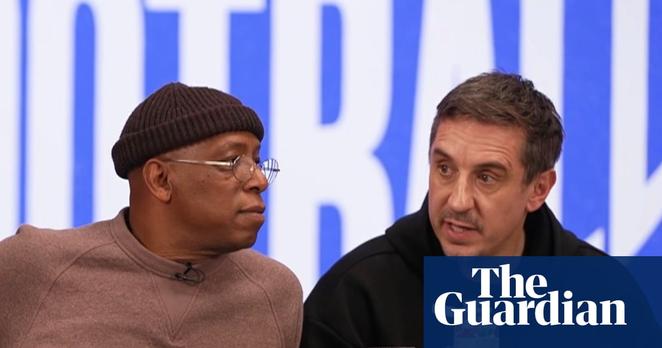
Disney secures rights to podcast content of Gary Neville's soccer media group The Overlap in a multimillion-pound deal; shows will still broadcast on YouTube (Matt Hughes/The Guardian)
https://www.theguardian.com/football/2026/
 @Techmeme@techhub.social
2026-10-13 02:50:47
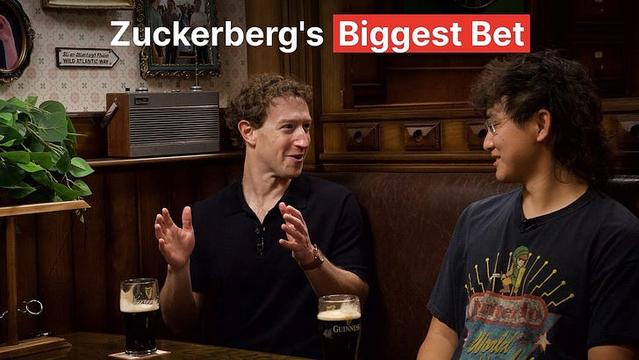
Q&A with Mark Zuckerberg and Alexandr Wang on the Muse app, Muse Wonder, the risks of committing $100B to AI, rebooting Meta's AI team, agentic commerce, more (Cheeky Pint)
https://cheekypint.substack.com/p/muse-wonder-zuckerberg-and-wangs
 @hynek@mastodon.social
2026-07-14 07:34:07
cooool, Hashi Nomad 2.0.4 broke half of our cluster in a fucking point release again 🥲
i'm really gonna have to learn kubernetes don't i
https://github.com/hashicorp/nomad/issues/28224
 @alejandrobdn@social.linux.pizza
2026-10-12 16:44:10
I really messed up my Duplicati container config and I couldn't figure out how to create a new one by replicating it so that it would use my current backups as a starting point. I had to start the backup on my DAS from scratch.
No problem because I followed the 3-2-1 rule and have an additional offsite backup that (even though its rclone script only runs once a month) contains everything important in case the worst happens during the current backup.
Listen to the IT gurus, k…
 @michabbb@social.vivaldi.net
2026-07-14 01:47:52
🧠 The reasoning: text tokens are discrete, drawn from a fixed vocabulary of ~50,000 entries, each mapping to a fixed point in embedding space.
Image tokens are continuous vectors of a thousand floating point numbers, so they can pack far more information into the same space.
🎮 The test: a tower-defense game where the AI plays in JSON mode without graphics, run for hours with two context variants — the same game state as a plain text string, and as an image rendered via PixelPipe.…
@Mediagazer@mstdn.social2026-09-14 05:01:14
Analysts discuss consumer frustration over streaming price hikes and Netflix having the lowest risk of cancellations due to its "deep bench of content" (Todd Spangler/Variety)
https://variety.com/2026/tv/news/streaming-price-…

 @bilbo_le_hobbit@mamot.fr
2026-10-12 19:03:49
C'est une maison bleue, accrochée Š la... falaise.
La maison WTF de #Ouessant. Vue imprenable. #OuessantCestMoche #bzh

 @theodric@social.linux.pizza
2026-08-12 18:24:40
Despite the clouds and the oh-so-helpful automatic exposure continually resetting its zero point until I was unable to cut enough light to meaningfully capture the occlusion in quantity, I got these two shots. I really need a dSLR that does as it's told!


 @arXiv_csHC_bot@mastoxiv.page
2026-08-12 08:29:20
AI-Generated Interactive Fiction for Educational Use: A Pilot Study of Perceived Comprehensibility, Coherence, and Engagement
Finn Rogosch, Andreas Schrader
https://arxiv.org/abs/2608.10818 https://arxiv.org/pdf/2608.10818 https://arxiv.org/html/2608.10818
arXiv:2608.10818v1 Announce Type: new
Abstract: Generative artificial intelligence (AI) can produce educational content at scale, including interactive and narrative learning experiences, but technical generation alone is not sufficient: scenarios that are confusing, narratively inconsistent, or unengaging are unlikely to be useful in practice. This paper presents a pilot user-centred evaluation of AI-generated interactive fiction (IF) for educational use in higher education. Using a previously described domain-agnostic pipeline and a shared STEM content base, we generated a controlled pool of scenarios and asked participants (N = 22, STEM higher-education) to play one generated episode and rate it on narrative clarity, story-content coherence, engagement, and length acceptance. A free-text prompt captured open feedback. Narrative clarity and length acceptance were rated positively, engagement sat near the neutral mid-point of the scale, and story-content coherence was the weakest dimension by a clear margin. Qualitative feedback points to quiz integration as the bottleneck. Artificial in-fiction motivation for quiz prompts and abrupt setting changes were reported. Feedback also pointed to missing story-level consequences for wrong answers. From these observations, we derive concrete design implications that can inform larger follow-up studies, including later work on learning effectiveness.
toXiv_bot_toot
 @cdarwin@c.im
2026-08-09 14:32:21
Netanyahu rejects US Gaza plan, vows no pullout until Hamas disarms
Israeli prime minister Benjamin Netanyahu has rejected a Gaza plan hailed by Donald Trump,
vowing no military pullout of Gaza until Hamas is “genuinely” disarmed.
“Israel rejects the 15-point document,” Netanyahu said,
referring to a plan endorsed in late July by Hamas.
The Israeli military “will not carry out any withdrawal until Hamas is genuinely disarmed
and will continue to thwart thr…
