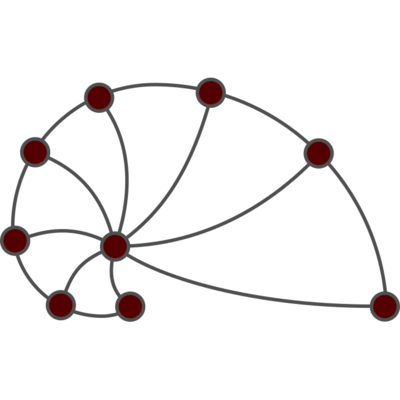
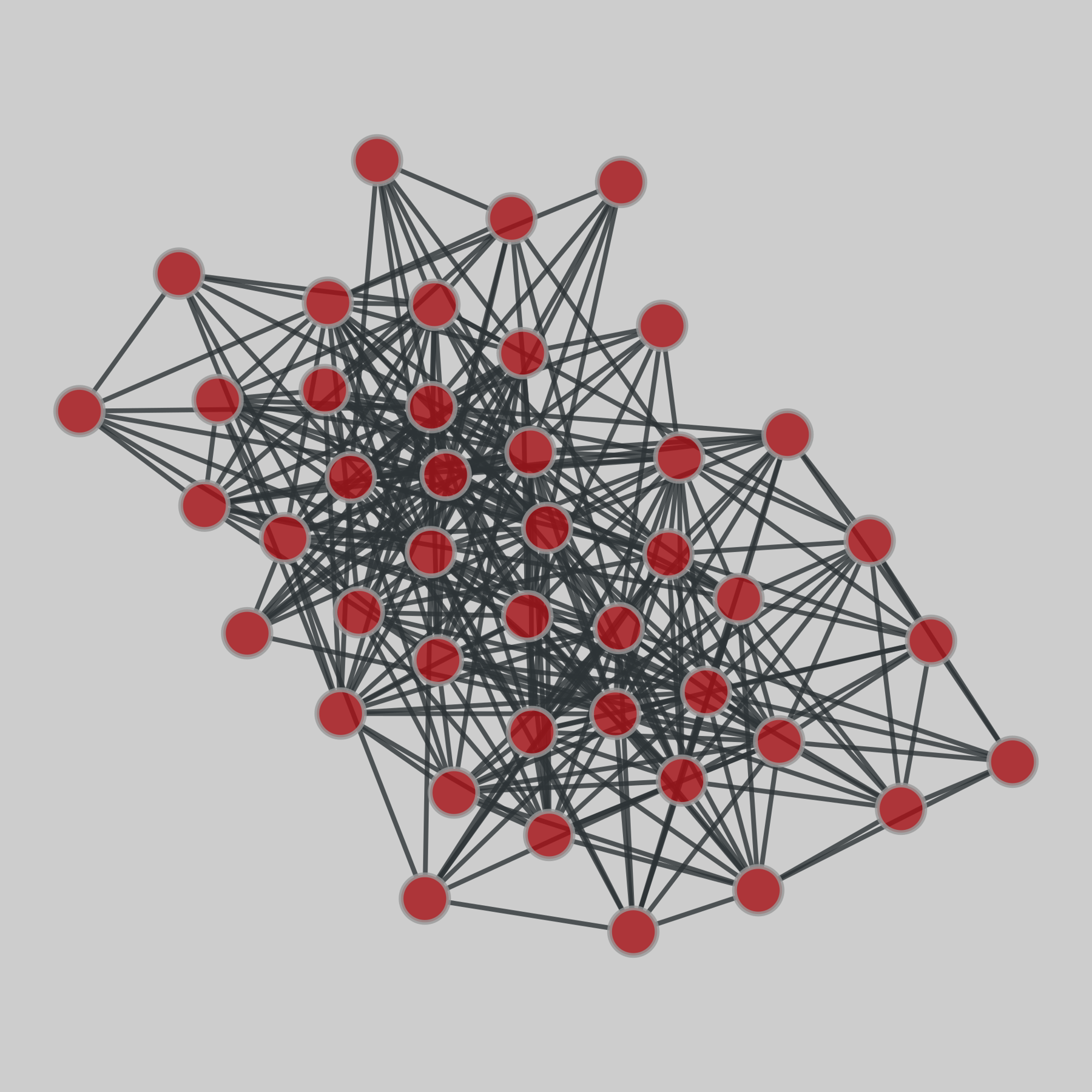
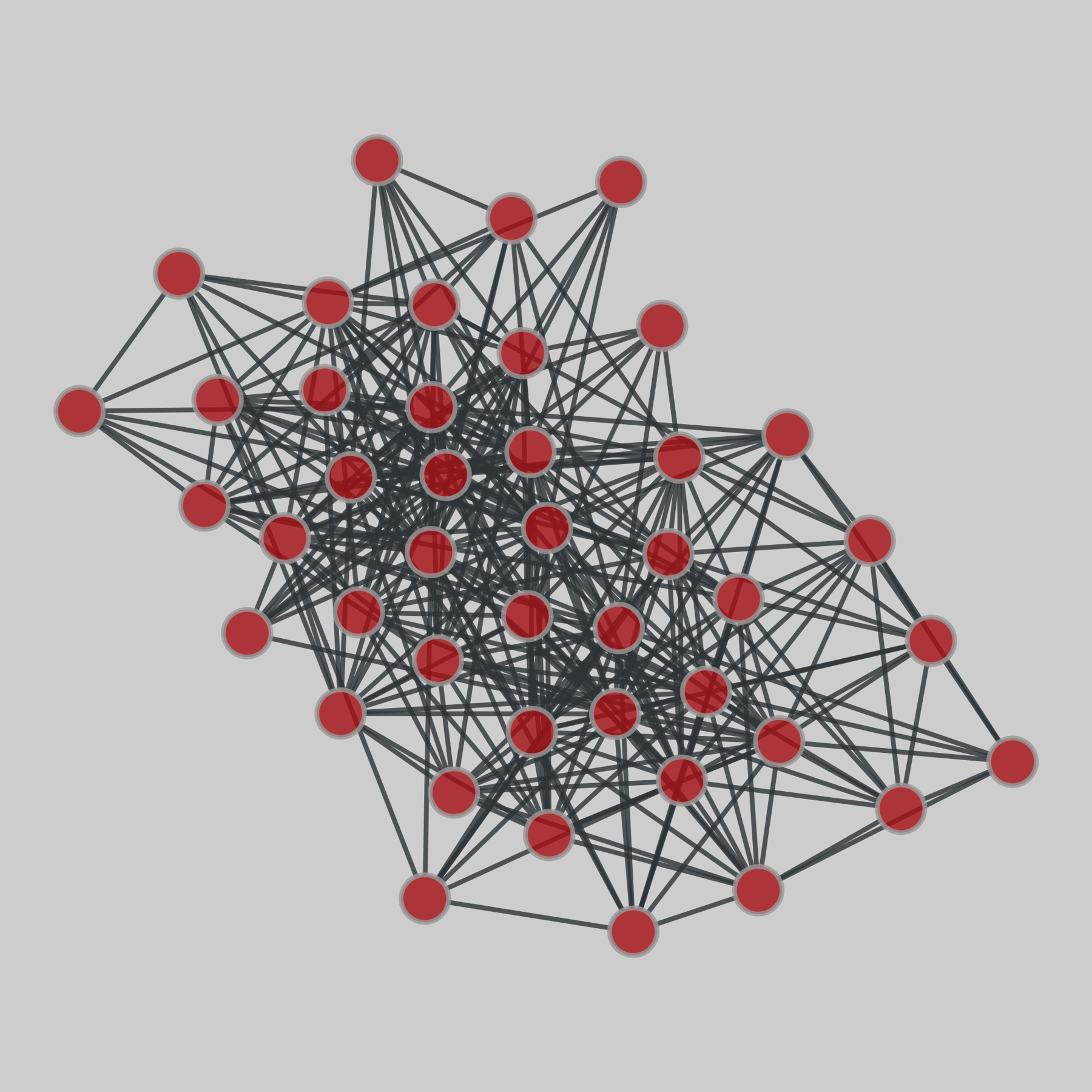
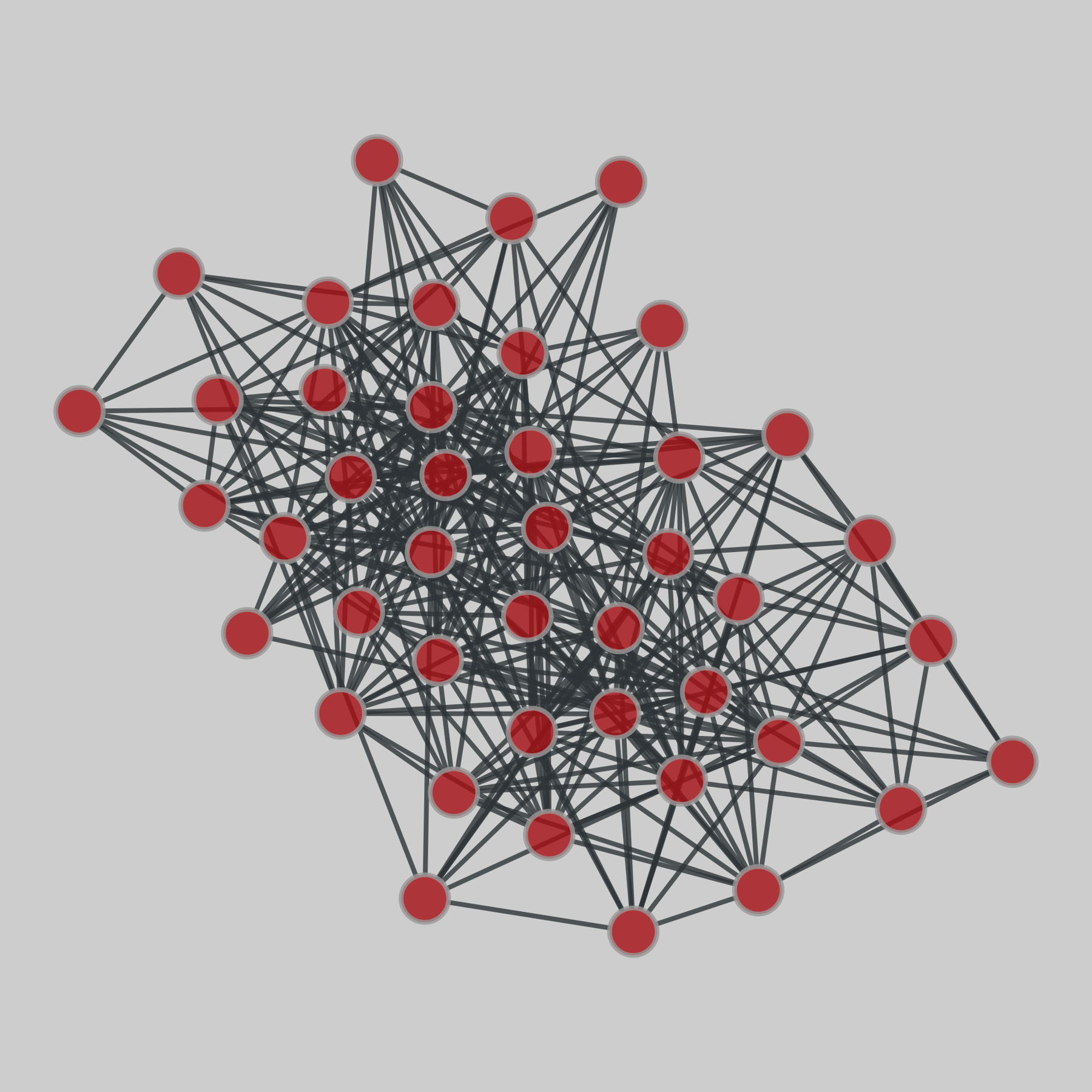
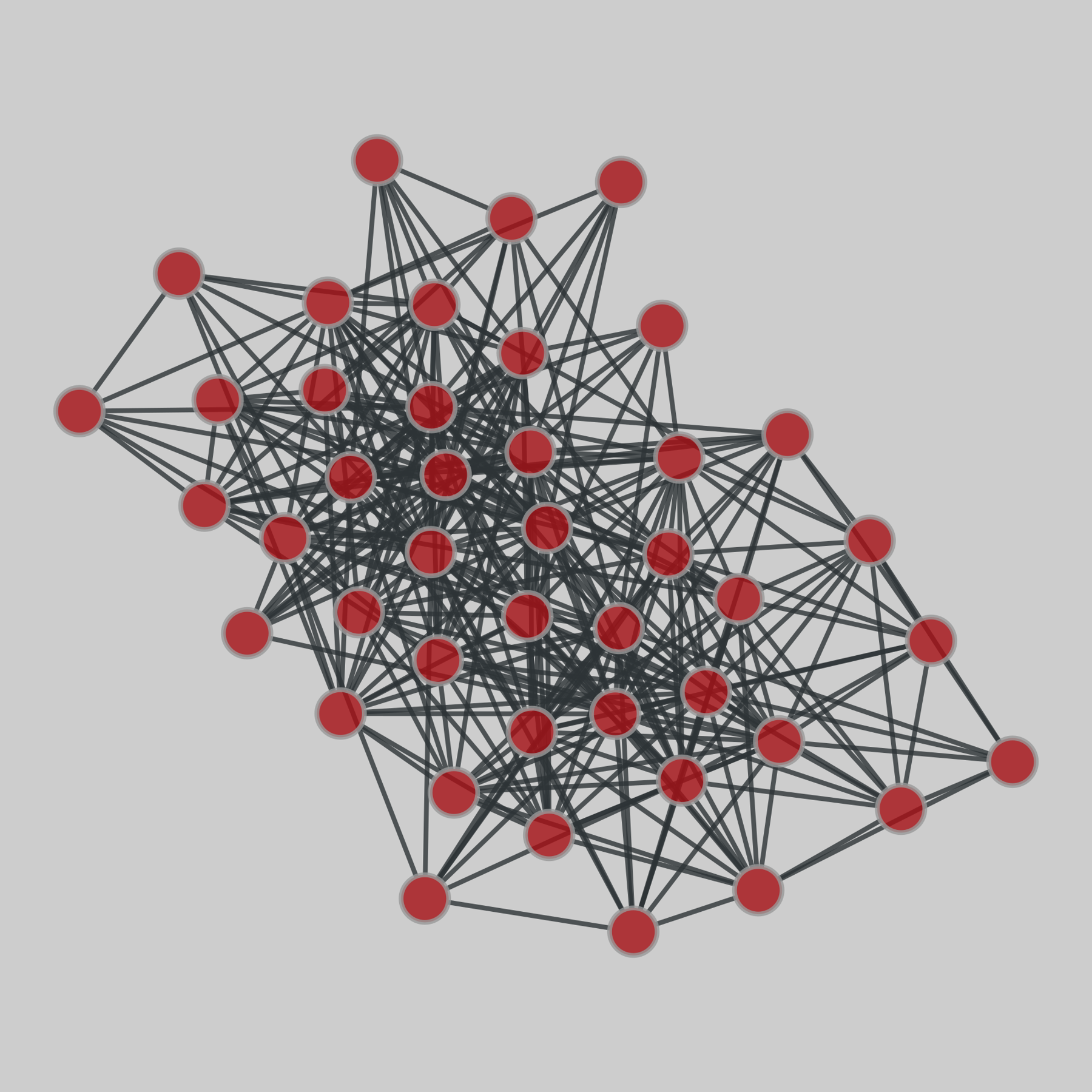
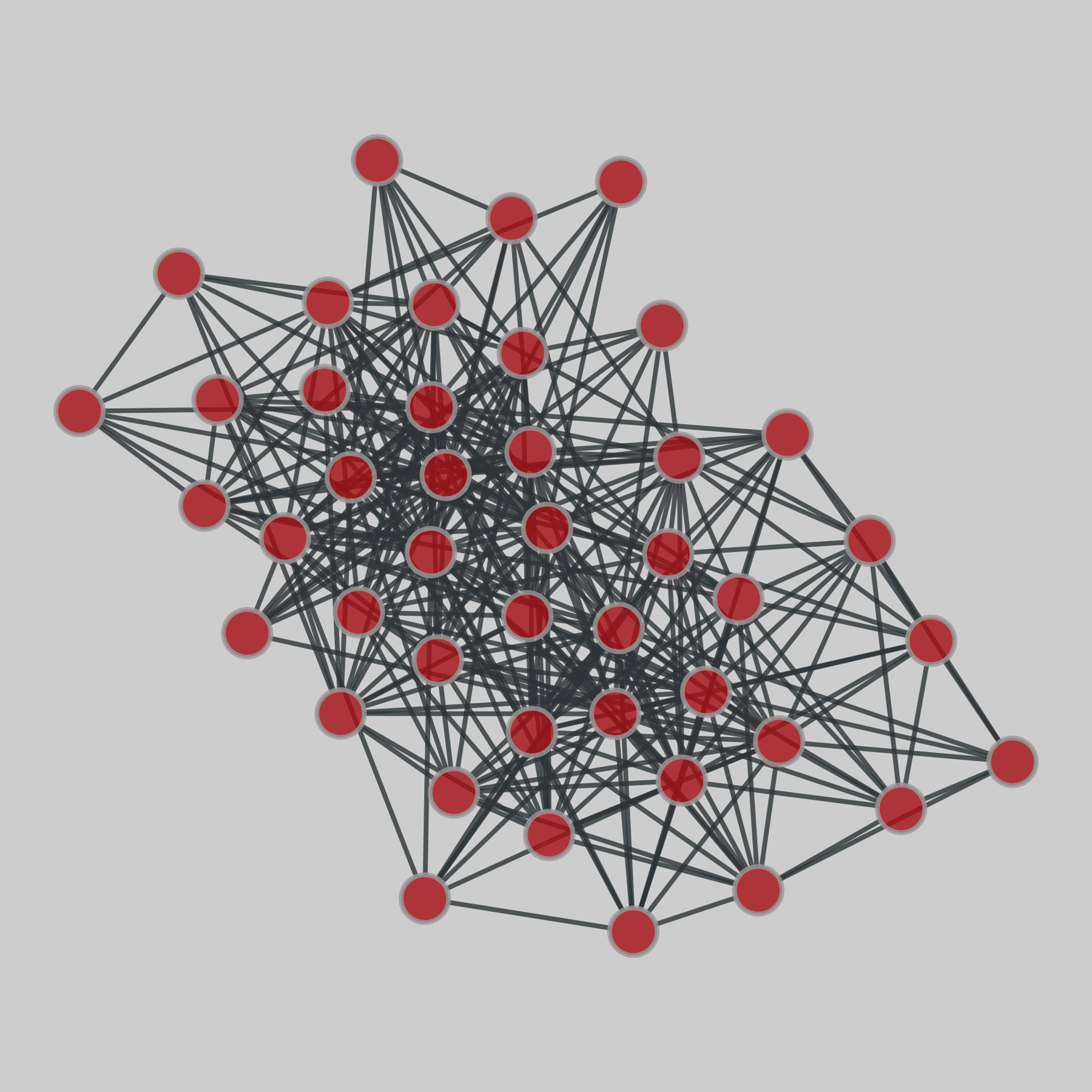
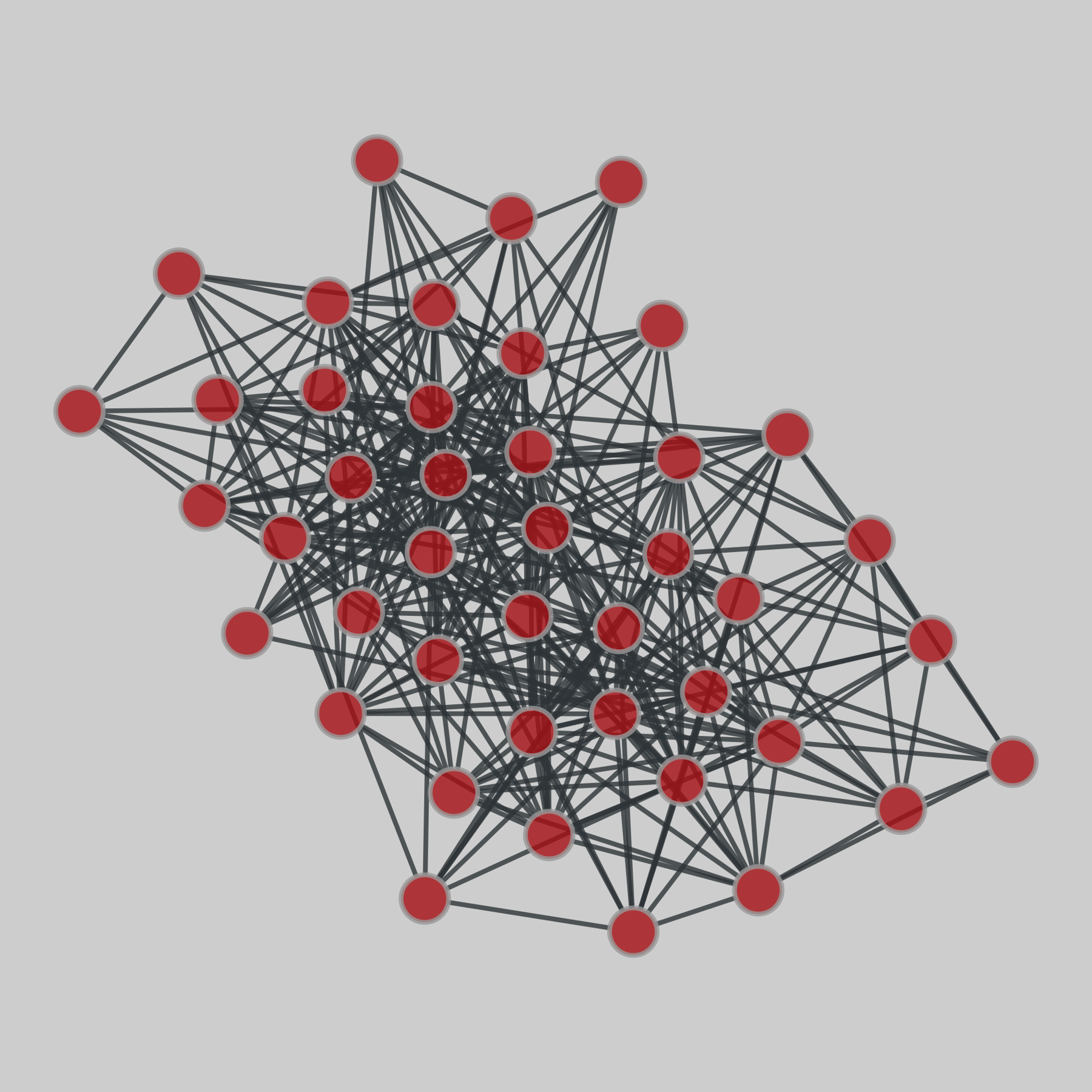
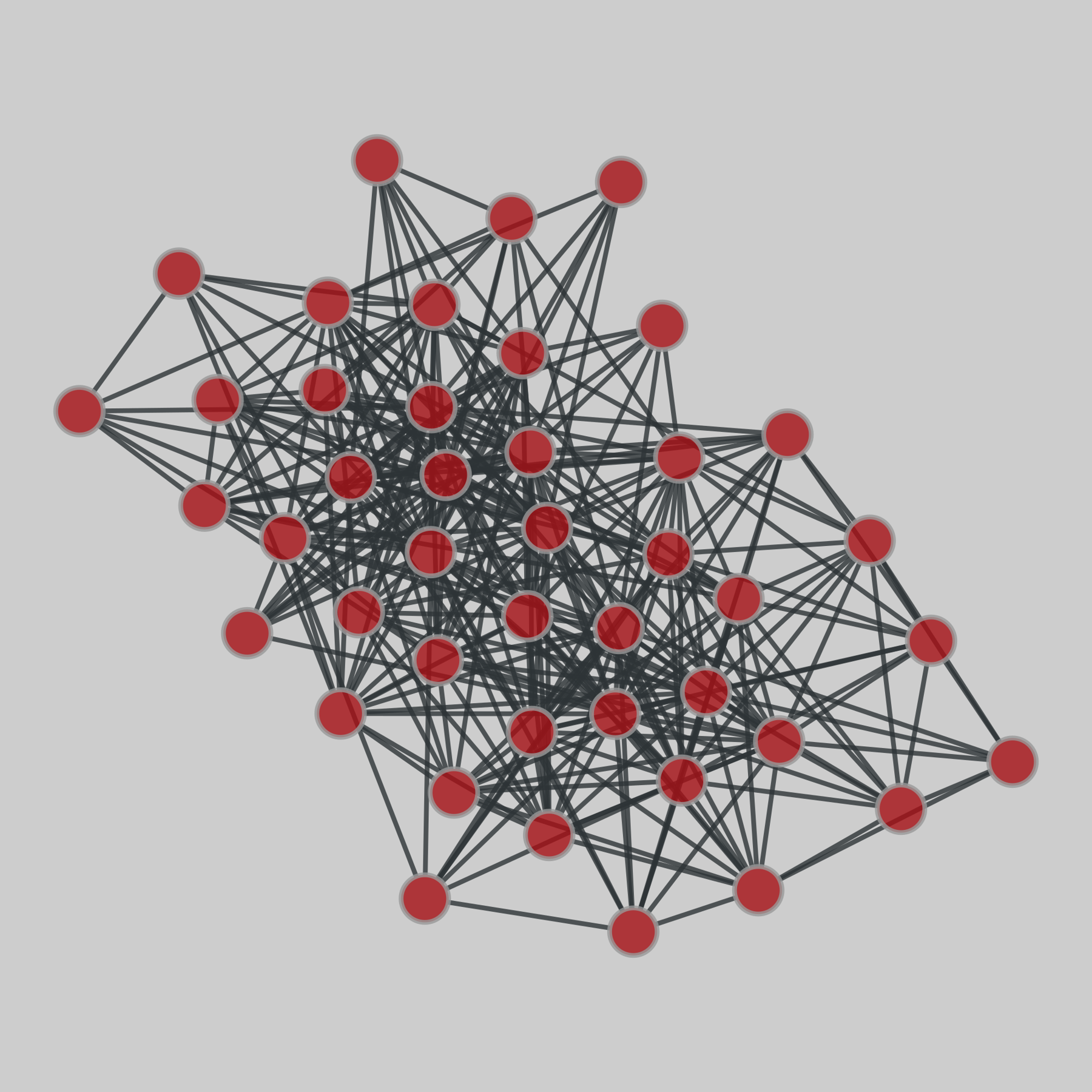
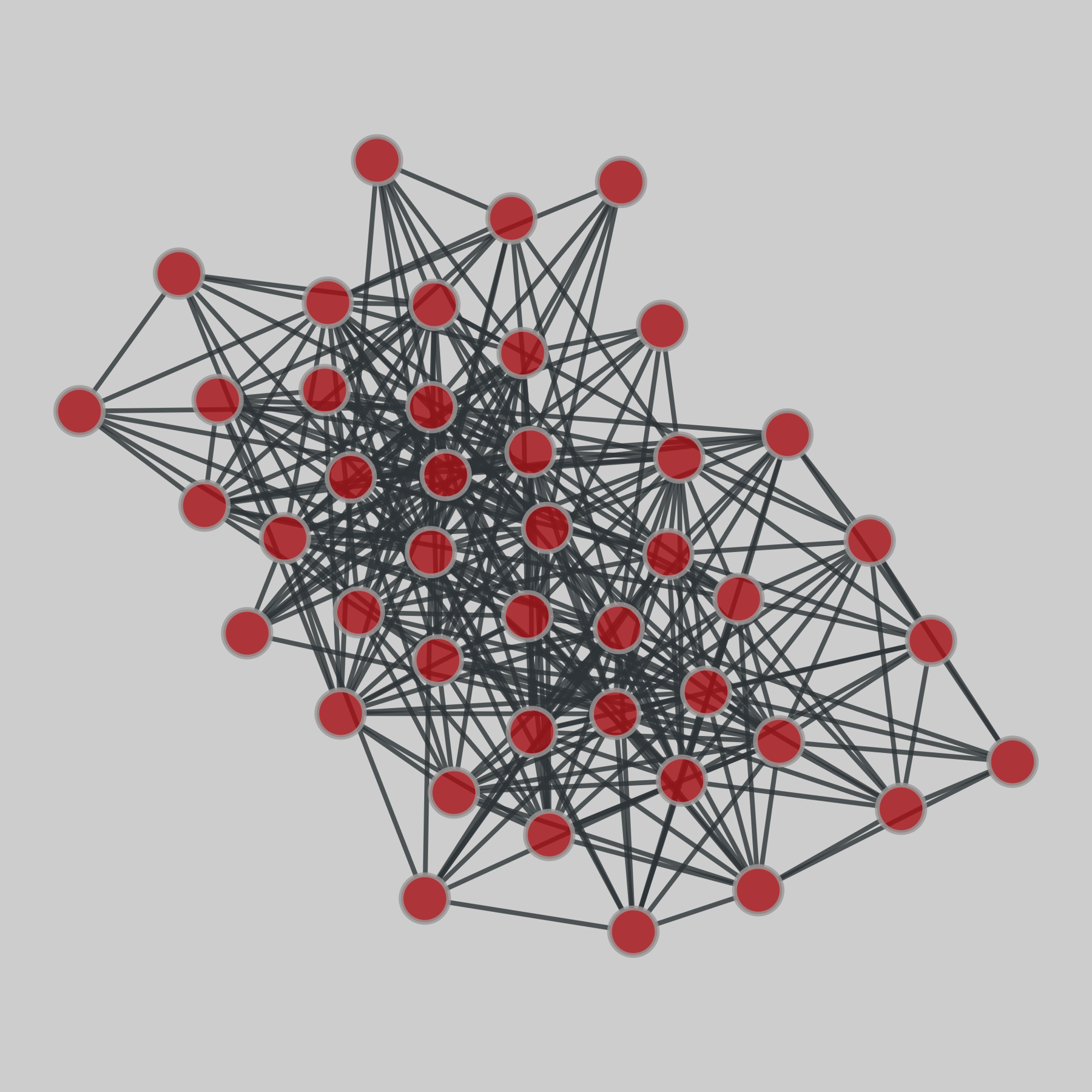
windsurfers: Windsurfers network (1986)
A network of interpersonal contacts among windsurfers in southern California during the Fall of 1986. The edge weights indicate the perception of social affiliations majored by the tasks in which each individual was asked to sort cards with other surfer’s name in the order of closeness.
This network has 43 nodes and 336 edges.
Tags: Social, Offline, Weighted
The post-hoc montage of perception: deep layers of primary visual cortex encode postdictive percepts https://www.biorxiv.org/content/10.64898/2026.09.04.749457v1 V1 "is involved in the post-hoc revision of perception", through auditory stimuli;
Replaced article(s) found for q-bio.NC. https://arxiv.org/list/q-bio.NC/new
[1/1]:
- Subjective functions
Samuel J. Gershman
https://arxiv.org/abs/2512.15948 https://mastoxiv.page/@arXiv_csAI_bot/115745517602563939
- A modular state-space model of human perception, cognition, and decision dynamics
Sven Schoonebeek, Carlo Cenedese, Anahita Jamshidnejad
https://arxiv.org/abs/2607.14078 https://mastoxiv.page/@arXiv_eessSY_bot/116928666355965273
toXiv_bot_toot
"We have these White American Jesuses - this is shaping our perception." In the latest Quadcast episode, YDS alum Richard Lindsay joins us to explore how much of our image of Jesus comes from Hollywood. Listen here:
https://soundcloud.com/yaleuniversity/the-bible-…
Four sources of pleasure associated with the experience of groove
Music, in both perception and production, is a uniquely powerful source of pleasure, engaging cognitive, bodily, psychological, and social processes. This paper focuses on groove, an everyday, effortless form of sensorimotor musical experience. While previous studies have solely examined groove as pleasurable urge to move, this paper develops a theoretical framework for understanding groove as a multidimensional source ……
windsurfers: Windsurfers network (1986)
A network of interpersonal contacts among windsurfers in southern California during the Fall of 1986. The edge weights indicate the perception of social affiliations majored by the tasks in which each individual was asked to sort cards with other surfer’s name in the order of closeness.
This network has 43 nodes and 336 edges.
Tags: Social, Offline, Weighted
Meta launches Muse Voice Transcribe, MSL's first real-time audio perception model, with streaming automatic speech recognition, trained with 70 languages (Meta AI Research)
https://research.meta.ai/blog/introducing-muse-voice-transcribe
Replaced article(s) found for cs.HC. https://arxiv.org/list/cs.HC/new
[1/2]:
- Music Interpretation and Emotion Perception: A Computational and Neurophysiological Investigation
Lyberatos, Kantarelis, Zioga, Anagnostopoulou, Stamou, Georgaki
https://arxiv.org/abs/2506.01982 https://mastoxiv.page/@arXiv_csHC_bot/114623887921808883
- Selective Prediction Reduces the Negative Effects of Automation Bias Overall but Increases False ...
Jabbour, Fouhey, Banovic, Shepard, Kazerooni, Sjoding, Wiens
https://arxiv.org/abs/2508.07617 https://mastoxiv.page/@arXiv_csHC_bot/115015501954907821
- Sighted by Default: Addressing Implicit Vision Assumptions in Real-Time VLM Assistance for BLV Users
Yi Zhao, Siqi Wang, Qiqun Geng, Erxin Yu, Jing Li
https://arxiv.org/abs/2511.00945 https://mastoxiv.page/@arXiv_csHC_bot/115490927925171769
- UXCascade: Scalable Usability Testing with Simulated User Agents
Steffen Holter, Eunyee Koh, Mustafa Doga Dogan, Gromit Yeuk-Yin Chan
https://arxiv.org/abs/2601.15777 https://mastoxiv.page/@arXiv_csHC_bot/115943802965989174
- Does Explanation Correctness Matter? Linking Computational XAI Evaluation to Human Understanding
Gregor Baer, Chao Zhang, Isel Grau, Pieter Van Gorp
https://arxiv.org/abs/2603.25251 https://mastoxiv.page/@arXiv_csHC_bot/116300187728326082
- Beyond Screenshots: Evaluating VLMs' Understanding of UI Animations
Chen Liang, Xirui Jiang, Naihao Deng, Eytan Adar, Anhong Guo
https://arxiv.org/abs/2604.26148 https://mastoxiv.page/@arXiv_csHC_bot/116492495199874264
- Quieting the Cobwebs: Browser Interaction for Visual Floaters
Kenneth Ge, Jinglin Li, Shikhar Ahuja
https://arxiv.org/abs/2605.12739 https://mastoxiv.page/@arXiv_csHC_bot/116571803728109358
- Patients With Personality: Realistic Patient Simulation through Controlled Diversity and Selectiv...
Moritz Schlager, et al.
https://arxiv.org/abs/2606.17441 https://mastoxiv.page/@arXiv_csHC_bot/116764285920198987
- TailVis: Expressive Chart Refinement Preserving Data-Binding Integrity
Yumin Song, Seokhyeon Park, Soohyun Lee, Aeri Cho, Hyeon Jeon, John Joon Young Chung, Jinwook Seo
https://arxiv.org/abs/2607.25386 https://mastoxiv.page/@arXiv_csHC_bot/117002258150815192
- How Usable Are Geospatial Foundation Models? A Systematic Evaluation of 89 Models
Robin Young, Artyom Gabtraupov, Kenzy Soror, Srinivasan Keshav
https://arxiv.org/abs/2608.03804 https://mastoxiv.page/@arXiv_csHC_bot/117041905504697955
toXiv_bot_toot
Negativity surrounding the government has seeped into public perception of the core components of America’s story,
such as its history, notions of American foreign influence and impact, or the way the country’s democracy works.
Pride in American democracy has declined 14 percentage points since 2017, when it was measured at 42 percent, to 28 percent.
The survey also found that a majority of Americans are disillusioned with the American dream:
They are not confident in …
Thoughtseeds as Latent Causes: A Dual-Process Computational Phenomenology of Focused-Attention Meditation
Prakash Chandra Kavi, Daniel Ari Friedman, Gustavo Patow
https://arxiv.org/abs/2607.14833 https://arxiv.org/pdf/2607.14833 https://arxiv.org/html/2607.14833
arXiv:2607.14833v1 Announce Type: new
Abstract: Meditative expertise involves sustained attention, rapid recovery from distraction, and coordinated dynamics of large-scale brain networks. We present a computational phenomenology of focused-attention meditation traversing four attractor states: breath focus, mind-wandering, meta-awareness, and redirect attention. Within a dual-process active inference formulation, the model implements a three-layer nested Markov-blanket architecture: (L1) a high-dimensional physiological neuronal substrate modeled as a stochastic multivariate Ornstein--Uhlenbeck process over attentional Yeo networks; (L2) a low-dimensional generative model (System 1) that encodes latent mental content as thoughtseeds and evaluates autonomic action tendencies; and (L3) an agentic metacognitive monitor (System 2) that implements a Global Neuronal Workspace (GNW) capacity bottleneck to selectively gate these tendencies. In L3, meta-awareness functions as the GNW ignition signal, derived from policy-prior divergence and dynamically gated by direct competition between orchestrator and distractor thoughtseeds. Policy selection actively minimizes expected free energy, and L2 actions furnish descending predictions over network activity to close the enactive perception--action cycle. Training uses variational Expectation-Maximization (EM) across expert and novice phenotypes. Simulations reproduce behavior consistent with empirical observations and findings in contemplative neuroscience, providing a tractable link between first-person phenomenology and objective neurophysiological measures.
toXiv_bot_toot
RE: https://mastodon.social/@thetransmitter/116913384256610078
Awake vivid sound-guided generative perception (visual imagery) is what we seek for most compelling results with The vOICe vision BCI for the blind
I learned a long time ago that the smell of fruit helped me identify the better tasting produce (and without bruising the fruit by squeezing it). This article raises a much broader discussion topic:
Smelling test: children need education in sniffing aromas, scientist says
ht…
I learned a long time ago that the smell of fruit helped me identify the better tasting produce (and without bruising the fruit by squeezing it). This article raises a much broader discussion topic:
Smelling test: children need education in sniffing aromas, scientist says
ht…
Can one of yall recommend me the best reading there is on the role of games like Call of Duty and Counter Strike in warping mainstream perception of the middle east
Window on crime and ethnicity:
Nine out of 10 unsolved murders in London were of minority ethnic victims [corrected headline] UK criminal justice | The Guardian
https://www.theguardian.com/law/2026/aug/23/nine-out-of-10-…
LU 1er juillet 2026
"Lëtz prepare! Luc Frieden, Yuriko Backes et Léon Gloden présentent les résultats de l'enquête nationale sur la perception des risques et menaces"
Site: • https://gouvernement.lu/fr/actualites/
RE: https://mas.to/@carnage4life/117176191401177256
Can confirm: Perception of tech is in the toilet.
With that context, the apparent pause on ICE vehicle stops is fascinating. I hesitate to parse it too finely without (1) deeper context and (2) anything other than “Trump administration people said so,” but even if it’s just the hot air they’re blowing today:
- Suggests there are internal battles going on at DHS
- Strongly suggests they are afraid of public backlash and media perception
- which in turn suggests that our outrage and our pressure and our resistance efforts do in fact matter, and we should continue all of it
Whatever the hell is going on internally, signs of weakness are oozing out every part of DHS. Don't despair, don't relent.
https://www.theguardian.com/us-news/2026/jul/14/ice-vehicle-stops-texas-maine-shootings
A horizon is the visible form of the invisible fact that every perception excludes more than it reveals.
Blue magnetophosphene perception under subthreshold magnetic stimulation in a human retinal degeneration model https://www.frontiersin.org/journals/neuroscience/articles/10.3389/fnins.2026.1893022/full "Extremely low-frequency magnetic fie…
🔊 #NowPlaying on #BBCRadio3:
#TheEssay
- Jazz Among the British
Veteran jazz broadcaster Geoffrey Smith (1943-2026) reflects on the perception of jazz in Britain, and begins by questioning the dubious term 'jazzer' and its jokey connotations.
Relisten now 👇
https://www.bbc.co.uk/programmes/m000pgbm
AI-based single-shot structured-light depth reconstruction for real-time laparoscopic surgical guidance
Wayne Wonseok Rodgers, Xiangyi Le, Seonghoon Jang, Shuwen Wei, Justin Opfermann, Michael Kam, Axel Krieger, Jin U. Kang
https://arxiv.org/abs/2608.05109 https://arxiv.org/pdf/2608.05109 https://arxiv.org/html/2608.05109
arXiv:2608.05109v1 Announce Type: new
Abstract: Significance. Accurate intraoperative depth perception is important for autonomous and semi-autonomous robotic laparoscopic surgery. Conventional fringe projection profilometry can achieve millimeter-scale accuracy but often requires multi-shot acquisition, digital-micromirror-device projection, and projector-camera synchronization, complicating integration into compact laparoscopic systems.
Aim. To develop a synchronization-free, single-shot depth-sensing platform using a passive LED-illuminated binary mask and a VQ-VAE prior with a custom U-Net depth head.
Approach. A compact projection module was coupled to one channel of a dual-channel laparoscope, while the second channel imaged the fringe-illuminated target. A Zivid 3D camera acquired reference depth for 722 paired phantom images. Zivid depth maps were reprojected into the SSLE image frame for supervised training and evaluation. The VQ-VAE encoded each input into a discrete latent representation, and a latent-space U-Net predicted depth without a separate mask-prediction branch.
Results. Using a fixed train/validation/test split, the proposed model achieved an MAE of 3.70 mm, AbsRel of 0.0326, delta=1.1 accuracy of 0.962, and delta=1.1^2 accuracy of 0.970. It achieved lower MAE than the dual U-Net MaskNet DepthNet baseline and outperformed off-the-shelf monocular depth models in MAE, AbsRel, and threshold accuracy. The pipeline operated at 26.0 Hz over 301 consecutive frames on an NVIDIA A100 GPU.
Conclusions. The LED-illuminated binary-pattern platform with latent-space depth reconstruction enables synchronization-free, video-rate endoscopic depth estimation. Results demonstrate Zivid-referenced phantom reconstruction without an explicit segmentation stage, while emphasizing the importance of dataset size and SSLE-Zivid calibration accuracy.
toXiv_bot_toot
Visual-to-Haptic Augmentation in XR: A Wearable Glove for Perceptual Grounding in Multimodal Interaction
Faisal Mohd, Hamdi Elsaddik, Erhan Baturay Onural, Jihong Zhang, Fedwa Laamarti, Abdulmotaleb El Saddik
https://arxiv.org/abs/2608.10368 https://arxiv.org/pdf/2608.10368 https://arxiv.org/html/2608.10368
arXiv:2608.10368v1 Announce Type: new
Abstract: Extended Reality (XR) systems increasingly deliver high-fidelity visual and auditory experiences, yet tactile perception remains comparatively underutilized as a modality for enriching embodied interaction. This work presents a visual-to-haptic wearable glove and a feature-based visual-to-haptic mapping algorithm that translates spatial and temporal visual features from images and videos into distributed vibrotactile patterns. The proposed method extracts motion, edge, and brightness cues and fuses them into actuator-level intensity maps aligned with a 29-actuator glove arranged in a five-by-seven layout.
The system is implemented through a modular four-layer architecture comprising the XR environment, media content handling, visual-to-haptic processing, and embedded haptic hardware. A within-subject user study (N = 20) compared visual-only interaction with visual-plus-haptic augmentation across texture-based and dynamic video scenarios. Results indicate that tactile augmentation significantly improves perceived realism in dynamic video scenarios and enhances immersion and visual-tactile correspondence across conditions, with stronger and more consistent effects observed for dynamic visual events.
While the current implementation operates in a single-user, offline-synchronized configuration, the findings demonstrate that vision-driven tactile augmentation can function as a perceptual enhancement layer within multimodal XR systems. Such a layer may provide a foundation for future socially enriched XR environments where coherent multisensory grounding supports higher-level interaction and communication.
toXiv_bot_toot
windsurfers: Windsurfers network (1986)
A network of interpersonal contacts among windsurfers in southern California during the Fall of 1986. The edge weights indicate the perception of social affiliations majored by the tasks in which each individual was asked to sort cards with other surfer’s name in the order of closeness.
This network has 43 nodes and 336 edges.
Tags: Social, Offline, Weighted
Microsoft introduces MAI-Cyber-1-Flash, an AI model trained for cybersecurity, and launches Perception, an agentic security system to patch vulnerabilities (New York Times)
https://www.nytimes.com/2026/07/27/techno…
windsurfers: Windsurfers network (1986)
A network of interpersonal contacts among windsurfers in southern California during the Fall of 1986. The edge weights indicate the perception of social affiliations majored by the tasks in which each individual was asked to sort cards with other surfer’s name in the order of closeness.
This network has 43 nodes and 336 edges.
Tags: Social, Offline, Weighted
BRIDGE-STIM 2027: Probing sensorimotor circuits and perception across species with microstimulation workshop, Pittsburgh, May 17-19, 2027 #BCI
windsurfers: Windsurfers network (1986)
A network of interpersonal contacts among windsurfers in southern California during the Fall of 1986. The edge weights indicate the perception of social affiliations majored by the tasks in which each individual was asked to sort cards with other surfer’s name in the order of closeness.
This network has 43 nodes and 336 edges.
Tags: Social, Offline, Weighted
Crosslisted article(s) found for eess.IV. https://arxiv.org/list/eess.IV/new
[1/1]:
- Posterior Variance Is a Constraint Map, Not an Error Map: Closed-Form Uncertainty for Radiative G...
Chulin Zhao, Yiran Xu, Shu Liu
https://arxiv.org/abs/2607.13682 https://mastoxiv.page/@arXiv_csCV_bot/116928707811647772
- Domain-Generalized Adaptive Semantic Communication for Collaborative Perception
Fan Gao, Youzheng Wang, Ning Ge
https://arxiv.org/abs/2608.00056 https://mastoxiv.page/@arXiv_eessSP_bot/117036252275761839
- MBO Scheme for Local Chan--Vese Segmentation
Kevin Bui, Adina Ciomaga
https://arxiv.org/abs/2608.00893 https://mastoxiv.page/@arXiv_csCV_bot/117036520429041661
- Swimm3R: Splatting with Medium-aware SfM for Underwater 3D Reconstruction
Minseong Kweon, Junaed Sattar
https://arxiv.org/abs/2608.00950 https://mastoxiv.page/@arXiv_csCV_bot/117036523180798942
- Clear-Weighted Bit Allocation for Satellite Downlinks
Alireza Furutanpey, Qiyang Zhang, Yujie Huang, Philipp Raith, Schahram Dustdar
https://arxiv.org/abs/2608.01457 https://mastoxiv.page/@arXiv_csNI_bot/117036296713814965
- Joint Retrieval of Radial Wind, Terminal Fall Velocity, and Median Diameter From Single-Polarizat...
Tworit K. Dash, Hans Driessen, Oleg A. Krasnov, Alexander G. Yarovoy
https://arxiv.org/abs/2608.02364 https://mastoxiv.page/@arXiv_eessSP_bot/117036479139566444
toXiv_bot_toot
windsurfers: Windsurfers network (1986)
A network of interpersonal contacts among windsurfers in southern California during the Fall of 1986. The edge weights indicate the perception of social affiliations majored by the tasks in which each individual was asked to sort cards with other surfer’s name in the order of closeness.
This network has 43 nodes and 336 edges.
Tags: Social, Offline, Weighted
windsurfers: Windsurfers network (1986)
A network of interpersonal contacts among windsurfers in southern California during the Fall of 1986. The edge weights indicate the perception of social affiliations majored by the tasks in which each individual was asked to sort cards with other surfer’s name in the order of closeness.
This network has 43 nodes and 336 edges.
Tags: Social, Offline, Weighted
🇺🇦 #NowPlaying on KEXP's #MorningShow
Groove Junkies & Solara:
🎵 Perception (Richard Earnshaw Hypnotronic radio edit)
#GrooveJunkies #Solara
Improvement of peripheral visual discrimination through mental imagery https://www.cell.com/iscience/fulltext/S2589-0042(26)01812-2 "Mental imagery can enhance visual perception"
(2024) Vision without photoreceptors: Crossmodal perception within the blind spots https://jov.arvojournals.org/article.aspx?articleid=2800902 "Participants reported strong illusory percepts within their blind spots, as well as in visible locations", "audition…
Regardless of specifics, any kind of claim of non-existence of something showing up, be it climate change, self-identity or myriads of bug reports, is a matter of coping with aspects of a world full of transitions and different perspectives. ✨
Denial is just the easy route. Looking beyond your perception might be hard, yet can be very rewarding.
There are many colors to enjoy! 🏳️🌈
TL;DR: Deal with it, things change over time.
So, hug your friends if that's your thing - have a lovely day! 🧡
Replaced article(s) found for cs.GR. https://arxiv.org/list/cs.GR/new
[1/1]:
- B-repLer: Language-guided Editing of CAD Models
Yilin Liu, Niladri Shekhar Dutt, Changjian Li, Niloy J. Mitra
https://arxiv.org/abs/2508.10201 https://mastoxiv.page/@arXiv_csGR_bot/115031625722935245
- Geometrically Approximated Modeling for Emitter-Centric Ray-Triangle Filtering in Arbitrarily Dyn...
Rabin Gajmer, Joonas Haapala, Zoltan Beck
https://arxiv.org/abs/2605.10457 https://mastoxiv.page/@arXiv_csGR_bot/116560660242490785
- NaP-Control: Navigating Diffusion Prior for Versatile and Fast Character Control
Chia-Wen Chen, Yan Wu, Korrawe Karunratanakul, Siyu Tang
https://arxiv.org/abs/2605.20209 https://mastoxiv.page/@arXiv_csGR_bot/116611422054088912
- Vis4GS: A Visual Analytic Tool for 3D Gaussian Splatting Reconstruction
Kai-Yuan Lin, Aryabima Mandala Putra, Jui-Chi Lee, Shih-Hsuan Hung
https://arxiv.org/abs/2606.26985 https://mastoxiv.page/@arXiv_csGR_bot/116815255549530340
- LATO.2: Factorized 3D Mesh Generation with Vertex and Topology Flow
Long, Zhao, Lin, Zhang, Guo, Liang, Xu, Hladk\'y, Nie{\ss}ner, Hu, Yang
https://arxiv.org/abs/2607.10623 https://mastoxiv.page/@arXiv_csGR_bot/116917178519049532
- OmniX: From Unified Panoramic Generation and Perception to Graphics-Ready 3D Scenes
Yukun Huang, Jiwen Yu, Yanning Zhou, Jianan Wang, Xintao Wang, Pengfei Wan, Xihui Liu
https://arxiv.org/abs/2510.26800 https://mastoxiv.page/@arXiv_csCV_bot/115468347012341868
- HairPort: In-context 3D-aware Hair Import and Transfer for Images
Alireza Heidari, Amirhossein Alimohammadi, Ali Mahdavi-Amiri
https://arxiv.org/abs/2606.12562 https://mastoxiv.page/@arXiv_csCV_bot/116735964747387747
- From Scene-Centric to Observer-Centric: Modeling Observer-Aware Relations for 3D Scene Graph Gene...
Jingjun Sun, Chaowei Wang, Zhirui Liu, Jiaxu Tian, Ming Yang, Yaoxing Wang, Yan Di, Shan Gao
https://arxiv.org/abs/2606.27412 https://mastoxiv.page/@arXiv_csCV_bot/116832228785083392
toXiv_bot_toot
Did you see the sound? A Bayesian assessment on cross-modal perception in low vision #multisensory
Content-specific and raw occipital alpha oscillations serve distinct functional role in predictive visual perception https://ecvp2026.uk/posters_programme.html "The shape identification task involved auditory cues predicting which shape was likely to appear."
windsurfers: Windsurfers network (1986)
A network of interpersonal contacts among windsurfers in southern California during the Fall of 1986. The edge weights indicate the perception of social affiliations majored by the tasks in which each individual was asked to sort cards with other surfer’s name in the order of closeness.
This network has 43 nodes and 336 edges.
Tags: Social, Offline, Weighted
windsurfers: Windsurfers network (1986)
A network of interpersonal contacts among windsurfers in southern California during the Fall of 1986. The edge weights indicate the perception of social affiliations majored by the tasks in which each individual was asked to sort cards with other surfer’s name in the order of closeness.
This network has 43 nodes and 336 edges.
Tags: Social, Offline, Weighted
It looks like brain implants for restoring vision to the blind will need AI scene description to become practical/useful/functional while giving phosphenes (to late-blind) mostly for the visual experience with light perception. #hybrid #BCI #AI
 @seeingwithsound@mas.to