 @arXiv_csCL_bot@mastoxiv.page
2026-03-31 10:13:27
Adaptive Block-Scaled Data Types
Jack Cook, Hyemin S. Lee, Kathryn Le, Junxian Guo, Giovanni Traverso, Anantha P. Chandrakasan, Song Han
https://arxiv.org/abs/2603.28765 https://arxiv.org/pdf/2603.28765 https://arxiv.org/html/2603.28765
arXiv:2603.28765v1 Announce Type: new
Abstract: NVFP4 has grown increasingly popular as a 4-bit format for quantizing large language models due to its hardware support and its ability to retain useful information with relatively few bits per parameter. However, the format is not without limitations: recent work has shown that NVFP4 suffers from its error distribution, resulting in large amounts of quantization error on near-maximal values in each group of 16 values. In this work, we leverage this insight to design new Adaptive Block-Scaled Data Types that can adapt to the distribution of their input values. For four-bit quantization, our proposed IF4 (Int/Float 4) data type selects between FP4 and INT4 representations for each group of 16 values, which are then scaled by an E4M3 scale factor as is done with NVFP4. The selected data type is denoted using the scale factor's sign bit, which is currently unused in NVFP4, and we apply the same insight to design formats for other bit-widths, including IF3 and IF6. When used to quantize language models, we find that IF4 outperforms existing 4-bit block-scaled formats, achieving lower loss during quantized training and achieving higher accuracy on many tasks in post-training quantization. We additionally design and evaluate an IF4 Multiply-Accumulate (MAC) unit to demonstrate that IF4 can be implemented efficiently in next-generation hardware accelerators. Our code is available at https://github.com/mit-han-lab/fouroversix.
toXiv_bot_toot
 @nemobis@mamot.fr
2026-02-24 14:42:25
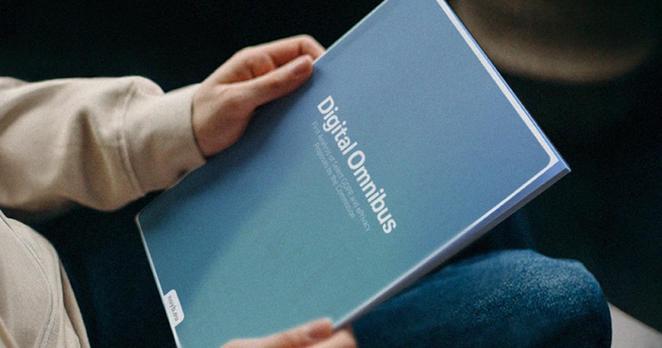
I see that the European Commission is adopting that well-tested method for "simplification", called "let's rewrite all basic definitions in the law from scratch and throw 10 years of court rulings out of the window, so we can start anew!".
https://…
 @MolemanPeter@neuromatch.social
2026-02-27 08:52:55
The abstract capacity to consciously predict, simulate, and actively prepare for an uncertain future can be argued to be humanity’s primary adaptive strength. However, and perhaps uniquely, it also carries with it the existential certainty of inevitable mortality...
Dor-Ziderman Y, Schweitzer Y, Nave O, Trautwein F-M, Fulder S, Lutz A, et al. (2025): Training the embodied self in its impermanence: meditators evidence neurophysiological markers of death acceptance. Neuroscience of Consc…
 @UP8@mastodon.social
2026-01-27 21:38:43
⚽ US sports say parity is essential for success. The Premier League proves that’s untrue
https://www.theguardian.com/football/2026/jan/15/premier-league-parity-nfl-nba-mlb

 @privacity@social.linux.pizza
2026-03-28 14:37:39
Android 17 Beta 3, tutte le novitŠ su geolocalizzazione e privacy
Google ha rilasciato una nuova build di test di Android 17, la Beta 3: è importante per gli sviluppatori perché raggiunge la cosiddetta Platform Stability, ma introduce anche alcune novitŠ dal punto di vista della privacy che vale la pena guardare un po’ più da vicino - soprattutto per quanto riguarda geolocalizzazione e posizione. Le modifiche sono pensate per rendere più trasparente e controllato l’accesso ai dati più …
 @arXiv_csLG_bot@mastoxiv.page
2026-02-25 10:44:11
Sequential Counterfactual Inference for Temporal Clinical Data: Addressing the Time Traveler Dilemma
Jingya Cheng, Alaleh Azhir, Jiazi Tian, Hossein Estiri
https://arxiv.org/abs/2602.21168 https://arxiv.org/pdf/2602.21168 https://arxiv.org/html/2602.21168
arXiv:2602.21168v1 Announce Type: new
Abstract: Counterfactual inference enables clinicians to ask "what if" questions about patient outcomes, but standard methods assume feature independence and simultaneous modifiability -- assumptions violated by longitudinal clinical data. We introduce the Sequential Counterfactual Framework, which respects temporal dependencies in electronic health records by distinguishing immutable features (chronic diagnoses) from controllable features (lab values) and modeling how interventions propagate through time. Applied to 2,723 COVID-19 patients (383 Long COVID heart failure cases, 2,340 matched controls), we demonstrate that 38-67% of patients with chronic conditions would require biologically impossible counterfactuals under naive methods. We identify a cardiorenal cascade (CKD -> AKI -> HF) with relative risks of 2.27 and 1.19 at each step, illustrating temporal propagation that sequential -- but not naive -- counterfactuals can capture. Our framework transforms counterfactual explanation from "what if this feature were different?" to "what if we had intervened earlier, and how would that propagate forward?" -- yielding clinically actionable insights grounded in biological plausibility.
toXiv_bot_toot
 @NFL@darktundra.xyz
2026-01-24 17:31:41
Today's top games to watch, best bets, odds: Knicks-76ers tops NBA slate, ranked college hoops action and more
https://www.cbssports.com/betting/ne…
@privacity@social.linux.pizza2026-01-28 15:39:06
Giornata della protezione dei dati: 5 idee sbagliate sulla protezione dei dati, sfatate da @…
Da quando il #GDPR (General Data Protection Regulation) è entrato in vigore nel 2018, i cittadini dell'Unione Europea hanno una maggiore protezione della