Tootfinder

Opt-in global Mastodon full text search. Join the index!

@DrPlanktonguy@ecoevo.social
2026-01-10 14:33:10

Weekend #Plankton Factoid 🦠🦐
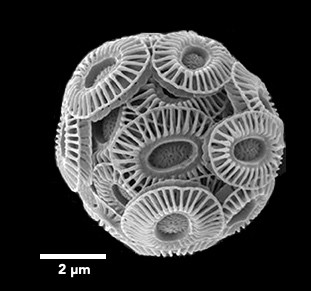
The White Cliffs of Dover are an iconic formation often seen on television or films that can be over 100 m high. The white colour is chalk "biomicrite" formed by the compacted deposits from dense blooms of Coccolithophore phytoplankton covered with distinct plates of calcite (coccoliths) in a shallow sea during the Late Cretaceous. The dark bands of fli…
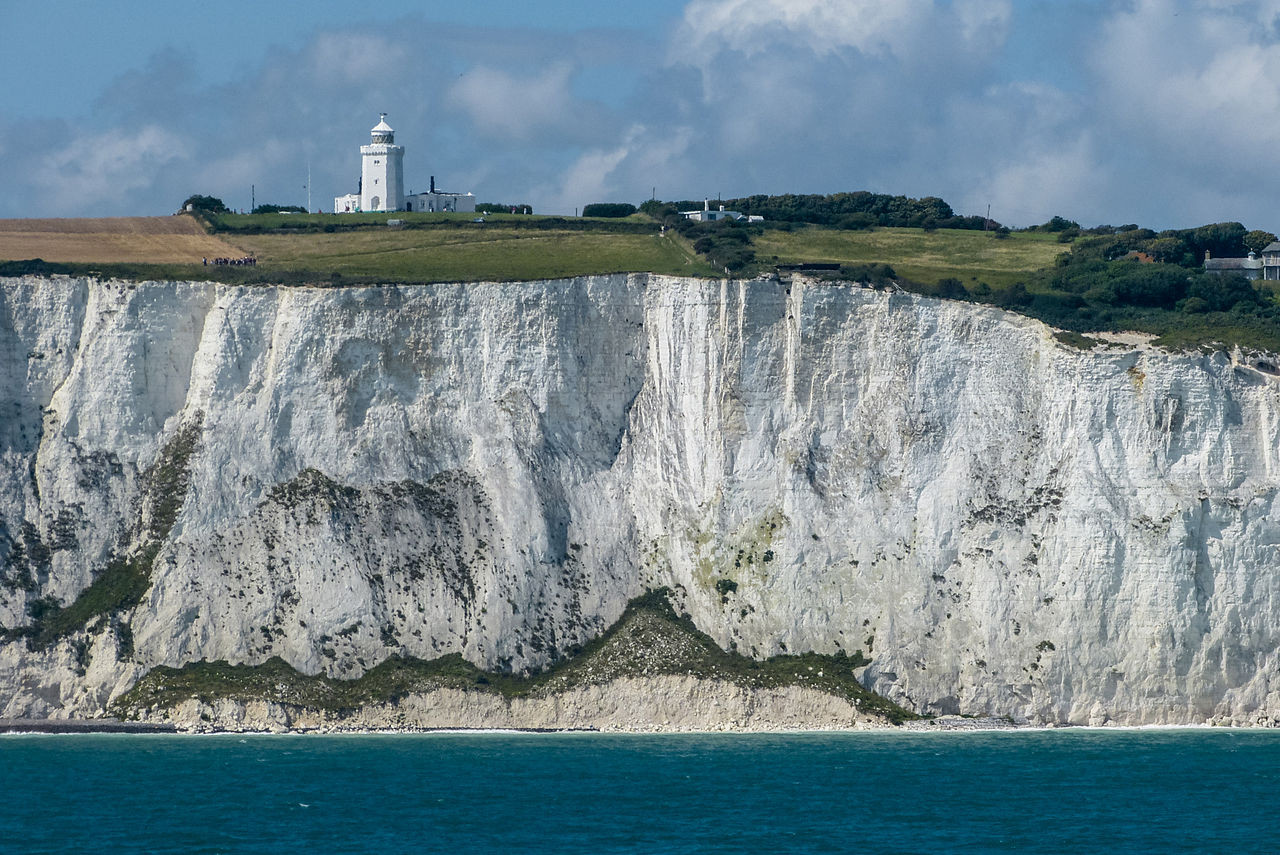
image/jpeg a photo of tall, very white cliffs emerging from blue water. The cliff tops are covered in a thin layer of green grass, and a lighthouse is seen in the distance. Photo from Archangel12 CC-BY-SA 2.0.
image/jpeg a scanning electron micrograph of a spherical organism covered in oval plates with radiating spokes from a depressed center, looking similar to lifesaver candies. Scale bar suggests cell is about 8 microns in diameter. Photo from Jeremy Young CC-BY-SA 4.0.
@primonatura@mstdn.social
2025-10-21 12:00:40

"World’s oceans losing their greenness through global heating, study finds"
#Oceans #Climate #ClimateChange

@DrPlanktonguy@ecoevo.social
2025-10-25 14:16:33

Weekend #Plankton Factoid 🦠🦐
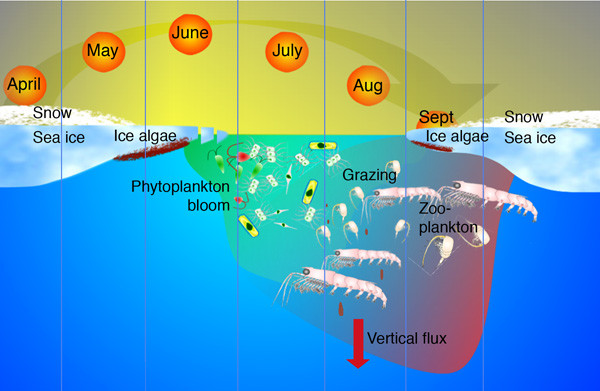
The poles are cold and dark half the year, so you might think these areas were low productivity. Nope. These are some of the highest productivity and efficient food webs on the planet, which is why whales will travel half the globe to feed here. When sunlight returns in spring, long days and nutrients drive intense blooms. There was a question of nutrient sources…

image/jpeg an illustration of the Arctic productivity cycle showing the sun rising higher in April to provide sunlight to support the growth of algae and phytoplankton. The summer sun drives production of dense bloos in June, leading to growth of grazing zooplankton which drives vertical flux of nutrients via fecal matter to the deep waters. Production gradually declines during as the phytoplankton use up nutrients and reduced sunlight.
Illustration: Alexander Keck & Paul Wassmann (1993), modif…
@DrPlanktonguy@ecoevo.social
2026-01-03 14:30:04

Weekend #Plankton Factoid 🦠🦐
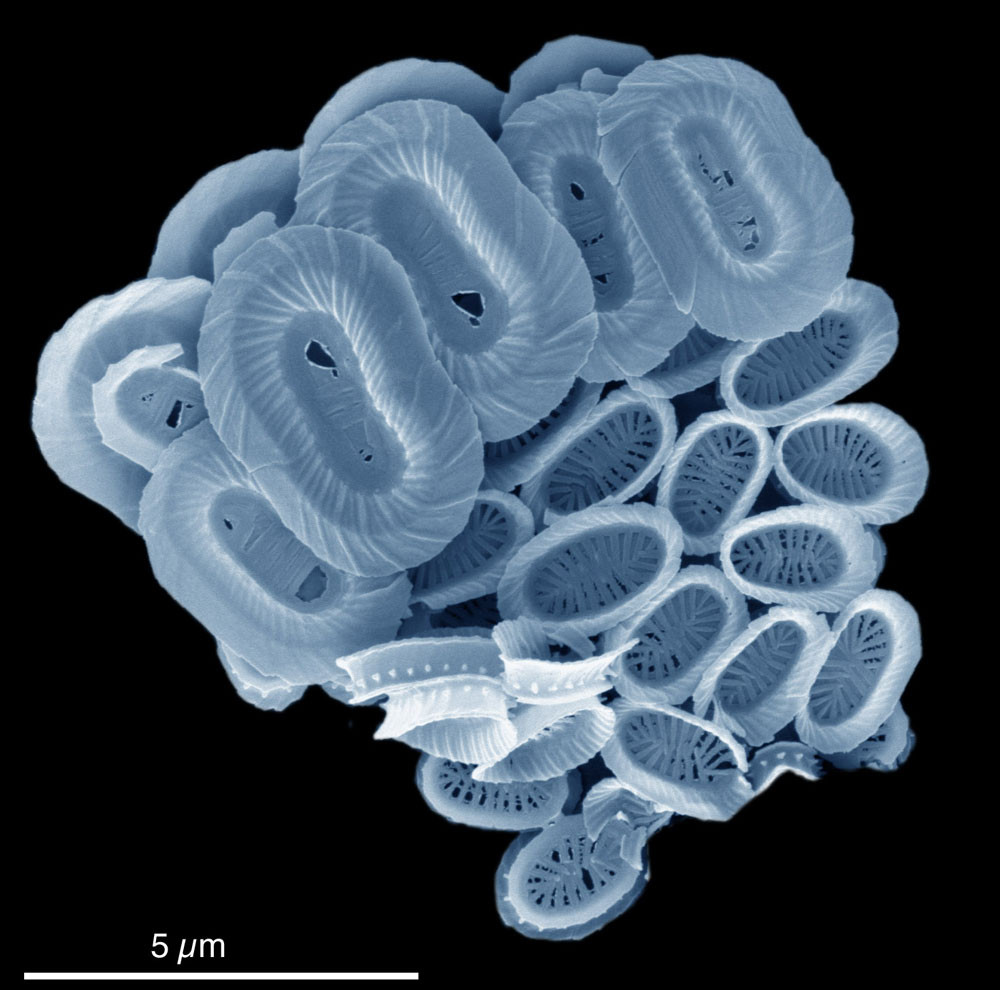
Happy New Year everyone. While species are often named out of respect for famous people, one had never been named for a TV series. This changed in 2018 when scientists at University College of London named a Southern Ocean cocolithophorid phytoplankton "Syracosphaera azureaplaneta" after Sir David Attenborough's BBC Blue Planet series. They look lik…

image/jpeg a scanning electron microscope darkfield photograph of a cluster of light blue oval algae cells with an enlarged outer diameter, making them look like inflatable boats. A scale bar indicates they are 2-5 microns long. Image by Jeremy Young CC-BY-SA 4.0.
@DrPlanktonguy@ecoevo.social
2025-11-22 14:40:59

Weekend #Plankton Factoid 🦠🦐
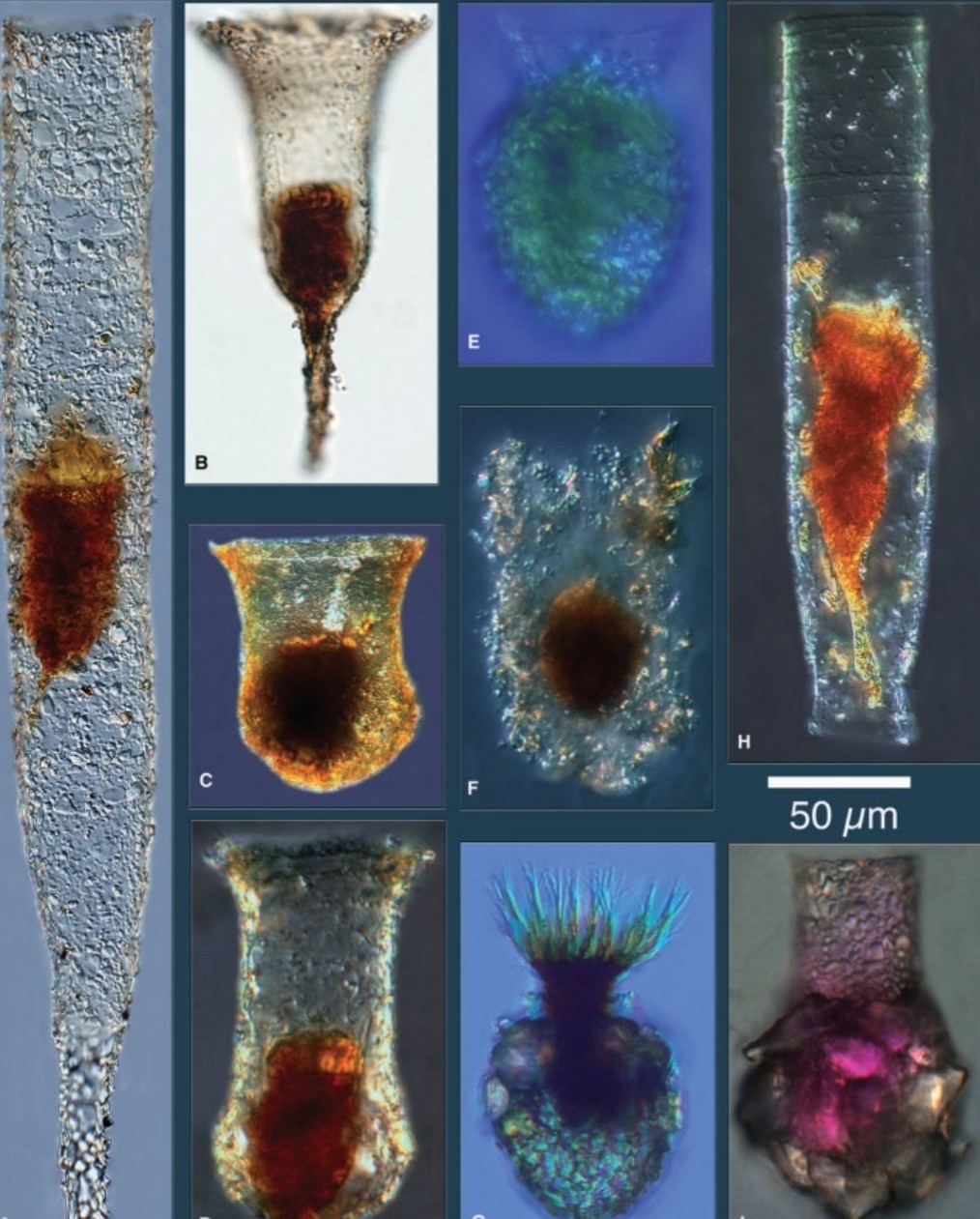
Tintinnids ("tinkling bells") are ciliates found in fresh and saltwater known for their characteristic vase-shaped shell called a lorica. These are formed of tough proteins, incorporating minerals from the water and vary considerably by species. The shell offers protection and optimizes feeding on phytoplankton, bacteria and flagellates. These small pro…

image/jpeg a collection of microscopic photos of organisms with a wide diversity of vase-shaped shells. Colour ranges from yellow to red to purple. A size bar indicates they are about 50 microns in width but can be many times longer. Taken from Dolan et al. 2013. 
https://www.wiley.com/en-us/The+Biology+and+Ecology+of+Tintinnid+Ciliates%3A+Models+for+Marine+Plankton-p-9780470671511