Research: AI's ability to complete long and complex software engineering tasks doubles every 6-7 months, but there is a "messiness tax" for real-world tasks (Boaz Barak/Windows On Theory)
https://windowsontheory.org/2025/11/04/thoughts-by…
RE: https://fediscience.org/@suomenantropologi/115614886106180185
Vale Keith Hart. That keynote from 2010 (link below) was (and still is) a compelling argument for reconnecting value theory to practical political economy by weaving together Marx's commodity fetishism, the concept of plural economy inspired by Mauss, and the digital revolution's radical cheapening of information.
Inte helt originellt, liknande teorier finns ju sedan tidigare, men ändå tänkvärd text. ”Rational depends on the system you’re in. So if you’re in the spheres-of-influence system, this might not appear rational, but if you’re in this neo-royalist structure, it’s perfectly rational.” https://www.
The effort to create authoritarianism is more likely to lead to a breakup of the state than to a total regime change.
This end of the United States is possible, in part,
because our president and vice-president think that it is impossible.
Because they are inside a grift bubble, they push for authoritarianism in their own interest,
without reckoning with the possibility that their actions can wreck the country.
For them, America is a limitless passive resource…
Muddled.
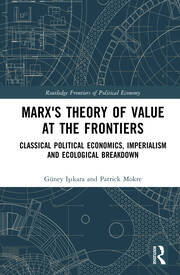
'Value' has specific meanings in Marxist political economy.
It isn't the appropriate term for what Boillier is discussing.
'Wealth' is closer but still not right.
It's a matter of standpoint: the abundance of nature isn't purely for human use, so those two terms don't apply well, or at all.
Toward a New Theory of Value (and Meaning): Living Systems as Generative - resilience
The Theory of Strategic Evolution: Games with Endogenous Players and Strategic Replicators
Kevin Vallier
https://arxiv.org/abs/2512.07901 https://arxiv.org/pdf/2512.07901 https://arxiv.org/html/2512.07901
arXiv:2512.07901v1 Announce Type: new
Abstract: This paper develops the Theory of Strategic Evolution, a general model for systems in which the population of players, strategies, and institutional rules evolve together. The theory extends replicator dynamics to settings with endogenous players, multi level selection, innovation, constitutional change, and meta governance. The central mathematical object is a Poiesis stack: a hierarchy of strategic layers linked by cross level gain matrices. Under small gain conditions, the system admits a global Lyapunov function and satisfies selection, tracking, and stochastic stability results at every finite depth. We prove that the class is closed under block extension, innovation events, heterogeneous utilities, continuous strategy spaces, and constitutional evolution. The closure theorem shows that no new dynamics arise at higher levels and that unrestricted self modification cannot preserve Lyapunov structure. The theory unifies results from evolutionary game theory, institutional design, innovation dynamics, and constitutional political economy, providing a general mathematical model of long run strategic adaptation.
toXiv_bot_toot
 @Techmeme@techhub.social