 @cowboys@darktundra.xyz
2026-04-16 20:57:33
Cowboys' Christian Parker To Play 'Significant' Role in 2026 NFL Draft Plans https://www.si.com/nfl/cowboys/onsi/dallas-cowboys-christian-parker-play-significant-role-2026-nfl-draft-plans
 @Techmeme@techhub.social
2026-04-15 22:41:09
Sources: Apple plans to send a significant part of its Siri team, known as a laggard, to an AI coding bootcamp; the group is expected to be fewer than 200 (The Information)
https://www.theinformation.com/articles/apple-sends-siri-…

 @privacity@social.linux.pizza
2026-02-16 13:19:39
Quando l'archiviazione del codice sorgente viene riconosciuta come bene pubblico digitale: spunti dal percorso decennale di Software Heritage presso l'UNESCO
Senza conservazione, le societŠ perdono la capacitŠ di comprendere come sono stati costruiti i sistemi, perché sono state prese le decisioni e come la conoscenza si è evoluta nel tempo. La conservazione, quindi, non significa guardare al passato; significa consentire la continuitŠ. Quando il software viene preservato, la c…
 @NFL@darktundra.xyz
2026-03-11 11:01:31
Colts, Daniel Jones have made significant progress on 2-year contract https://www.nfl.com/news/colts-daniel-jones-have-made-significant-progress-on-2-year-contract
 @Carwil@mastodon.online
2026-04-16 11:59:03
"Across a variety of tasks, including mathematical reasoning and reading comprehension, we find that although AI assistance improves performance in the short-term, people perform significantly worse without AI and are more likely to give up."
https://arxiv.org/abs/2604.04721

 @stefan@gardenstate.social
2026-03-12 13:13:34
every morning 1 - 5 bots sign up at the same time. I could fix this by closing signup or requiring approvals but I both don't want to and want to be included in the upcoming mastodon local instance sign up program.
Once https://gardenstate.social is in the program I only expect bot signup to increase.
 @heiseonline@social.heise.de
2026-03-07 15:28:00
 @chris@mstdn.chrisalemany.ca
2026-04-11 18:18:10
PHEW! Terminé con cinco minutos restantes.
Here's my short essay from my test. It's about AI, and the impact of technology in general. Go easy on me. (Actual proper citations were not needed)
——
La tecnología mšs importante en la sociedad actual es el inteligencia artificial, IA, o el acrónimo inglés, “AI”.
“AI” es una tecnología relativamente nueva. Él aparecí al comienzo del ano 2023 y cambió ršpidamente la manera que los personas en línea buscaban y creaban. Realmente, “AI” no esta inteligente, mejor dicho uno modelo de lenguaje grande, “LLM” en inglés. LLM significa que los ordenadores que les alimentan no usan razón, pero los intentos a predecir una respuesta de una pregunta o mensaje en función de los patrones de palabras y mensajes en les bancos de datos.(1)
La tecnología ha contribuido en gran medida al progreso del sociedad. La tecnología agrícola lo hizo posible para humanidad a crecer y cambiar de nómada a creer asentamientos y eventualmente ciudades mas grandes. La hecha posible a usar recursos del medio ambiente en nos sociedades. Pero la tecnología ha creado grandes problemas también como desigualdad o cambio climštico.
Yo creo que, en la mayoría de situaciones, la tecnología es una fuerza positiva en la sociedad. Las problemas son creado por los personas sin moralidad, a menudo para la acumulación de la riqueza, influencia, y autoridad. Si la población puede mantener la influencia democrštica para reglamentar la tecnología, como la AI, para el beneficio de la población y los individuos, entonces la tecnología puede contribuir a la progresión de la sociedad.
Finalmente, si los individuos son compasivos y respetuosos, la tecnología reflejarš esa también.
1: “The Illusion of Thinking: Understanding the Strengths and Limitations of Reasoning Models via the Lens of Problem Complexity” #español
 @primonatura@mstdn.social
2026-04-10 15:18:31
"10% of the ocean is protected. Now just 20% more to go"
#Oceans #Environment
https://
 @primonatura@mstdn.social
2026-04-10 10:00:32
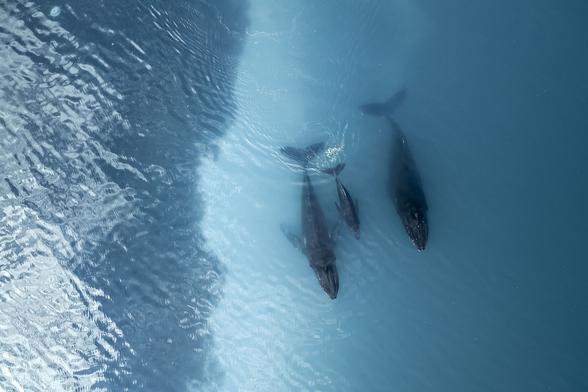
"10% of the ocean is protected. Now just 20% more to go"
#Oceans #Environment
https://