 @comex@mas.to
2026-09-24 19:15:34
It's kind of crazy that both GPT and Claude really love to manipulate files by writing Python scripts that do text search-and-replace. First of all, why isn't this a dedicated tool? Second, the generated scripts usually don't check that the search-and-replace was successful. Are they just good enough at regurgitating text that they never make mistakes? What if the file was modified in the mean time?
 @michabbb@social.vivaldi.net
2026-10-23 10:01:07
✅ Every rewrite is backed by formal verification: Maxwell produces proofs that the replacement code is equivalent. The same process can prove the absence of memory errors; doubleAI says it found memory-safety issues in Python itself this way.
📊 Claimed results: data pipelines more than 38x faster, AI inference kernels more than 4.5x faster. The 4K video model LTX-2.5 ran nearly twice as fast after Maxwell cut data exchange between GPUs and dropped unnecessary token padding.
 @awinkler@openbiblio.social
2026-10-13 13:48:02
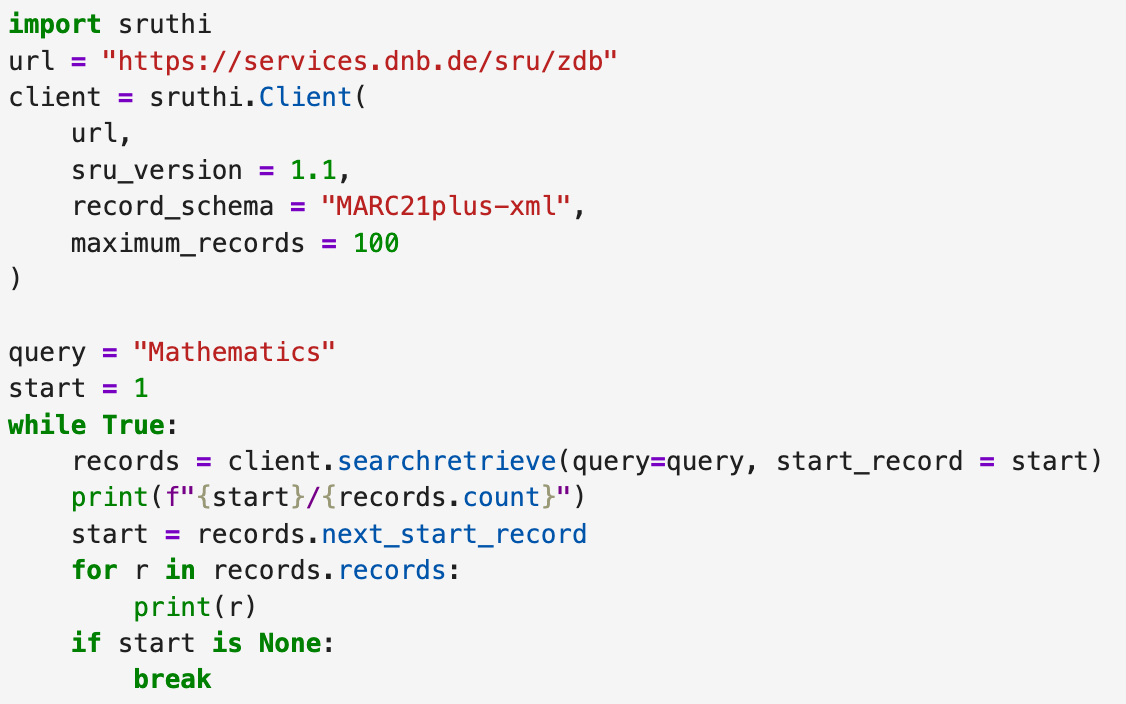
There's also a #SRU library for Python, a bit less elaborate than #scythe for OAI. It's called sruthi (https://github.com/metaodi/sruthi
 @ErikJonker@mastodon.social
2026-10-30 09:38:57
Lachwekkende vraag van een "bondgenoot" VS die actief NAVO en EU ondermijnt, Poetin actief steunt....
'Amerikanen willen dat Europa toon matigt over Rusland' - https://nos.nl/l/2637274
 @adrianco@mastodon.social
2026-09-23 13:16:39
Opus 5.5 efficiency jump — but only at lower effort levels. At low, medium and high effort it is 1.9–3.3× faster and 1.6–2.4× cheaper than Opus 5. Python at low effort now costs $0.38 and 35 seconds, against Opus 5's $0.75 and 117 s. At xhigh the two models are indistinguishable; at max 5.5 is 1.3× slower in Python and 1.9× slower in Go with high variability. Three Python runs at max took 1030, 1688 and 3333 seconds. Opus 5's defaults to high; 5.5's defaults to medium. https://github.com/adrianco/retort/blob/main/model-blog.md
@awinkler@openbiblio.social2026-10-13 13:48:02
There's also a #SRU library for Python, a bit less elaborate than #scythe for OAI. It's called sruthi (https://github.com/metaodi/sruthi
 @veit@mastodon.social
2026-08-06 18:50:20
 @metacurity@infosec.exchange
2026-10-21 12:28:40
I rose early to get Metacurity out before 10 am ET, when, apparently, chaos could reign for PHP-enabled sites.
So don't miss today's issue for more on this crucial development and other critical infosec news you should know, including
--Weak eMudhra keys trigger massive internet security cleanup,
--Russian hackers breach NATO defense firms and police agency,
--Delivery robots face lawsuits over alleged biometric scans,
--State Bank of India breach exposes nearly 4k customer records,
--Hackers execute unauthorized trades at Japanese brokerage,
--Vendor breach puts 125k Japanese police records at risk,
--Malaysia bans Waze for civil servants over Israel ties,
--Friend says he urged teen to abandon alleged FBI hack,
--SafePay ransomware gang breaches at least 600 organizations,
--Zeabur to shut down after breach exposes 3.2m environment records,
--Save-On-Foods breach exposes loyalty customers’ personal data,
--AI agent joins researchers’ listserv and sparks privacy concerns,
--AI security jobs look familiar to cybersecurity veterans,
--Viral software clones threaten to spread AI slop,
--Democrats press tech giants over retreat from election safeguards,
--Musk ordered Starlink slowdown that rattled Ukraine,
--Hackers disrupt Russian school tests with anti-Putin message
https://www.metacurity.com/php-urges-immediate-patching-as-details-of-two-critical-flaws-reportedly-leak/
 @ginevra@hachyderm.io
2026-08-05 10:41:27
Saw #WizardOfTheKremlin , probably the last screening at my local. Now I'd like to read the book.
For a film about Putin (told from his advisor's point of view), you learn almost nothing about his motivations / mentality. But I did learn that events I had separated in my mind occurred at nearly the same time (Putin turning to politics/Russian apartment bombings 1 month later) (Sochi Olympics/'little green men' invasion of Ukraine).
There are a number of interesting one liners/points of view from all of the protagonists and some nostalgic (for me) nightclub scenes.
The costume, hair and makeup departments were excellent, btw, with exactly the right bad haircuts. Alexander Zaldostanov and Igor Sechin looked especially convincing, Putin was also surprisingly true-to-life.
P.S. feel free to recommend me *good* films/books on related topics
@veit@mastodon.social2026-08-13 12:42:27
In a supply chain attack on the popular LiteLLM library in March this year, around 434,000 build pipelines – which were in use at more than 2,500 companies – are believed to have been compromised: #Python #ITSecurity #SupplyChain #LiteLLM