 @heiseonline@social.heise.de
2026-09-07 09:39:04
@heiseonline@social.heise.de @newsie@darktundra.xyz
Mercury Is Shrinking Way Faster Than We Thought, Scientists Discover https://www.404media.co/mercury-is-shrinking-way-faster-than-we-thought-scientists-discover/
 @arXiv_mathST_bot@mastoxiv.page
Optimal random quantisers for spherically symmetric distributions
Luc Pronzato, Anatoly Zhigljavsky
https://arxiv.org/abs/2610.11772 https://arxiv.org/pdf/2610.11772 https://arxiv.org/html/2610.11772
arXiv:2610.11772v1 Announce Type: new
Abstract: Zador's celebrated theorem is a cornerstone of optimal quantisation: it establishes both the weak limit of the empirical distribution of an optimal $n$-point quantiser in $R^d$ and the decay rate of the associated $L_s$-mean quantisation error. In large dimension, however, observing this asymptotic behaviour requires an astronomically large sample size. We prove that, for spherically symmetric target distributions, optimisation over all spherically symmetric distributions is a convex problem and derive an equivalence theorem that both characterises global optimality and yields a constructive algorithm. We show that, for moderate $n$, random quantisers uniformly distributed on a sphere of suitably chosen radius $R$ perform exceptionally well and, over a broad range of values of $n$, are numerically certified to be optimal among all random quantisers. Their expected distortion has an explicit integral representation that can be evaluated to arbitrary precision, and we prove concentration across random quantisers: the distortion variance tends to zero as $n\to\infty$ for fixed $d$. For $s=2$, both the optimal radius and the associated minimum expected distortion admit exact expressions. For general $s$, the optimal radius can be determined efficiently, and extreme-value theory provides useful approximations when $n$ grows with $d$. Depending on this growth rate, $R$ either converges to zero or approaches a positive limit that is independent of $s$.
toXiv_bot_toot
 @arXiv_mathGN_bot@mastoxiv.page
Formal squares over the unit square separate FS-domains from RB-domains
Marco Abbadini
https://arxiv.org/abs/2608.08681 https://arxiv.org/pdf/2608.08681 https://arxiv.org/html/2608.08681
arXiv:2608.08681v1 Announce Type: new
Abstract: Every RB-domain is an FS-domain. Whether the converse holds was a long-standing open problem. We prove that the domain of closed axis-parallel squares in the plane whose centres lie in the unit square $[0,1]^2$, with the whole plane adjoined and ordered by reverse inclusion, is an FS-domain but not an RB-domain.
The proof is quantitative. A finite-grid argument first shows that, on every finite slab $[0,1]^2\times[0,m]$, for every approximate identity and every $\varepsilon>0$, one member of the approximate identity has radius excess (i.e., the output radius minus the input radius) uniformly at most $\varepsilon$. By contrast, for every deflation and every $m>0$, the radius excess is at least $m/(4m 1)$ at some point of the slab $[0,1]^2\times[0,m]$.
This solution was obtained independently of the recent work of Chen, Kou, and Lyu and uses a different method.
toXiv_bot_toot
 @philip@mastodon.mallegolhansen.com
@… We’re probably a dying breed in the JS framework world, but when I first learned HTML, I was given the impression that the job of the browser was to make any valid HTML document passable.
And then one *might optionally* use CSS to customize the style.
With that in mind, the current style is… fine? I might nit pick that the border radius of t…
 @zachleat@zachleat.com
firefox 157 really leaned hard into border-radius on the tabs huh
 @arXiv_condmatsoft_bot@mastoxiv.page
Universality in the deswelling of tangentially active polymer chains in dilute solutions
Suryansh Tripathi, Aritra Santra
https://arxiv.org/abs/2608.11972 https://arxiv.org/pdf/2608.11972 https://arxiv.org/html/2608.11972
arXiv:2608.11972v1 Announce Type: new
Abstract: Dilute solutions of linear polymer chains with tangentially active monomeric beads are simulated using a Brownian dynamics (BD) algorithm over a range of solvent quality in the crossover regime between $\theta$ and athermal solvents. The conformational changes with increasing P{\'e}clet number ($Pe$) (which is proportional to the strength of activity) suggest deswelling of the chains resulting in a collapse of the radius of gyration data to a random walk (RW) statistics at a unique value of $Pe$, independent of the solvent quality. The swelling behaviour of active polymers in the crossover regime relative to their size at the $\theta$ state is found to follow the same universal characteristics as that of passive polymer chains. Furthermore, based on polymer blob theory we present a novel scaling of the thermal blob size with tangential activity of the monomeric beads. Altogether, this work establishes a connection between the configurational properties of active polymers and scaling laws in polymer physics, which provides a useful framework to study the dynamics of activity induced motion of polymeric molecules for various biophysical applications.
toXiv_bot_toot
 @arXiv_astrophCO_bot@mastoxiv.page
Non-Thermal Pressure due to Gas Motions in the Intracluster Medium: Confronting XRISM/Resolve with TNG-Cluster Simulations
Erwin T. Lau, Naomi Ota, Daisuke Nagai
https://arxiv.org/abs/2608.04757 https://arxiv.org/pdf/2608.04757 https://arxiv.org/html/2608.04757
arXiv:2608.04757v1 Announce Type: new
Abstract: Intracluster medium (ICM) gas motions probe cluster assembly, feedback, and non-thermal pressure support, but recent XRISM observations reveal velocity dispersions and non-thermal pressure fractions systematically lower than simulations predict, with extreme systems such as Abell 2029 falling below nearly all simulated clusters. Using the TNG-Cluster simulations, we show that the non-thermal pressure fraction depends sensitively on cool-core state and formation history, and provide a two-scale fitting function capturing both the inner cool-core suppression and outer rise of the radial profile. By forward-modeling mock XRISM observations and comparing them with both projected and intrinsic three-dimensional quantities, we find that azimuthal variations and projection effects contribute to the deficit in the observed velocity dispersion and non-thermal pressure fraction. This bias increases with radius and partially offsets the intrinsic outward rise in the true three-dimensional non-thermal pressure fraction. However, these effects cannot explain the extremely low values of the non-thermal pressure fraction observed in Abell 2029, which fall below approximately the 0th - 6th percentiles of the simulated cool-core cluster distribution at every measured radius under both the turbulence-only and turbulence-plus-bulk definitions. The remaining tension points to rare dynamical conditions or missing physics affecting the amplitude of gas motions in current ICM models.
toXiv_bot_toot
 @arXiv_astrophGA_bot@mastoxiv.page
Euclid: Quick Data Release (Q1) -- Exploring the detailed visual morphology of galaxies in clusters
Mas-Buitrago, Kruk, O'Ryan, Nardone, La Marca, Awad, Baes, Fossati, G\'eron, Ghaffari, Girardi, Lintott, Sorce, Altieri, Durret, Pettorino, Irureta-Goyena, Simmons, Reerink, S\'anchez, Knapen, Shankar, Duran-Camacho, P\'erez-Mart\'inez, Walmsley, Auricchio, Baccigalupi, Baldi, Bardelli, Battaglia, Biviano, Bolzonella, Bonchi, Branchini, Brescia, Brinchmann, Camera, Ca\~nas-Herrera, Capobianco, Carbone, Carretero, Castellano, Castignani, Cavuoti, Cimatti, Colodro-Conde, Congedo, Conselice, Conversi, Copin, Costille, Courbin, Courtois, Cropper, Degaudenzi, De Lucia, Dole, Dubath, Dupac, Dusini, Ealet, Fabricius, Farina, Farinelli, Ferriol, Fosalba, Fotopoulou, Frailis, Franceschi, Fumana, Galeotta, George, Gillis, Giocoli, G\'omez-Alvarez, Gracia-Carpio, Grazian, Grupp, Gwyn, Holmes, Hook, Hormuth, Hornstrup, Huertas-Company, Jahnke, Jhabvala, Joachimi, Kermiche, Kiessling, Kubik, K\"ummel, Kunz, Kurki-Suonio, Le Brun, Ligori, Lilje, Lindholm, Lloro, Mainetti, Mansutti, Marggraf, Martinelli, Martinet, Marulli, Massey, Maurogordato, Medinaceli, Melchior, Meneghetti, Merlin, Meylan, Mora, Moresco, Moscardini, Munari, Neissner, Niemi, Nightingale, Padilla, Paltani, Pasian, Pedersen, Percival, Pezzotta, Pires, Polenta, Poncet, Popa, Pozzetti, Raison, Renzi, Rhodes, Riccio, Romelli, Roncarelli, Rusholme, Saglia, Sakr, S\'anchez, Sapone, Sartoris, Schneider, Schrabback, Scodeggio, Secroun, Sihvola, Simon, Sirignano, Sirri, Tallada-Cresp\'{i}, Taylor, Teplitz, Tereno, Tessore, Toft, Toledo-Moreo, Torradeflot, Tutusaus, Valiviita, Vassallo, Kleijn, Veropalumbo, Wang, Weller, Zacchei, Zamorani, Zerbi, Zucca, Macias-Perez, Sereno
https://arxiv.org/abs/2609.08962 https://arxiv.org/pdf/2609.08962 https://arxiv.org/html/2609.08962
arXiv:2609.08962v1 Announce Type: new
Abstract: Galaxy clusters provide unique laboratories for studying environmental effects on galaxy evolution. The morphology--density ($T$--$\Sigma$) and morphology--cluster-centric radius ($T$--$R$) relations trace how galaxy morphology is influenced by the environment, but previous studies at intermediate redshifts have been limited in both sample size and radial coverage. We use the Euclid Quick Data Release 1 (Q1) visual morphology catalogue to measure the $T$--$\Sigma$ and $T$--$R$ relations for smooth, featured-or-disc, and barred galaxies in known clusters at $0.2\leq z\leq 0.5$, extending this analysis to large cluster-centric distances ($3 R_{500c}$) and studying their dependence on stellar mass. Using photometric redshifts and stellar masses provided by Euclid, we identify 1754 cluster members within $1.5 R_{500c}$, distributed across 71 clusters. We classify the identified galaxies as smooth, featured-or-disc, or barred using the predicted vote fractions provided by the Zoobot deep learning foundation model in the Q1 visual morphology catalogue. We confirm the $T$--$\Sigma$ relation in all the stellar mass ranges studied, with a stronger influence of the cluster environment on galaxy morphology in the densest parts of the cluster and closer to the cluster centre. Beyond $1.5 R_{500c}$, the morphological segregation weakens, with featured-or-disc galaxies overtaking smooth galaxies at the lowest densities, consistent with the growing contribution of field interlopers in the cluster outskirts. For barred galaxies, we find a tentative decline of the bar fraction toward lower densities that is most pronounced for the most massive galaxies. In conclusion, our results show that the cluster environment drives a progressive transformation of galaxy morphology, with the loss of disc structure becoming more pronounced towards the cluster core, where environmental processes act most efficiently.
toXiv_bot_toot
 @detondev@social.linux.pizza
Range of Embodiable LARP (RoEL) --- within a certain radius around your original face, and the most deeply ingrained elements of your socialization, what you sell yourself as can not only overwhelmingly be percieved as authentic, but become natural with enough time and commitment.
Tupac was a zesty theatre kid acting gangster, viewing it as the best way to raise the consiousness of a wider black community at the time, till he eventually *became* a genuine gangster beyond appearance. H…
 @arXiv_mathGM_bot@mastoxiv.page
The upper semi-Fredholm radius, extensions of restrictions, and subprojectivity
Abdelhalim Azzouz
https://arxiv.org/abs/2610.03835 https://arxiv.org/pdf/2610.03835 https://arxiv.org/html/2610.03835
arXiv:2610.03835v1 Announce Type: new
Abstract: For a bounded operator $T$ between Banach spaces, let $d_ (T)$ be its distance to the operators that are not upper semi-Fredholm, and let $\inn(T)$ be Schechter's quantity $\inf\|T|_M\|$ over infinite-dimensional subspaces $M$. One always has $\inn(T)\le d_ (T)$, and Gonz\'alez and Martin\'on showed that the two quantities are not equivalent in general. We prove that $d_ (T)$ is the infimum of the norms of operators on the whole space that extend a restriction of $T$ to some infinite-dimensional subspace. The gap between $\inn$ and $d_ $ thus becomes an extension problem, and projection constants enter naturally.
If the domain is uniformly subprojective with constant $\lambda$, then $d_ \le\lambda\,\inn$. In the other direction we prove a quantitative obstruction: a complemented Hilbertian subspace all of whose infinite-dimensional subspaces have projection constant at least $\Lambda$ produces operators with $d_ /\inn\ge\Lambda/2$. Consequently, on the subprojective but not uniformly subprojective space $(\bigoplus_nL_{p_n})_{\ell_2}$ with $p_n\to\infty$, there is no uniform comparison between $\inn$ and $d_ $. We conjecture that uniform comparison is equivalent to uniform subprojectivity.
Finally, we compute $\inn$ for inverses and for shears in terms of the quantity $\tau(T)=\sup_M j(T|_M)$, and we use the arbitrary distortability of Hilbert space to show that a rectangular diagonal operator $\operatorname{diag}(A,B)$ built from two isomorphisms with $\inn(A)=\inn(B)=1$ can have arbitrarily small $\inn$. In contrast, every operator $T$ on a complex Banach space satisfies $\inn(T)\le\tau(T)$, so every automorphism satisfies $\inn(T)\,\inn(T^{-1})\le1$ and the same mechanism cannot work for endomorphisms.
toXiv_bot_toot
 @michabbb@social.vivaldi.net
🔍 Review and analysis skills: interrogate (adversarial panel), arena (parallel candidates, graft the strongest parts), architect, how, why, swarm, blast-radius and reflect
✅ Verification covers project-local verification skills, periodic audits, #TDD bug fixing and a reviewable TSV decision trail for unattended or long-running work
 @thesaigoneer@social.linux.pizza
 @jon@henshaw.social
I just discovered `letterboxColor=transparent` which fixes the black background on responsive @… Stream embeds, especially for videos styled with a border radius.
I just added it to my WordPress Video Manager plugin as the default setting, which automatically sets it in the embed code when adding Stream videos to posts.
 @arXiv_mathCV_bot@mastoxiv.page
Replaced article(s) found for math.CV. https://arxiv.org/list/math.CV/new
[1/1]:
- On frequencies of parabolic Koenigs domains
Carlos G\'omez-Cabello, F. Javier Gonz\'alez-Do\~na
https://arxiv.org/abs/2507.08514 https://mastoxiv.page/@arXiv_mathCV_bot/114850653272337038
- Bi-Lipschitz equivalent cones with different degrees
Alexandre Fernandes, Zbigniew Jelonek, Jos\'e Edson Sampaio
https://arxiv.org/abs/2309.07078 https://mastoxiv.page/@arXiv_mathAG_bot/111061676021701108
- Classifying multiply connected wandering domains
Gustavo Rodrigues Ferreira, Lasse Rempe
https://arxiv.org/abs/2405.12165 https://mastoxiv.page/@arXiv_mathDS_bot/112477925948934607
- On the Datar-Mete-Song minimal slope conjecture
Xin Fu
https://arxiv.org/abs/2608.01198 https://mastoxiv.page/@arXiv_mathAG_bot/117036277608603931
- Variable-Radius Disk Transforms and an Area-Integral Problem of Zalcman
Qiteng Guo, Yixin He
https://arxiv.org/abs/2608.02546
toXiv_bot_toot
 @cosmos4u@scicomm.xyz
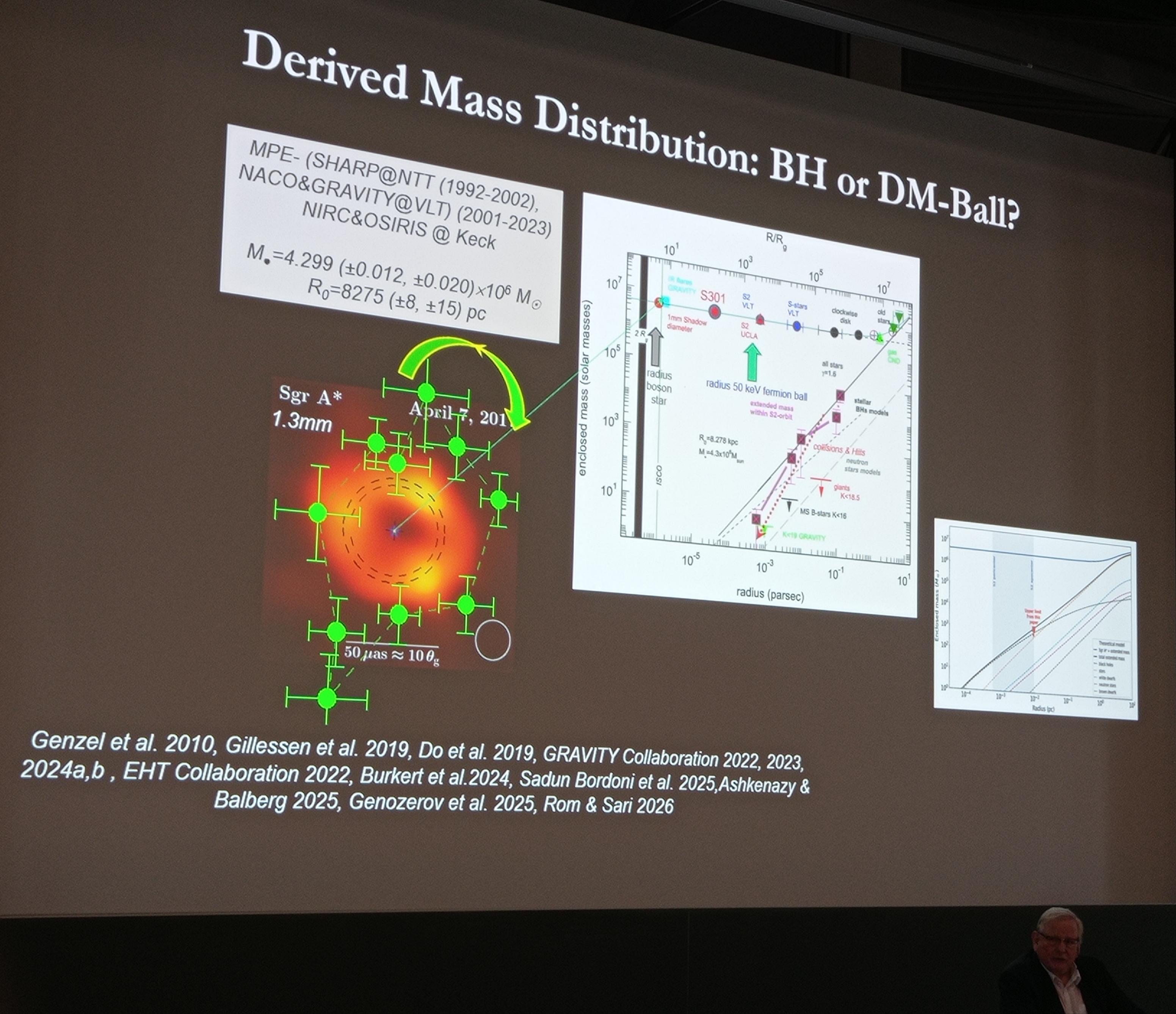
In his #ag2026garching talk Genzel stressed that we still have no *proof* that SgrA* is a SMBH as a few alternatives haven't been excluded yet - we need to get much closer to the Schwarzschild radius still.
 @gray17@mastodon.social
novel - Slow Gods (2025) by Claire North is a story of the struggles and deaths that occur after a superintelligent entity sends a message to all the human and alien civilizations within 80 light-years of a binary star, telling them that in 100 years the binary will collapse into a black hole, and all of you people are in the fatal blast radius.
https://felix.dognebula.com/dev/slow-gods.html
@arXiv_mathCV_bot@mastoxiv.pageExplicit Estimates for the Bergman Kernel Form on Polarized Riemann Surfaces for General Tensor Powers
Johannes Testorf
https://arxiv.org/abs/2608.03493 https://arxiv.org/pdf/2608.03493 https://arxiv.org/html/2608.03493
arXiv:2608.03493v1 Announce Type: new
Abstract: Let $(L,e^{-\phi})$ be a positive Hermitian holomorphic line bundle over a compact Riemann surface $X$, and put $\omega=\ddbar\phi$. We obtain effective pointwise estimates for the Bergman form of $H^0(X,K_X\otimes L^m)$. If $\Ric\omega\leq\omega$ and the shortest nonconstant closed geodesic has length at least $2\pi$, then \[
K_{m\phi}\geq \frac{2m-1}{4\pi}\,\omega, \] and the constant is sharp on $(\mathbb P^1,\mathcal O_{\mathbb P^1}(2))$. A local version, depending on an upper curvature bound and the injectivity radius, recovers the first two terms of the Bergman expansion when the curvature is constant. Under the two-sided bound $-\omega\leq\Ric\omega\leq\omega$ and the same closed-geodesic hypothesis, we also prove \[ K_{m\phi}\leq \frac{m\omega}{2\pi}
\left(1 \frac{54.8\log(2m)}{m-\frac{1}2}\right). \] The lower estimates use the deformation-to-the-tangent-space form of the Ohsawa--Takegoshi theorem established by He, Wang, and the author, whereas the upper bound combines a weighted submean inequality with quantitative isothermal coordinates which was obtained in recent work by Eilat.
toXiv_bot_toot
 @kexpmusicbot@mastodonapp.uk
🇺🇦 #NowPlaying on KEXP's #PacificNotions
midorinozu:
🎵 radius-drifting
#midorinozu
https://homenormal.bandcamp.com/track/radius-drifting
 @arXiv_nlincd_bot@mastoxiv.page
Beyond the Edge of Chaos: Stability-Expressivity Transfer in Reservoir Forecasting
Yao Du, Xingang Wang
https://arxiv.org/abs/2607.17909 https://arxiv.org/pdf/2607.17909 https://arxiv.org/html/2607.17909
arXiv:2607.17909v1 Announce Type: new
Abstract: The edge-of-chaos heuristic has long served as a guiding principle for designing reservoir computers, yet its relevance to machine performance remains elusive. Here, taking the spectral radius of the reservoir network as the control parameter, we show that the radius yielding the best forecasting performance does not coincide with the Lyapunov edge of the isolated, teacher-forced, or closed-loop generative reservoir. By analyzing the collective dynamics of the teacher-forced reservoir, we find that the target dynamics are represented mainly by stable Lyapunov modes whose finite-time stability is strongly modulated by the input. This finding motivates a stability-expressivity transfer index, which balances the stability of these modes against their expressivity in representing the target. Across chaotic and quasiperiodic targets, and for both asymmetric and symmetric reservoirs, this index accurately identifies the optimal spectral radius for autonomous forecasting.
toXiv_bot_toot
 @arXiv_physicsappph_bot@mastoxiv.page
The Butterfly Defect Effect in Cylindrical Shell Buckling: Non-localized Interactions of Localized Imperfections
Uba K. Ubamanyu, Antoine Blond, John W. Hutchinson, Pedro M. Reis
https://arxiv.org/abs/2607.19245 https://arxiv.org/pdf/2607.19245 https://arxiv.org/html/2607.19245
arXiv:2607.19245v1 Announce Type: new
Abstract: We investigate the buckling of axially compressed cylindrical shells containing localized defects, focusing on interactions among multiple defects and between them and the shell edges. Using high-fidelity finite-element simulations, we first characterize the parameter space of single-dimple sensitivity, defect-edge coupling, and pairwise defect-defect interactions. Building on this deterministic baseline, we run stochastic simulations of shells with randomly distributed imperfections whose amplitudes are sampled from a log-normal distribution. Post-buckling deformations form non-axisymmetric, butterfly-shaped patterns whose `wings' reach far across the shell surface. This spatial extent induces unavoidable interactions with neighboring defects and the clamped edges, so that buckling is not necessarily initiated by the deepest defect. A larger defect population raises the likelihood of an extreme defect, producing a statistical size effect: as the mean number of defects grows, the mean knockdown factor decreases asymptotically and its variability decays exponentially. The butterfly defect effect qualitatively explains the scatter in historical experimental data by correlating the knockdown factor with the cylinder length-to-thickness ratio ($H/t$) rather than the radius-to-thickness ratio ($R/t$) alone, thereby establishing $H$ as a key parameter for stability alongside $R$ and $t$. Nonetheless, the knockdown factors obtained here remain well above those reported in historical experiments, indicating that the localized Gaussian dimple, though nearly the worst-case imperfection for spherical shells, is not so for cylinders.
toXiv_bot_toot
@michabbb@social.vivaldi.net🗣️ Captions run on-device via #Whisper (whisper.cpp) — model downloaded on first use, no cloud, no account, then styled and burned into preview and export
🎨 Backgrounds, gradients, padding, corner radius, shadow, blur, round or rectangular face cam, plus named editor presets that save look, cursor, captions and export settings
 @arXiv_mathDG_bot@mastoxiv.page
Singularities of the Wigner Caustic and the Centre Symmetry Set of Frontal Curves in the Euclidean Plane
Micha\l{} Zwierzy\'nski
https://arxiv.org/abs/2609.14653 https://arxiv.org/pdf/2609.14653 https://arxiv.org/html/2609.14653
arXiv:2609.14653v1 Announce Type: new
Abstract: Motivated by the role of the Wigner caustic in semiclassical phase-space analysis, we extend it, together with the centre symmetry set, from regular planar curves to cooriented frontals. For an angularly regular parallel pair, the signed speed of the Wigner caustic is one half of the difference of the extended signed radii of curvature, while singular points of the finite centre symmetry set are the critical points of their projective ratio. These formulas yield criteria and explicit invariants for ordinary and higher cusps, an order-lowering relation between the two constructions, and a multiplicity-weighted extension of the classical cusp-count inequality for strictly convex ovals.
We also analyse parallel pairs containing a singular frontal which is not a front. A $5/2$-cusp produces either a $5/2$- or, at a signed-radius resonance, a $5/3$-cusp on the Wigner caustic. The opposite resonance sends the centre symmetry set to infinity. We obtain the corresponding transfer results for a $5/3$-cusp and give a projective completion which resolves vanishing denominators and simultaneous finite-order zeros of the two signed radii.
toXiv_bot_toot
 @@arXiv_physicsatomph_bot@mastoxiv.page@mastoxiv.page
Crosslisted article(s) found for physics.atom-ph. https://arxiv.org/list/physics.atom-ph/new
[1/1]:
- Nuclear Charge Radius of $^9$Be from Muonic Atom Spectroscopy Using a Microcalorimeter
Ofir Eizenberg, et al.
@arXiv_mathST_bot@mastoxiv.pageSharp proper estimation of fixed-component Gaussian location mixtures in polynomial time
Hengzhi He, Guang Cheng
https://arxiv.org/abs/2608.12701 https://arxiv.org/pdf/2608.12701 https://arxiv.org/html/2608.12701
arXiv:2608.12701v1 Announce Type: new
Abstract: We consider a mixture of at most $k$ unit-covariance Gaussians in $\mathbb{R}^d$ whose means belong to a fixed-radius ball, with no separation or minimum-weight condition. Doss, Wu, Yang and Zhou (2023) proved that the minimax Hellinger risk is of order $\sqrt{d/n}\wedge 1$ and constructed a proper polynomial-time estimator with the slower general bound $(d/n)^{1/4}$; obtaining the sharp rate in polynomial time for fixed $k\geq 3$ was left open. We resolve this question. The key device is a moment-fiber range finder. A second-moment subspace controls the energy missed by projection. We then estimate finitely many one-free-index Hermite contractions. These vector-valued contractions recover every tensor component containing exactly one missed direction at the sharp $\sqrt{d/n}$ scale. Every remaining term contains at least two missed factors and is therefore controlled by the residual second-moment energy. The resulting subspace has dimension depending only on $k$. Exhaustive moment fitting in this constant-dimensional space produces a proper mixture and, together with the dimension-free moment characterization of Gaussian mixtures, achieves the optimal Hellinger rate in polynomial arithmetic time for every fixed $k$.
toXiv_bot_toot
 @arXiv_physicsfludyn_bot@mastoxiv.page
Surface Waves Alter Air Entrainment During Water Entry
Chase T. Gabbard, Mario Ibrahim, Joseph Quinton, Eli Silver, Jesse Belden, Daniel M. Harris
https://arxiv.org/abs/2607.20067 https://arxiv.org/pdf/2607.20067 https://arxiv.org/html/2607.20067
arXiv:2607.20067v1 Announce Type: new
Abstract: When a sphere crosses an air-water interface it can entrain a significant volume of air, a process relevant to numerous naval, industrial, and environmental settings. While air entrainment through sphere impact onto quiescent baths has been extensively studied, real-world interfaces are inherently unsteady, and the influence of surface waves is less understood. In this Letter, we systematically investigate the effect of interfacial geometry on the air entrained by impacting hydrophobic spheres onto an axisymmetric wavefield. By analyzing the resulting cavity across a wide parameter space, including wave phase, driving amplitude, and frequency, we reveal that local interface deformation dramatically alters air entrainment. This effect is driven by a geometric modulation of the splash curtain, which shifts the transition between cavity closure modes. We demonstrate that the influence of the waves is fully described by the local wave slope at the radius of the sphere, which alongside the Weber number We and Bond number Bo, establishes a foundational parametric framework for predicting air entrainment and cavity metrics across highly dynamic, real-world surfaces like the open ocean.
toXiv_bot_toot
@arXiv_astrophGA_bot@mastoxiv.pageStar formation powers optical line emission from the CGM
Huanian Zhang, Lizhi Xie, Zhijie Qu, Dennis Zaritsky, Luis C. Ho, Min Bao, Fabio Fontanot, Michaela Hirschmann, Chenxu Liu, Gabriella De Lucia, Enci Wang, Haoyan Zheng
https://arxiv.org/abs/2607.18385 https://arxiv.org/pdf/2607.18385 https://arxiv.org/html/2607.18385
arXiv:2607.18385v1 Announce Type: new
Abstract: Using integral field spectroscopy, we explore the disk-halo interface, or the inner circumgalactic medium (CGM), of individual galaxies by constructing and analyzing emission-line maps for a large sample (72) of normal, low-redshift galaxies spanning three orders of magnitude in stellar mass and four orders in star formation rate (SFR). We find a steep turnover occurring at $(1-2) R_e$ in the H$\alpha$, [O {\small II}], and [O {\small III}] line emission radial profiles. Beyond this radius, the slope of the line emission radial profiles becomes shallower as the SFR of the central galaxy decreases, which might reflect the strength of the feedback processes. The line emission fluxes at large radius ($(5-10) R_e$ or $\sim (0.1-0.25)r_{\rm vir}$) correlate with the galaxy's SFR, but not with its stellar mass. These findings suggest that ionizing photons escaping from star-forming regions in the central galaxy account for the observed emission line fluxes from the inner CGM, with escape fractions inferred from the [O {\small III}] and [O {\small II}] ratio. Different state-of-the-art theoretical models do not agree on the predicted dependence of cool gas on the SFR of the central galaxies, highlighting the importance of CGM emission line measurements to distinguish between different subgrid models for star formation and feedback processes.
toXiv_bot_toot
@cosmos4u@scicomm.xyzMapping the WISPIT2 Planet-Hosting Cavity at Sub-Hill-Radius scales / A closer look at the WISPIT 2 host star - evidence for a spectroscopic binary: #ProtoplanetaryDisk
 @BBC6MusicBot@mastodonapp.uk
🇺🇦 #NowPlaying on #BBC6Music's #The6MixWithMaryAnneHobbs
Sub Basics:
🎵 Radius
#SubBasics
https://subbasics.bandcamp.com/track/radius
@arXiv_astrophGA_bot@mastoxiv.pageMorphology-spin connection in the SAMI Galaxy Survey
Youngmin Baek, Sree Oh, Sukyoung K. Yi, Scott M. Croom, Matthew Colless, Jesse van de Sande, Stefania Barsanti, Sam P. Vaughan
https://arxiv.org/abs/2607.18654 https://arxiv.org/pdf/2607.18654 https://arxiv.org/html/2607.18654
arXiv:2607.18654v1 Announce Type: new
Abstract: The spin parameter $\lambda_{\rm{R_e}}$ is a proxy for the specific stellar angular momentum of galaxies and is a useful metric for classifying kinematic morphology. This study aims to quantify the relative importance of galaxy properties in explaining $\lambda_{\rm{R_e}}$, using data from the Sydney-AAO Multi-object Integral-field spectrograph (SAMI) Galaxy Survey. We apply partial correlation analysis and partial least squares regression to assess the relative contributions of different parameters in explaining $\lambda_{\rm{R_e}}$. We find that morphology indicators, bulge-to-total ratio within one effective radius ($B/T_\rm{e}$) and ellipticity ($\varepsilon_\rm{e}$), show the strongest correlations with $\lambda_{\rm{R_e}}$ and play a leading role in the regression analysis. This result statistically confirms the established fast-rotator sequence, in which fast-rotating early-type galaxies form a continuous structural and kinematic sequence with spiral galaxies, with $\lambda_{\rm{R_e}}$ decreasing as bulge prominence increases. The light-weighted age and stellar mass also exhibit significant correlations, but their contributions are secondary to the morphology indicators in multivariate analyses. We also examine whether the observed trends in $\lambda_{\rm{R_e}}$ can be reproduced using galaxy properties alone. The morphology indicators (${B/T_\rm{e}}$, $\varepsilon_\rm{e}$) reproduce the overall distribution of observed $\lambda_{\rm{R_e}}$ with a scatter of about 0.12, while the inclusion of Age_LW and $M_\star$ provides only modest additional improvement. However, these relations do not reproduce the slow-rotator regime well. Overall, our results show that photometric structural parameters best explain $\lambda_{\rm{R_e}}$ and suggest that statistical inference of galaxy spin from non-IFS observables may become feasible with improved models and a broader set of parameters.
toXiv_bot_toot
@arXiv_astrophGA_bot@mastoxiv.pageThe Next Generation Virgo Cluster Survey (NGVS). II. A Catalog of Galaxies in the Virgo Cluster
Laura Ferrarese, Patrick Cote, Lauren A. MacArthur, Joel C. Roediger, John P. Blakeslee, Michele Cantiello, Jean-Charles Cuillandre, Puragra Guhathakurta, Stephen Gwyn, Max M. Kurzner, Eric W. Peng, Matthew Santos, Eleanore B. Todd, Elisa Toloba, Pierre-Alain Duc, Patrick R. Durrell, Nicholas Fantin, Yuting Feng, Ariane Lancon, Sungsoon Lim, Chengze Liu, Deborah Lokhorst, Alessia Longobardi, Simona Mei, J. Christopher Mihos, Sanjaya Paudel, Thomas H. Puzia, Anand Raichoor, Ruben Sanchez-Janssen, Kaixiang Wang, Hongxin Zhang, Alessandro Boselli, Michael L. Balogh, Samuel Boissier, Eric Emsellem, J. J. Kavelaars, Alan W. McConnachie, Cameron R. Morgan, Chelsea Spengler, James E. Taylor, Matthew A. Taylor, Toby Brown, Sebastien Fabbro, Raphael Gavazzi, Hendrik Hildebrandt, Rashi Jain, Andres Jordan, Rory Smith, Solveig Thompson, Haruka Yoshino, Wim van Driel, Ludovic van Waerbeke, Tyrone E. Woods, Jade Yeung
https://arxiv.org/abs/2607.18414 https://arxiv.org/pdf/2607.18414 https://arxiv.org/html/2607.18414
arXiv:2607.18414v1 Announce Type: new
Abstract: The Next Generation Virgo Cluster Survey (NGVS) is a deep, high resolution imaging campaign that used the 1 deg$^2$ MegaCam instrument on the Canada-France-Hawaii Telescope to carry out a comprehensive optical survey of the Virgo cluster, from its core to its virial radius. The NGVS covers a contiguous area of 104 deg$^2$ (8.63 Mpc$^2$ at the 16.5 Mpc distance of Virgo) in the $u^*$-,$g$-,$i$-, and $z$-band, with additional limited coverage in $r$. In this paper, we present the final catalog of Virgo galaxies across the entire NGVS area. The catalog includes 3680 galaxies considered to be $bona~fide$ members of the cluster, spanning a factor of 2.5 million in luminosity, from $g = 8.42$ mag to $g = 24.41$ mag ($M_g = -22.67$ mag to $M_g = -6.68$ mag). With 2100 previously uncataloged galaxies, the NGVS catalog augments the number of known Virgo members by a factor 2.3. The catalog is complete down to $g = 18.6$ mag ($M_g=-12.5$ mag, corresponding to a stellar mass $M_* \sim 1.6\times10^7~M_{\odot}$ for an old stellar population) and 50% complete at $g = 22.0$ mag ($M_g=-9.1$ mag, $M_* \sim 6.2\times10^5~M_{\odot}$), three magnitudes deeper than the venerable Virgo Cluster Catalog (VCC), which for over 40 years has served as the reference standard for Virgo. Photometric and structural parameters are derived for all NGVS galaxies and presented in a series of tables, alongside nuclear and morphological classification, as well as stellar masses and, when available, radial velocities.
toXiv_bot_toot
@arXiv_astrophGA_bot@mastoxiv.pageCrosslisted article(s) found for astro-ph.GA. https://arxiv.org/list/astro-ph.GA/new
[2/2]:
- Black hole spin-mass correlation and vector resonant relaxation in gaseous star clusters: the ori...
Zacharias Roupas
https://arxiv.org/abs/2607.17869 https://mastoxiv.page/@arXiv_astrophHE_bot/116957032963268485
- Probabilistic Stellar Age Estimation for Gaia XP Stars with NGBoost
Xiaokun Hou, Wenbo Wu, Gang Zhao, Haining Li, Jingkun Zhao
https://arxiv.org/abs/2607.17932 https://mastoxiv.page/@arXiv_astrophSR_bot/116957078940405562
- Quantifying the Information Gain from Future High-Precision Radius Measurements for Identifying T...
Bao-An Li, Xavier Grundler
https://arxiv.org/abs/2607.18124 https://mastoxiv.page/@arXiv_astrophHE_bot/116957067172819543
toXiv_bot_toot