 @toxi@mastodon.thi.ng
2026-10-09 12:23:32
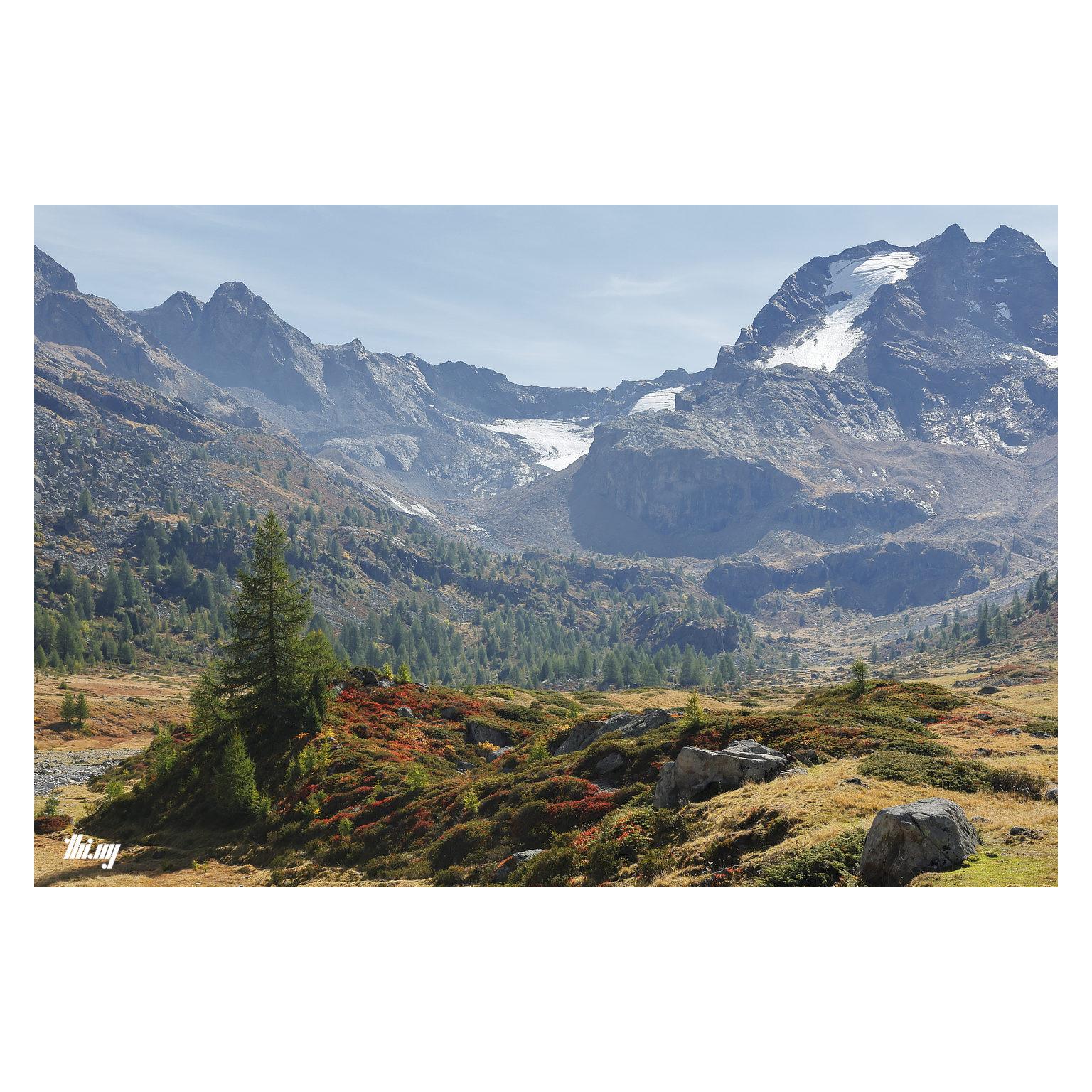
Valle dei Sogni (2026)
(Complete solitude in the valley of dreams — that's how it felt and how I will remember/cherish it...)
#FootpathFriday #LandscapePhotography #NaturePhotography
 @primonatura@mstdn.social
2026-08-04 13:00:58
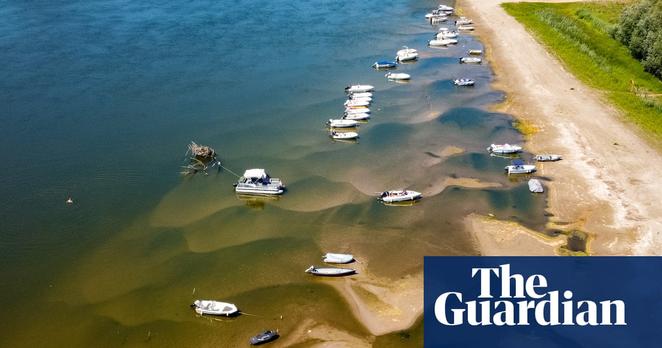
"Record low water levels across Europe reveal mammoth skeletons and forgotten shipwrecks – video"
#Europe #Climate #ClimateChange
 @Techmeme@techhub.social
2026-09-02 01:55:49
Source: OpenAI's Astra model uses "recurrent depth", a technique that improves cost and performance but obscures the AI's reasoning, making it harder to monitor (The Information)
https://www.theinformation.com/articles/se

 @der_raddler@dresden.network
2026-10-05 04:16:26
Hätte man auch schon beim ersten Mal wissen können. 🤷
🗺️ Blueprint #37 2/6
🟩🟨⬛⬛⬛⬆️
🟩🟩🟩🟩🟩🎉
#Blueprint

 @cowboys@darktundra.xyz
2026-07-29 16:16:22
Cowboys Reveal ‘Tampering’ Concern on Blockbuster NFL Trade for $106 Million Superstar https://heavy.com/sports/nfl/dallas-cowboys/nfl-trade-rumors-news-raiders-maxx-crobsy/
 @cosmos4u@scicomm.xyz
2026-07-15 23:29:07
An ancient sandstorm recorded by supercritical climbing wind ripple strata in Gale crater, Mars: #Curiosity Finds Evidence of an Ancient Sandstorm: https://science.nasa.gov/photojournal/curiosity-finds-evidence-of-an-ancient-sandstorm/
 @v_i_o_l_a@openbiblio.social
2026-07-30 10:45:49
"What 311 academic librarians from 31 countries told us about AI"
https://blog.degruyter.com/what-311-academic-librarians-from-31-countries-told-us-about-ai/
"The use of artificial intelligence in higher education is s…
 @arXiv_astrophCO_bot@mastoxiv.page
2026-08-06 07:52:32
Non-Thermal Pressure due to Gas Motions in the Intracluster Medium: Confronting XRISM/Resolve with TNG-Cluster Simulations
Erwin T. Lau, Naomi Ota, Daisuke Nagai
https://arxiv.org/abs/2608.04757 https://arxiv.org/pdf/2608.04757 https://arxiv.org/html/2608.04757
arXiv:2608.04757v1 Announce Type: new
Abstract: Intracluster medium (ICM) gas motions probe cluster assembly, feedback, and non-thermal pressure support, but recent XRISM observations reveal velocity dispersions and non-thermal pressure fractions systematically lower than simulations predict, with extreme systems such as Abell 2029 falling below nearly all simulated clusters. Using the TNG-Cluster simulations, we show that the non-thermal pressure fraction depends sensitively on cool-core state and formation history, and provide a two-scale fitting function capturing both the inner cool-core suppression and outer rise of the radial profile. By forward-modeling mock XRISM observations and comparing them with both projected and intrinsic three-dimensional quantities, we find that azimuthal variations and projection effects contribute to the deficit in the observed velocity dispersion and non-thermal pressure fraction. This bias increases with radius and partially offsets the intrinsic outward rise in the true three-dimensional non-thermal pressure fraction. However, these effects cannot explain the extremely low values of the non-thermal pressure fraction observed in Abell 2029, which fall below approximately the 0th - 6th percentiles of the simulated cool-core cluster distribution at every measured radius under both the turbulence-only and turbulence-plus-bulk definitions. The remaining tension points to rare dynamical conditions or missing physics affecting the amplitude of gas motions in current ICM models.
toXiv_bot_toot
@der_raddler@dresden.network2026-09-03 05:04:25
Dafür, dass ich oft einfach ins Blaue rate, läuft es eigentlich ganz gut.
🗺️ Blueprint #5 1/6
🟩🟩🟩🟩🟩🎉
#Blueprint
 @der_raddler@dresden.network
2026-09-02 04:17:50
Heute war wieder einfach.
🗺️ Blueprint #4 1/6
🟩🟩🟩🟩🟩🎉
#Blueprint #polarcade