 @profcarroll@federate.social
2026-09-09 02:59:04
Patient Computing: Virtuous Waiting because the output is free as in libre, free as in beer, and free as in it didn't consume more resources than this post.
 @Techmeme@techhub.social
2026-09-08 13:41:06
Researchers say Meta ran 300 ads with CSAM this year; some featured morphed images of real children, and many linked to "nudification" apps from China (Matt Burgess/Wired)
https://www.wired.com/story/meta-failed-to…
 @Mediagazer@mstdn.social
2026-09-08 15:05:25
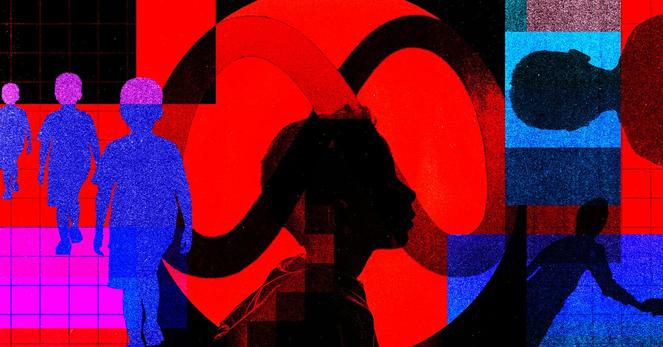
Researchers say Meta ran 300 ads with CSAM this year; some featured morphed images of real children, and many linked to "nudification" apps from China (Matt Burgess/Wired)
https://www.wired.com/story/meta-failed-to…

 @cosmos4u@scicomm.xyz
2026-07-22 21:19:36
More papers appearing the #SunriseIII – Early Science collection: https://iopscience.iop.org/collections/apjl-260303-220_Focus-on-Sunrise-III -> Queen’s researchers help capture “extraordinary” new view of the Sun: https://www.qub.ac.uk/News/Allnews/featured-research/sunrise-mission-unlocks-mysteries-sun.html
 @laura@social.coop
2026-09-30 17:12:39
Some of our F-Secure research is featured in this article about how consumers check (or don't) AI answers https://www.technewsworld.com/story/ai-users-know-they-should-check-answers-many-dont-180598.html in which I am quoted (channel…

 @geant@mstdn.social
2026-07-23 08:57:48
Video conferencing is part of daily academic life. eduMEET offers a browser-based, trusted and privacy-respecting alternative, built by and for #Research & #Education.
Now completing its transition to community-governed open-source software, its eduMEET Federation Proof of Concept already cou…

 @cdarwin@c.im
2026-07-25 13:44:58
Some birds defy overall plunge in bird numbers
Bird multitudes are slipping away on a global scale,
but a new study offers hope for how we can be better neighbors to feathered friends.
Researchers at Cal Poly San Luis Obispo knew, like everyone else in the bird world, that 3 billion birds have been lost in the last half century,
but they wanted to know more about why.
So they looked at changes in air pollution, light pollution, summer heat and eight other e…

 @davidaugust@mastodon.online
2026-07-22 13:17:26
Almost like he wants another 9-11 type attack, which he thinks he will then be able to seize extra powers as a result of such an attack. The Reichstag may have been fire, but I don't think a reboot will work as he hopes.
"Congress created…TSA after…September 11, 2001…Before…airlines contracted…private security firms to screen…but…9/11 attacks showed…private system had dangerous vulnerabilities. Now…Trump administration is resurrecting that…"

 @arXiv_physicsmedph_bot@mastoxiv.page
2026-07-20 08:45:03
Replaced article(s) found for physics.med-ph. https://arxiv.org/list/physics.med-ph/new
[1/1]:
- Unsupervised Deep Learning for Inverse Problems in Computed Tomography
Laura Hellwege, Johann Christopher Engster, Moritz Schaar, Thorsten M. Buzug, Maik Stille
https://arxiv.org/abs/2508.05321 https://mastoxiv.page/@arXiv_physicsmedph_bot/114992289081710005
- PsSource: an installable Geant4 extension for transport-coupled positronium annihilation with val...
Jason G Parker (Department of Radiology and Imaging Sciences, Indiana University School of Medicine)
https://arxiv.org/abs/2604.21173 https://mastoxiv.page/@arXiv_physicsmedph_bot/116458611013618832
- Development of a Proton Therapy Research Beamline with FLASH and Minibeam Capabilities at the 18 ...
Eva Kasanda, et al.
https://arxiv.org/abs/2605.05441 https://mastoxiv.page/@arXiv_physicsmedph_bot/116537855448982582
- Energy-Efficient Federated Learning via Adaptive Encoder Freezing for MRI-to-CT Conversion: A Gre...
Raggio, Migliorelli, Skupien, Zabaleta, Blanck, Cicone, Cascini, Zaffino, Spadea
https://arxiv.org/abs/2512.03054 https://mastoxiv.page/@arXiv_csLG_bot/115660279427393440
toXiv_bot_toot