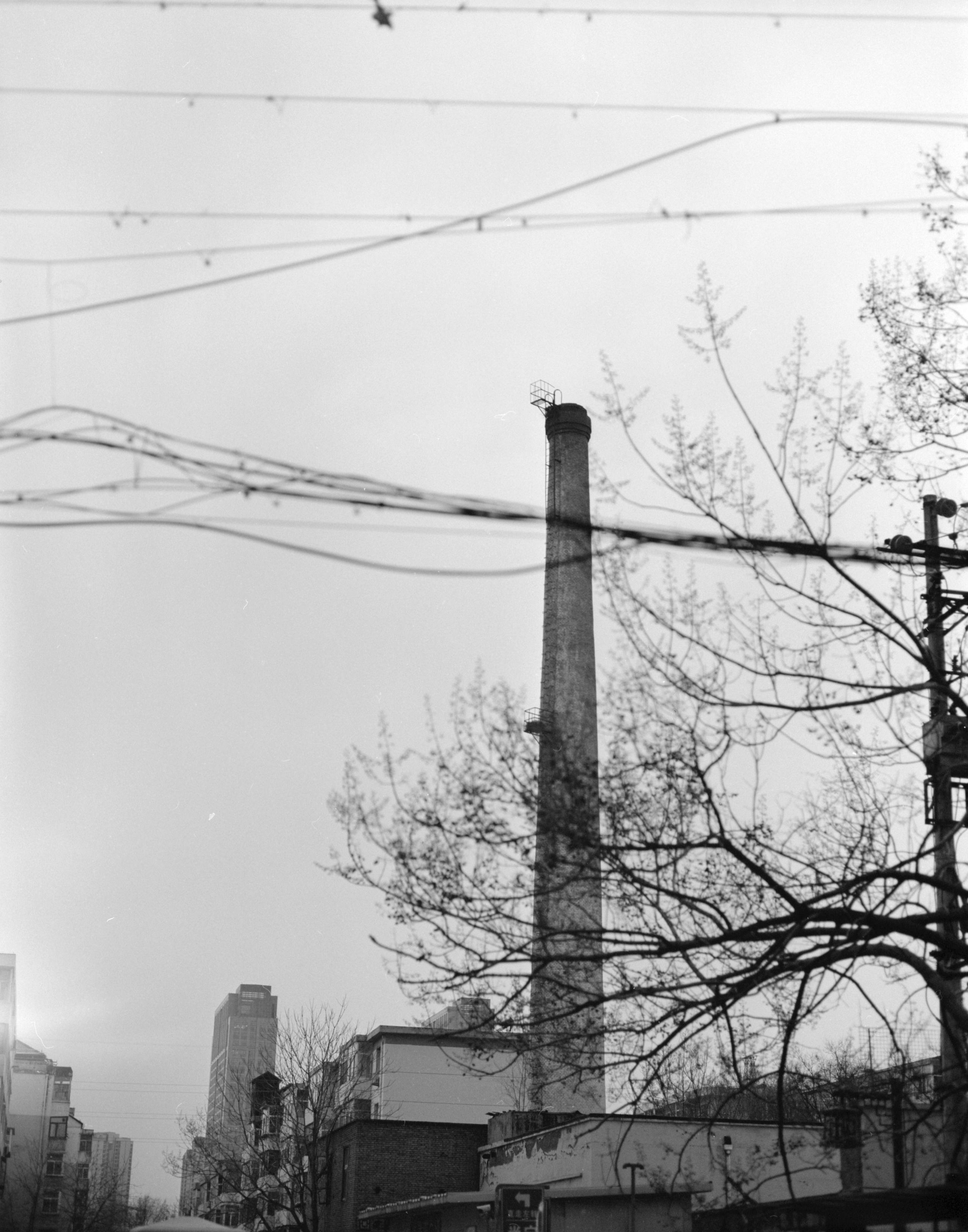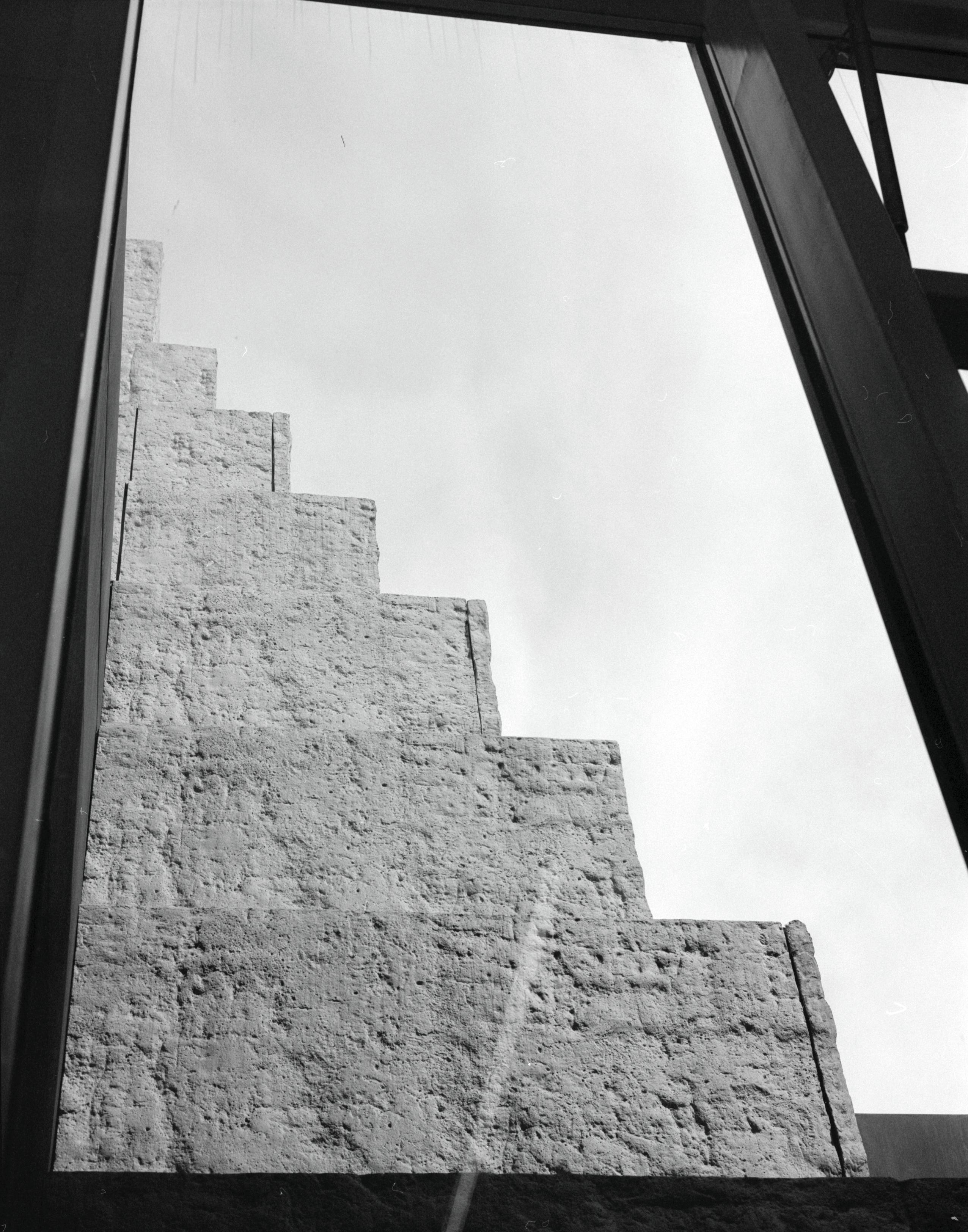
Quartet 🎵
四重奏 🎵
📷 Nikon F4E
🎞️ Ilford Pan 400
If you like my work, Support by buying me a coffee or a roll of film from
PayPal https://www.paypal.com/paypalme/ydcdingsite
Wise
🔊 #NowPlaying on #BBCRadio3:
#KeyChanges:Radio3sEssentialHistoryOfClassicalMusic
- 1672: London Calling
1672, London. At a tavern near Fleet Street, John Banister hosts a radical new event: a concert open to anyone who can pay. It marks the birth of public concert life.
Relisten now 👇
https://www.bbc.co.uk/programmes/m002xmrs
An interview with Match Group CEO Spencer Rascoff about plans for Tinder, including a redesign, AI features, live events, and group dating to win over Gen Z (Samantha Kelly/Bloomberg)
https://www.bloomberg.com/news/features/20
Kimalaiset ratkaisevat ongelmia kuin kädelliset – uusi tutkimus haastaa käsityksiä eläinten älykkyydestä https://www.verdelehti.fi/2026/06/11/kimalaiset-ratkaisevat-ongelmia-kuin-kadelliset-uusi-tutkimus-h…
Dienstleister vertauscht Plus und Minus - Auswärtiges Amt zahlte einigen Beamten Monatelang zu viel Geld. Computerfehler, kann man nix machen.
https://www.t-online.de/nachrichten/deutschland/i…
A discrete Boltzmann model with state-dependent power-law relaxation time for nonequilibrium transport in compressible flows
Demei Li, Zhongyi He, Huilin Lai, Yanbiao Gan, Hailong Liu, Pengfei Lin
https://arxiv.org/abs/2605.18216 https://arxiv.org/pdf/2605.18216 https://arxiv.org/html/2605.18216
arXiv:2605.18216v1 Announce Type: new
Abstract: Thermodynamic nonequilibrium effects play a central role in momentum and energy transport in compressible flows. In conventional BGK kinetic models, the relaxation time $\tau$ is taken as a constant, which neglects the dependence of the relaxation process on local macroscopic states. To overcome this limitation, we develop a discrete Boltzmann model with a density- and temperature-dependent power-law relaxation time, termed DTRT-DBM, in which $\tau=\tau_0(\rho/\rho_0)^a(T/T_0)^b$. This formulation extends the discrete Boltzmann framework to flows with spatially varying nonequilibrium intensity. The model is validated by the Sod shock tube and by analytical solutions for viscous stress and heat flux, demonstrating accurate recovery of both macroscopic wave structures and nonequilibrium quantities across shock waves, rarefaction waves, and contact discontinuities. On this basis, phase diagrams of viscous stress and heat flux are constructed to examine how these quantities depend on the power-law exponents $a$ and $b$. The extrema of these quantities depend exponentially on the model parameters and exhibit regime-dependent behaviour. The roles of $a$ and $b$ are not symmetric: the nonequilibrium response is more sensitive to $a$ when density gradients dominate, but more sensitive to $b$ when temperature gradients dominate. Within the parameter range and flow configurations examined here, higher-order viscous stress increases the growth rate of the total viscous-stress extremum, whereas higher-order heat flux reduces the growth rate of the total heat-flux extremum. These results show that the proposed model can capture different higher-order nonequilibrium responses in compressible flows and provides a framework for the modelling and analysis of multiscale nonequilibrium processes.
toXiv_bot_toot
🇺🇦 #NowPlaying on BBCRadio3's #KeyChanges:Radio3sEssentialHistoryOfClassicalMusic
Benjamin Britten, BBC Symphony Orchestra & Dalia Stasevska:
🎵 Young Person's Guide to the Orchestra (excerpt)
#BenjaminBritten
https://open.spotify.com/track/6BKcbGaoqA8BeaJX0F2hbz
China's iQiyi plans to overhaul its streaming service into an AI content hub, with an app redesign and Nadou Pro AI tool handling "every aspect of film-making" (Bloomberg)
https://www.bloomberg.com/news/articles/20
Shear alignment and tensorial Taylor--Aris dispersion of Brownian rods in a circular tube
Jingsen Feng, Xu Chu
https://arxiv.org/abs/2605.17614 https://arxiv.org/pdf/2605.17614 https://arxiv.org/html/2605.17614
arXiv:2605.17614v1 Announce Type: new
Abstract: Brownian rods disperse in pressure-driven flow through a coupling between axial shear, anisotropic translational diffusion and Jeffery--Brownian rotation. Classical tube Taylor--Aris theory treats transverse mixing as a scalar process, and existing passive-rod reductions have mainly addressed planar geometries. A circular tube adds two ingredients: the shear strength varies with radius and freely rotating rods sample a three-dimensional orientation space. We formulate a tensorial Taylor--Aris theory for dilute axisymmetric rods in Poiseuille flow by solving the local steady orientation Fokker--Planck problem and using its second moments to close a conservative axisymmetric transport equation. The long-wave reduction shows how each part of the diffusion tensor enters the one-dimensional limit. The radial diffusivity sets the invariant cross-sectional measure and the cell problem for the leading Taylor coefficient; the radial--axial component produces an inverse-P{\'e}clet correction to the migration speed; the axial component gives the direct diffusivity. The central mechanism is the streamwise alignment generated in high-shear annular layers. Alignment reduces radial diffusivity there, shifts the long-time sampling of the velocity profile toward slower streamlines, and amplifies the radial cell response. In strong shear this raises the Taylor coefficient by about \(23\%\) for aspect ratio \(p=1000\) and by about \(30\%\) in the infinitely slender limit, approaching the fully aligned bound. Direct simulations of the full tensorial equation validate the asymptotic coefficients. The same radial mixing operator also gives a Sturm--Liouville spectral model that tracks finite-time relaxation from different radial injections to the long-time Taylor regime.
toXiv_bot_toot
🇺🇦 #NowPlaying on BBCRadio3's #KeyChanges:Radio3sEssentialHistoryOfClassicalMusic
Henry Purcell, Jeremy Budd, The Sixteen, The Sixteen Orchestra & Harry Christophers:
🎵 Welcome Song - Fly, bold rebellion, Z324
https://open.spotify.com/track/2442kuPx4B9qy9XUTRrD0L