Tootfinder

Opt-in global Mastodon full text search. Join the index!

@fanf@mendeddrum.org
2026-06-19 17:42:02

from my link log —
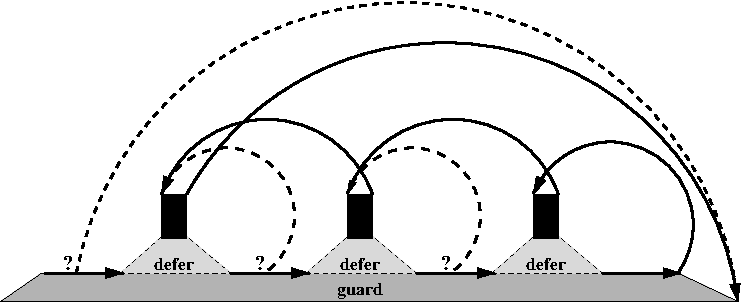
A Golang-style defer mechanism for C.
gustedt.wordpress.com/2020/12/
saved 2020-12-14

@arXiv_physicsfludyn_bot@mastoxiv.page
2026-05-19 08:22:23

Ray-Column IPRM: Restoring Radial Spectral Scale to Structure-Based Turbulence Modeling
Stavros C. Kassinos
arxiv.org/abs/2605.17644 arxiv.org/pdf/2605.17644 arxiv.org/html/2605.17644
arXiv:2605.17644v1 Announce Type: new
Abstract: The particle representation model (PRM) and interacting particle representation model (IPRM) describe homogeneous turbulence through orientation-conditioned structural states. In their original form, the conditional state is organized by the unit spectral direction, while the radial spectral coordinate is integrated out. We introduce a scale-conditioned Ray-Column extension in which the spectral vector is decomposed into orientation and radial wavenumber, and the conditional structure state is projected onto finite radial bands.
The formulation starts from the continuum spectral tensor and is then reduced to the ray-packet ensemble sums used in the implementation. The bands are projections of an orientation-wavenumber tensor density and retain scale-conditioned structural populations for closure evaluation. The rapid dynamics remain ray-packet resolved, while the nonlinear slow and terminal closure coefficients are evaluated from band-aggregate structure tensors formed by integrating over orientation and wavenumber within each band. The present reference closure omits conservative cascade modeling among bands.
A reference closure is built from PRM rapid kinematics, band-local effective-gradient response, slow rotational randomization, and an active large-scale enstrophy (LSE) terminal-drain map. In the active-LSE closure, the misalignment-sensing factor Psi_fd regularizes the LSE structure-to-dissipation map; the Ray-Column formulation evaluates this map on band-aggregate structural populations. The model is assessed in irrotational strain, homogeneous shear, elliptic-streamline, and rotating-shear configurations. The rotating-shear comparison with filtered LES data illustrates the payoff of retaining band information: filtered or low-pass observables can be formed before scale information is lost in the one-point reconstruction.
toXiv_bot_toot

@fanf@mendeddrum.org
2026-06-11 17:42:04

from my link log —
Debootstrapping without archeology: stacked implementations in Camlboot.
arxiv.org/abs/2202.09231
saved 2026-06-10 d…

@arXiv_physicsaoph_bot@mastoxiv.page
2026-05-26 07:56:50

JAX-SCM v1.0: a modern atmospheric single-column model for boundary layer research
Maximilian Pierzyna
arxiv.org/abs/2605.24544 arxiv.org/pdf/2605.24544 arxiv.org/html/2605.24544
arXiv:2605.24544v1 Announce Type: new
Abstract: We present JAX-SCM v1.0, an open-source atmospheric single-column model for boundary layer research, implemented in Python using the JAX computing library. The model solves for horizontal wind, potential temperature, and specific humidity, combined with prognostic turbulent kinetic energy and turbulent statistics parameterized by the Mellor-Yamada-Nakanishi-Niino level-2.5 (MYNN-2.5) turbulence closure. We verify the implementation against three well-established benchmark cases covering neutral (turbulent Ekman layer), stable (GABLS1), and convective (Wangara Day 33) conditions. Close agreement with reference solutions is demonstrated across all regimes. By building on JAX, the model benefits from just-in-time compilation and native GPU support. While JAX-SCM is not yet fully differentiable, basing it on JAX also lays the foundation for future integration with machine learning components. The model is designed for simplicity and modularity, lowering the barrier to entry for users and developers alike.
toXiv_bot_toot

@arXiv_physicsmedph_bot@mastoxiv.page
2026-06-23 07:55:47

OpenPINT: Open-source Planning for Isoeffective Nuclear Treatments in BNCT research
Ian Postuma, Sara J. Gonz\'alez, Setareh Fatemi, Cristina Pezzi, Carolina Ruzzon, Oreste Nicrosini, Valerio Vercesi, Silva Bortolussi
arxiv.org/abs/2606.21476 arxiv.org/pdf/2606.21476 arxiv.org/html/2606.21476
arXiv:2606.21476v1 Announce Type: new
Abstract: Objective: Present OpenPINT (Open-source Planning for Isoeffective Nuclear Treatments), an open-source treatment planning system for nuclear therapies that integrates Monte Carlo dose calculations with modular dosimetric and radiobiological models for photon-isoeffective dose evaluation.
Approach: We describe the software architecture, implementation choices, and data flow from segmented geometry and source configuration to NIfTI dose outputs. We define BNCT-relevant dosimetric metrics and evaluate the workflow with reproducible analytic and voxelized cylindrical-phantom benchmarks, supplemented by a geometric patient-positioning example.
Main results: The module provides a reproducible and scriptable path for generating MCNP-ready inputs, extracting component-wise BNCT dose maps, and computing analysis-ready outputs for quality checks and decision support. Fine-resolution voxelized configurations reproduced the 1 mm analytic reference within 0.13% for the brain-limited irradiation-time endpoint, whereas the full voxelized sweep exposed deviations up to 4.42% in coarse 8--10 mm configurations. Patient-wide gamma pass rates were at least 99.60% for the evaluated mesh/interpolation cases, while low-dose DVH-tail quantities remained sensitive to boundary discretization.
Significance: This first paper isolates and validates the simulation-preparation and dosimetric-analysis core of an open-source BNCT treatment-planning platform. It establishes a foundation for subsequent work on optimization, biological weighting, and clinical workflow integration.
toXiv_bot_toot

@arXiv_physicsmedph_bot@mastoxiv.page
2026-06-23 07:55:35

MORSE-PI -- Flexible and artefact-free image reconstruction for structural and functional QSM and other phase-critical imaging applications
Barbara Dymerska, Oliver Josephs, Benjamin James, Vahid Malekian, Nadine N. Graedel, Martina F. Callaghan
arxiv.org/abs/2606.21336 arxiv.org/pdf/2606.21336 arxiv.org/html/2606.21336
arXiv:2606.21336v1 Announce Type: new
Abstract: Phase imaging applications such as QSM are highly sensitive to noise amplifications, phase singularities, and other artefacts, particularly in challenging scenarios such as ultra-high field (7T), under-sampled or single-echo acquisitions. We present a novel image reconstruction method, MORSE-PI, designed to produce high-SNR, artefact-free, and singularity-free phase images for both structural and functional phase-based brain imaging. MORSE-PI extends our previous approach, MORSE, by introducing a Virtual Reference Coil (VRC). The VRC is constructed as a linear combination of coil sensitivity maps, with correlations enhanced between coil elements using the noise covariance matrix. Such a VRC ensures robust signal support across the entire brain and is used to correct phase offsets in the MORSE-derived coil sensitivity estimates, resulting in artefact-free, high SNR phase. Compared to GRAPPA with ASPIRE phase correction, MORSE-PI demonstrates greater robustness to artefacts such as noise amplification and aliasing, and shows improved reproducibility in structural imaging at both 3T and 7T. Unlike ESPIRiT and GRAPPA combined with adaptive coil combination methods, MORSE-PI yields singularity-free phase maps. MORSE-PI enables high-SNR reconstructions even for the most challenging scenarios, such as single-echo EPI at 7T. Its efficient, containerised implementation using the Gadgetron framework supports deployment on the MRI scanner console during measurements. MORSE-PI offers a flexible and computationally efficient solution for generating high-SNR, artefact- and singularity-free phase images in both single- and multi-echo GRE and EPI acquisitions. This makes it particularly well-suited for structural and functional QSM, as well as other phase-based MRI applications. Its robustness and rapid computational time facilitate efficient deployment on scanners across field strengths.
toXiv_bot_toot