Interesting LLM nuance: why does using phrases like "you're a pen-tester" cause chatbots to emit substantially different predictions, and basically "follow" that instruction? Because of how LLMs work, this implies that the training data has plenty of examples where real humans told each other that they were some role and the humans just immediately jumped into that role without question or intervening dialogue. But that's not something people do in normal conversation. Even in playing-with-kids contexts if you drop that out of the blue you're probably going to get "no I want to be a robot" or "but you were the elephant last time!" rather than immediate assumption of the assigned role.
It's possible that training LLMs to predict immediate role-assumption is something the big models spent a lot of manual effort on. But what I think is more likely is: it's the legacy of role-play forums! All those reams of pages of teenagers (yes, often horny) pretending to be Captain Kirk or their own incredibly cringe "cool" character (but honestly, why call it cringe, let kids be kids and have fun)...
So next time you "tell" a chatbot "you're a..." to get it to do what you want, I'm pretty sure you have an RP forum teen from the past to thank :)
#AI #LLMs
Claude Opus 4.6 has added value for finding vulnerabilities, ofcourse it is Anthropic telling you to buy Anthropic 🙂 , still a well documented blog that makes it plausible that LLMs have a role to play here, as also confirmed in other blogs/with other models.
Bughunting is one of the those functionalities where the weaknesses of GenAI are not a problem. All agree, this is not only a hype.
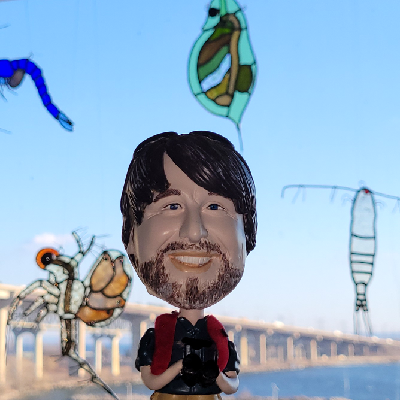
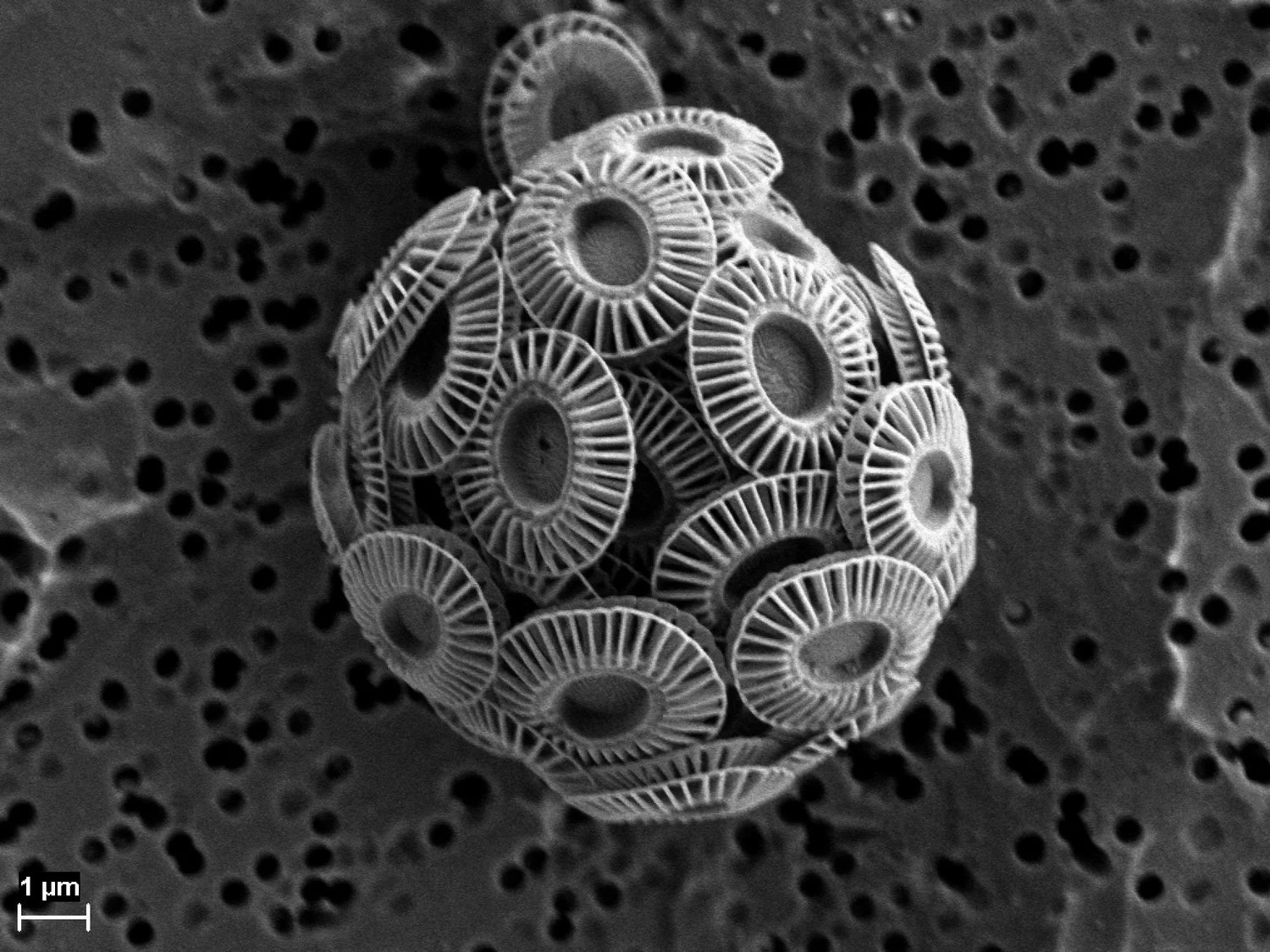
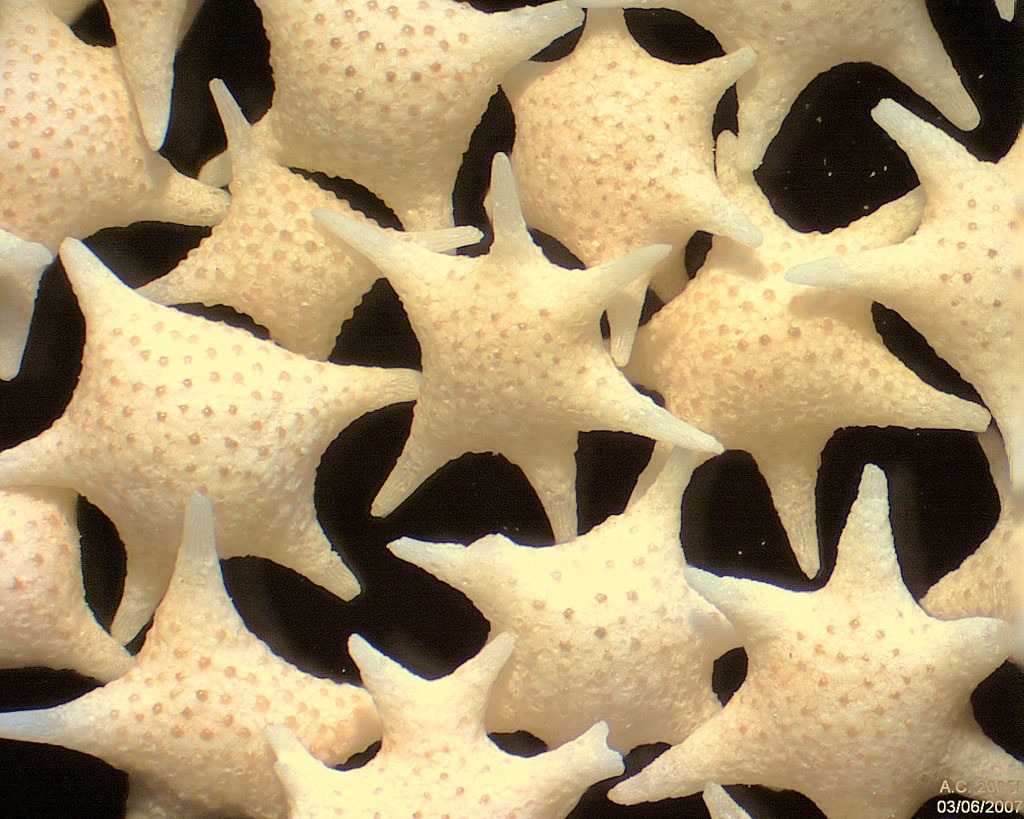
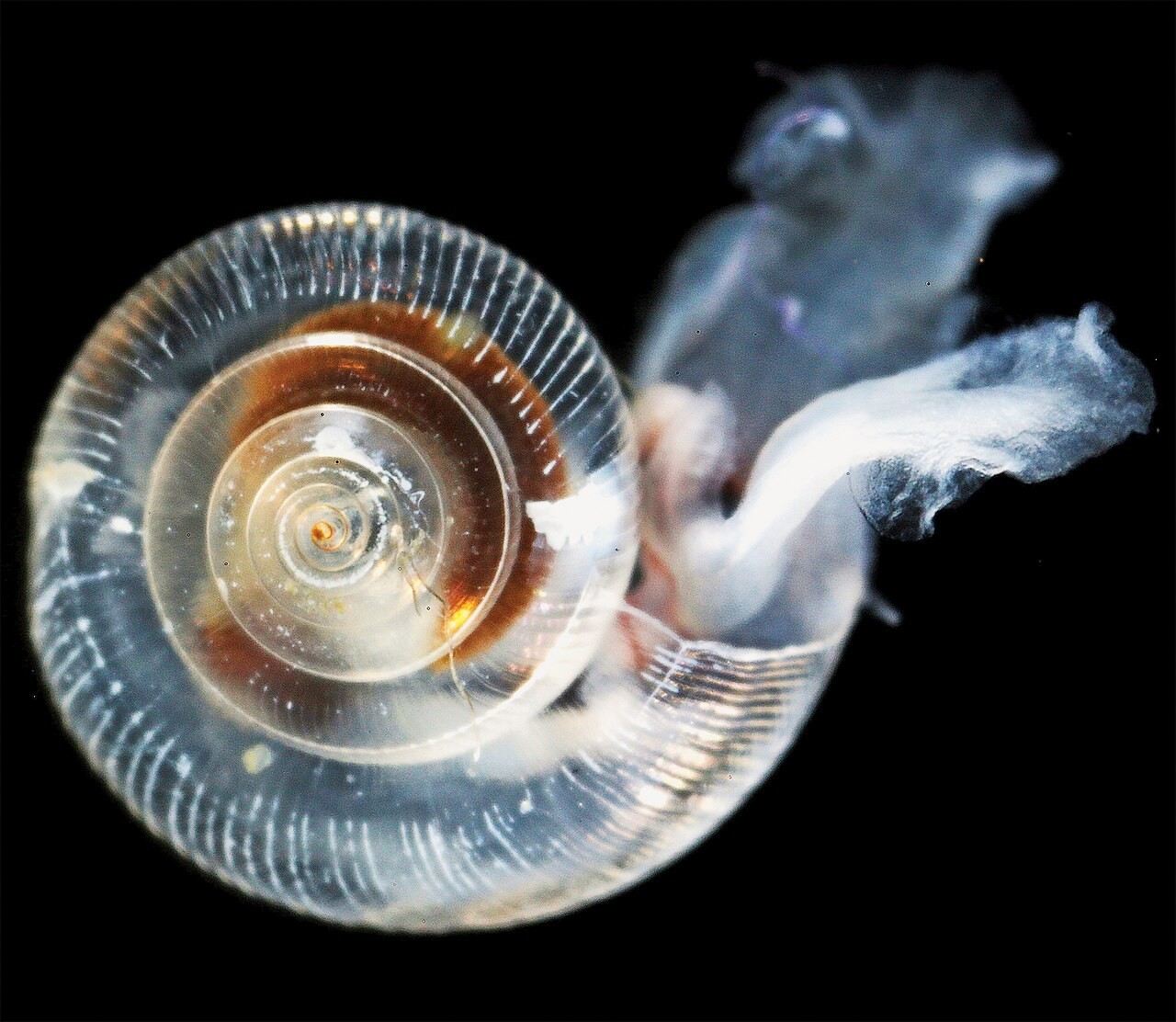
Weekend #Plankton Factoid 🦠🦐
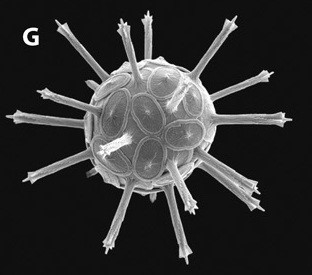
A recent review in #Science highlights knowledge gaps of the "calcifying plankton" role for biogenic carbon removal in #climate models. Coccolithophores (algae), f…
An interview with Mustafa Suleyman on Microsoft's AI reorg, how revising its OpenAI contract "unlocked [Microsoft's] ability to pursue superintelligence", more (Hayden Field/The Verge)
https://www.theverge.com/report/905791/mustafa-s…
From synthetic turbulence to true solutions: A deep diffusion model for discovering periodic orbits in the Navier-Stokes equations
Jeremy P Parker, Tobias M Schneider
https://arxiv.org/abs/2602.23181 https://arxiv.org/pdf/2602.23181 https://arxiv.org/html/2602.23181
arXiv:2602.23181v1 Announce Type: new
Abstract: Generative artificial intelligence has shown remarkable success in synthesizing data that mimic complex real-world systems, but its potential role in the discovery of mathematically meaningful structures in physical models remains underexplored. In this work, we demonstrate how a generative diffusion model can be used to uncover previously unknown solutions of a nonlinear partial differential equation: the two-dimensional Navier-Stokes equations in a turbulent regime. Trained on data from a direct numerical simulation of turbulence, the model learns to generate time series that resemble physically plausible trajectories. By carefully modifying the temporal structure of the model and enforcing the symmetries of the governing equations, we produce synthetic trajectories that are periodic in time, despite the fact that the training data did not contain periodic trajectories. These synthetic trajectories are then refined into true solutions using an iterative solver, yielding 111 new periodic orbits (POs) with very short periods. Our results reveal a previously unobserved richness in the PO structure of this system and suggest a broader role for generative AI: not as replacements for simulation and existing solvers, but as a complementary tool for navigating the complex solution spaces of nonlinear dynamical systems.
toXiv_bot_toot
Courtroom-Style Multi-Agent Debate with Progressive RAG and Role-Switching for Controversial Claim Verification
Masnun Nuha Chowdhury, Nusrat Jahan Beg, Umme Hunny Khan, Syed Rifat Raiyan, Md Kamrul Hasan, Hasan Mahmud
https://arxiv.org/abs/2603.28488 https://arxiv.org/pdf/2603.28488 https://arxiv.org/html/2603.28488
arXiv:2603.28488v1 Announce Type: new
Abstract: Large language models (LLMs) remain unreliable for high-stakes claim verification due to hallucinations and shallow reasoning. While retrieval-augmented generation (RAG) and multi-agent debate (MAD) address this, they are limited by one-pass retrieval and unstructured debate dynamics. We propose a courtroom-style multi-agent framework, PROClaim, that reformulates verification as a structured, adversarial deliberation. Our approach integrates specialized roles (e.g., Plaintiff, Defense, Judge) with Progressive RAG (P-RAG) to dynamically expand and refine the evidence pool during the debate. Furthermore, we employ evidence negotiation, self-reflection, and heterogeneous multi-judge aggregation to enforce calibration, robustness, and diversity. In zero-shot evaluations on the Check-COVID benchmark, PROClaim achieves 81.7% accuracy, outperforming standard multi-agent debate by 10.0 percentage points, with P-RAG driving the primary performance gains ( 7.5 pp). We ultimately demonstrate that structural deliberation and model heterogeneity effectively mitigate systematic biases, providing a robust foundation for reliable claim verification. Our code and data are publicly available at https://github.com/mnc13/PROClaim.
toXiv_bot_toot
Two-dimensional IR-Raman spectroscopy of vibrational polaritons: Role of dipole surfaces
Xinwei Ji, Tomislav Begusic, Tao E. Li
https://arxiv.org/abs/2603.24521 https://arxiv.org/pdf/2603.24521 https://arxiv.org/html/2603.24521
arXiv:2603.24521v1 Announce Type: new
Abstract: Nonlinear spectroscopy provides a unique perspective to understand time-resolved molecular dynamics under vibrational strong coupling (VSC). Herein, equilibrium-nonequilibrium cavity molecular dynamics simulations are performed to compute the two-dimensional (2D) infrared-infrared-Raman (IIR) spectroscopy of liquid water under VSC. In conventional computational chemistry practices, accurate molecular spectra are often constructed by using an advanced molecular dipole or polarizability model to post-process molecular dynamics trajectories evolved under a computationally efficient potential. By contrast, this work highlights the necessity of employing a consistent dipole surface model in both CavMD simulations and spectroscopic post-processing. While utilizing inconsistent dipole models only mildly influences the linear polariton spectrum, it severely distorts 2D spectra in wide frequency regions. With a consistent dipole-induced-dipole model, compared to the outside-cavity molecular 2D-IIR spectrum, the cavity 2D-IIR spectrum splits the OH stretch band to a pair of polariton branches along only the IR (not Raman) axis, while fading molecular signals at other frequency regions. This work provides the foundation for employing direct CavMD simulations to construct 2D spectra of realistic molecules under VSC.
toXiv_bot_toot
Crosslisted article(s) found for physics.flu-dyn. https://arxiv.org/list/physics.flu-dyn/new
[1/1]:
- Physics Constrained Neural Collision Operators for Variable Hard Sphere Surrogates and Ab Initio ...
Ehsan Roohi, Ahmad Shoja-Sani, Stefan Stefanov
https://arxiv.org/abs/2602.21244 https://mastoxiv.page/@arXiv_physicscompph_bot/116135902638427987
- Chapman-Enskog expansion for chirally colliding disks
Ruben Lier, Pawe{\l} Matus
https://arxiv.org/abs/2602.21367 https://mastoxiv.page/@arXiv_condmatsoft_bot/116135969484479808
- Passive freeze-out of the Richtmyer-Meshkov instability
J. Strucka, et al.
https://arxiv.org/abs/2602.21375 https://mastoxiv.page/@arXiv_physicsplasmph_bot/116135979972070806
- A CFD-Based Investigation of Local Luminal Curvature as a Primary Determinant of Hemodynamic Envi...
Marcella P. A. Dallavanzi, Jos\'e L. Gasche, Iago L. Oliveira
https://arxiv.org/abs/2602.21409 https://mastoxiv.page/@arXiv_physicsmedph_bot/116135886905819251
- Unstable magnetic reconnection self-generates turbulence
Nick Williams, Alessandro De Rosis, Alex Skillen
https://arxiv.org/abs/2602.21422 https://mastoxiv.page/@arXiv_physicsplasmph_bot/116135995018666818
- Out-of-time-ordered correlators for turbulent fields: a quantum-classical correspondence
Motoki Nakata
https://arxiv.org/abs/2602.21710 https://mastoxiv.page/@arXiv_physicsplasmph_bot/116136015335973276
- Particle, kinetic and hydrodynamic models for sea ice floes. Part II: Rotating floes with nonline...
Quanling Deng, Seung-Yeal Ha, Jaemoon Lee
https://arxiv.org/abs/2602.21972 https://mastoxiv.page/@arXiv_mathph_bot/116136043517281861
- A consistent phase-averaged model of the interactions between surface gravity waves and currents
Jacques Vanneste, William R. Young
https://arxiv.org/abs/2602.21976 https://mastoxiv.page/@arXiv_physicsaoph_bot/116135993734282277
- Hydrodynamics of Dense Active Fluids: Turbulence-Like States and the Role of Advected Activity
Sandip Sahoo, Siddhartha Mukherjee, Samriddhi Sankar Ray
https://arxiv.org/abs/2602.22044 https://mastoxiv.page/@arXiv_condmatsoft_bot/116136069077151185
- Surrogate models for Rock-Fluid Interaction: A Grid-Size-Invariant Approach
Pinheiro, Guo, Menke, Joshi, Heaney, ElSheikh, Pain
https://arxiv.org/abs/2602.22188 https://mastoxiv.page/@arXiv_csLG_bot/116136497040052377
toXiv_bot_toot
Replaced article(s) found for physics.flu-dyn. https://arxiv.org/list/physics.flu-dyn/new
[1/1]:
- Phase dynamics and their role determining energy flux in hydrodynamic shell models
Santiago J. Benavides, Miguel D. Bustamante
https://arxiv.org/abs/2507.03397 https://mastoxiv.page/@arXiv_physicsfludyn_bot/114817127598602181
- Sequential water wave reconstruction in VOF-based numerical wave tanks with the EnKF approach
Liwen Yan, Linyuan Che, Jing Li
https://arxiv.org/abs/2510.14356 https://mastoxiv.page/@arXiv_physicsfludyn_bot/115388597190883395
- cfdmfFTFoam: A front-tracking solver for multiphase flows on general unstructured grids in OpenFOAM
Ehsan Amani
https://arxiv.org/abs/2602.05627
- Causally coherent structures in turbulent dynamical systems
Daniele Massaro, Saleh Rezaeiravesh, Philipp Schlatter
https://arxiv.org/abs/2602.13899 https://mastoxiv.page/@arXiv_physicsfludyn_bot/116085105891668720
- On Topology of Perturbed Vortices
Taosif Ahsan, Samuel A. Cohen, Alan H. Glasser
https://arxiv.org/abs/2507.04596 https://mastoxiv.page/@arXiv_mathph_bot/114817045016896633
- Multi-Sink Solutions to the Self-Similar Euler Equations
Hyungjun Choi, Matei P. Coiculescu
https://arxiv.org/abs/2602.15152 https://mastoxiv.page/@arXiv_mathAP_bot/116090659297578893
toXiv_bot_toot
Replaced article(s) found for physics.flu-dyn. https://arxiv.org/list/physics.flu-dyn/new
[1/1]:
- Phase dynamics and their role determining energy flux in hydrodynamic shell models
Santiago J. Benavides, Miguel D. Bustamante
 @Techmeme@techhub.social