 @fanf@mendeddrum.org
2026-09-16 14:42:04
from my link log —
A design space exploration of async/await.
https://cel.cs.brown.edu/blog/design-space-async-await/
saved 2026-09-15 https:/…
@fanf@mendeddrum.orgfrom my link log —
A design space exploration of async/await.
https://cel.cs.brown.edu/blog/design-space-async-await/
saved 2026-09-15 https:/…
 @Dragofix@veganism.social
UK oil refinery broke toxic pollution limits dozens of times, documents reveal #UnitedKingdom
 @Techmeme@techhub.social
OpenAI announces ChatGPT Space, a collaborative workspace for users and ChatGPT and Dots, available on Pro, Business and Enterprise plans (Kris Holt/Engadget)
https://www.engadget.com/2272248/chatgpt-space-for-work/
@Techmeme@techhub.socialGoogle DeepMind launches EmbeddingGemma 2, a 740M-parameter model to map code, images, video, and audio in a shared embedding space, under an Apache 2.0 license (Google)
https://blog.google/innovation-and-ai/technology/developers-tools/embeddinggemma-2/
 @arXiv_csPL_bot@mastoxiv.page
Crosslisted article(s) found for cs.PL. https://arxiv.org/list/cs.PL/new
[1/1]:
- Modelling Shared-Space Coordination in mCRL2: a Bach-to-mCRL2 Translation Framework
Corentin Reuther (University of Namur, Belgium), Jean-Marie Jacquet (University of Namur, Belgium)
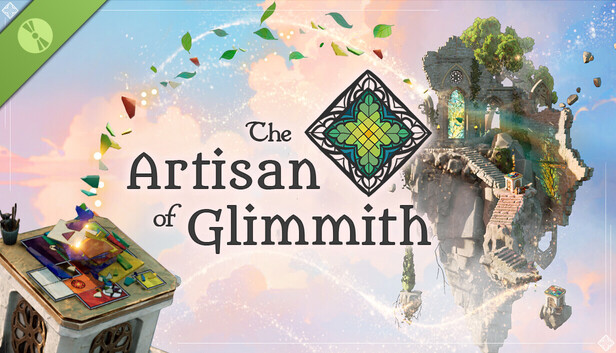
Finished the Artisan of Glimmith Demo. Decided to rather watch streamers playing the rest of the game instead.
![Game screenshot:
Thank you for playing the demo!
Your progress will carry over to the full game.
Demo: 100% complete
Game: 4.2% complete
[Buy now]
The full game has 28 areas packed with clever puzzle rules that interact in surprising and delightful ways.
Everything is 100% handmade by our award-winning puzzle team.
You can also create and share your own puzzles using the in-game editor and Steam Workshop.
[Continue (Space)]](https://s1a23studio.s3.us-west-004.backblazeb2.com/firefish/webpublic-b9be4090-61d5-4111-b420-318963c44374.webp)
 @CubitOom@social.linux.pizza
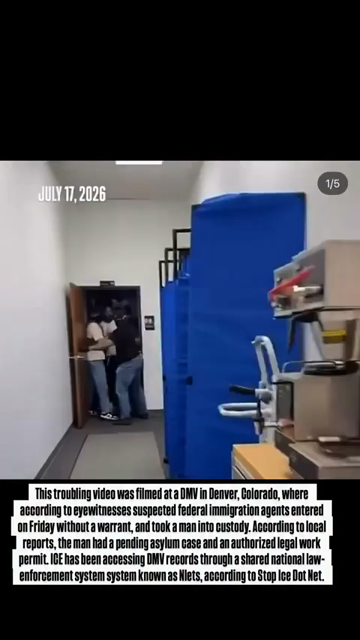
Fascists at Denver DMV pushing into a private space to abduct a man with a pending asylum case and a legal work permit. (Denver, CO)
Video Source:
https://reddit.com/comments/1v3ubvg
How did they track a routine civic visit? Federal agents are exploiting a shared law enforcement dragnet kn…
 @burger_jaap@mastodon.social
"carefully designed tariffs, used with sensible scheduling, could bring
some part of space-heating and hot water demand forward in the afternoon to take pressure off evening peaks. At a neighbourhood scale, borehole fields with water-to-water heat pumps as part of a district heating system can supply efficient, shared, low-carbon heat and act as
thermal storage"
#HeatPumps
 @pre@boing.world
So streaming ain't gonna work well until I can upgrade the OS kernel, or get to the front of the Steam Machine queue.
Streaming a flat-screen game from the gaming PC to a theatre-screen in the headset seems to work fairly well though.
Not much actual point in my room that already has a massive projector, but maybe if you shared a space I guess?
You can of course download your flat-screen game and play it on the bus too. It's using the pass-through so you ain't blindfolding yourself to local thieves.
There is a web-browser of course. Chromium. Visited my VR site, which has an embedded 360/stereo player that works on Quest: Doesn't work here. Just does a full-screen-in-the-theatre-window mode. Can't turn it even so it's just looking forward.
Presumably better web-browser VR API stuff is on the way.
As a stand-alone VR machine though, it is is working well so long as you download the game and for those that actually work.
Doom doesn't. but Alyx on-device looks great. Loads fast, no frame-dropping, and the game is great. See some detail suddenly being filled in sometimes. Like a chunk of screen comming into focus. Suspect that's the foviated rendering? Maybe. Or just normal LOD, who knows.
Played Metro Awakening VR for ten minutes. Haven't played that before. Pretty nice looking game.
Seems like Pistol Whip in particular is more clunky than I'm used to for no particular reason. Maybe they'll release a Frame-optimized version later.
The sound is definitely not as good as the quest either. Less bass response. The quest you really feel it when you pistol-whip someone, the clunk of their armour. Not so here, just a little speaker-click.
 @digitalnaiv@mastodon.social
Der erste Coworking-Space Darmstadts verliert seinen Standort – und macht als CoWo42 weiter. Carsten Buchholz baut das Angebot aus: Community statt vermieteter Schreibtische, Shared Services gegen den Bürokratiekram und ein Rechner zum KI-Ausprobieren. #9vor9 #Coworking #NewWork #KI
http://stefanpfeiffer.blog/2026/09/07/back-to-office-ist-kontrolle-nicht-zusammenarbeit-coworking-zeigt-den-unterschied/?utm_source=mastodon&utm_medium=jetpack_social