 @jlpiraux@wallonie-bruxelles.social
2026-02-25 06:26:32
 @toxi@mastodon.thi.ng
2026-02-14 11:42:35
Already 6 years old, so not even taking into account post-2022 hyperscaling, this is a sobering, very rational and well argued 20 min presentation for some cold flush reality check of the hot fever dreams of AI proponents (and all YOLO energy/resource guzzlers of any walk/standing):
Blip (2020)
https://www.youtube.com/watch?v=cd…


 @chpietsch@fedifreu.de
2026-04-11 19:06:37
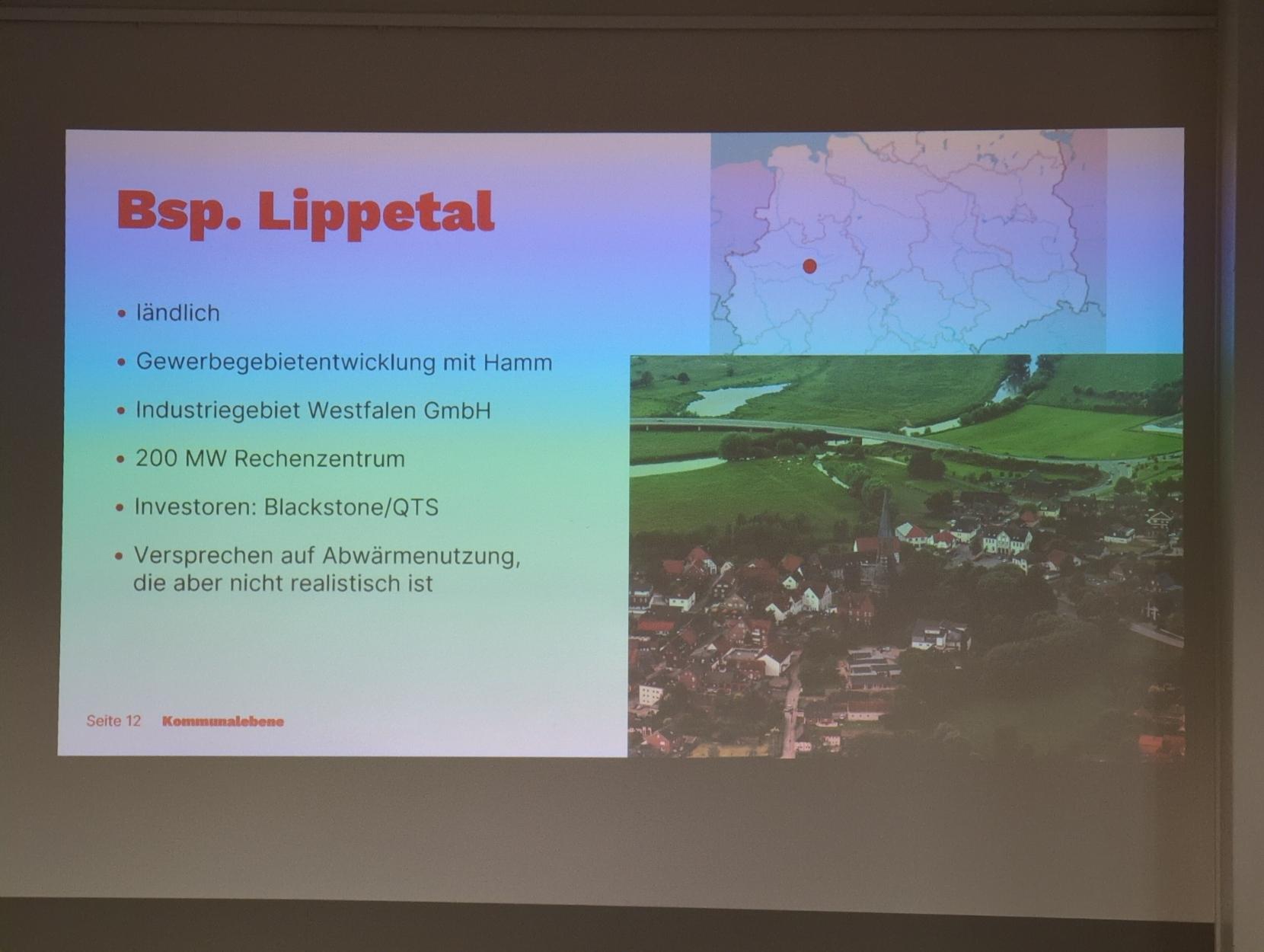
What an energizing #CablesOfResistance workshop:
Jeff and Karl managed to have a fruitful conversation with a packed room. Lots of people contributed facts.
Having attended MP @…'s pr…
 @colgrave@social.linux.pizza
2026-04-21 09:54:56
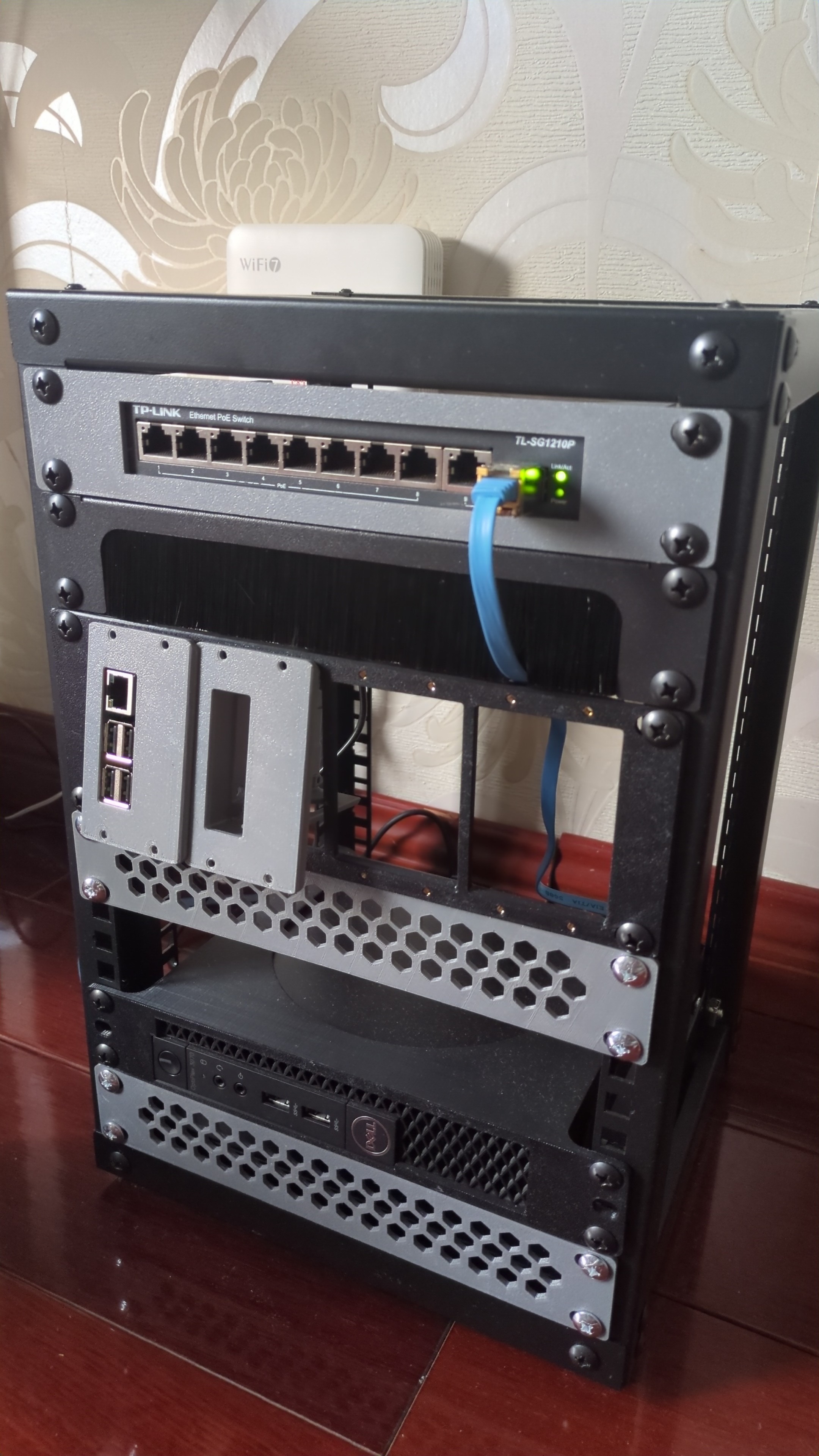
oooo boy
Things are getting together
 @fathermcgruder@jorts.horse
2026-04-14 22:42:16
In and of itself these bills are a good thing, but it seems bad that that we're essentially letting landlords off the hook and expecting tenants to make this investment in solar power. It should be treated like other appliances, such as ovens and refrigerators, that we expect landlords to provide. Furthermore, it's not apparent that this legislation forces landlords (or HOAs for that matter) to allow for these systems to be installed.
 @arXiv_physicsinsdet_bot@mastoxiv.page
2026-02-03 09:09:47
Gamma Imagers for Nuclear Security and Nuclear Forensics: Recommendations based on results from a side-by-side intercomparison
L. E. Sinclair, P. R. B. Saull, A. McCann, A. M. L. MacLeod, N. J. Murtha, A. El-Jaby, G. Jonkmans
https://arxiv.org/abs/2602.00826 https://arxiv.org/pdf/2602.00826 https://arxiv.org/html/2602.00826
arXiv:2602.00826v1 Announce Type: new
Abstract: Nuclear security operations and forensic investigations require the utilization of a suite of instruments ranging from passive gamma spectrometers to high-precision laboratory sample analyzers. Gamma spectroscopy survey is further broken down into wide-area search performed with large-volume scintillator-based mobile survey spectrometers which are integrated with geographic position sensors for mapping and identification of hot zones, and high-precision long-dwell measurements using solid state spectrometers for follow-on characterization to establish isotopic content and ratios. While performing well at detecting the presence, quantity and type of radioactivity, all of these methods have limited ability to determine the location of a source of radioactivity. In recent years, technology advances have resulted in gamma imager devices which can create an image of the distribution of radioactive sources using the gamma emissions which accompany radioactive decay, and overlay this on an optical photograph of the environment. These gamma imaging devices have arisen out of methods developed for medical physics, experimental particle physics, and astrophysics, resulting in a proliferation of different technological approaches. Those responsible for establishing a nuclear security concept of operations, require guidance to choose the proper gamma imager for each of the application spaces in a tiered response. Here the results of an intercomparison of two gamma imagers based on two widely different technologies, semiconductor and scintillator detectors, are presented. The optimal utilization of these imaging technologies in a tiered response is discussed based on the results of the trial. Finally, an outlook on future directions for gamma imaging advances is provided.
toXiv_bot_toot
@arXiv_physicsinsdet_bot@mastoxiv.page2026-02-09 08:25:58
CAGE: An Internal Source Scanning Cryostat for HPGe Characterization
G. Othman, C. Wiseman, T. H. Burritt, J. A. Detwiler, M. P. Held, R. Henning, T. Mathew, D. Peterson, W. Pettus, G. Song, T. D. Van Wechel
https://arxiv.org/abs/2602.06289 https://arxiv.org/pdf/2602.06289 https://arxiv.org/html/2602.06289
arXiv:2602.06289v1 Announce Type: new
Abstract: The success of current and future-generation neutrinoless double beta decay experiments relies on the ability to eliminate or reduce extraneous backgrounds. In addition to constructing experiments using radiopure materials and handling in underground laboratories, it is necessary to understand and reduce known backgrounds in data analysis. The Large Enriched Germanium Experiment for Neutrinoless double beta Decay is searching for this decay using 76Ge-enriched high-purity germanium detectors submerged in an active liquid argon veto. A significant background in LEGEND is surface events from shallowly-impinging radiation on detector surfaces. In this paper we introduce the Collimated Alphas, Gammas, and Electrons (CAGE) scanning system, an internal-source scanning vacuum cryostat, designed to perform studies of surface events on sensitive surfaces of HPGe in a surface-lab. CAGE features a collimated radionuclide source inside a movable infrared shield that is able to perform precision scans of detector surfaces by utilizing three independent motor stages for source positioning. This allows detailed studies of pulse shapes as a function of source position and incident angle, where defining features can be extracted and exploited for removing surface backgrounds in data analysis in LEGEND. In this paper, we describe CAGE and demonstrate its performance with a commissioning run with 241Am. The commissioning run was completed with the source at normal incidence, and we estimate a beam spot precision of 3.1 mm, which includes positioning uncertainties and the beam-spot size. Using the 59.5 keV gamma population from 241Am, we show that low-energy photon events near the passivated surface feature risetimes that increase with radial distance from the detector center. We suggest a specific metric that can be used to discriminate low-energy gamma backgrounds in LEGEND with similar characteristics.
toXiv_bot_toot