 @cosmos4u@scicomm.xyz
2026-01-15 23:20:50
Formation of Substructure in Luminous Submillimeter Galaxies (FOSSILS) - Evidence of Multiple Pathways to Trigger #Starbursts in Luminous Submillimeter Galaxies: https://iopscience.iop.org/article/10.3847/1538-4357/ae157e -> Multiple Origins Behind The Extreme Star Formation In “Monster Galaxies”: https://alma-telescope.jp/en/news/press/multipleorigins-202601.html
 @Techmeme@techhub.social
2026-01-14 01:45:53
Sources: Apple and Qualcomm are scrambling to secure glass cloth fiber, used in chip substrates and PCBs, as the AI boom boosts demand for the component (Nikkei Asia)
https://asia.nikkei.com/business/technology/tech-…

 @usul@piaille.fr
2026-01-15 13:00:14
 @netzschleuder@social.skewed.de
2026-02-07 03:00:04
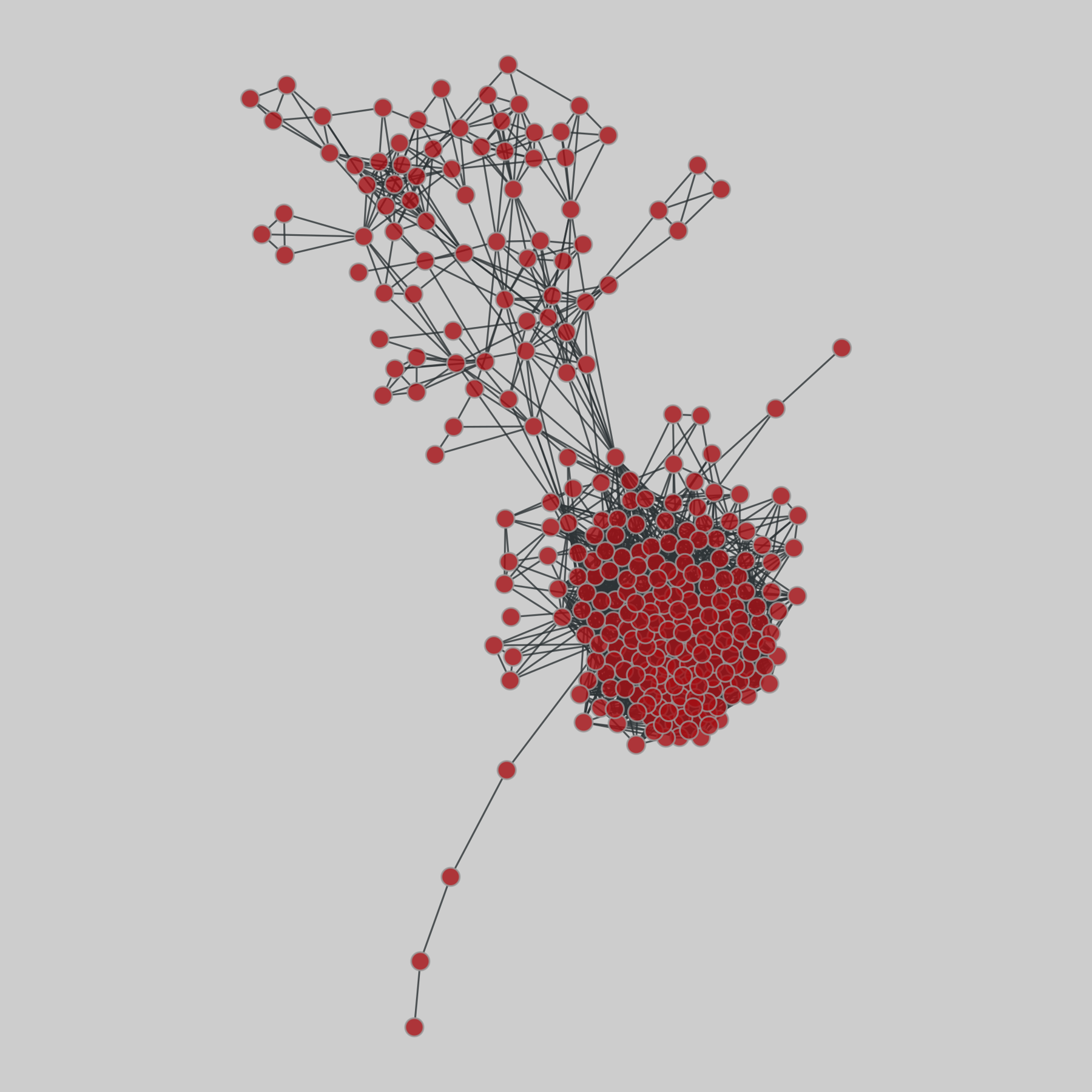
malaria_genes: Malaria var DBLa HVR networks
Networks of recombinant antigen genes from the human malaria parasite P. falciparum. Each of the 9 networks shares the same set of vertices but has different edges, corresponding to the 9 highly variable regions (HVRs) in the DBLa domain of the var protein. Nodes are var genes, and two genes are connected if they share a substring whose length is statistically significant. Metadata includes two types of node labels, both based on sequence st…
 @davidaugust@mastodon.online
2026-03-07 18:18:45
Not sure I agree w/this whole article, but interesting perspective. “…any systemically important market can be shut down not by force but by…withdrawal of…institutional trust layer that enables…function…mechanism is substrate-agnostic…operated in…repo market in 2008…is operating in…Strait of Hormuz in 2026…will operate again, in…different domain…next time verification costs invert transaction economics in…concentrated market structure w/o adequate government backstop.”

 @boris@cosocial.ca
2026-01-26 16:23:13
@… this is a different kind of shape but a related theme of what is and isn’t necessary by @…
Substrates and algae
…
@netzschleuder@social.skewed.de2026-01-02 14:00:04
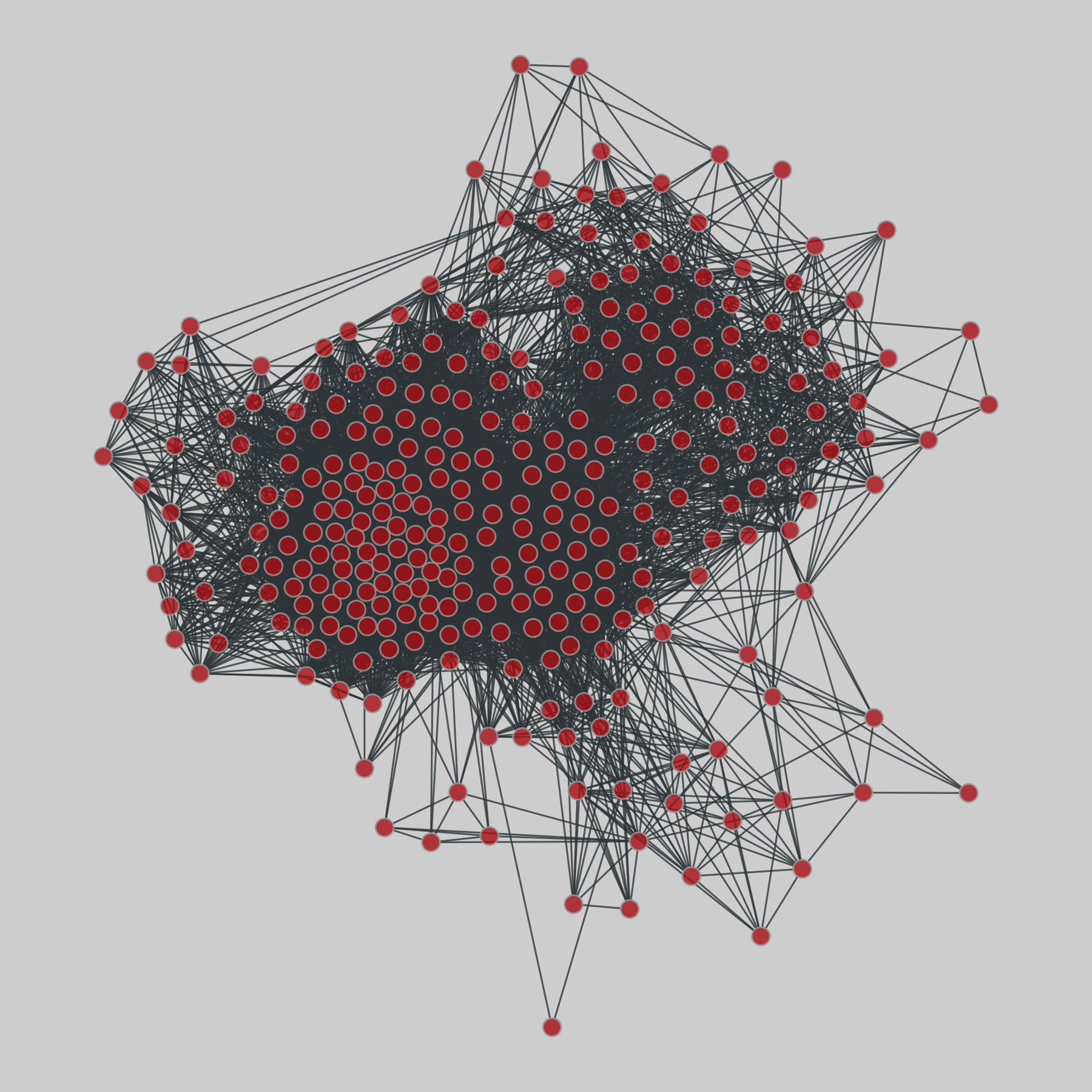
malaria_genes: Malaria var DBLa HVR networks
Networks of recombinant antigen genes from the human malaria parasite P. falciparum. Each of the 9 networks shares the same set of vertices but has different edges, corresponding to the 9 highly variable regions (HVRs) in the DBLa domain of the var protein. Nodes are var genes, and two genes are connected if they share a substring whose length is statistically significant. Metadata includes two types of node labels, both based on sequence st…
 @cosmos4u@scicomm.xyz
2026-01-26 03:47:09
The ALMA survey to Resolve #ExoKuiper belt Substructures (ARKS) - motivation, sample, data reduction, and results overview: https://www.mpg.de/26005548/arks_part_i_overview_preprint.pdf -> ALMA Reveals Teenage Years of New Worlds: https://www.mpia.de/news/science/2026-01-arks-survey - new astronomical survey captures previously unknown growing pains in the lives of planets.
@netzschleuder@social.skewed.de2025-12-26 13:00:04
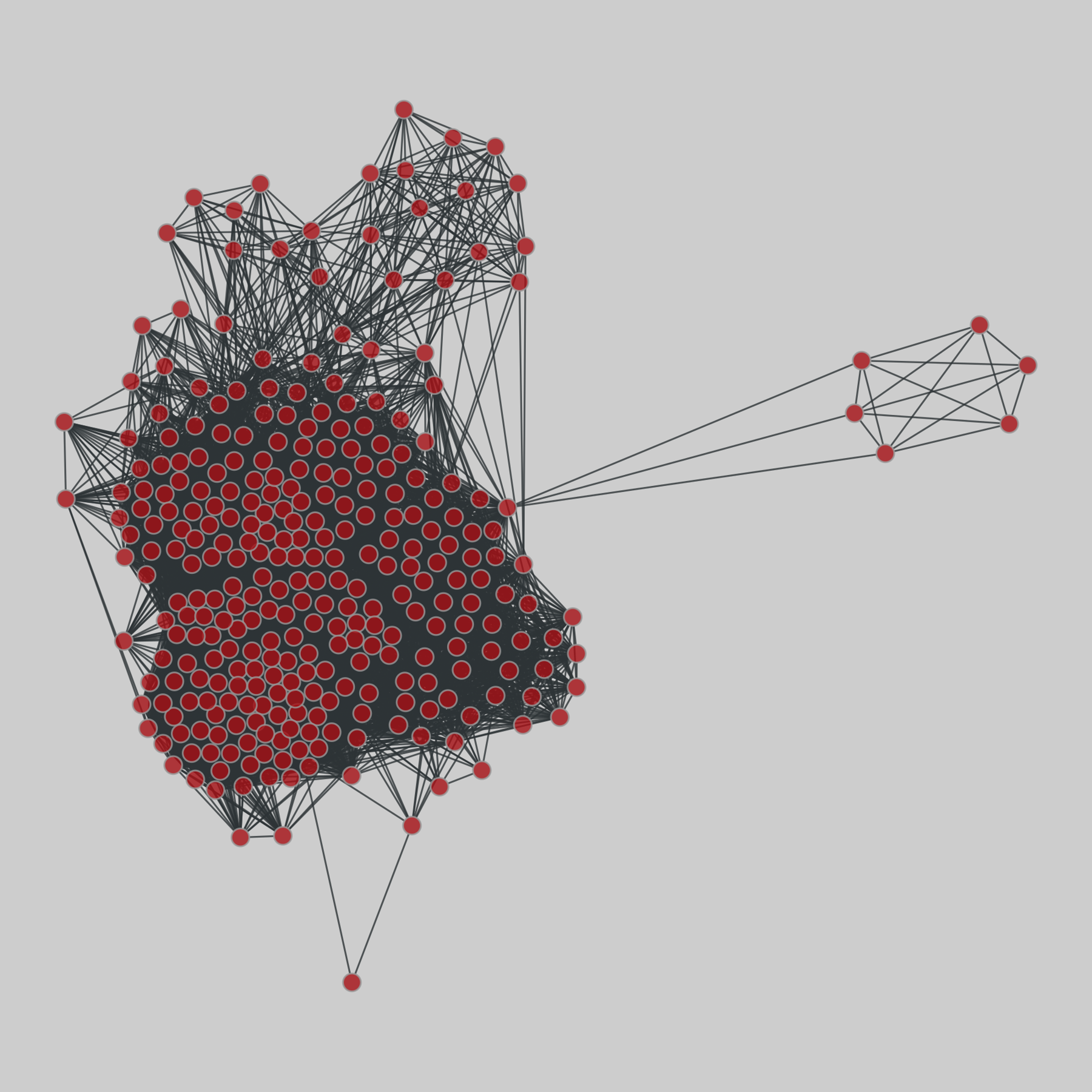
malaria_genes: Malaria var DBLa HVR networks
Networks of recombinant antigen genes from the human malaria parasite P. falciparum. Each of the 9 networks shares the same set of vertices but has different edges, corresponding to the 9 highly variable regions (HVRs) in the DBLa domain of the var protein. Nodes are var genes, and two genes are connected if they share a substring whose length is statistically significant. Metadata includes two types of node labels, both based on sequence st…
 @arXiv_csLG_bot@mastoxiv.page
2026-02-25 12:33:48
Crosslisted article(s) found for cs.LG. https://arxiv.org/list/cs.LG/new
[3/3]:
- Functional Continuous Decomposition
Teymur Aghayev
https://arxiv.org/abs/2602.20857 https://mastoxiv.page/@arXiv_eessSP_bot/116130499236089653
- SpatiaLQA: A Benchmark for Evaluating Spatial Logical Reasoning in Vision-Language Models
Xie, Zhang, Shan, Zhu, Tang, Wei, Song, Wan, Song
https://arxiv.org/abs/2602.20901 https://mastoxiv.page/@arXiv_csCV_bot/116130845273808954
- Some Simple Economics of AGI
Christian Catalini, Xiang Hui, Jane Wu
https://arxiv.org/abs/2602.20946 https://mastoxiv.page/@arXiv_econGN_bot/116130470423837005
- Multimodal MRI Report Findings Supervised Brain Lesion Segmentation with Substructures
Yubin Ge, Yongsong Huang, Xiaofeng Liu
https://arxiv.org/abs/2602.20994 https://mastoxiv.page/@arXiv_eessIV_bot/116130212832138624
- MIP Candy: A Modular PyTorch Framework for Medical Image Processing
Tianhao Fu, Yucheng Chen
https://arxiv.org/abs/2602.21033 https://mastoxiv.page/@arXiv_csCV_bot/116130864279556063
- Empirically Calibrated Conditional Independence Tests
Milleno Pan, Antoine de Mathelin, Wesley Tansey
https://arxiv.org/abs/2602.21036 https://mastoxiv.page/@arXiv_statME_bot/116130690605113562
- Is Multi-Distribution Learning as Easy as PAC Learning: Sharp Rates with Bounded Label Noise
Rafael Hanashiro, Abhishek Shetty, Patrick Jaillet
https://arxiv.org/abs/2602.21039 https://mastoxiv.page/@arXiv_statML_bot/116130572661848449
- Position-Aware Sequential Attention for Accurate Next Item Recommendations
Timur Nabiev, Evgeny Frolov
https://arxiv.org/abs/2602.21052 https://mastoxiv.page/@arXiv_csIR_bot/116130263323086316
- Motivation is Something You Need
Mehdi Acheli, Walid Gaaloul
https://arxiv.org/abs/2602.21064 https://mastoxiv.page/@arXiv_csAI_bot/116130680774678580
- An Enhanced Projection Pursuit Tree Classifier with Visual Methods for Assessing Algorithmic Impr...
Natalia da Silva, Dianne Cook, Eun-Kyung Lee
https://arxiv.org/abs/2602.21130 https://mastoxiv.page/@arXiv_statML_bot/116130610674573081
- Complexity of Classical Acceleration for $\ell_1$-Regularized PageRank
Kimon Fountoulakis, David Mart\'inez-Rubio
https://arxiv.org/abs/2602.21138 https://mastoxiv.page/@arXiv_mathOC_bot/116130547076073836
- LUMEN: Longitudinal Multi-Modal Radiology Model for Prognosis and Diagnosis
Jiang, Yang, Nath, Parida, Kulkarni, Xu, Xu, Anwar, Roth, Linguraru
https://arxiv.org/abs/2602.21142 https://mastoxiv.page/@arXiv_csCV_bot/116130871488694585
- A Benchmark for Deep Information Synthesis
Debjit Paul, et al.
https://arxiv.org/abs/2602.21143 https://mastoxiv.page/@arXiv_csAI_bot/116130692571594706
- Scaling State-Space Models on Multiple GPUs with Tensor Parallelism
Anurag Dutt, Nimit Shah, Hazem Masarani, Anshul Gandhi
https://arxiv.org/abs/2602.21144 https://mastoxiv.page/@arXiv_csDC_bot/116130520888343997
- Not Just How Much, But Where: Decomposing Epistemic Uncertainty into Per-Class Contributions
Mame Diarra Toure, David A. Stephens
https://arxiv.org/abs/2602.21160 https://mastoxiv.page/@arXiv_statML_bot/116130618512594211
- Aletheia tackles FirstProof autonomously
Tony Feng, et al.
https://arxiv.org/abs/2602.21201 https://mastoxiv.page/@arXiv_csAI_bot/116130705679345625
- Squint: Fast Visual Reinforcement Learning for Sim-to-Real Robotics
Abdulaziz Almuzairee, Henrik I. Christensen
https://arxiv.org/abs/2602.21203 https://mastoxiv.page/@arXiv_csRO_bot/116130765974498223
toXiv_bot_toot