Tootfinder

Opt-in global Mastodon full text search. Join the index!

@netzschleuder@social.skewed.de

2026-02-01 22:00:08

wiki_link_dyn: Wikipedia link dynamics (2011)
Six networks of the evolving hyperlink structure among wikipedia articles, for simple English (en), German (de), Dutch (nl), Polish (pl), Italian (it), French (fr), taken in August 2011. Each edge is timestamped, and an edge (i,j) indicates that article i hyperlinks to j. The edge sign indicates the addition ( 1) or deletion (-1) of that link at the specified time.
This network has 100312 nodes and 1627472 edges.
Tags: Informati…

wiki_link_dyn: Wikipedia link dynamics (2011). 100312 nodes, 1627472 edges. https://networks.skewed.de/net/wiki_link_dyn
@socallinuxexpo@social.linux.pizza
2026-01-30 01:55:01

Dawn Foster will speak on 'Power Dynamics, Rug Pulls, and Other Corporate Impacts on OSS Sustainability' as part of our General track at SCaLE 23x. Full details: socallinuxexpo.org/scale/23x/p

@ruth_mottram@fediscience.org
2025-11-30 07:48:23

In the field of dynamical glaciology, this would be DeConto and Pollard, 2016.
I think it's dead wrong, but it's certainly led to some very interesting studies.and some real advanced in the otherwise moribund calving dynamics sub-field.
Would love to hear other suggestions from #climate (or adjacent) fields..
#science

@hex@kolektiva.social
2025-11-17 06:11:16

I think we can actually prove that this constraint is the *only* constraint that can preserve freedom:
1. There will exist actors in a system who will wish to take advantage of others. Evolution drives survival and one strategy for increasing survival in an altruistic society is to become a parasite.
2. Expecting exploitative dynamics, a system needs to have a set of rules to manage exploitation.
3. If the set of rules is static it will lack the requisite variety necessary to manage the infinite possible behavior of humans so the system will fail.
4. If the system is dynamic then it must have a rule set about how it's own rules are updated. This would make the system recursive, which makes the system at least as complex as mathematics. Any system at least as complex as mathematics is necessarily either incomplete or inconsistent (Gödel's incompleteness theorem). If the system is incomplete, then constraints can be evaded which then allow a malicious agent to seize control of the system and update the rules for their own benefit. If constraints are incomplete, then a malicious agent can take advantage of others within the system.
5. Therefore, no social system can possibly protect freedom unless there exists a single metasystemic constraint (that the system must be optional) allowing for the system to be abandoned when compromised.
Oh, you might say, but this just means you have to infinitely abandon systems. Sure, but there's an evolutionary advantage to cooperation so there's evolutionary pressure to *not* be a malicious actor. So a malicious actor being able to compromise the whole system is likely to be a much more rare event. Compromising a system is a lot of work, so the first thing a malicious actor would want to do is preserve that work. They would want to lock you in. The most important objective to a malicious actor compromising a system would be to violate that metasystemic constraint, or all of their work goes out the window when everyone leaves.
And now you understand why borders exist, why fascists are obsessed with maintaining categories like gender, race, ethnicity, etc. This is why even Democrats like Newsom are on board with putting houseless people in concentration camps. And this is why the most important thing anarchists promote is the ability to choose not to be part of any of that.

@Techmeme@techhub.social
2025-11-20 07:26:14

Google DeepMind hires former Boston Dynamics CTO Aaron Saunders as VP of hardware engineering, as Demis Hassabis envisions Gemini to become a sort of robot OS (Will Knight/Wired)
wired.com/story/google-hires-c

@netzschleuder@social.skewed.de

2025-12-27 12:00:07

wiki_link_dyn: Wikipedia link dynamics (2011)
Six networks of the evolving hyperlink structure among wikipedia articles, for simple English (en), German (de), Dutch (nl), Polish (pl), Italian (it), French (fr), taken in August 2011. Each edge is timestamped, and an edge (i,j) indicates that article i hyperlinks to j. The edge sign indicates the addition ( 1) or deletion (-1) of that link at the specified time.
This network has 100312 nodes and 1627472 edges.
Tags: Informati…

wiki_link_dyn: Wikipedia link dynamics (2011). 100312 nodes, 1627472 edges. https://networks.skewed.de/net/wiki_link_dyn
@heiseonline@social.heise.de
2026-01-06 12:00:00

Atlas sortiert Autoteile: Boston Dynamics testet Roboter in Hyundai-Fabrik
Boston Dynamics gewährt "60 Minutes" Einblicke in seine Arbeit: Der Roboter Atlas soll erstmals im realen Industrieumfeld lernen, Aufgaben autonom zu erledigen.

@netzschleuder@social.skewed.de

2025-12-27 19:00:07

wiki_link_dyn: Wikipedia link dynamics (2011)
Six networks of the evolving hyperlink structure among wikipedia articles, for simple English (en), German (de), Dutch (nl), Polish (pl), Italian (it), French (fr), taken in August 2011. Each edge is timestamped, and an edge (i,j) indicates that article i hyperlinks to j. The edge sign indicates the addition ( 1) or deletion (-1) of that link at the specified time.
This network has 100312 nodes and 1627472 edges.
Tags: Informati…

wiki_link_dyn: Wikipedia link dynamics (2011). 100312 nodes, 1627472 edges. https://networks.skewed.de/net/wiki_link_dyn
@heiseonline@social.heise.de
2025-12-11 11:29:00

Boston Dynamics erklärt merkwürdiges Aufstehen des humanoiden Atlas-Roboters
Der humanoide Atlas-Roboter unternimmt einige merkwürdige Verrenkungen, um aus einer liegenden Position aufzustehen. Eine Ingenieurin erläutert, warum.

@netzschleuder@social.skewed.de
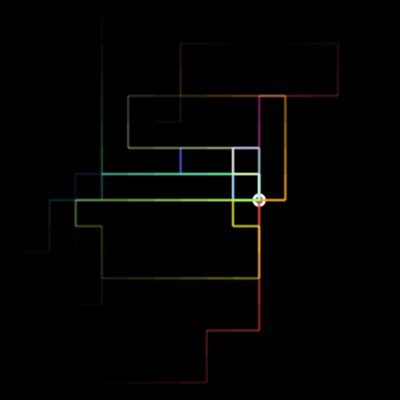
2025-11-24 10:00:07

wiki_link_dyn: Wikipedia link dynamics (2011)
Six networks of the evolving hyperlink structure among wikipedia articles, for simple English (en), German (de), Dutch (nl), Polish (pl), Italian (it), French (fr), taken in August 2011. Each edge is timestamped, and an edge (i,j) indicates that article i hyperlinks to j. The edge sign indicates the addition ( 1) or deletion (-1) of that link at the specified time.
This network has 100312 nodes and 1627472 edges.
Tags: Informati…

wiki_link_dyn: Wikipedia link dynamics (2011). 100312 nodes, 1627472 edges. https://networks.skewed.de/net/wiki_link_dyn
@tiotasram@kolektiva.social
2025-12-16 12:30:40

Just finished "Class Act" by Jerry Craft. An excellent follow-up to "New Kid", and it deepens the exploration of racism in "New Kid" in a lot of different directions. I think the aspect I liked most was the handling of class/race dynamics but also the different explorations of fitting back into neighborhood communities.
#AmReading #ReadingNow

@heiseonline@social.heise.de
2026-01-07 14:03:00

KI-Update kompakt: Milliarden für xAI, CES 2026, Boston Dynamics, ChatGPT
Das „KI-Update“ liefert drei mal pro Woche eine Zusammenfassung der wichtigsten KI-Entwicklungen.

@netzschleuder@social.skewed.de

2025-11-23 15:00:07

wiki_link_dyn: Wikipedia link dynamics (2011)
Six networks of the evolving hyperlink structure among wikipedia articles, for simple English (en), German (de), Dutch (nl), Polish (pl), Italian (it), French (fr), taken in August 2011. Each edge is timestamped, and an edge (i,j) indicates that article i hyperlinks to j. The edge sign indicates the addition ( 1) or deletion (-1) of that link at the specified time.
This network has 100312 nodes and 1627472 edges.
Tags: Informati…

wiki_link_dyn: Wikipedia link dynamics (2011). 100312 nodes, 1627472 edges. https://networks.skewed.de/net/wiki_link_dyn
@hex@kolektiva.social
2025-11-21 18:54:12

Any sufficiently advanced disaster preparedness is indistinguishable from revolutionary dual power. This essay is a bit of a transition between the theory I've written earlier, and more concrete plans.
Even though I only touched on my life on the commune, it was hard not to write more. These are such weird spaces, with so much invisible opportunity. But they're also just so unique and special. For all the stress and uncertainty of making sure you stayed on Lorean's (the head priestess), there were also those long summer nights with the whole community (except the old lady) gathered around a fire, talking and drinking. There was almost a child-like play to the whole time.
There were so Fridays I'd come home with a couple of gallons of beer from the real world, folks would bring things from the garden, someone would grill a steak, everyone who didn't cook would clean up, and we'd just hang out and have fun. So many evenings I'd go over to Miles place with a guitar, or with his guitar, and we'd pass it around over a few beers, talking about philosophy, Star Wars, or some book or other. It's hard not to write about the strange magic of that space.
My partner and I bonded over similar experiences, mine on a weird little religious commune in California and theirs as a temporary worker at Omega Institute. Both had exploitation, people on weird power trips, frustrating dynamics, but also a strange magic and freedom. Both were sort of fantasy worlds, but places that let us see through this one, let us imagine something that something else is possible behind the veil.
There are many such veils.
Perhaps it's fitting that this is more meandering, as a good wander can help the transition between lots of hard thinking and lots of hard working.
anarchoccultism.org/building-z
Editing feedback (especially typos, spelling, grammar) is always welcome, as are questions and even wider structural advice. I've been adding the handles of folks who provide feedback to the intro in a "thank you" section. If you do help and wouldn't like to be added, please let me know.

@NFL@darktundra.xyz
2025-12-16 11:06:32

Duke Tobin, Zac Taylor and Al Golden: Insight on who might stay, go with Bengals nytimes.com/athletic/6892444/2

@ruth_mottram@fediscience.org
2025-12-11 16:56:52

Epic and also wildly fascinating thread on solar dynamics by @… ...
The good and hard science really is on mastodon.
social.sciences.re/@jaztrophys

@netzschleuder@social.skewed.de

2025-11-21 08:00:07

wiki_link_dyn: Wikipedia link dynamics (2011)
Six networks of the evolving hyperlink structure among wikipedia articles, for simple English (en), German (de), Dutch (nl), Polish (pl), Italian (it), French (fr), taken in August 2011. Each edge is timestamped, and an edge (i,j) indicates that article i hyperlinks to j. The edge sign indicates the addition ( 1) or deletion (-1) of that link at the specified time.
This network has 100312 nodes and 1627472 edges.
Tags: Informati…

wiki_link_dyn: Wikipedia link dynamics (2011). 100312 nodes, 1627472 edges. https://networks.skewed.de/net/wiki_link_dyn
@arXiv_mathOC_bot@mastoxiv.page
2025-11-14 09:30:00

The Age-Structured Chemostat with Substrate Dynamics as a Control System
Iasson Karafyllis, Dionysis Theodosis, Miroslav Krstic
arxiv.org/abs/2511.09963 arxiv.org/pdf/2511.09963 arxiv.org/html/2511.09963
arXiv:2511.09963v1 Announce Type: new
Abstract: In this work we study an age-structured chemostat model with a renewal boundary condition and a coupled substrate equation. The model is nonlinear and consists of a hyperbolic partial differential equation and an ordinary differential equation with nonlinear, nonlocal terms appearing both in the ordinary differential equation and the boundary condition. Both differential equations contain a non-negative control input, while the states of the model are required to be positive. Under an appropriate weak solution framework, we determine the state space and the input space for this model. We prove global existence and uniqueness of solutions for all admissible initial conditions and all allowable control inputs. To this purpose we employ a combination of Banach's fixed-point theorem with implicit solution formulas and useful solution estimates. Finally, we show that the age-structured chemostat model gives a well-defined control system on a metric space.
toXiv_bot_toot

@heiseonline@social.heise.de
2025-12-12 06:48:00

Lara Croft kehrt zurück: Zwei neue „Tomb Raider“-Spiele angekündigt
Crystal Dynamics und Amazon Game Studios wollen der „Tomb Raider“-Reihe um Lara Croft neues Leben einhauchen.

@arXiv_csGT_bot@mastoxiv.page
2025-12-10 07:44:21

The Theory of Strategic Evolution: Games with Endogenous Players and Strategic Replicators
Kevin Vallier
arxiv.org/abs/2512.07901 arxiv.org/pdf/2512.07901 arxiv.org/html/2512.07901
arXiv:2512.07901v1 Announce Type: new
Abstract: This paper develops the Theory of Strategic Evolution, a general model for systems in which the population of players, strategies, and institutional rules evolve together. The theory extends replicator dynamics to settings with endogenous players, multi level selection, innovation, constitutional change, and meta governance. The central mathematical object is a Poiesis stack: a hierarchy of strategic layers linked by cross level gain matrices. Under small gain conditions, the system admits a global Lyapunov function and satisfies selection, tracking, and stochastic stability results at every finite depth. We prove that the class is closed under block extension, innovation events, heterogeneous utilities, continuous strategy spaces, and constitutional evolution. The closure theorem shows that no new dynamics arise at higher levels and that unrestricted self modification cannot preserve Lyapunov structure. The theory unifies results from evolutionary game theory, institutional design, innovation dynamics, and constitutional political economy, providing a general mathematical model of long run strategic adaptation.
toXiv_bot_toot

@arXiv_csLG_bot@mastoxiv.page
2025-12-22 13:54:24

Replaced article(s) found for cs.LG. arxiv.org/list/cs.LG/new
[1/5]:
- Feed Two Birds with One Scone: Exploiting Wild Data for Both Out-of-Distribution Generalization a...
Haoyue Bai, Gregory Canal, Xuefeng Du, Jeongyeol Kwon, Robert Nowak, Yixuan Li
arxiv.org/abs/2306.09158
- Sparse, Efficient and Explainable Data Attribution with DualXDA
Galip \"Umit Yolcu, Moritz Weckbecker, Thomas Wiegand, Wojciech Samek, Sebastian Lapuschkin
arxiv.org/abs/2402.12118 mastoxiv.page/@arXiv_csLG_bot/
- HGQ: High Granularity Quantization for Real-time Neural Networks on FPGAs
Sun, Que, {\AA}rrestad, Loncar, Ngadiuba, Luk, Spiropulu
arxiv.org/abs/2405.00645 mastoxiv.page/@arXiv_csLG_bot/
- On the Identification of Temporally Causal Representation with Instantaneous Dependence
Li, Shen, Zheng, Cai, Song, Gong, Chen, Zhang
arxiv.org/abs/2405.15325 mastoxiv.page/@arXiv_csLG_bot/
- Basis Selection: Low-Rank Decomposition of Pretrained Large Language Models for Target Applications
Yang Li, Daniel Agyei Asante, Changsheng Zhao, Ernie Chang, Yangyang Shi, Vikas Chandra
arxiv.org/abs/2405.15877 mastoxiv.page/@arXiv_csLG_bot/
- Privacy Bias in Language Models: A Contextual Integrity-based Auditing Metric
Yan Shvartzshnaider, Vasisht Duddu
arxiv.org/abs/2409.03735 mastoxiv.page/@arXiv_csLG_bot/
- Low-Rank Filtering and Smoothing for Sequential Deep Learning
Joanna Sliwa, Frank Schneider, Nathanael Bosch, Agustinus Kristiadi, Philipp Hennig
arxiv.org/abs/2410.06800 mastoxiv.page/@arXiv_csLG_bot/
- Hierarchical Multimodal LLMs with Semantic Space Alignment for Enhanced Time Series Classification
Xiaoyu Tao, Tingyue Pan, Mingyue Cheng, Yucong Luo, Qi Liu, Enhong Chen
arxiv.org/abs/2410.18686 mastoxiv.page/@arXiv_csLG_bot/
- Fairness via Independence: A (Conditional) Distance Covariance Framework
Ruifan Huang, Haixia Liu
arxiv.org/abs/2412.00720 mastoxiv.page/@arXiv_csLG_bot/
- Data for Mathematical Copilots: Better Ways of Presenting Proofs for Machine Learning
Simon Frieder, et al.
arxiv.org/abs/2412.15184 mastoxiv.page/@arXiv_csLG_bot/
- Pairwise Elimination with Instance-Dependent Guarantees for Bandits with Cost Subsidy
Ishank Juneja, Carlee Joe-Wong, Osman Ya\u{g}an
arxiv.org/abs/2501.10290 mastoxiv.page/@arXiv_csLG_bot/
- Towards Human-Guided, Data-Centric LLM Co-Pilots
Evgeny Saveliev, Jiashuo Liu, Nabeel Seedat, Anders Boyd, Mihaela van der Schaar
arxiv.org/abs/2501.10321 mastoxiv.page/@arXiv_csLG_bot/
- Regularized Langevin Dynamics for Combinatorial Optimization
Shengyu Feng, Yiming Yang
arxiv.org/abs/2502.00277
- Generating Samples to Probe Trained Models
Eren Mehmet K{\i}ral, Nur\c{s}en Ayd{\i}n, \c{S}. \.Ilker Birbil
arxiv.org/abs/2502.06658 mastoxiv.page/@arXiv_csLG_bot/
- On Agnostic PAC Learning in the Small Error Regime
Julian Asilis, Mikael M{\o}ller H{\o}gsgaard, Grigoris Velegkas
arxiv.org/abs/2502.09496 mastoxiv.page/@arXiv_csLG_bot/
- Preconditioned Inexact Stochastic ADMM for Deep Model
Shenglong Zhou, Ouya Wang, Ziyan Luo, Yongxu Zhu, Geoffrey Ye Li
arxiv.org/abs/2502.10784 mastoxiv.page/@arXiv_csLG_bot/
- On the Effect of Sampling Diversity in Scaling LLM Inference
Wang, Liu, Chen, Light, Liu, Chen, Zhang, Cheng
arxiv.org/abs/2502.11027 mastoxiv.page/@arXiv_csLG_bot/
- How to use score-based diffusion in earth system science: A satellite nowcasting example
Randy J. Chase, Katherine Haynes, Lander Ver Hoef, Imme Ebert-Uphoff
arxiv.org/abs/2505.10432 mastoxiv.page/@arXiv_csLG_bot/
- PEAR: Equal Area Weather Forecasting on the Sphere
Hampus Linander, Christoffer Petersson, Daniel Persson, Jan E. Gerken
arxiv.org/abs/2505.17720 mastoxiv.page/@arXiv_csLG_bot/
- Train Sparse Autoencoders Efficiently by Utilizing Features Correlation
Vadim Kurochkin, Yaroslav Aksenov, Daniil Laptev, Daniil Gavrilov, Nikita Balagansky
arxiv.org/abs/2505.22255 mastoxiv.page/@arXiv_csLG_bot/
- A Certified Unlearning Approach without Access to Source Data
Umit Yigit Basaran, Sk Miraj Ahmed, Amit Roy-Chowdhury, Basak Guler
arxiv.org/abs/2506.06486 mastoxiv.page/@arXiv_csLG_bot/
toXiv_bot_toot

@arXiv_qbioNC_bot@mastoxiv.page
2025-12-12 08:14:40

Allometric scaling of brain activity explained by avalanche criticality
Tiago S. A. N. Sim\~oes, Jos\'e S. Andrade Jr., Hans J. Herrmann, Stefano Zapperi, Lucilla de Arcangelis
arxiv.org/abs/2512.10834 arxiv.org/pdf/2512.10834 arxiv.org/html/2512.10834
arXiv:2512.10834v1 Announce Type: new
Abstract: Allometric scaling laws, such as Kleiber's law for metabolic rate, highlight how efficiency emerges with size across living systems. The brain, with its characteristic sublinear scaling of activity, has long posed a puzzle: why do larger brains operate with disproportionately lower firing rates? Here we show that this economy of scale is a universal outcome of avalanche dynamics. We derive analytical scaling laws directly from avalanche statistics, establishing that any system governed by critical avalanches must exhibit sublinear activity-size relations. This theoretical prediction is then verified in integrate-and-fire neuronal networks at criticality and in classical self-organized criticality models, demonstrating that the effect is not model-specific but generic. The predicted exponents align with experimental observations across mammal species, bridging dynamical criticality with the allometry of brain metabolism. Our results reveal avalanche criticality as a fundamental mechanism underlying Kleiber-like scaling in the brain.
toXiv_bot_toot

@netzschleuder@social.skewed.de

2025-11-07 17:00:07

wiki_link_dyn: Wikipedia link dynamics (2011)
Six networks of the evolving hyperlink structure among wikipedia articles, for simple English (en), German (de), Dutch (nl), Polish (pl), Italian (it), French (fr), taken in August 2011. Each edge is timestamped, and an edge (i,j) indicates that article i hyperlinks to j. The edge sign indicates the addition ( 1) or deletion (-1) of that link at the specified time.
This network has 100312 nodes and 1627472 edges.
Tags: Informati…

wiki_link_dyn: Wikipedia link dynamics (2011). 100312 nodes, 1627472 edges. https://networks.skewed.de/net/wiki_link_dyn
@arXiv_mathOC_bot@mastoxiv.page
2025-11-14 13:23:10

Replaced article(s) found for math.OC. arxiv.org/list/math.OC/new
[1/1]:
- A robust BFGS algorithm for unconstrained nonlinear optimization problems
Yaguang Yang
arxiv.org/abs/1212.5929
- Quantum computing and the stable set problem
Alja\v{z} Krpan, Janez Povh, Dunja Pucher
arxiv.org/abs/2405.12845 mastoxiv.page/@arXiv_mathOC_bo
- Mean Field Game with Reflected Jump Diffusion Dynamics: A Linear Programming Approach
Zongxia Liang, Xiang Yu, Keyu Zhang
arxiv.org/abs/2508.20388 mastoxiv.page/@arXiv_mathOC_bo
- Differential Dynamic Programming for the Optimal Control Problem with an Ellipsoidal Target Set a...
Sungjun Eom, Gyunghoon Park
arxiv.org/abs/2509.07546 mastoxiv.page/@arXiv_mathOC_bo
- On the Moreau envelope properties of weakly convex functions
Marien Renaud, Arthur Leclaire, Nicolas Papadakis
arxiv.org/abs/2509.13960 mastoxiv.page/@arXiv_mathOC_bo
- Automated algorithm design via Nevanlinna-Pick interpolation
Ibrahim K. Ozaslan, Tryphon T. Georgiou, Mihailo R. Jovanovic
arxiv.org/abs/2509.21416 mastoxiv.page/@arXiv_mathOC_bo
- Optimal Control of a Bioeconomic Crop-Energy System with Energy Reinvestment
Othman Cherkaoui Dekkaki
arxiv.org/abs/2510.11381 mastoxiv.page/@arXiv_mathOC_bo
- Point Convergence Analysis of the Accelerated Gradient Method for Multiobjective Optimization: Co...
Yingdong Yin
arxiv.org/abs/2510.26382 mastoxiv.page/@arXiv_mathOC_bo
- History-Aware Adaptive High-Order Tensor Regularization
Chang He, Bo Jiang, Yuntian Jiang, Chuwen Zhang, Shuzhong Zhang
arxiv.org/abs/2511.05788
- Equivalence of entropy solutions and gradient flows for pressureless 1D Euler systems
Jos\'e Antonio Carrillo, Sondre Tesdal Galtung
arxiv.org/abs/2312.04932 mastoxiv.page/@arXiv_mathAP_bo
- Kernel Modelling of Fading Memory Systems
Yongkang Huo, Thomas Chaffey, Rodolphe Sepulchre
arxiv.org/abs/2403.11945 mastoxiv.page/@arXiv_eessSY_bo
- The Maximum Theoretical Ground Speed of the Wheeled Vehicle
Altay Zhakatayev, Mukatai Nemerebayev
arxiv.org/abs/2502.15341 mastoxiv.page/@arXiv_physicscl
- Hessian stability and convergence rates for entropic and Sinkhorn potentials via semiconcavity
Giacomo Greco, Luca Tamanini
arxiv.org/abs/2504.11133 mastoxiv.page/@arXiv_mathPR_bo
- Optimizing the ground state energy of the three-dimensional magnetic Dirichlet Laplacian with con...
Matthias Baur
arxiv.org/abs/2504.21597 mastoxiv.page/@arXiv_mathph_bo
- A localized consensus-based sampling algorithm
Arne Bouillon, Alexander Bodard, Panagiotis Patrinos, Dirk Nuyens, Giovanni Samaey
arxiv.org/abs/2505.24861 mastoxiv.page/@arXiv_mathNA_bo
- A Novel Sliced Fused Gromov-Wasserstein Distance
Moritz Piening, Robert Beinert
arxiv.org/abs/2508.02364 mastoxiv.page/@arXiv_csLG_bot/
- Minimal Regret Walras Equilibria for Combinatorial Markets via Duality, Integrality, and Sensitiv...
Alo\"is Duguet, Tobias Harks, Martin Schmidt, Julian Schwarz
arxiv.org/abs/2511.09021 mastoxiv.page/@arXiv_csGT_bot/
toXiv_bot_toot