 @mariyadelano@hachyderm.io
2025-11-14 21:05:53
So I grew up next to #Chernobyl and this is, well, TERRIFYING.
A story for y’all: I’m from a city called Zhytomyr, 2 hours west of Kyiv in the North of #Ukraine. We were downwind of the Chernobyl #nuclear power plant when the 1986 disaster happened.
I wasn’t born for another 12 years, but my childhood was filled with stories and the aftermath of it all. Things like:
- My grandmother worked as a head doctor in a hospital and rehabilitation facility exclusively for children of Chernobyl victims to treat the extremely high prevalence of Tuberculosis and other severe health complications. (To specify: these were SECOND GENERATION of exposure).
- A lot of the kids in that facility were orphans, because their parents died young from health problems.
- My uncle’s wife was born in Pripyat. She was 1 year old when the disaster happened. Her parents were told to evacuate while given no information about what happened. They had to pack up their things and rush out to an unfamiliar city with their baby, never to see the rest of their belongings, apartment, or hometown again.
- When I was a kid, it became so common to see weirdly mutated animals and insects that even 2-3 year olds would make jokes about “Chernobyl mosquitos” and I wouldn’t even flinch seeing occasional giant bugs, dark frogs, weird-looking dogs.
- We’d frequently hear of nearby farms having issues with their animals being born too mutated to survive or random outbreaks from contaminated water / food. Crops would randomly fail. People would get poisoned on a regular basis. This all got less common as I grew up.
- My mother still remembers being a little girl, 10 years old, and looking outside from their balcony at the clouds blowing over from Chernobyl that day. People were told to not go outside and to shut all the windows, but not given an explanation as to why. My mother swears that the rain looked different. They weren’t able to go and buy more food for the kitchen for multiple days.
Anyway - nuclear safety isn’t a joke. I don’t understand how this level of carelessness can happen after Chernobyl and Fukushima.
https://www.404media.co/power-companies-are-using-ai-to-build-nuclear-power-plants/
 @midtsveen@social.linux.pizza
2026-01-15 18:22:20
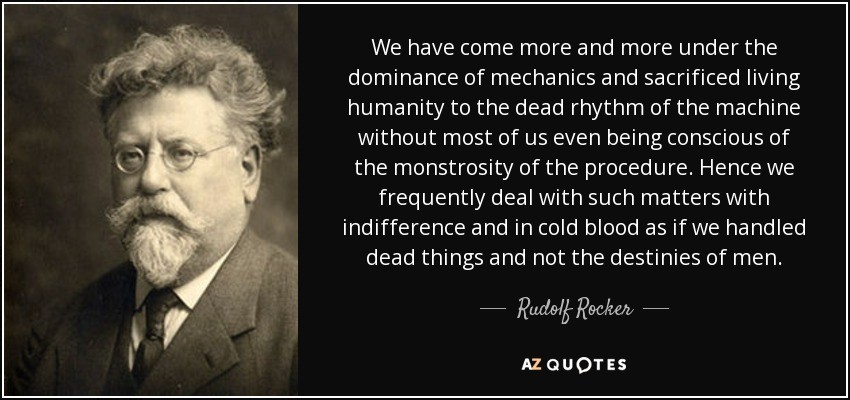
The working class is the fundamental force that produces the material conditions necessary for the reproduction of society, and through our collective labor we not only create food, shelter, healthcare, education, transportation, and communication networks, but we also sustain and reproduce the conditions that allow every aspect of social life to continue functioning, so that even those who do not work, whether they are managers, bureaucrats, or capitalists, depend entirely on our labor for …
 @hikingdude@mastodon.social
2025-11-16 12:29:09
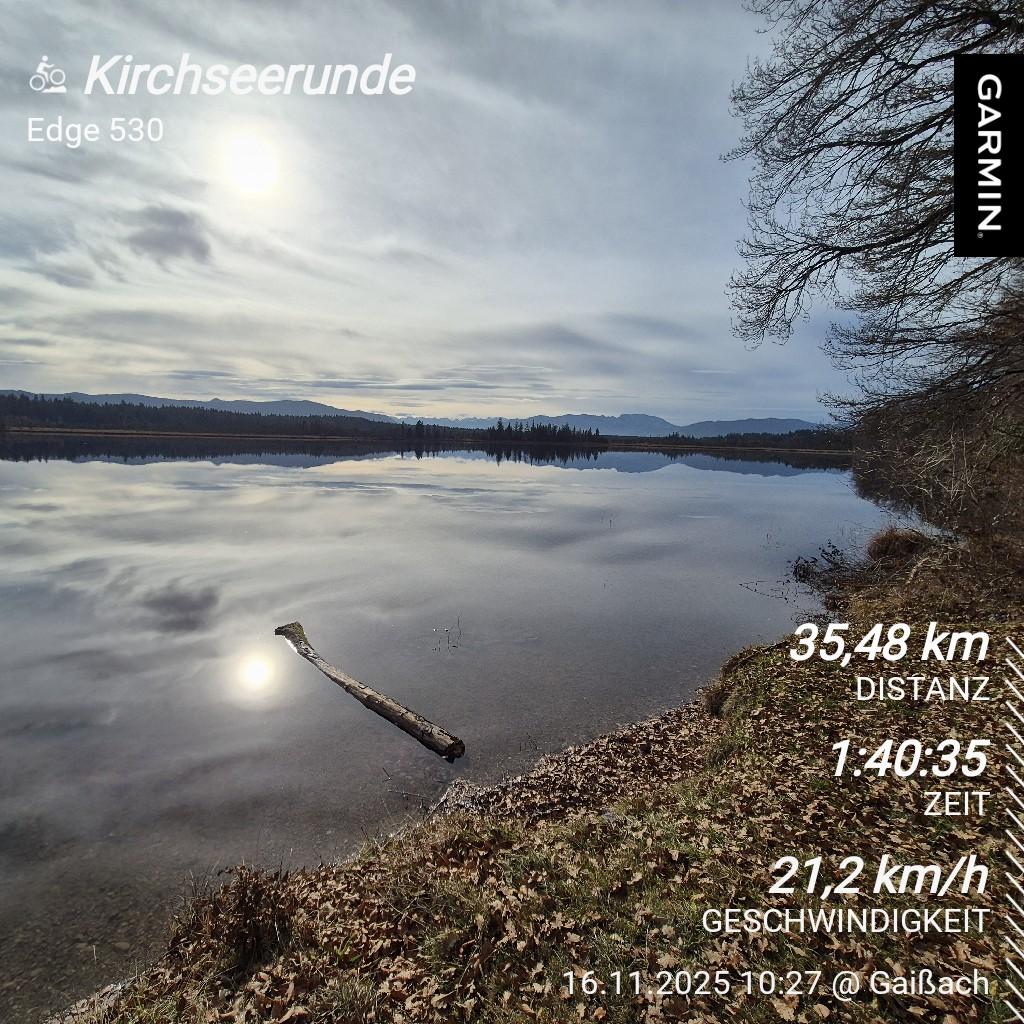
For several reasons I didn't do mountains this weekend. But I enjoyed a nice cozy loop in the vicinity to the #kirchsee.
At this spot I made a quick stop and thought: #silentsunday! Not even wind. Just a lake, view, mountains in the distance and me and my bike.
 @eichkat3r@hessen.social
2025-11-15 23:10:42
wann läuft eigentlich wieder wetten dass,,,
https://www.t-online.de/unterhaltung/stars/id_101001308/thomas-gottschalks-bambi-eklat-so-reagierte-ehefrau-karina.html
 @Techmeme@techhub.social
2026-01-16 11:01:31
TikTok plans to roll out a new age detection system, which analyzes profile information to predict whether a user is under 13, across Europe in the coming weeks (Supantha Mukherjee/Reuters)
https://www.reuters.com/sustainability/boa
 @hex@kolektiva.social
2025-10-30 10:05:59
The fracturing of the Dutch far-right, after Wilder's reminded everyone that bigots are bad at compromise, is definitely a relief. Dutch folks I've talked to definitely see D66 as progressive, <strike>so there's no question this is a hard turn to the left (even if it's not a total flip to the far-left)</strike> a lot of folks don't agree. I'm going to let the comments speak rather than editorialize myself..
While this is a useful example of how a democracy can be far more resilient to fascism than the US, that is, perhaps, not the most interesting thing about Dutch politics. The most interesting thing is something Dutch folks take for granted and never think of as such: there are two "governments."
The election was for the Tweede Kamer. This is a house of representatives. The Dutch use proportional representation, so people can (more or less) vote for the parties they actually want. Parties <strike>rarely</strike> never actually get a ruling majority, so they have to form coalition governments. This forces compromise, which is something Wilders was extremely bad at. He was actually responsible for collapsing the coalition his party put together, which triggered this election... and a massive loss of seats for his party.
Dutch folks do still vote strategically, since a larger party has an easier time building the governing coalition and the PM tends to come from the largest party. This will likely be D66, which is really good for the EU. D66 has a pretty radical plan to solve the housing crisis, and it will be really interesting to see if they can pull it off. But that's not the government I want to talk about right now.
In the Netherlands, failure to control water can destroy entire towns. A good chunk of the country is below sea level. Both floods and land reclamation have been critical parts of Dutch history. So in the 1200's or so, the Dutch realized that some things are too important to mix with normal politics.
You see, if there's an incompetent government that isn't able to actually *do* anything (see Dick Schoof and the PVV/VVD/NSC/BBB coalition) you don't want your dikes to collapse and poulders to flood. So the Dutch created a parallel "government" that exists only to manage water: waterschap or heemraadschap (roughly "Water Board" in English). These are regional bureaucracies that exist only to manage water. They exist completely outside the thing we usually talk about as a "government" but they have some of the same properties as a government. They can, for example, levy taxes. The central government contributes funds to them, but lacks authority over them. Water boards are democratically elected and can operate more-or-less independent of the central government.
Controlling water is a common problem, so water boards were created to fulfill the role of commons management. Meanwhile, so many other things in politics run into the very same "Tragedy of the Commons" problems. The right wing solution to commons management is to let corporations ruin everything. The left-state solution is to move everything into the government so it can be undermined and destroyed by the right. The Dutch solution to this specific problem has been to move commons management out of the domain of the central government into something else.
And when I say "government" here, I'm speaking more to the liberal definition of the term than to an anarchist definition. A democratically controlled authority that facilitates resource management lacks the capacity for coercive violence that anarchists define as "government." (Though I assume they might leverage police or something if folks refuse to pay their taxes, but I can't imagine anyone choosing not to.)
As the US federal government destroys the social fabric of the US, as Trump guts programs critical to people's survival, it might be worth thinking about this model. These authorities weren't created by any central authority, they evolved from the people. Nothing stops Americans from building similar institutions that are both democratic and outside of the authority of a government that could choose to defund and abolish them... nothing but the realization that yes, you actually can.
#USPol #NLPol
 @cdarwin@c.im
2026-01-12 16:28:45
Iran’s foreign minister has claimed the situation in the country has
“come under total control”
as authorities carry out a brutal crackdown against the nationwide protest movement.
Abbas Araghchi made the comments to foreign diplomats in Tehran, without supplying evidence.
The few messages and videos to have emerged from Iran overnight showed that protests were continuing,
but an ongoing internet blackout made it difficult to judge whether the authorities’ use o…
 @simon_brooke@mastodon.scot
2025-12-14 11:20:55
With the emergence of more processors with 64 cores or more, I'm thinking more about whether it makes sense to implement a hypercube virtualised on a single chip with a single vector of memory, or as a literal hypercube of 64 (say) RP2350s. I understand the problems of transferring data across a hypercube, but I don't have a good feeling of how the bus contention on a multicore processor scales. What should I read?

 @arXiv_mathOC_bot@mastoxiv.page
2025-11-14 09:58:00
Measuring dissimilarity between convex cones by means of max-min angles
Welington de Oliveira, Valentina Sessa, David Sossa
https://arxiv.org/abs/2511.10483 https://arxiv.org/pdf/2511.10483 https://arxiv.org/html/2511.10483
arXiv:2511.10483v1 Announce Type: new
Abstract: This work introduces a novel dissimilarity measure between two convex cones, based on the max-min angle between them. We demonstrate that this measure is closely related to the Pompeiu-Hausdorff distance, a well-established metric for comparing compact sets. Furthermore, we examine cone configurations where the measure admits simplified or analytic forms. For the specific case of polyhedral cones, a nonconvex cutting-plane method is deployed to compute, at least approximately, the measure between them. Our approach builds on a tailored version of Kelley's cutting-plane algorithm, which involves solving a challenging master program per iteration. When this master program is solved locally, our method yields an angle that satisfies certain necessary optimality conditions of the underlying nonconvex optimization problem yielding the dissimilarity measure between the cones. As an application of the proposed mathematical and algorithmic framework, we address the image-set classification task under limited data conditions, a task that falls within the scope of the \emph{Few-Shot Learning} paradigm. In this context, image sets belonging to the same class are modeled as polyhedral cones, and our dissimilarity measure proves useful for understanding whether two image sets belong to the same class.
toXiv_bot_toot
@arXiv_mathOC_bot@mastoxiv.page2025-11-14 09:28:40
Convergence analysis of inexact MBA method for constrained upper-$\mathcal{C}^2$ optimization problems
Ruyu Liu, Shaohua Pan
https://arxiv.org/abs/2511.09940 https://arxiv.org/pdf/2511.09940 https://arxiv.org/html/2511.09940
arXiv:2511.09940v1 Announce Type: new
Abstract: This paper concerns a class of constrained optimization problems in which, the objective and constraint functions are both upper-$\mathcal{C}^2$. For such nonconvex and nonsmooth optimization problems, we develop an inexact moving balls approximation (MBA) method by a workable inexactness criterion for the solving of subproblems. By leveraging a global error bound for the strongly convex program associated with parametric optimization problems, we establish the full convergence of the iterate sequence under the partial bounded multiplier property (BMP) and the Kurdyka-{\L}ojasiewicz (KL) property of the constructed potential function, and achieve the local convergence rate of the iterate and objective value sequences if the potential function satisfies the KL property of exponent $q\in[1/2,1)$. A verifiable condition is also provided to check whether the potential function satisfies the KL property of exponent $q\in[1/2,1)$ at the given critical point. To the best of our knowledge, this is the first implementable inexact MBA method with a full convergence certificate for the constrained nonconvex and nonsmooth optimization problem.
toXiv_bot_toot