 @NFL@darktundra.xyz
2026-07-19 18:10:23
Tom Brady teases 'at least one match' with WWE, slaps Logan Paul https://www.nfl.com/news/tom-brady-teases-at-least-one-match-with-wwe-slaps-logan-paul
 @mia@hcommons.social
2026-07-17 14:50:26
How has the Museum Data Service helped Art UK break new records? Through the MDS, record and image ingestion is now at least 20 times faster than at any other time during @artukdotorg.bsky.social 's history.
David Saywell @artukcurations.bsky.social explains in https://museumdata.uk/blog/h…

 @colinpurrington@flipping.rocks
2026-07-18 13:16:00
There was once speculation that smoke flies use smoke as a way to rid themselves of mites (see them on fly's abdomen in pic linked above). #mites https://digitalcollections.usfca.edu/digital/api/collection/p15129coll11/id/987/download
 @poppastring@dotnet.social
2026-09-18 14:03:50
 @tschfflr@fediscience.org
2026-07-17 16:51:28
"Do you know of any unexpected pattern of emoji usage? For example I'd expect younger folks to use emoji more than older folks and private communication to use it more than business... But maybe my assumptions are wrong or there is something else interesting?" - Yes generally our studies show that younger ppl use emojis more than older (and women a bit more than men). But in class with my undergraduates, they recently often tell me "I don't use emojis at all". I must say I don't fully believe them (maybe they don't even notice all the little hearts anymore?) and I haven't been able to show this in studies, but it's an interesting anecdotal data point I'd like to know more about!
Also, a student of mine recently asked teenagers (13 and 16yos) about their emoji interpretations. And surprisingly to us, these almost entirely match the data we already have for adults. Even for some like 🙃 and 😉 that I thought were changing (and just told you that younger people see them differently 😬). So that was a bit weird to me 😅 #emojis #WorldEmojiDay #linguistics
 @Erikmitk@mastodon.gamedev.place
2026-07-19 16:11:26
Just for the record: Spain is a great team. Argentina is a great team. Both coaches are incredible. Can’t ask for a more perfect match. Whoever wins is a worthy world champion!
I want to see the little Magic Man from Rosario take home another trophy with his mates *a bit more*.
So I will cry if Argentina wins and I will cry if Argentina loses. Overall big sob fest whatever happens.
Extremely hyped for the game! 3 hours left in waiting mode.
 @cdarwin@c.im
2026-07-17 15:28:56
Donald Trump’s border czar, Tom Homan,
has warned that there will be more “bloodshed” unless Democrats
“shut their mouths.”
Following the
back-to-back fatal shootings of a Colombian native in Maine
and a Mexican man in Houston by Immigration and Customs Enforcement,
👉the Trump administration has tried to shift the blame onto Democratic leaders who have been educating immigrants on their rights.
“I'm scared to death because assaults with vehicles …

 @BugWarp@wikis.world
2026-07-20 07:42:31
I think those of us who lived the heartbreak of Argentina's team since 2006 (and even before if you are older) would have signed with our blood for a championship in 2022 and a final in 2026 so no, it's not a failure by any means.
I never liked Scaloni's way of setting up the team, and while Spain are the deserving champions, I know we could have done a better match against them.
Anyways, it was an amazing ride, and I can't wait to do it again.
GRACIAS
 @peterhoneyman@a2mi.social
2026-07-18 20:58:30
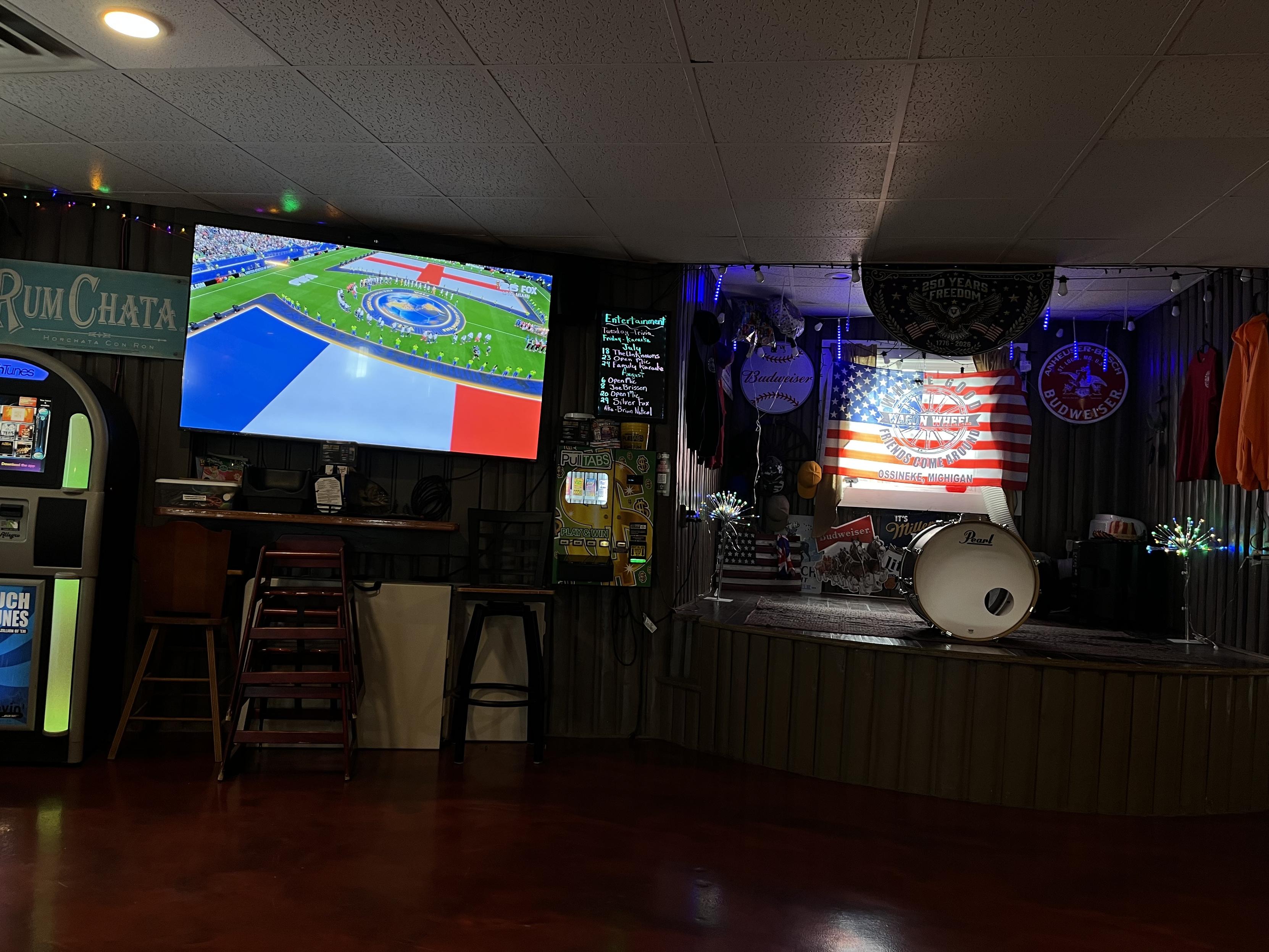
Watching the France v England match in a roadhouse in Ossineke
 @NFL@darktundra.xyz
2026-07-17 19:26:28
Tom Brady wants 'at least one match' in the WWE to showcase his athletic ability: 'Make it happen'
https://www.cbssports.com/wwe/news/tom-brady-wwe-match-cody-rhodes-nfl/