 @tinoeberl@mastodon.online
2026-07-21 15:17:03
#Steady #Klimacrew
#BahnMonitor-Projekt: 7. Zufall ist nicht gleich Zufall. 🤭
Nach der Verspätungsmeldung kommt ein Wissenshäppchen. Der

 @kexpmusicbot@mastodonapp.uk
2026-06-22 04:42:23
🇺🇦 #NowPlaying on KEXP's #Expansions
missing project:
🎵 Poisson D’Avril (Da’ Future Given a Deep Soul mix)
#missingproject
https://music-from-memory.bandcamp.com/track/missing-project-poisson-davril-galaxy-dub
https://open.spotify.com/track/0GCzWPpqnXqQ2THTB1eEM0
 @BBC3MusicBot@mastodonapp.uk
2026-05-22 18:18:34
🇺🇦 #NowPlaying on BBCRadio3's #ClassicalMixtape
Philip Glass & Third Coast Percussion:
🎵 Paru River (Aguas da Amazonia)
#PhilipGlass #ThirdCoastPercussion
https://open.spotify.com/track/3f7nEi8E09bsQIEKQzcRtr
 @mnalis@mastodon.online
2026-07-22 01:07:37
CoMaps is open-source community-oriented privacy-first navigation app for mobile devices. It is currently choosing its fiscal / umbrella host which would be most aligned with those goals, so if you have opinions, come vote at https://codeberg.org/comaps/Governance/issues/166
 @cosmos4u@scicomm.xyz
2026-05-13 23:19:30
"We’re delighted to announce the first #GalaxyZoo workflow to include images from the NSF-DOE Vera C #Rubin Observatory, using #galaxies drawn from its first Data Preview": https://blog.galaxyzoo.org/2026/05/12/a-first-galaxy-zoorubin-project/ - "[t]he new workflow went live on the site just now, but with only 10,359 subjects it won’t stick around for long, so do jump in and get classifying."
 @doktrock@toad.social
2026-05-17 14:48:29
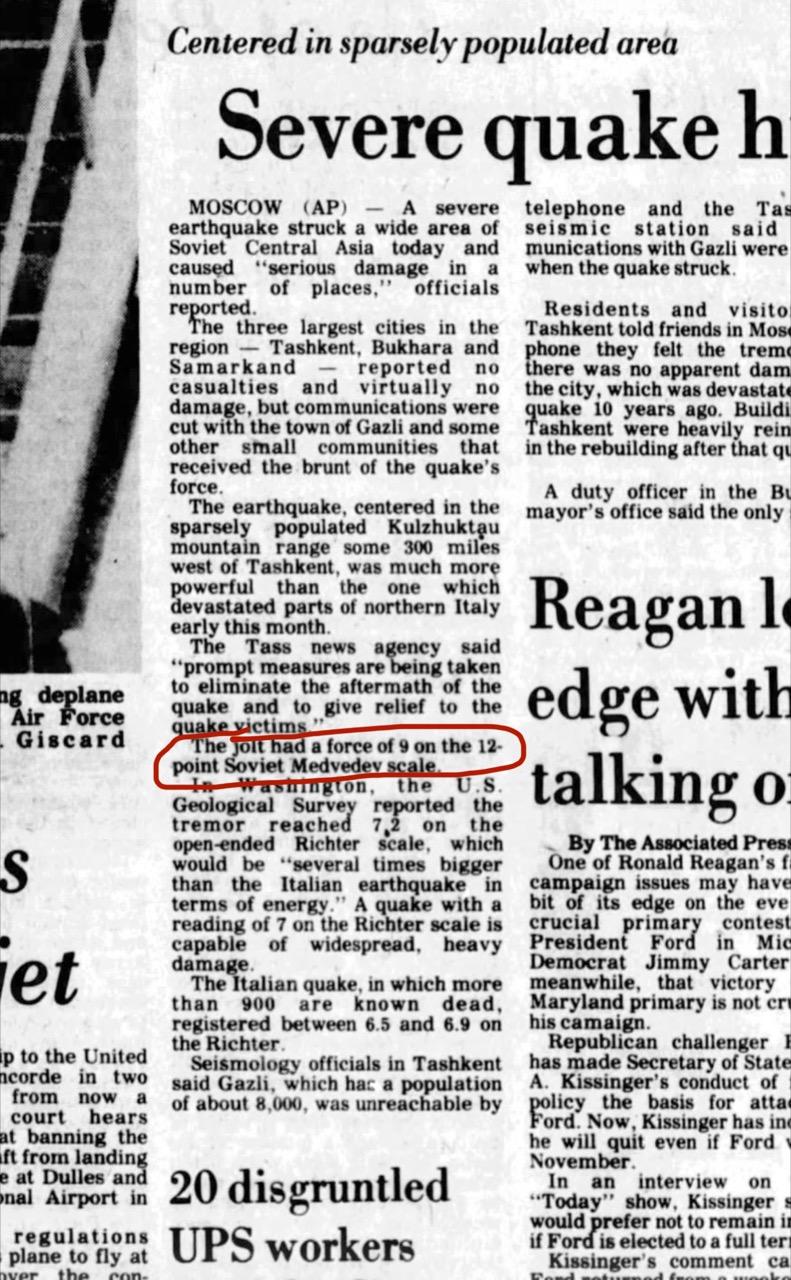
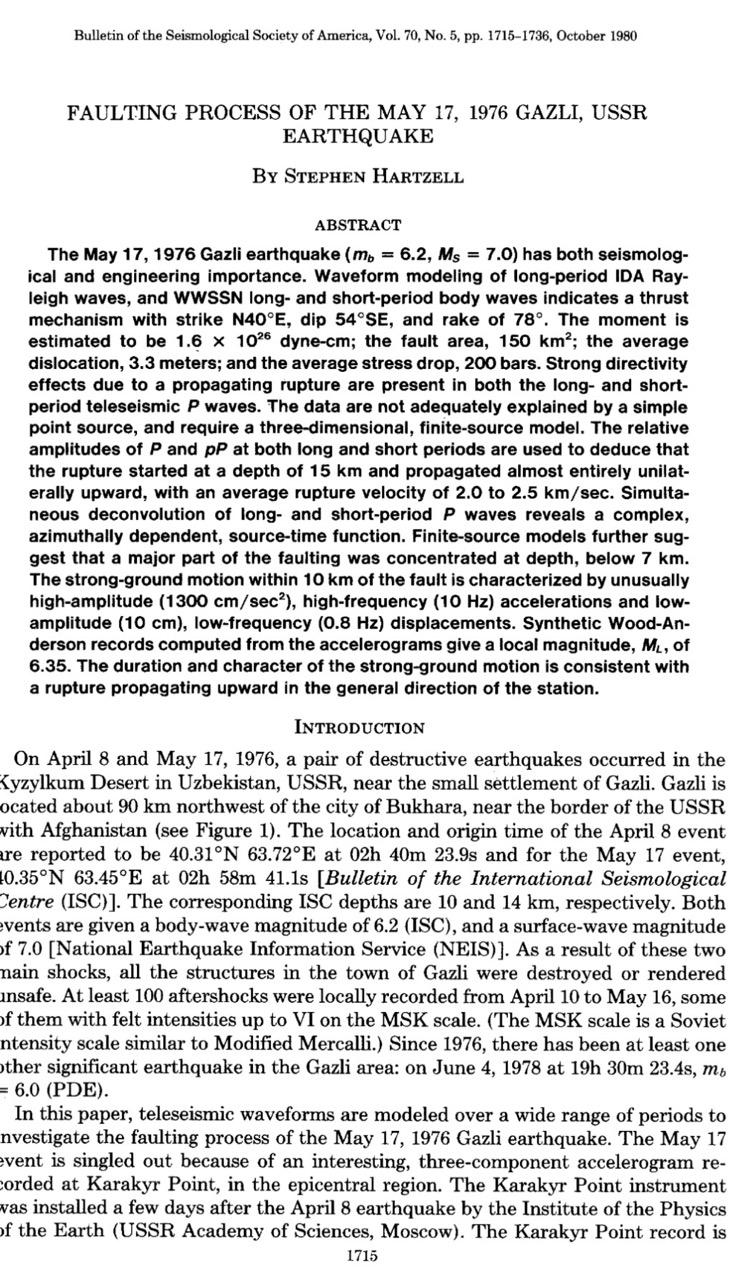
News story on a significant earthquake in Uzbekistan, 50 years ago, May 17, 1976 (Fargo-Moorhead Forum archives). Mentions the Medvedev scale, apparently now the the MSK or MSK-64 scale. That scale is not mentioned in North American, physical geology textbooks I have seen, although it's apparently similar to the Mercalli scale.
Also, the first page of a scientific paper on it, from 1980. ⚒️🧪
#OTD
 @metacurity@infosec.exchange
2026-06-10 14:03:46
AI red teaming is not your father's red teaming. As models become agents that can take actions in the real world, red teams are now testing everything from prompt injections and misinformation to autonomous behavior and business-process failures.
Check out my latest CSO feature for more on this trend.
Many thanks to Microsoft's Ram Shankar Siva Kumar and Pete Bryan, Cisco's Tom Gillis, Palo Alto Networks' Ian Swanson, and HackerOne's Dane Sherrets for their…

 @matematico314@social.linux.pizza
2026-07-09 21:35:53
 @arXiv_astrophGA_bot@mastoxiv.page
2026-07-22 07:55:10
Star formation powers optical line emission from the CGM
Huanian Zhang, Lizhi Xie, Zhijie Qu, Dennis Zaritsky, Luis C. Ho, Min Bao, Fabio Fontanot, Michaela Hirschmann, Chenxu Liu, Gabriella De Lucia, Enci Wang, Haoyan Zheng
https://arxiv.org/abs/2607.18385 https://arxiv.org/pdf/2607.18385 https://arxiv.org/html/2607.18385
arXiv:2607.18385v1 Announce Type: new
Abstract: Using integral field spectroscopy, we explore the disk-halo interface, or the inner circumgalactic medium (CGM), of individual galaxies by constructing and analyzing emission-line maps for a large sample (72) of normal, low-redshift galaxies spanning three orders of magnitude in stellar mass and four orders in star formation rate (SFR). We find a steep turnover occurring at $(1-2) R_e$ in the H$\alpha$, [O {\small II}], and [O {\small III}] line emission radial profiles. Beyond this radius, the slope of the line emission radial profiles becomes shallower as the SFR of the central galaxy decreases, which might reflect the strength of the feedback processes. The line emission fluxes at large radius ($(5-10) R_e$ or $\sim (0.1-0.25)r_{\rm vir}$) correlate with the galaxy's SFR, but not with its stellar mass. These findings suggest that ionizing photons escaping from star-forming regions in the central galaxy account for the observed emission line fluxes from the inner CGM, with escape fractions inferred from the [O {\small III}] and [O {\small II}] ratio. Different state-of-the-art theoretical models do not agree on the predicted dependence of cool gas on the SFR of the central galaxies, highlighting the importance of CGM emission line measurements to distinguish between different subgrid models for star formation and feedback processes.
toXiv_bot_toot
@cosmos4u@scicomm.xyz2026-07-07 19:29:55
SDSS J110546.07 145202.4 - The First Long-duration Radio Changing-look NLS1 Galaxy: #BlackHole at the centre of a nearby galaxy is growing exceptionally fast, and is producing a burst of radio emission that has never been observed before: https://www.mpifr-bonn.mpg.de/pressreleases/2026/a-nearby-black-hole-as-a-window-into-the-early-universe - with characteristics that are expected in the early Universe, this unique galaxy provides important insights into the processes that governed the growth of the first black holes.