 @aral@mastodon.ar.al
2026-09-17 06:53:43
And this is apparently what passes for journalism today.
No, the raging Zionist Robert Kraft who rounded up a posse of stadium owners to cancel Macklemore for supporting Gaza during his set is *NOT* doubling Macklemore’s $1M donation to Gaza.
Ed both-sides-on-genocide Sheeran asked Kraft “to match a $2m (£1.5m) donation to ‘aid in the region’” (

 @arXiv_astrophCO_bot@mastoxiv.page
2026-08-05 08:12:59
Cosmic Velocity Flows: from Theory to Observations
Saee Dhawalikar
https://arxiv.org/abs/2608.03530 https://arxiv.org/pdf/2608.03530 https://arxiv.org/html/2608.03530
arXiv:2608.03530v1 Announce Type: new
Abstract: The Large-Scale Structure (LSS) of the Universe forms a complex network of nodes, filaments, sheets, and voids known as the Cosmic Web. As current and upcoming galaxy surveys increasingly probe the quasi-linear and non-linear regimes of structure formation, understanding its geometry and dynamics is essential for precision cosmology. In particular, cosmic filaments, which channel matter across the web, are central to these dynamical processes.
This thesis develops numerical tools to study the non-linear cosmic web. First, the Sahyadri suite of high-resolution cosmological $N$-body simulations is introduced, providing a framework for precision studies of LSS and its cosmological dependence. A calibration framework for filament reconstruction is then developed using controlled filament realizations, enabling systematic investigation of reconstruction biases. The effects of filament curvature and reconstruction noise on inferred filament properties are quantified, and a novel Fourier-space smoothing approach is introduced to improve profile recovery.
The thesis further presents Skeletor, a Voronoi-based filament finder that identifies filamentary structures directly from discrete tracers while explicitly incorporating the hierarchical nature of the cosmic web. A novel framework for classifying sub-filamentary structure is developed. Applying these tools to cosmological simulations reveals distinct properties of filament substructure and provides a detailed view of filament phase space, including coherent inflows, multistreaming, and caustic-like features.
Together, these developments provide a framework for studying the geometry, hierarchy, and dynamics of the non-linear cosmic web. More broadly, they contribute to the ongoing effort to build a physically motivated understanding of the non-linear cosmic web beyond traditional measures of clustering.
toXiv_bot_toot
 @aardrian@toot.cafe
2026-08-21 02:19:46
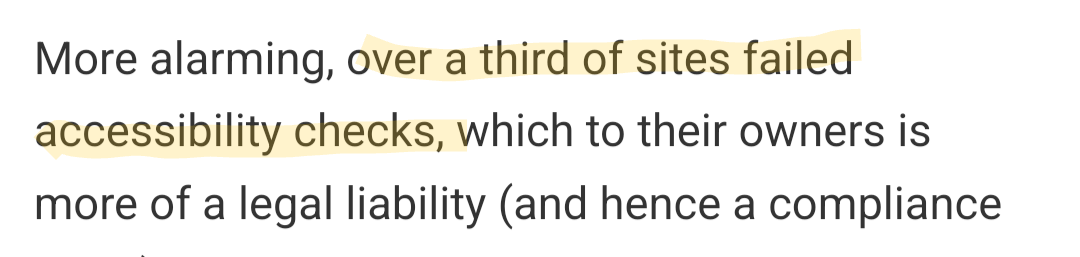
“Almost nobody pays attention to web standards anymore”
https://www.theregister.com/devops/2026/08/17/almost-nobody-pays-attention-to-web-standards-anymore/5288782
Has the two attached bangers. My thoughts:
1. …

 @arXiv_physicsmedph_bot@mastoxiv.page
2026-07-23 07:43:08
PRIME-SVR: Physics-infoRmed Implicit Multi-Echo Slice-to-Volume Reconstruction for Fetal T2 mapping
Busra Bulut, Maik Dannecker, Thomas Sanchez, Sara Neves Silva, Steven Jia, Jean-Baptiste Ledoux, Leo Pomar, Joanna Sichitiu, Yvan Gomez, Meriam Koob, Vincent Dunet, Maria Deprez, Guillaume Auzias, Francois Rousseau, Jana Hutter, Daniel Rueckert, Meritxell Bach Cuadra
https://arxiv.org/abs/2607.20136 https://arxiv.org/pdf/2607.20136 https://arxiv.org/html/2607.20136
arXiv:2607.20136v1 Announce Type: new
Abstract: Slice-to-volume reconstruction (SVR) is the standard method for obtaining high-resolution (HR) 3D fetal brain volumes from motion-corrupted 2D MRI slice stacks acquired in multiple orientations. Existing SVR methods are optimized and validated only for clinical-range echo times (TEs), limiting their use at non-clinical TEs and making them incompatible with quantitative T2 mapping, a protocol- and center-independent biomarker of fetal brain maturation requiring HR reconstructions across multiple TEs. We present PRIME-SVR, the first implicit neural representation (INR) framework for joint HR reconstruction from multi-echo MRI. A single fully connected network models a continuous function from spatial coordinates to signal intensities across TEs, while a second network estimates slice-specific acquisition degradations. Cross-TE coherence is enforced via a Bloch equation-derived regularization penalizing deviations from expected T2 decay, with adaptive weighting that strengthens coupling for degraded stacks. The method is fully self-supervised. We validate PRIME-SVR on 39 in vivo fetal acquisitions (13 subjects x 3 TEs) from two centers, two vendors, and two field strengths (1.5 T and 0.55 T). Compared to state-of-the-art SVR, PRIME-SVR improves reconstruction sharpness by 47%, anatomical accuracy by 30%, and cross-TE structural consistency by 14%. It enables reconstruction at late TEs previously inaccessible to SVR, yielding the first 0.8 mm isotropic T2 maps at 0.55 T and the first T2 maps derived from INR-based SVR. PRIME-SVR also accelerates quantitative imaging by reducing the data needed for multi-TE reconstruction, cutting acquisition from 15 to 10 minutes while keeping T2 accuracy within 1.7% in white and deep gray matter, or to 5 minutes with a mean T2 error of 2.3% for high-quality acquisitions.
toXiv_bot_toot
 @arXiv_csGR_bot@mastoxiv.page
2026-07-23 07:57:47
Fast Wave-optics Rendering of Multiplane Images for 3D Holographic Displays
Brian Chao, Dario Seyb, Nathan Matsuda, Oliver Cossairt, Yang Zhou, Douglas Lanman, Gordon Wetzstein, Grace Kuo, Changwon Jang
https://arxiv.org/abs/2607.19731 https://arxiv.org/pdf/2607.19731 https://arxiv.org/html/2607.19731
arXiv:2607.19731v1 Announce Type: new
Abstract: Recent advances in neural rendering have unlocked unprecedented capabilities in 3D reconstruction and novel view synthesis, giving rise to applications such as virtual fly-throughs of a 3D scene reconstructed from a set of sparse, casually captured images. However, these renderings are viewed on a computer screen or conventional VR headsets as 2D images, greatly limiting the perceptual realism and immersiveness of such experiences. The rapid development in novel 3D scene representations calls for dedicated rendering algorithms that convert these readily-available 3D contents into formats that are compatible with emerging 3D display technologies, such as holographic displays. In this paper, we propose a wave-optics rendering pipeline that works with multiplane images (MPIs) for efficient and high-quality hologram synthesis. Our MPI-based computer-generated holography algorithm greatly outperforms state-of-the-art primitive-based CGH algorithms in terms of runtime, achieving speedups up to 250,000x while achieving comparable image quality, and significantly outperforms conventional layer-based CGH algorithms in terms of image quality. We validate our method extensively on a wide variety of 3D scene datasets both in simulation and through experimentally captured results, showing exceptional 3D focal stack and 4D light field reconstruction performance without sacrificing efficiency.
toXiv_bot_toot
@arXiv_physicsmedph_bot@mastoxiv.page2026-07-23 07:43:14
A simplified reconstruction of Positron Emission Tomography image using Time of Flight simulated data in Gate 10
Marcin Balcerzyk, Santiago Jimenez-Serrano, \'Oscar Pietrzyk, Edwing Ulin-Brise\~no, Marta Freire
https://arxiv.org/abs/2607.20169 https://arxiv.org/pdf/2607.20169 https://arxiv.org/html/2607.20169
arXiv:2607.20169v1 Announce Type: new
Abstract: Background: Ultrafast Time-of-Flight (TOF) information in Gate 10 simulations enables direct 3D PET reconstruction without scanner-specific modeling. Although such picosecond timing is not achievable in current detectors, simulated data allow exploration of idealized TOF regimes and rapid evaluation of prototype PET designs. Methods: The TOF-driven reconstruction assigns each coincidence to its annihilation position using sub-picosecond timestamps, producing voxelized 3D histograms with flexible voxel size and field-of-view selection. The approach operates directly on Gate-sorted coincidences, requires no corrections, and outputs MHD/DICOM images. Timestamp precision (~10^-13 s) enables localization on the millimeter scale. Results: Full 3D images of the simulated INSPIRE PET scanner are generated in under one second. The method resolves 0.25 mm features in point-source studies and 1.2 mm rods in the Derenzo phantom, reproduces ground-truth activity distributions in image-quality tests, and maintains quantitative stability across geometries. Performance reflects the theoretical benefits of ultrafast TOF rather than current detector capabilities. Significance: This fast, geometry-agnostic reconstruction tool supports early-stage PET prototyping, allowing rapid assessment of spatial resolution, sensitivity, and uniformity without implementing complex reconstruction software. It is broadly applicable to any simulated PET system with sorted coincidences and enables systematic exploration of ultrafast TOF performance in a controlled environment.
toXiv_bot_toot
 @arXiv_qbioNC_bot@mastoxiv.page
2026-07-20 07:46:16
STSBench: A Large-Scale Dataset for Modeling Neuronal Activity in the Dorsal Stream of Primate Visual Cortex
Ethan B. Trepka, Ruobing Xia, Shude Zhu, Sharif Saleki, Danielle Abreu Lopes, Stephen J. Ni\~no Cital, Konstantin F. Willeke, Mindy Kim, Tirin Moore
https://arxiv.org/abs/2607.15631 https://arxiv.org/pdf/2607.15631 https://arxiv.org/html/2607.15631
arXiv:2607.15631v1 Announce Type: new
Abstract: The primate visual system is typically divided into two streams - the ventral stream, responsible for object recognition, and the dorsal stream, responsible for encoding spatial relations and motion. Recent studies have shown that convolutional neural networks (CNNs) pretrained on object recognition tasks are remarkably effective at predicting neuronal responses in the ventral stream, shedding light on the neural mechanisms underlying object recognition. However, similar models of the dorsal stream remain underdeveloped due to the lack of large scale datasets encompassing dorsal stream areas. To address this gap, we present STSBench, a dataset of large-scale, single neuron recordings from over 2,000 neurons in the superior temporal sulcus (STS), a nearly 50-fold increase over existing dorsal stream datasets, collected while Rhesus macaques viewed thousands of unique, natural videos. We show that our dataset can be used for benchmarking encoding models of dorsal stream neuronal responses and reconstructing visual input from neural activity.
toXiv_bot_toot
@arXiv_physicsmedph_bot@mastoxiv.page2026-07-23 07:41:50
COBRA2026: a large-scale multicenter pelvic cone-beam computed tomography projection dataset
Adrian Thummerer, Simon Rit, Florian Kamp, Matteo Maspero, Martjin P. W. Intven, Thomas G. Bon\'e, Christopher Kurz, Guillaume Landry, Thomas Baudier, Mustafa Kadhim, Julius Arnold, Michael Rauter, Barbara Kn\"ausl, Lukas Zimmermann
https://arxiv.org/abs/2607.20037 https://arxiv.org/pdf/2607.20037 https://arxiv.org/html/2607.20037
arXiv:2607.20037v1 Announce Type: new
Abstract: The COBRA2026 dataset is a large-scale, multicenter resource of raw radiotherapy cone-beam computed tomography (CBCT) acquisitions created for the development and evaluation of conventional and learning-based reconstruction and image-correction methods. It contains data from 867 patients undergoing pelvic radiotherapy at six European centers, acquired using Elekta and Varian imaging systems. For each case, the dataset includes raw projection data, acquisition geometry, calibration and correction information, clinically reconstructed CBCT images, and corresponding planning CT images. Vendor-specific files were anonymized and converted into open formats. Planning CT images were deformably registered to the daily CBCT anatomy, and matched projections were simulated using the corresponding acquisition geometry. All cases underwent visual quality control, and cases with substantial processing or registration errors were excluded. The approximately 950 GB dataset is divided into training, validation, and test sets containing 692, 52, and 123 cases, respectively. Projection stacks and volumetric images are provided as compressed MetaImage files, with geometry and metadata supplied in XML and YAML formats. COBRA2026 supports research on full- and sparse-view reconstruction, low-dose imaging, artifact and scatter correction, motion compensation, and synthetic CT generation. The dataset is released under the CC BY-NC 4.0 license, indexed on Zenodo (doi:10.5281/zenodo.21322350), and accompanied by openly available preprocessing and baseline reconstruction code. It also forms the basis of the COBRA2026 reconstruction challenge.
toXiv_bot_toot
@arXiv_csGR_bot@mastoxiv.page2026-07-21 07:45:37
EVOLVE: Efficient Learned Volume Compression with Variable-Rate Encoding on a Cross-Domain Database
Kaiyuan Tang, Maizhe Yang, Chaoli Wang
https://arxiv.org/abs/2607.18187 https://arxiv.org/pdf/2607.18187 https://arxiv.org/html/2607.18187
arXiv:2607.18187v1 Announce Type: new
Abstract: Large-scale scientific simulations generate volumetric data at rates that far outpace advances in storage and network bandwidth, making effective lossy compression increasingly critical. However, conventional compressors often struggle to preserve fine structural details at high compression ratios (CRs), and implicit neural representations (INRs) require costly per-volume optimization and produce models with fixed CRs. To respond, we present EVOLVE, an autoencoder (AE)-based volume-compression framework that targets high CRs for offline compression, with three key contributions. First, we construct a large-scale cross-domain database of 6,376 volumes from 21 scientific simulations, curated via perceptual hashing to ensure diversity, enabling the optimized model to extract features that generalize across volumes within the covered scientific simulation domains. Second, we reexamine the design space of AE-based compressors and incorporate several macro- and micro-designs into a vanilla AE to develop EVOLVE, which substantially improves the expressive power and compression capability. Third, we develop a learnable gain mechanism with a three-stage training strategy to enable variable-rate encoding, allowing a single model to support continuous CR adjustment at inference time. Experiments on multiple unseen scientific simulation datasets demonstrate that EVOLVE achieves substantially higher CRs than conventional compressors at comparable reconstruction quality, while delivering compression speeds that are orders of magnitude faster than INR-based methods, highlighting its promise as a strong alternative for compressing scientific data. The code, model weights, and results are available on our project page at https://evolve-vis.github.io.
toXiv_bot_toot