 @karlauerbach@sfba.social
2026-02-18 20:42:04
There is a risk, a real risk, that because of California's "jungle" primary system that there could be no D candidate - yes, no D candidate at all - on the November ballot to replace the term-limited Gavin Newsom.
The D's need to focus - some D candidates need to drop out so that the primary vote is not split and thus allow the two top R's to take the two spots on the November general election ballot.

 @cellfourteen@social.petertoushkov.eu
2026-03-15 08:00:43
"50-50 power split, Recharge and Boost
The big ticket for 2026 is a new generation of power units that place more emphasis on the electrical side of the hybrid system. About half the power used by the car is going to be electrical, and half from internal combustion, with the power unit also using Advanced Sustainable Fuels."
The beginner’s guide to the 2026 Formula 1 regulations

 @cdarwin@c.im
2026-03-27 22:28:11
A striking report in The Wall Street Journal suggests Trump may be moving to marginalize Stephen Miller’s influence.
But Trump appears to think the difficulty can be cured by a few optical tweaks, when the real culprit is a deeper ideological one.
Trump wants to “lower the profile of his mass deportation effort,”
the Journal reveals.
He wants voters to think the targets of these deportations are
“bad guys,”
not noncriminal undocumented residents.
…

 @scott@carfree.city
2026-04-06 22:10:38
Good primer on how California housing development laws have changed in the past few years, for better or worse, but also how those changes are unlikely to usher in broad affordability.
"*This* project is all but certainly going to get financing because *this* project is exceptional. But not every project is exceptional... If merely approving a project resulted in its construction, San Francisco would have scores of thousands of additional built units. It doesn’t."

 @arXiv_qbioPE_bot@mastoxiv.page
2026-03-27 08:09:37
Modeling the mutational dynamics of very short tandem repeats
Amos Onn (Chair of Experimental Medicine and Therapy Research, University of Regensburg, Bioinformatics Group, Faculty of Mathematics and Computer Science, and Interdisciplinary Center for Bioinformatics, University of Leipzig), Tzipy Marx (Department of Computer Science and Applied Mathematics, Weizmann Institute of Science), Liming Tao (Cellular Tissue Genomics, Genentech), Tamir Biezuner (Department of Computer Science and Applied Mathematics, Weizmann Institute of Science), Ehud Shapiro (Department of Computer Science and Applied Mathematics, Weizmann Institute of Science), Christoph A. Klein (Chair of Experimental Medicine and Therapy Research, University of Regensburg, Fraunhofer Institute for Toxicology and Experimental Medicine Regensburg), Peter F. Stadler (Bioinformatics Group, Faculty of Mathematics and Computer Science, and Interdisciplinary Center for Bioinformatics, University of Leipzig, Max Planck Institute for Mathematics in the Sciences, Institute for Theoretical Chemistry, University of Vienna, Facultad de Ciencias, Universidad Nacional de Colombia, Center for non-coding RNA in Technology and Health, University of Copenhagen, Santa Fe Institute)
https://arxiv.org/abs/2603.25628 https://arxiv.org/pdf/2603.25628 https://arxiv.org/html/2603.25628
arXiv:2603.25628v1 Announce Type: new
Abstract: Short tandem repeats (STRs) are low-entropy regions in the genome, consisting of a short (1-6 bp) unit that is consecutively repeated multiple times. They are known for high mutational instability, due to so-called stutter-mutations, in which the number of units in the run increases or descreases. In particular, STRs with repeat unit length of 1-2 bp are prone to mutate even within several cell divisions. The extremely rapid accumulation of variation makes them interesting phylogenetic markers for retrospective single-cell lineage reconstruction. Here we model their mutational dynamics at the level of individual repeat unit type and then aggregate length variations over many STR loci with the aim of obtaining a very fast ``molecular clock''. We calibrate our model based on several datasets with known lineage structure prepared from cultured cells. We find that the mutational dynamics of STRs are reasonably consistent for a given cell line, but vary among different ones. This suggests that the dynamics are not entirely explained by mutations in caretaker genes, rather, various other factors play a role -- possibly tissue origin and differentiation state. Further data and research is necessary to asses their relative effects.
toXiv_bot_toot
 @azonenberg@ioc.exchange
2026-04-06 03:35:45
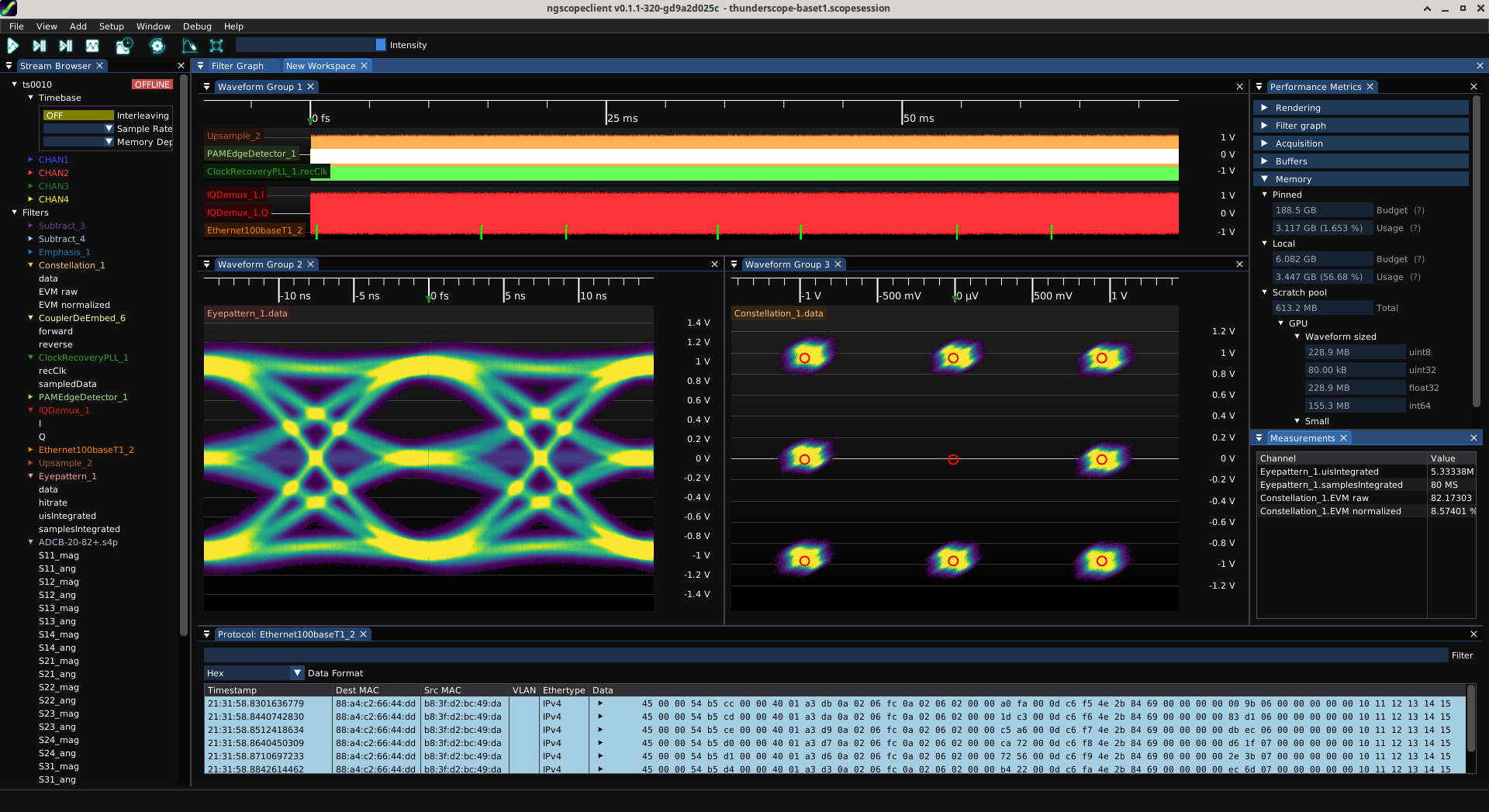
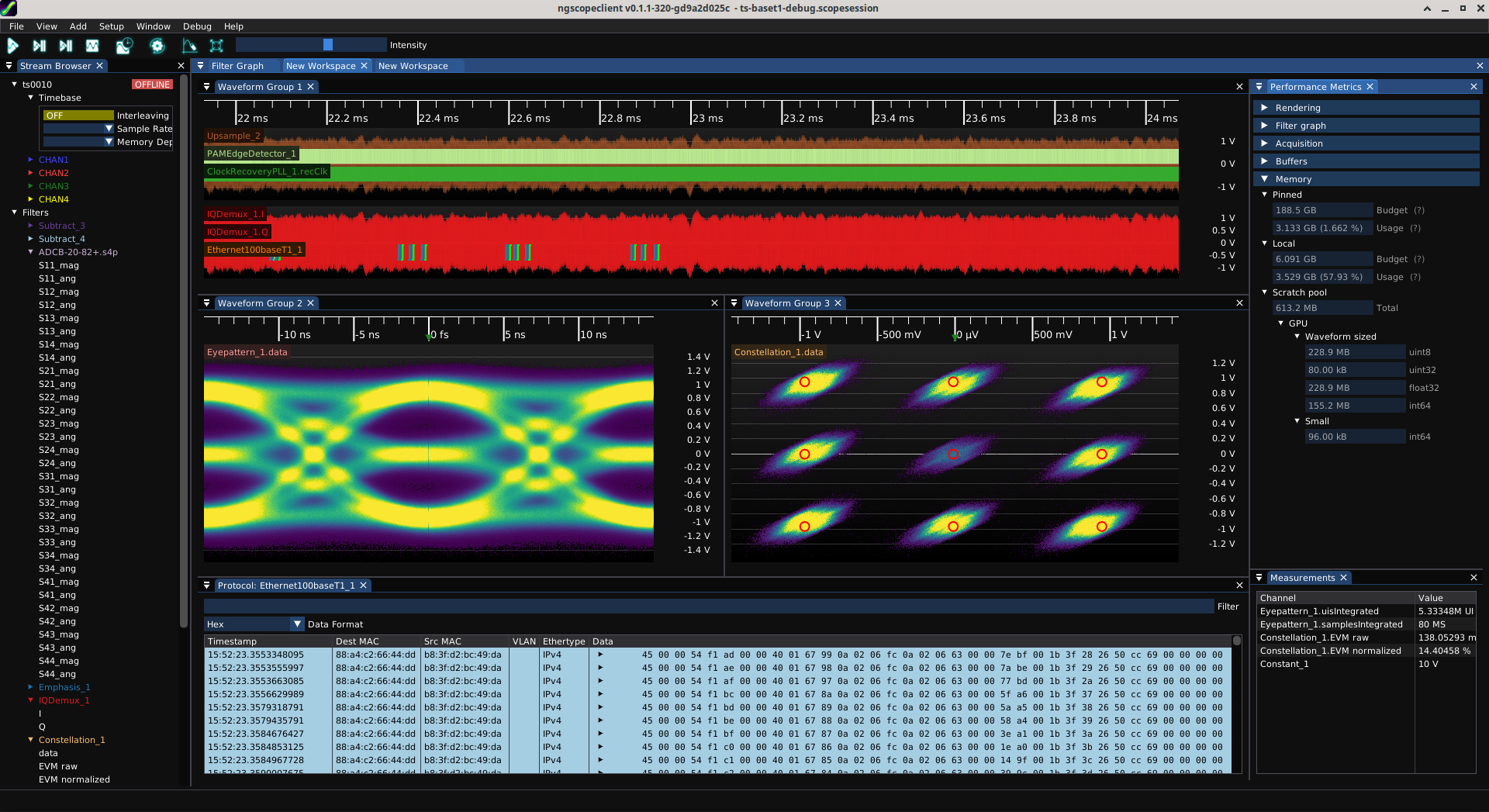
Since coming back from Germany for HARRIS I've been chasing a weird issue on my ThunderScope 100baseT1 test setup.
Before leaving for HARRIS I unplugged the TS, left the rest of the setup untouched, and brought the TS with me to demo to people while traveling.
After coming back the TS appears fine (passed calibration, and gives good-looking eyes on 100baseTX).
But when hooked back to the same, theoretically unmodified baseT1 test setup, I get weird diagonal distortion, …
 @cdarwin@c.im
2026-01-31 21:10:15
