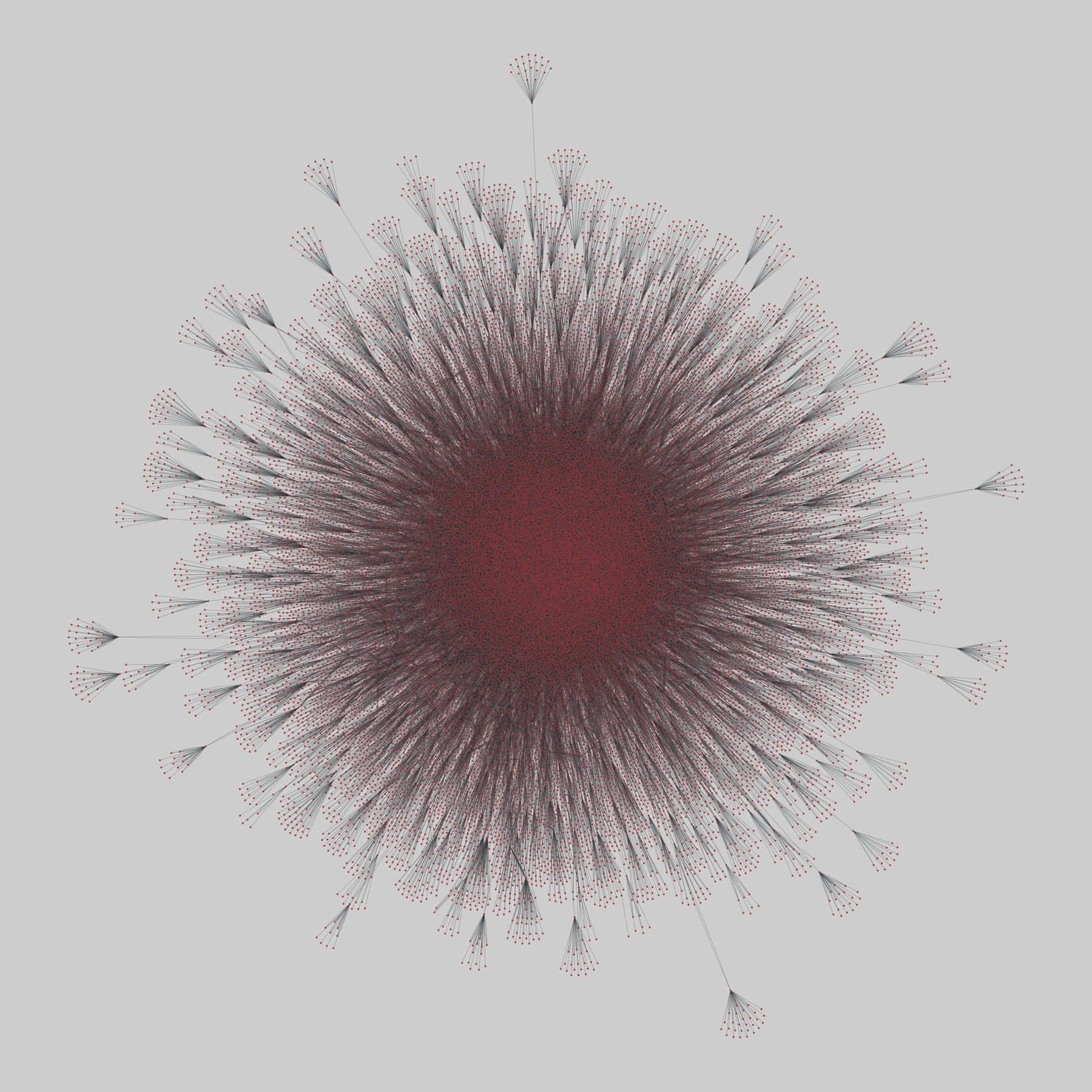
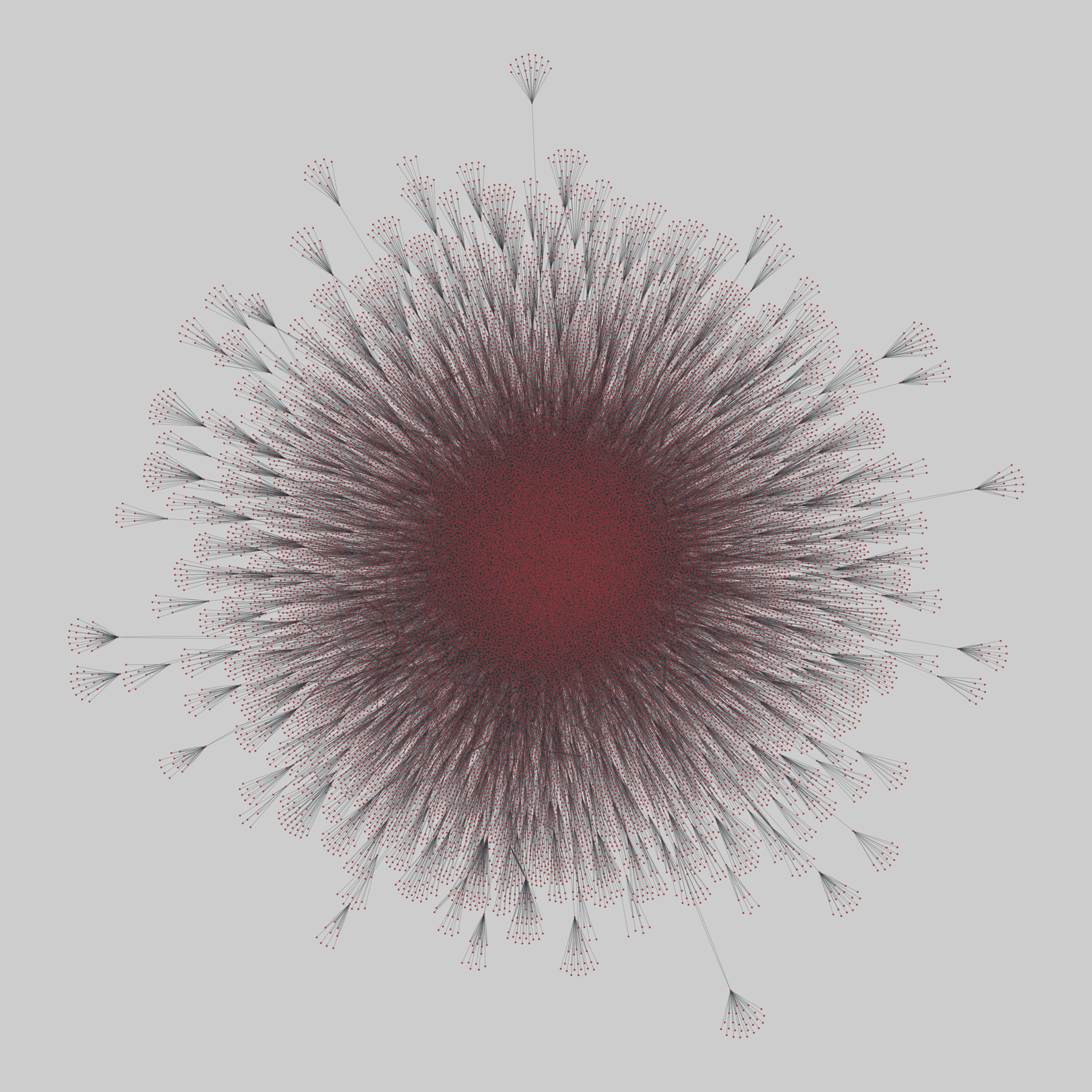
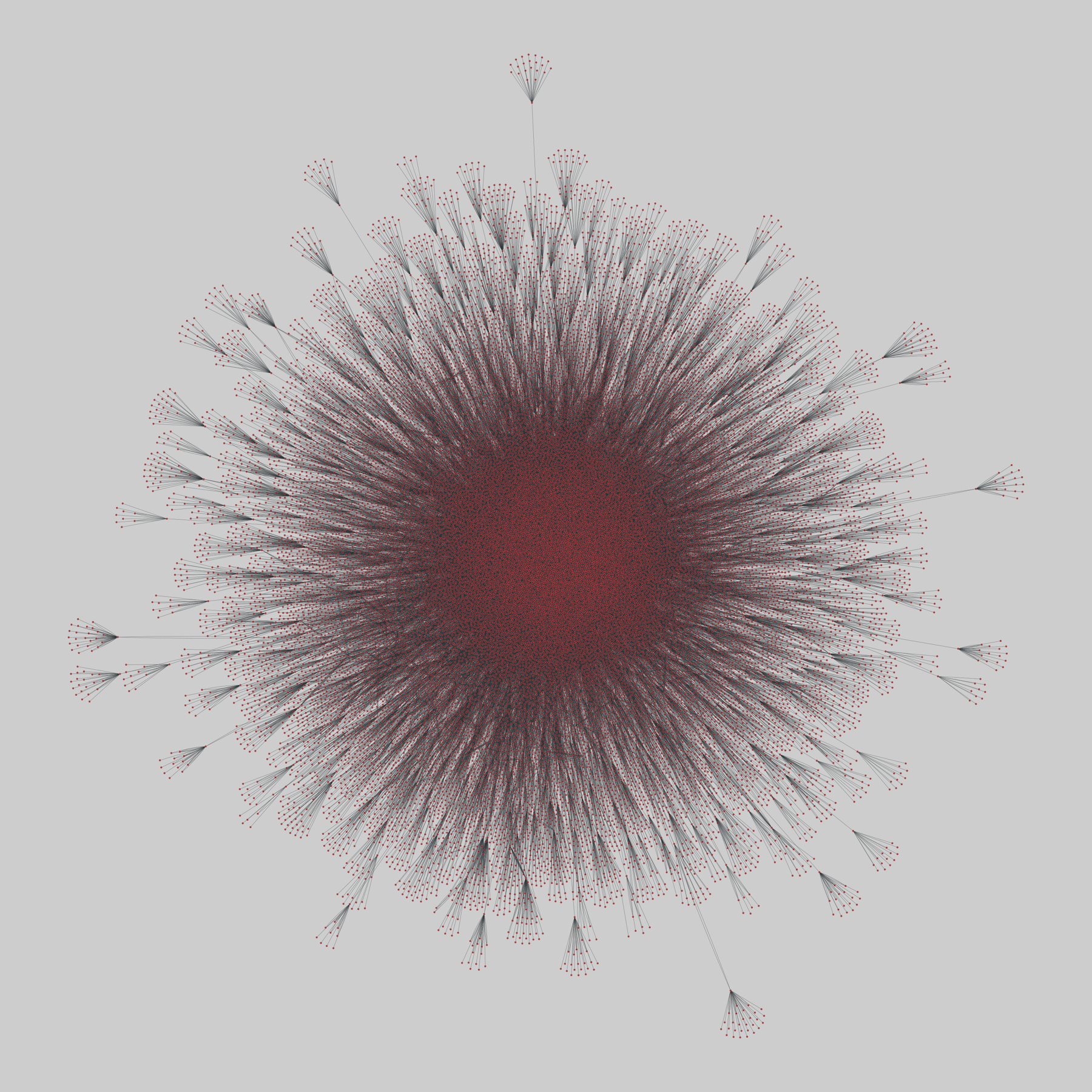
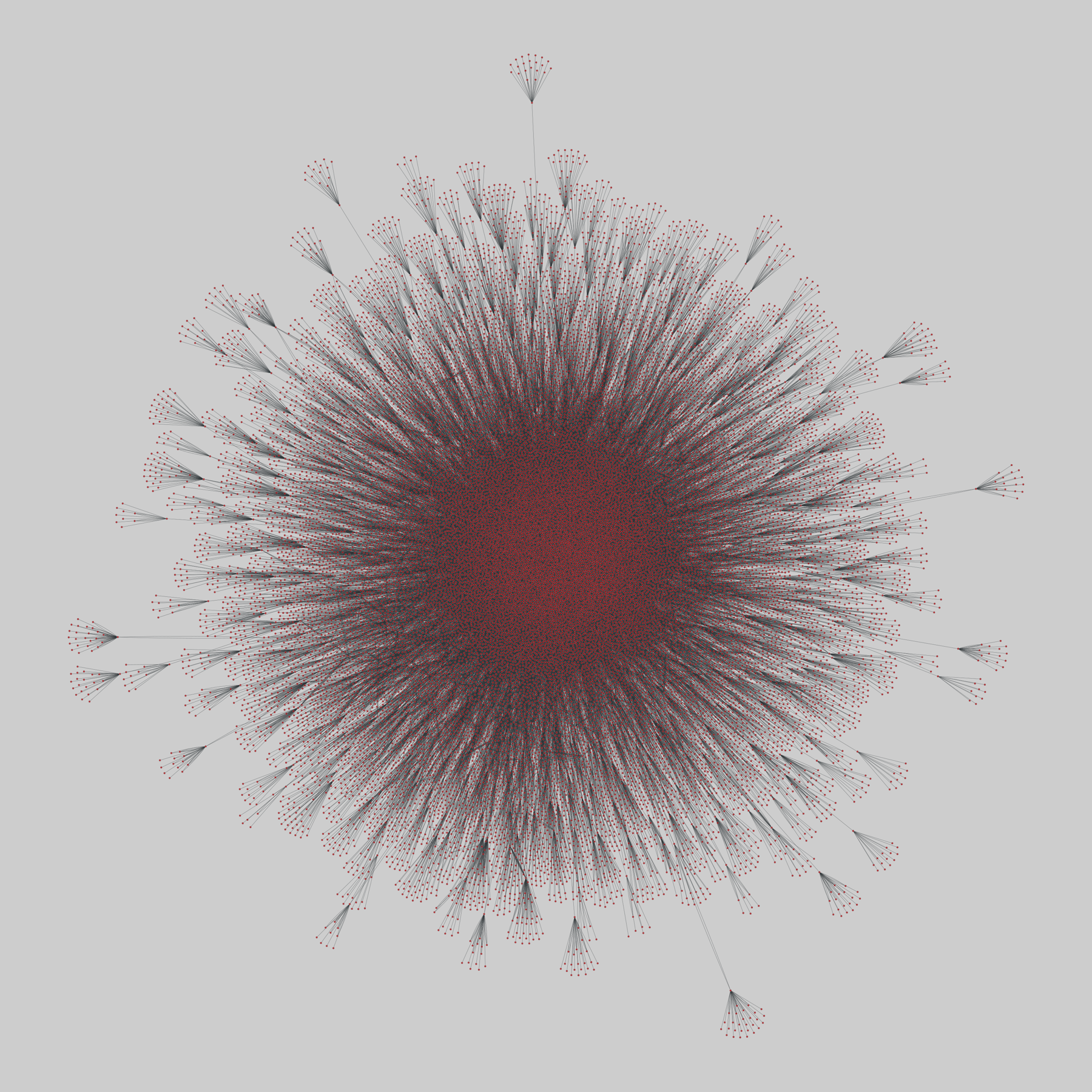
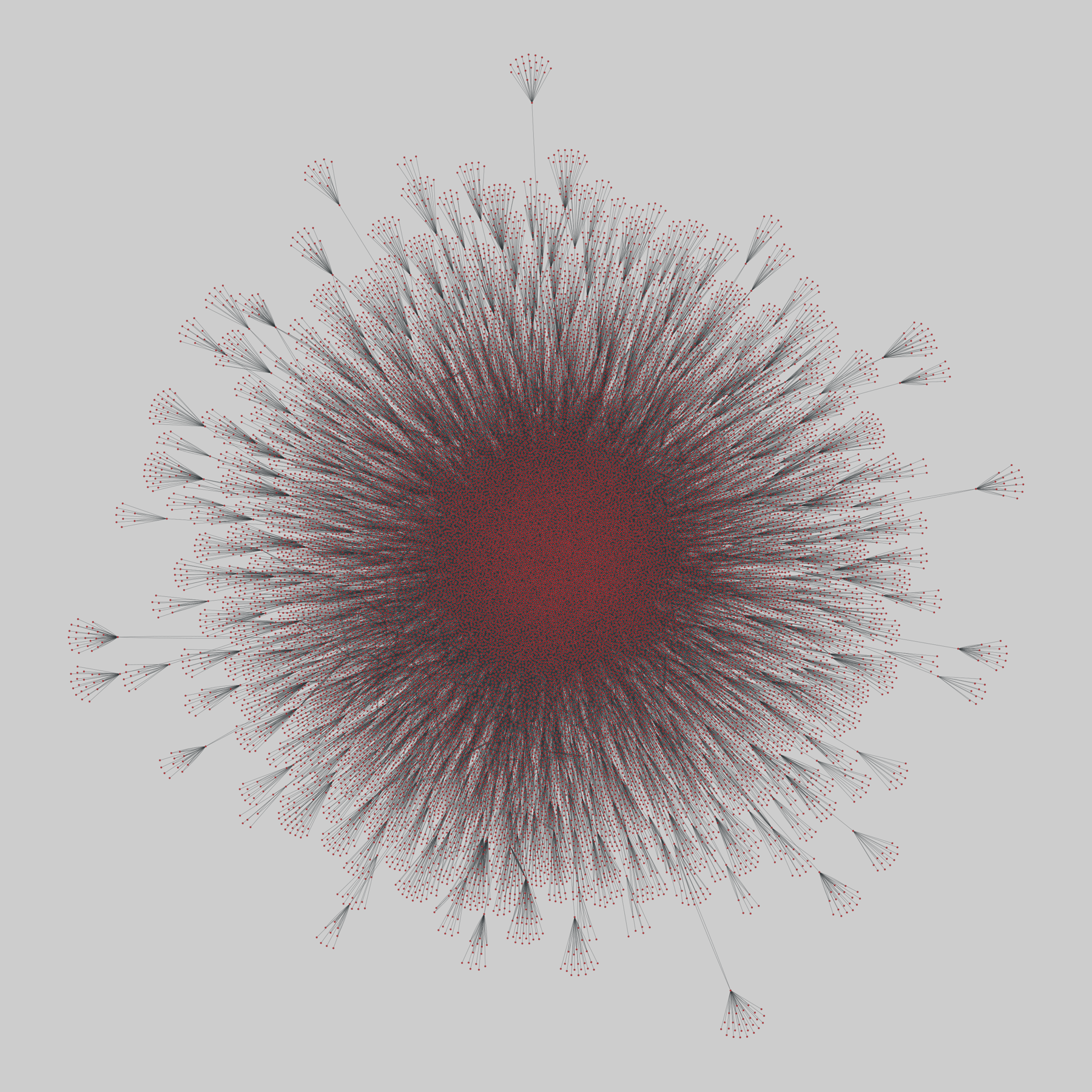
hiv_transmission: HIV transmission network (1988-2001)
A set of networks of HIV transmissions between people through sexual, needle-sharing, or social connections, based on combining 8 datasets collected from 1988 to 2001. Metadata includes test results of several diseases, as well as demographic variables such as age, ethnicity, and gender. Networks come in two flavors: egodyads and altdyads. Egodyads are the network among study-participants and their direct partners. Altdyads are the…
Space Complexity Dichotomies for Subgraph Finding Problems in the Streaming Model
Yu-Sheng Shih, Meng-Tsung Tsai, Yen-Chu Tsai, Ying-Sian Wu
https://arxiv.org/abs/2602.08002 https://arxiv.org/pdf/2602.08002 https://arxiv.org/html/2602.08002
arXiv:2602.08002v1 Announce Type: new
Abstract: We study the space complexity of four variants of the standard subgraph finding problem in the streaming model. Specifically, given an $n$-vertex input graph and a fixed-size pattern graph, we consider two settings: undirected simple graphs, denoted by $G$ and $H$, and oriented graphs, denoted by $\vec{G}$ and $\vec{H}$. Depending on the setting, the task is to decide whether $G$ contains $H$ as a subgraph or as an induced subgraph, or whether $\vec{G}$ contains $\vec{H}$ as a subgraph or as an induced subgraph. Let Sub$(H)$, IndSub$(H)$, Sub$(\vec{H})$, and IndSub$(\vec{H})$ denote these four variants, respectively.
An oriented graph is well-oriented if it admits a bipartition in which every arc is oriented from one part to the other, and a vertex is non-well-oriented if both its in-degree and out-degree are non-zero. For each variant, we obtain a complete dichotomy theorem, briefly summarized as follows.
(1) Sub$(H)$ can be solved by an $\tilde{O}(1)$-pass $n^{2-\Omega(1)}$-space algorithm if and only if $H$ is bipartite.
(2) IndSub$(H)$ can be solved by an $\tilde{O}(1)$-pass $n^{2-\Omega(1)}$-space algorithm if and only if $H \in \{P_3, P_4, co\mbox{-}P_3\}$.
(3) Sub$(\vec{H})$ can be solved by a single-pass $n^{2-\Omega(1)}$-space algorithm if and only if every connected component of $\vec H$ is either a well-oriented bipartite graph or a tree containing at most one non-well-oriented vertex.
(4) IndSub$(\vec{H})$ can be solved by an $\tilde{O}(1)$-pass $n^{2-\Omega(1)}$-space algorithm if and only if the underlying undirected simple graph $H$ is a $co\mbox{-}P_3$.
toXiv_bot_toot
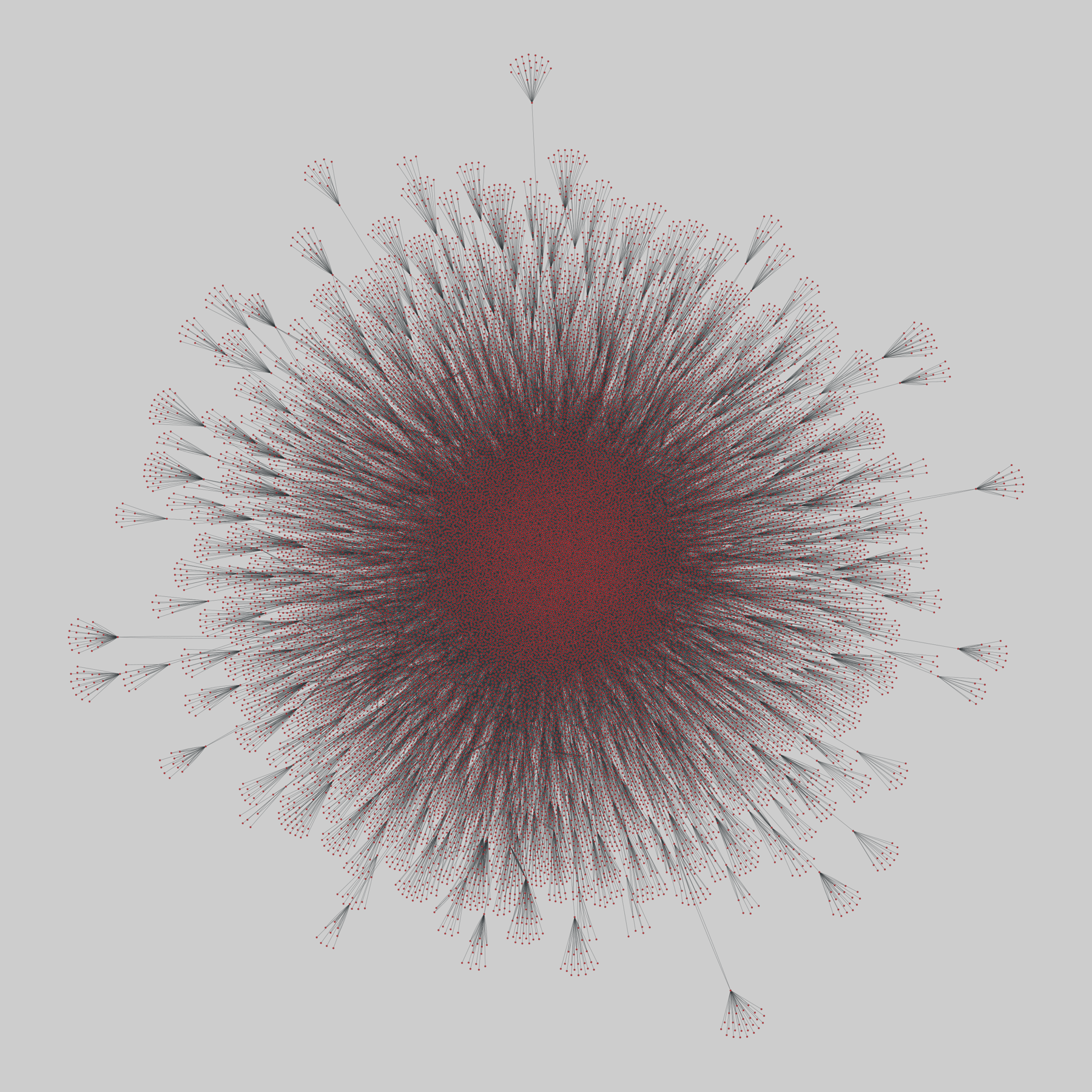
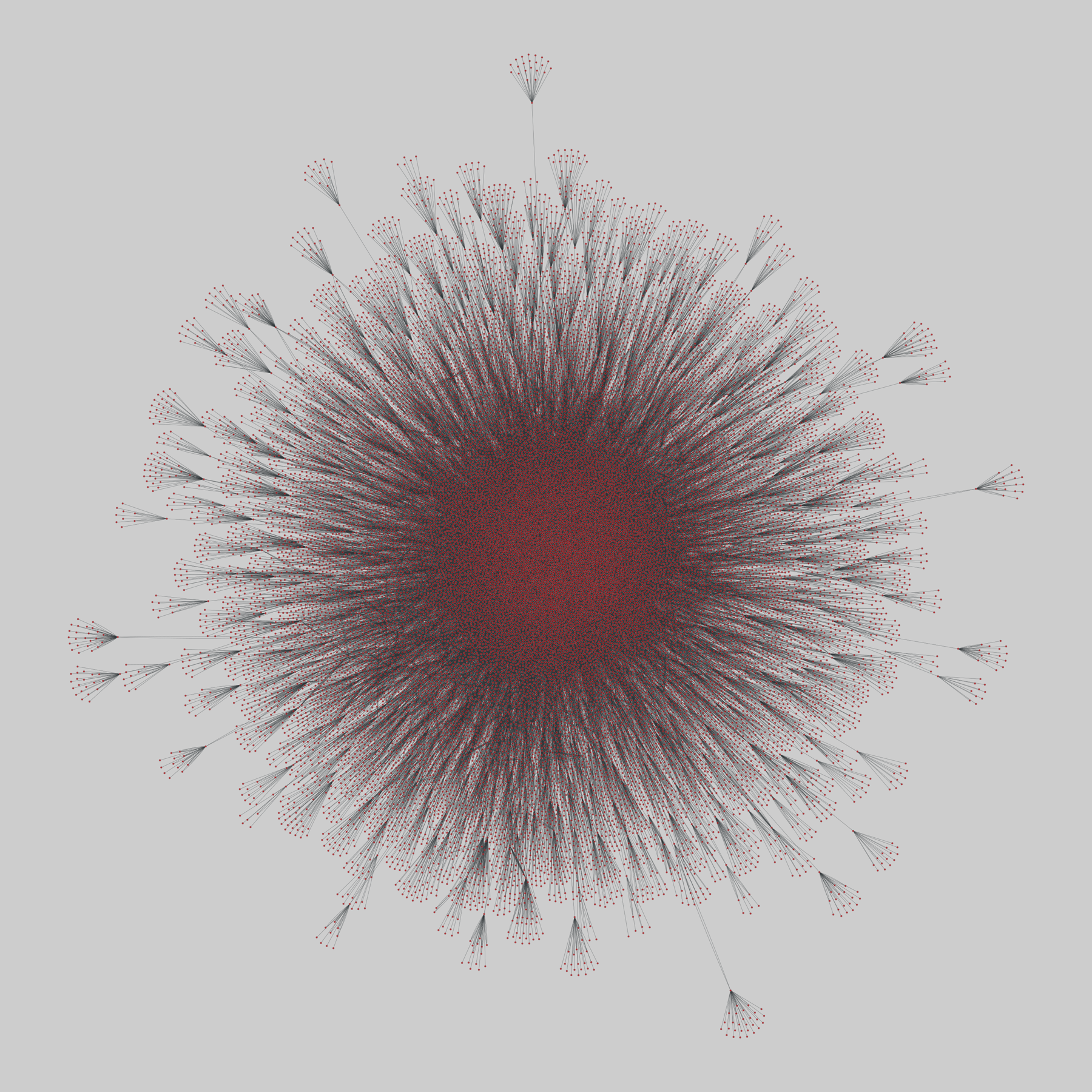
hiv_transmission: HIV transmission network (1988-2001)
A set of networks of HIV transmissions between people through sexual, needle-sharing, or social connections, based on combining 8 datasets collected from 1988 to 2001. Metadata includes test results of several diseases, as well as demographic variables such as age, ethnicity, and gender. Networks come in two flavors: egodyads and altdyads. Egodyads are the network among study-participants and their direct partners. Altdyads are the…
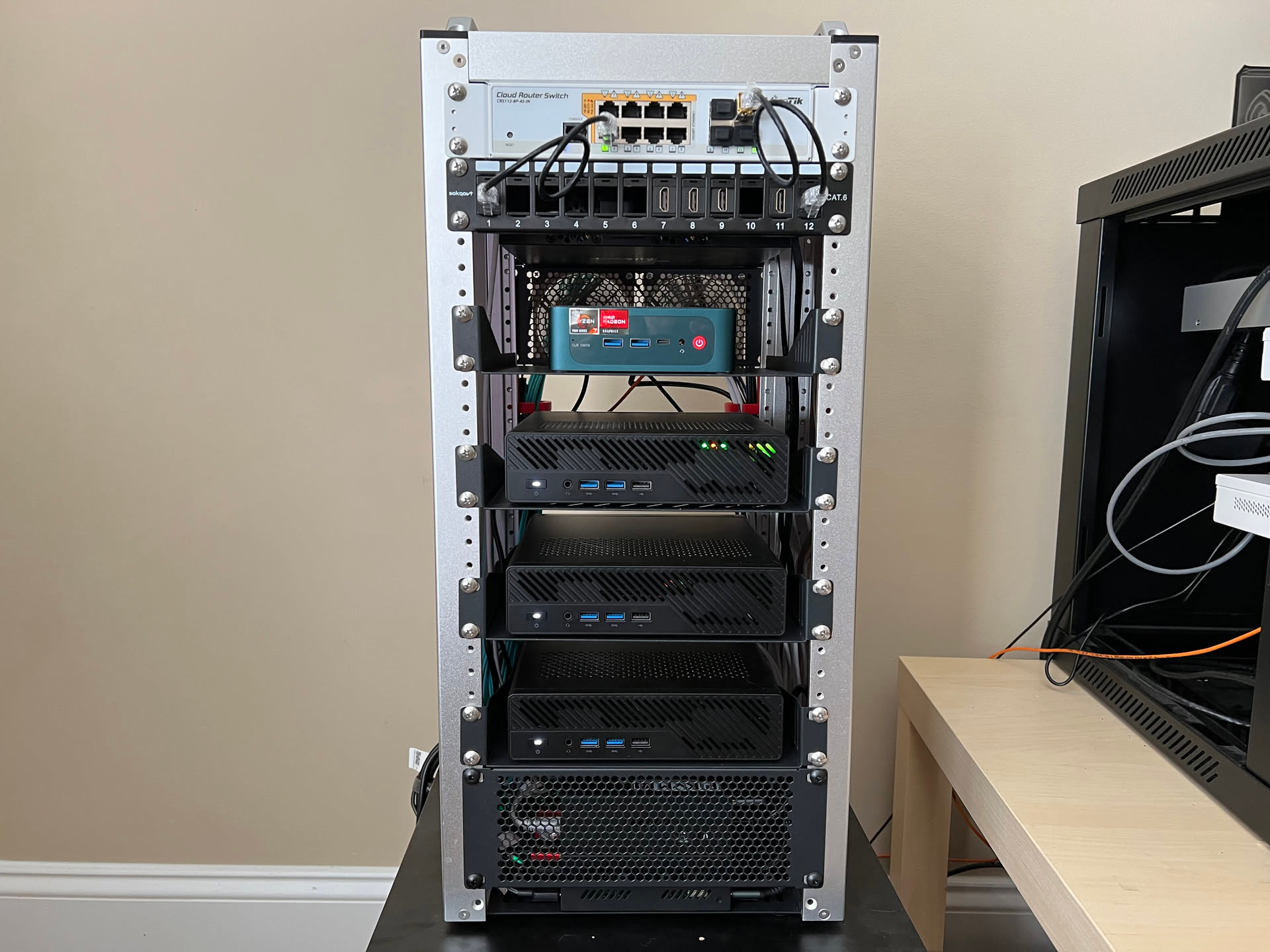
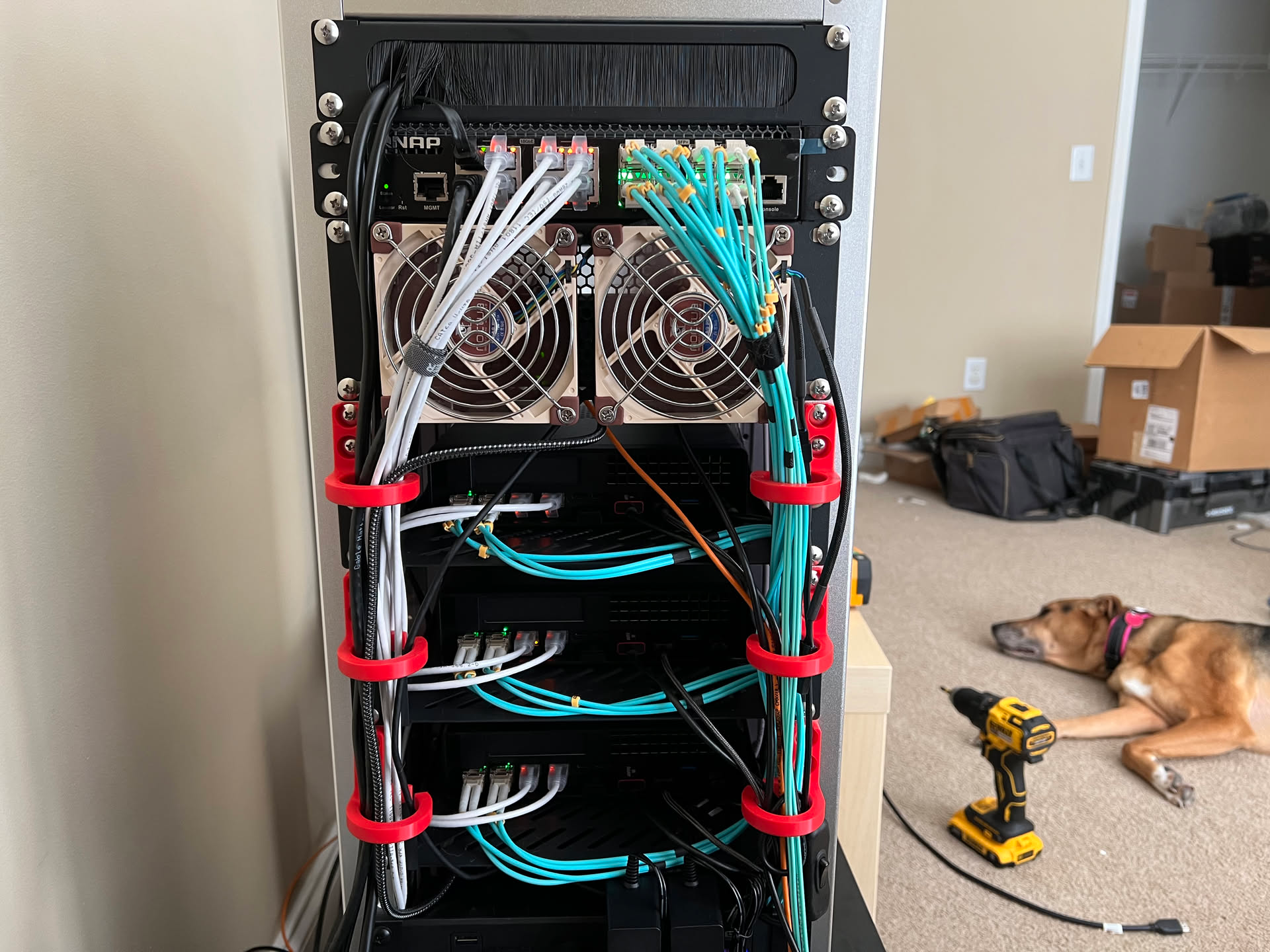
Finished cleaning up the cabling and getting the Beelink properly installed in the minirack. Overall, I miss the Pis because they looked pretty cool, but I'm not gonna complain: this looks pretty good as well.
The doggo wasn't quite as impressed.
#homelab #minirack
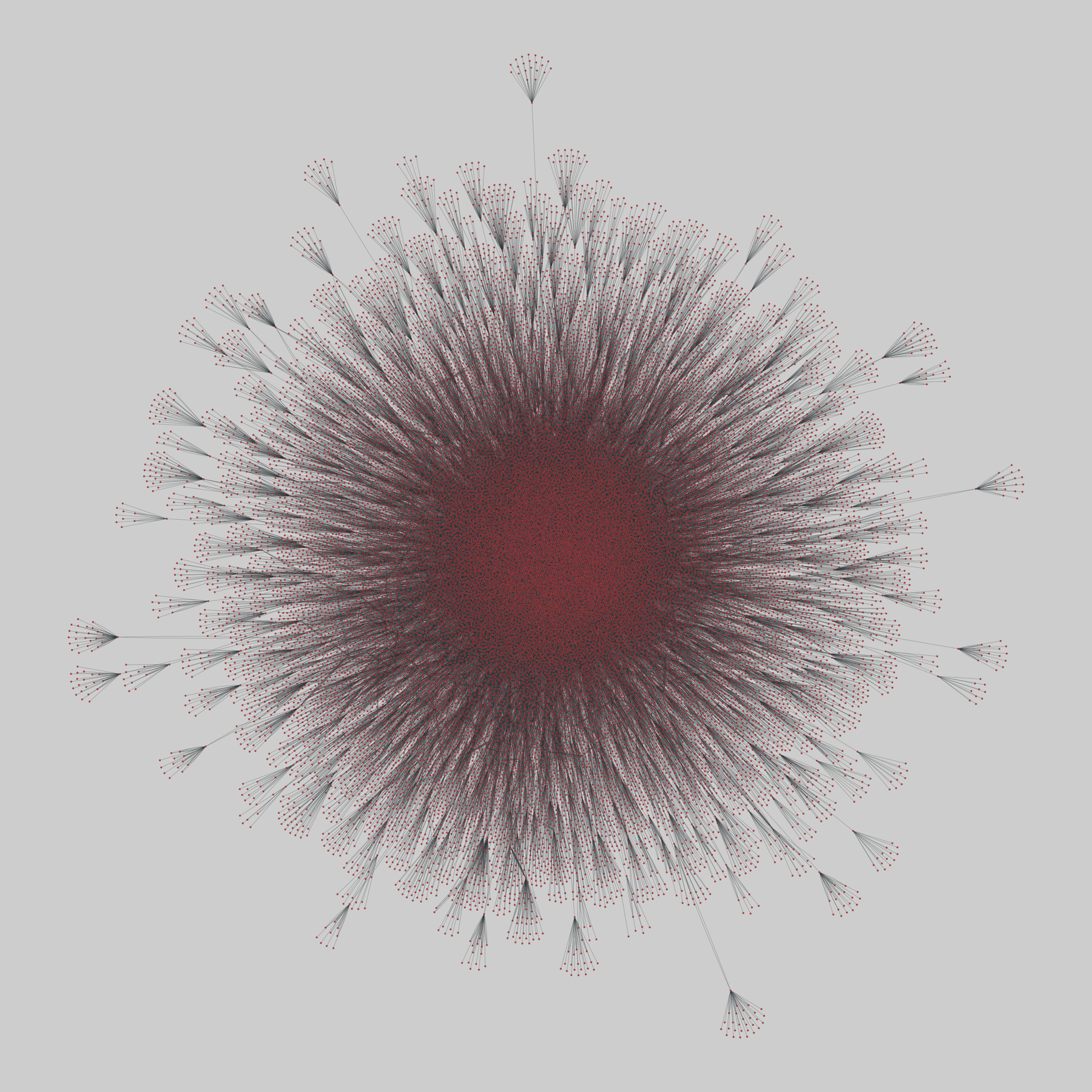
hiv_transmission: HIV transmission network (1988-2001)
A set of networks of HIV transmissions between people through sexual, needle-sharing, or social connections, based on combining 8 datasets collected from 1988 to 2001. Metadata includes test results of several diseases, as well as demographic variables such as age, ethnicity, and gender. Networks come in two flavors: egodyads and altdyads. Egodyads are the network among study-participants and their direct partners. Altdyads are the…
Estimating Spatially Resolved Radiation Fields Using Neural Networks
Felix Lehner, Pasquale Lombardo, Susana Castillo, Oliver Hupe, Marcus Magnor
https://arxiv.org/abs/2512.17654 https://arxiv.org/pdf/2512.17654 https://arxiv.org/html/2512.17654
arXiv:2512.17654v1 Announce Type: new
Abstract: We present an in-depth analysis on how to build and train neural networks to estimate the spatial distribution of scattered radiation fields for radiation protection dosimetry in medical radiation fields, such as those found in Interventional Radiology and Cardiology. Therefore, we present three different synthetically generated datasets with increasing complexity for training, using a Monte-Carlo Simulation application based on Geant4. On those datasets, we evaluate convolutional and fully connected architectures of neural networks to demonstrate which design decisions work well for reconstructing the fluence and spectra distributions over the spatial domain of such radiation fields. All used datasets as well as our training pipeline are published as open source in separate repositories.
toXiv_bot_toot
hiv_transmission: HIV transmission network (1988-2001)
A set of networks of HIV transmissions between people through sexual, needle-sharing, or social connections, based on combining 8 datasets collected from 1988 to 2001. Metadata includes test results of several diseases, as well as demographic variables such as age, ethnicity, and gender. Networks come in two flavors: egodyads and altdyads. Egodyads are the network among study-participants and their direct partners. Altdyads are the…
hiv_transmission: HIV transmission network (1988-2001)
A set of networks of HIV transmissions between people through sexual, needle-sharing, or social connections, based on combining 8 datasets collected from 1988 to 2001. Metadata includes test results of several diseases, as well as demographic variables such as age, ethnicity, and gender. Networks come in two flavors: egodyads and altdyads. Egodyads are the network among study-participants and their direct partners. Altdyads are the…
Fanciful Figurines flip Free Flood-It -- Polynomial-Time Miniature Painting on Co-gem-free Graphs
Christian Rosenke, Mark Scheibner
https://arxiv.org/abs/2602.00690 https://arxiv.org/pdf/2602.00690 https://arxiv.org/html/2602.00690
arXiv:2602.00690v1 Announce Type: new
Abstract: Inspired by the eponymous hobby, we introduce Miniature Painting as the computational problem to paint a given graph $G=(V,E)$ according to a prescribed template $t \colon V \rightarrow C$, which assigns colors $C$ to the vertices of $G$. In this setting, the goal is to realize the template using a shortest possible sequence of brush strokes, where each stroke overwrites a connected vertex subset with a color in $C$. We show that this problem is equivalent to a reversal of the well-studied Free Flood-It game, in which a colored graph is decolored into a single color using as few moves as possible. This equivalence allows known complexity results for Free Flood-It to be transferred directly to Miniature Painting, including NP-hardness under severe structural restrictions, such as when $G$ is a grid, a tree, or a split graph. Our main contribution is a polynomial-time algorithm for Miniature Painting on graphs that are free of induced co-gems, a graph class that strictly generalizes cographs. As a direct consequence, Free Flood-It is also polynomial-time solvable on co-gem-free graphs, independent of the initial coloring.
toXiv_bot_toot
Because because because because because. Because of the wonderful things he did in the last scene.
Improv teacher Steve Hoopla in today's 'story' course guided us through some "Because Games", in which scenes are to be causally connected. Each following on from prior scenes. Because that happened, this happened.
He didn't explicitly mention Pixar's "Story Spine", but the main loop in Pixar's story template is "...and because of that..." looping over and over between the introduction, call to adventure, and conclusion.
Causality is what strings a story together, gives it structure an avoids it being just a disconnected dream sequence. This scene is only happening because of the events in the prior scenes. It gives the string of scenes meaning and relevance.
So good fun to drill some of that stuff with the team and end up with sheep infestations and santa claus robot wars among other laughs.
Gonna miss next week's session due to a prior engagement, but the team is gelling well. Pretty sure we could do this show without much further guidance really. Everyone's very good.
#london #improv #hooplaImpro
hiv_transmission: HIV transmission network (1988-2001)
A set of networks of HIV transmissions between people through sexual, needle-sharing, or social connections, based on combining 8 datasets collected from 1988 to 2001. Metadata includes test results of several diseases, as well as demographic variables such as age, ethnicity, and gender. Networks come in two flavors: egodyads and altdyads. Egodyads are the network among study-participants and their direct partners. Altdyads are the…
hiv_transmission: HIV transmission network (1988-2001)
A set of networks of HIV transmissions between people through sexual, needle-sharing, or social connections, based on combining 8 datasets collected from 1988 to 2001. Metadata includes test results of several diseases, as well as demographic variables such as age, ethnicity, and gender. Networks come in two flavors: egodyads and altdyads. Egodyads are the network among study-participants and their direct partners. Altdyads are the…
hiv_transmission: HIV transmission network (1988-2001)
A set of networks of HIV transmissions between people through sexual, needle-sharing, or social connections, based on combining 8 datasets collected from 1988 to 2001. Metadata includes test results of several diseases, as well as demographic variables such as age, ethnicity, and gender. Networks come in two flavors: egodyads and altdyads. Egodyads are the network among study-participants and their direct partners. Altdyads are the…
 @netzschleuder@social.skewed.de