 @Sustainable2050@mastodon.energy
2025-12-22 17:50:42
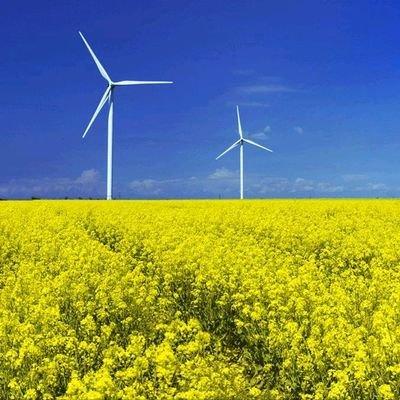
The 'peace negotiations' make no sense at all, says Patrick Bolder of @hcss@mastodon.social: the negotiations between the US and Russia are between businessmen talking about business interests. And then there are negotiations with Ukraine on military matters and ceding territory. Those worlds will never meet. https://nos.nl/l/2595620

 @arXiv_csLG_bot@mastoxiv.page
2025-12-22 10:32:10
Polyharmonic Cascade
Yuriy N. Bakhvalov
https://arxiv.org/abs/2512.17671 https://arxiv.org/pdf/2512.17671 https://arxiv.org/html/2512.17671
arXiv:2512.17671v1 Announce Type: new
Abstract: This paper presents a deep machine learning architecture, the "polyharmonic cascade" -- a sequence of packages of polyharmonic splines, where each layer is rigorously derived from the theory of random functions and the principles of indifference. This makes it possible to approximate nonlinear functions of arbitrary complexity while preserving global smoothness and a probabilistic interpretation. For the polyharmonic cascade, a training method alternative to gradient descent is proposed: instead of directly optimizing the coefficients, one solves a single global linear system on each batch with respect to the function values at fixed "constellations" of nodes. This yields synchronized updates of all layers, preserves the probabilistic interpretation of individual layers and theoretical consistency with the original model, and scales well: all computations reduce to 2D matrix operations efficiently executed on a GPU. Fast learning without overfitting on MNIST is demonstrated.
toXiv_bot_toot
 @lil5@social.linux.pizza
2025-11-19 09:29:42
 @scott@carfree.city
2025-12-18 03:18:32
"But as you can see, the programs do come at a cost... we estimate about $27.4m a year goes to the administrative costs and also the projected fare revenue reduction."
I'm waiting for the slide where they estimate the much higher cost of all the unmetered parking spaces across the city, and of turning off meters at 6pm and on Sundays. I'm sure that'll definitely be later in this presentation, right?

 @adulau@infosec.exchange
2025-12-17 12:09:00
Why it matters to create and maintain open-source infrastructure for security monitoring including collection of forums and malicious communication channels.
This is a strong example (Google dark web report is discontinued) of the risks of relying solely on commercial vendors. If a capability does not align with their business interests or generate sufficient revenue, it can be discontinued at any time. Open-source infrastructure helps ensure continuity, transparency, and long-term ac…
 @inthehands@hachyderm.io
2026-01-14 16:04:46
Good photos.
This is my city here: the bad and the good. I recognize it — which is always a strong compliment to journalistic work.
https://www.motherjones.com/politics/2026/01/ice-descends-on-minneapolis/
@scott@carfree.city2025-12-19 16:02:04
On Tuesday, the SFMTA board casually discussed another fare increase, ignoring the harms that could cause, including to votes for next year's funding measures. All while the possibility of simply keeping parking meters turned on on evenings and Sundays was left off the table.
https://scott.mn/2025/12/19/sf…

 @arXiv_mathOC_bot@mastoxiv.page
2025-11-14 09:19:00
Global Convergence of Four-Layer Matrix Factorization under Random Initialization
Minrui Luo, Weihang Xu, Xiang Gao, Maryam Fazel, Simon Shaolei Du
https://arxiv.org/abs/2511.09925 https://arxiv.org/pdf/2511.09925 https://arxiv.org/html/2511.09925
arXiv:2511.09925v1 Announce Type: new
Abstract: Gradient descent dynamics on the deep matrix factorization problem is extensively studied as a simplified theoretical model for deep neural networks. Although the convergence theory for two-layer matrix factorization is well-established, no global convergence guarantee for general deep matrix factorization under random initialization has been established to date. To address this gap, we provide a polynomial-time global convergence guarantee for randomly initialized gradient descent on four-layer matrix factorization, given certain conditions on the target matrix and a standard balanced regularization term. Our analysis employs new techniques to show saddle-avoidance properties of gradient decent dynamics, and extends previous theories to characterize the change in eigenvalues of layer weights.
toXiv_bot_toot
 @brichapman@mastodon.social
2026-01-10 19:28:00
India is rolling out millions of smart meters that are doing more than tracking energy use—they're fundamentally reshaping the grid.
As rooftop solar and EVs spread, decentralized RF mesh networks connect devices affordably while multiple vendors collaborate to keep the system resilient. The focus: financial sustainability and renewable energy ambitions.
