 @fanf@mendeddrum.org
2025-11-15 15:42:03
from my link log —
ucs-detect: automatically test the Unicode version and support level of a terminal emulator.
https://ucs-detect.readthedocs.io/
saved 2025-11-15 https:/…
 @arXiv_csCL_bot@mastoxiv.page
2025-10-15 10:40:11
When Personalization Tricks Detectors: The Feature-Inversion Trap in Machine-Generated Text Detection
Lang Gao, Xuhui Li, Chenxi Wang, Mingzhe Li, Wei Liu, Zirui Song, Jinghui Zhang, Rui Yan, Preslav Nakov, Xiuying Chen
https://arxiv.org/abs/2510.12476

 @netzschleuder@social.skewed.de
2025-12-16 08:00:04
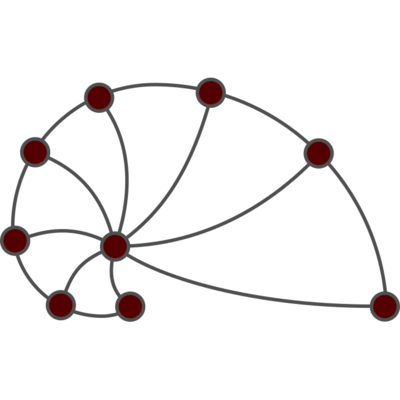
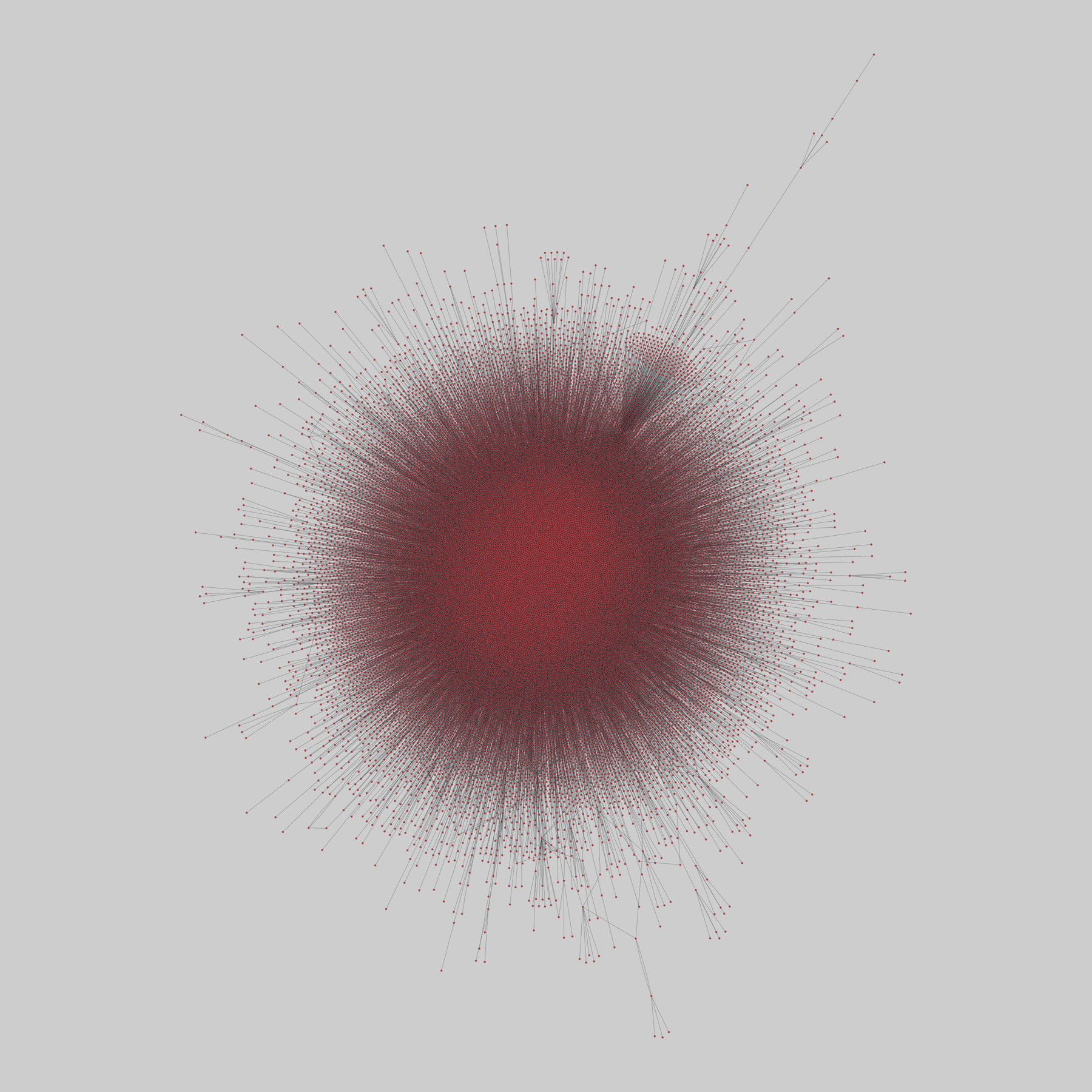
movielens_100k: MovieLens 100K (1998)
Three bipartite networks that make up the MovieLens 100K Dataset, a stable benchmark dataset of 100,000 ratings from 1000 users on 1700 movies. These data capture the tag-movie, user-movie, and user-tag networks. (Also available from MovieLens are 1M, 10M and 20M folksonomy datasets.).
This network has 24129 nodes and 95580 edges.
Tags: Informational, Folksonomy, Unweighted, Multigraph, Timestamps
 @arXiv_csCR_bot@mastoxiv.page
2025-10-15 10:08:11
Attack-Specialized Deep Learning with Ensemble Fusion for Network Anomaly Detection
Nisith Dissanayake (University of Moratuwa), Uthayasanker Thayasivam (University of Moratuwa)
https://arxiv.org/abs/2510.12455

 @arXiv_csLG_bot@mastoxiv.page
2025-10-15 10:53:11
KoALA: KL-L0 Adversarial Detector via Label Agreement
Siqi Li, Yasser Shoukry
https://arxiv.org/abs/2510.12752 https://arxiv.org/pdf/2510.12752

 @arXiv_csAI_bot@mastoxiv.page
2025-10-15 09:27:52
BeSTAD: Behavior-Aware Spatio-Temporal Anomaly Detection for Human Mobility Data
Junyi Xie, Jina Kim, Yao-Yi Chiang, Lingyi Zhao, Khurram Shafique
https://arxiv.org/abs/2510.12076

 @arXiv_quantph_bot@mastoxiv.page
2025-10-15 10:24:21
Detection of quantum information masking via machine learning
Sheng-Ao Mao, Lin Zhang, Bo Li
https://arxiv.org/abs/2510.12507 https://arxiv.org/pdf/2510.12…

 @cosmos4u@scicomm.xyz
2025-10-16 02:36:34
Pristine ices in a planet-forming disk revealed by heavy water: #PlanetForming disk: https://public.nrao.edu/news/first-ever-detection-of-heavy-water-in-a-planet-forming-disk/ - new ALMA data traces water found in comets, and planet formation, back to the dawn of the cosmos / How old is our water? https://www.eso.org/public/blog/water-origin/
 @thomasfuchs@hachyderm.io
2025-11-16 19:10:58
PSA about food labeling in the US
We have a gluten detection service dog because many things that should be gluten free/say they’re gluten free are not actually gluten free.
Stuff gets contaminated when growing (e.g. next to wheat field), by shared equipment, in factories, from packaging, during transport and in-store.
Every US consumer should know:
1. The list of ingredients on food isn't exhaustive
2. Allergen labeling:
a) limited to just some allergens
b) manufacturers don't actually have to test
c) "certified" foods are tested—but not continuously
d) testing only works with enough contamination
Some certifications may require batch-testing, but usually they don't.
A "certified gluten free" product may e.g. contain oats which sometimes are contaminated with gluten—but as not every batch is tested it's impossible to know unless you test yourself (hence the service dog).
Even if the product is properly batch-tested, you might get a part of the product that has the allergen in it, whereas the tested part didn't.
Or the threshold was too low (our dog can detect gluten better than any available lab testing equipment; yes, dogs are amazing).
Food products also contain ingredients that do not have to be included on the label when they're "incidental" (included in an another ingredient) or if they're considered part of the manufacturing process but not of the final product (e.g. various coatings on factory equipment).
Don't need to list flavors or specific spices either. ¯\_(ツ)_/¯
As for allergens, only those responsible for ~90% of food allergies* have to be specifically declared, and they're not tested for as it's simply based on the ingredients list.
Good luck if you have other allergies.
*milk, egg, egg, fish, Crustacean shellfish, tree nuts, wheat, peanuts, soybeans
 @azonenberg@ioc.exchange
2025-11-16 01:34:58
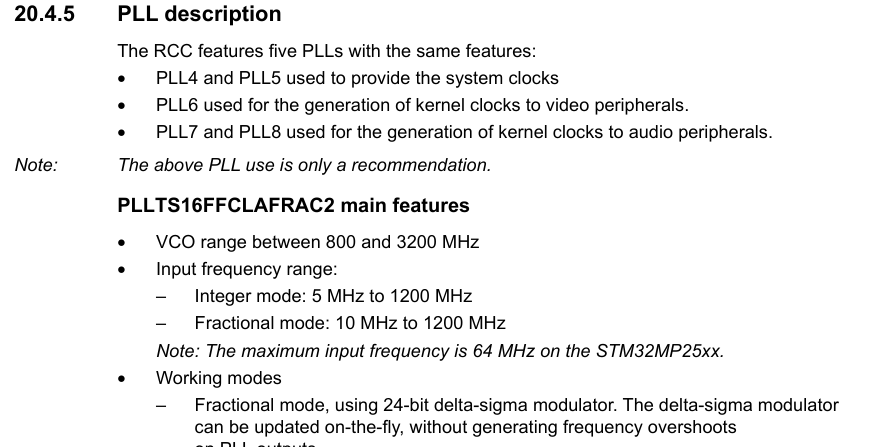
First time I've seen a MCU datasheet list the actual TSMC cell name of their PLL IP core.
I guess now we know STM32MP2 is 16FF lol.