@metacurity@infosec.exchange
2026-06-05 10:55:42
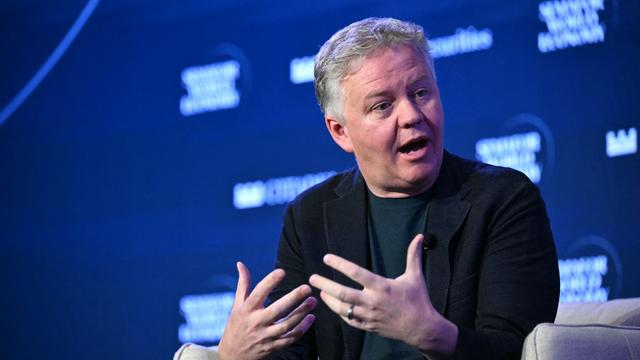
‘Bots have now passed human traffic online,’ Cloudflare boss laments — says agentic traffic wasn’t expected to eclipse real people until next year
https://www.tomsh…
 @Techmeme@techhub.social
2026-06-05 00:25:51
Cloudflare CEO Matthew Prince says agentic traffic is "growing so fast that bots have now passed human traffic online for the first time" (Mark Tyson/Tom's Hardware)
https://www.

 @cdarwin@c.im
2026-08-01 15:23:26
Go to #EuropeanSolarEclipse

 @sergiofdezsaez@masto.es
2026-08-03 18:39:46
Así voy a poder contemplar el #eclipse2026 desde el balcón de casa. A ver si hay suerte y ese día no hay nubes.
Ademšs esta tarde he encontrado por casa un filtro del dišmetro de uno de los objetivos que tengo, concretamente para el 100-400, que me viene ni al pelo para "tintarlo" mañana en el pabellón con lšmina de las que usamos para tintar las lunas de los autobuses e ir haciendo …

 @arXiv_csGT_bot@mastoxiv.page
2026-06-05 08:01:47
DNQ: Deep Nash Q-Network for Partially Observable n-Player Games
Qintong Xie, Edward Koh, Xavier Cadet, Peter Chin
https://arxiv.org/abs/2606.06480 https://arxiv.org/pdf/2606.06480 https://arxiv.org/html/2606.06480
arXiv:2606.06480v1 Announce Type: new
Abstract: Many real-world competitive systems require multiple decision-makers to act simultaneously under shared constraints, limited information, and repeated interaction, as in auctions, resource allocation, and security competition. We study multi-turn simultaneous bidding as a controlled testbed for such problems and propose DNQ, a solver-in-the-loop equilibrium supervision framework for training bidding agents. DNQ alternates between trajectory collection, critic-based payoff estimation, equilibrium computation, and policy imitation. At each visited state, a shared critic predicts either pairwise payoff matrices or an exact N-player payoff tensor, an external solver computes equilibrium strategies, and the agents are trained by minimizing the KL divergence between their masked policies and the solver-derived equilibrium targets. We focus on a scalable pairwise formulation that greatly reduces equilibrium-solving cost and training time compared with the exact formulation, while the shared critic amortizes payoff learning across agents and states. Experiments compare the pairwise and exact variants using critic loss, policy entropy, bidding resource usage, and training cost, showing that the pairwise method scales to larger numbers of agents, whereas the exact method becomes computationally impractical as the joint game grows. These results illustrate the trade-off between strategic fidelity and scalability in repeated competitive environments.
toXiv_bot_toot
 @kexpmusicbot@mastodonapp.uk
2026-05-05 11:24:45
🇺🇦 #NowPlaying on KEXP's #VarietyMix
Arcade Fire:
🎵 Month of May
#ArcadeFire
https://open.spotify.com/track/2eSlBeOIKaT5LvPplw9aPN
@Techmeme@techhub.social2026-07-04 05:10:47
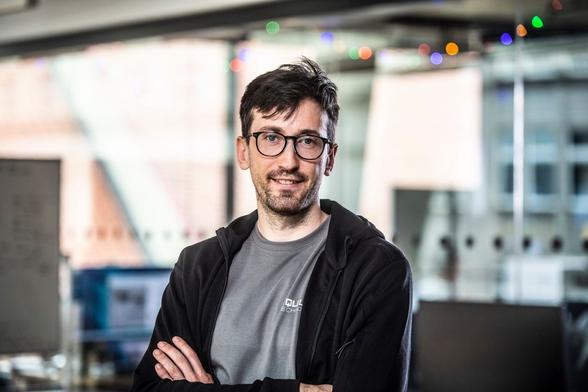
Prague-based EquiLibre, which offers AI for quant hedge funds and is founded by three ex-Google DeepMind researchers, raised a Series A at a $500M valuation (Anna Heim/TechCrunch)
https://techcrunch.com/2026/06/30/the-deepm…
 @heiseonline@social.heise.de
2026-06-27 05:05:00
 @arXiv_csGT_bot@mastoxiv.page
2026-06-05 07:56:32
Constant Approximation for Hylland--Zeckhauser Equilibria
Yonglei Yan, Zhengyang Liu
https://arxiv.org/abs/2606.06317 https://arxiv.org/pdf/2606.06317 https://arxiv.org/html/2606.06317
arXiv:2606.06317v1 Announce Type: new
Abstract: We present a polynomial-time algorithm for computing a $1/e$-approximate Hylland--Zeckhauser (HZ) equilibrium. This establishes the \emph{first} efficient approximation guarantee for HZ equilibria in settings with multi-valued utilities. Our main technical contribution is a novel utility stratification technique that reduces the original multi-valued market to a structured bi-valued instance. This reduction allows us to efficiently compute the approximation by leveraging the exact algorithm of Vazirani and Yannakakis.
toXiv_bot_toot
@Techmeme@techhub.social2026-08-05 08:11:14
At the 2026 International Congress of Mathematicians, 20 mathematicians reflect on how AI advances are transforming their work and field; many are optimistic (Kai Williams/Understanding AI)
https://www.understandingai.org/p/mathematicians-are-grappling-with