 @heiseonline@social.heise.de
2026-04-26 16:16:00

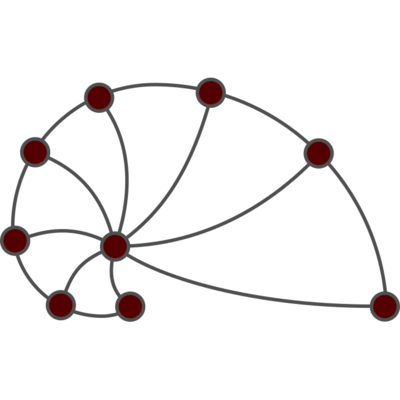 @netzschleuder@social.skewed.de
2026-02-27 20:00:13
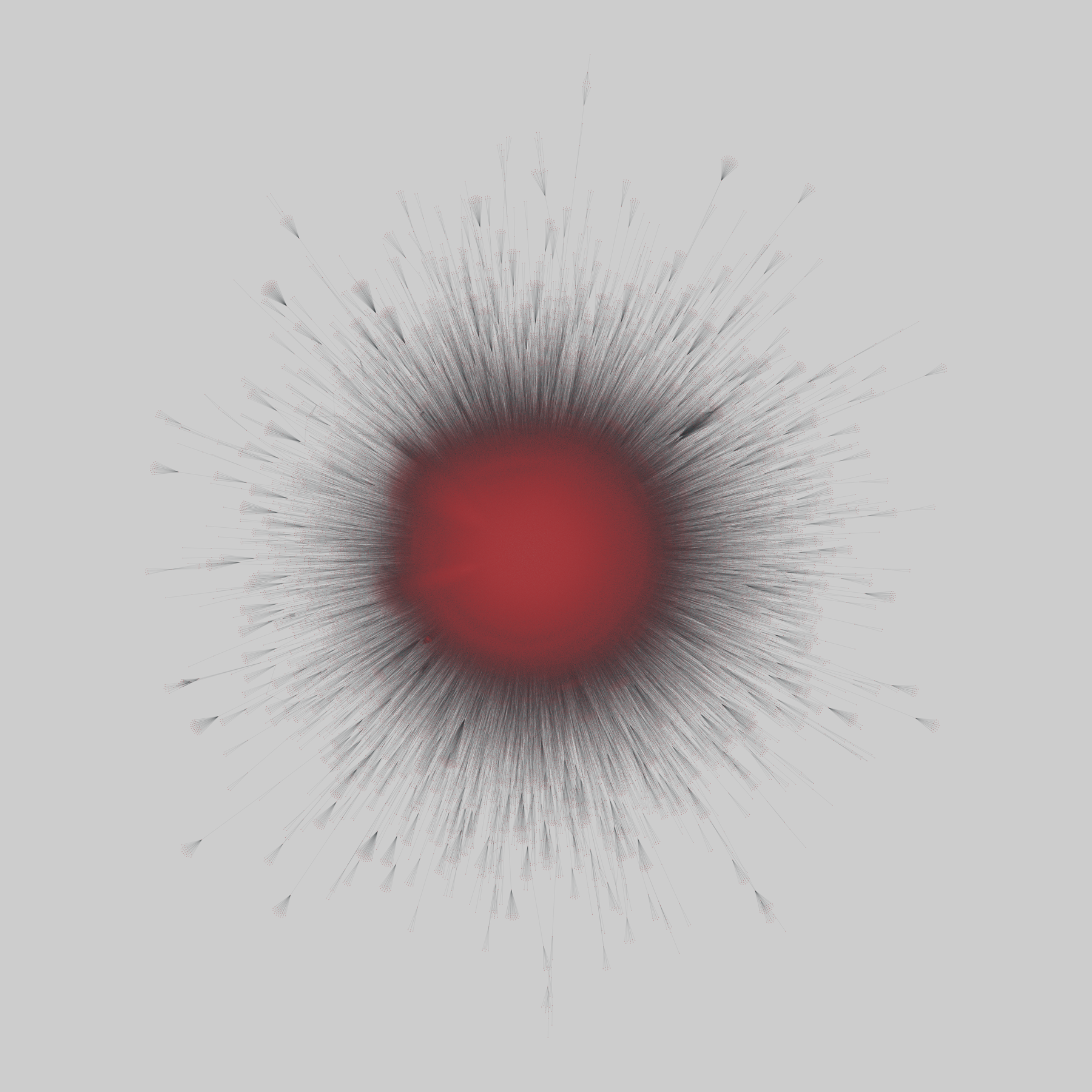
flickr_groups: OSN user groups (2007)
Bipartite networks of the affiliations between users and groups on several online social network sites, including Flickr, YouTube, LiveJournal, and Orkut, extracted in 2007.
This network has 499610 nodes and 8545307 edges.
Tags: Social, Online, Unweighted
https://networ…
 @v_i_o_l_a@openbiblio.social
2026-03-27 13:04:05
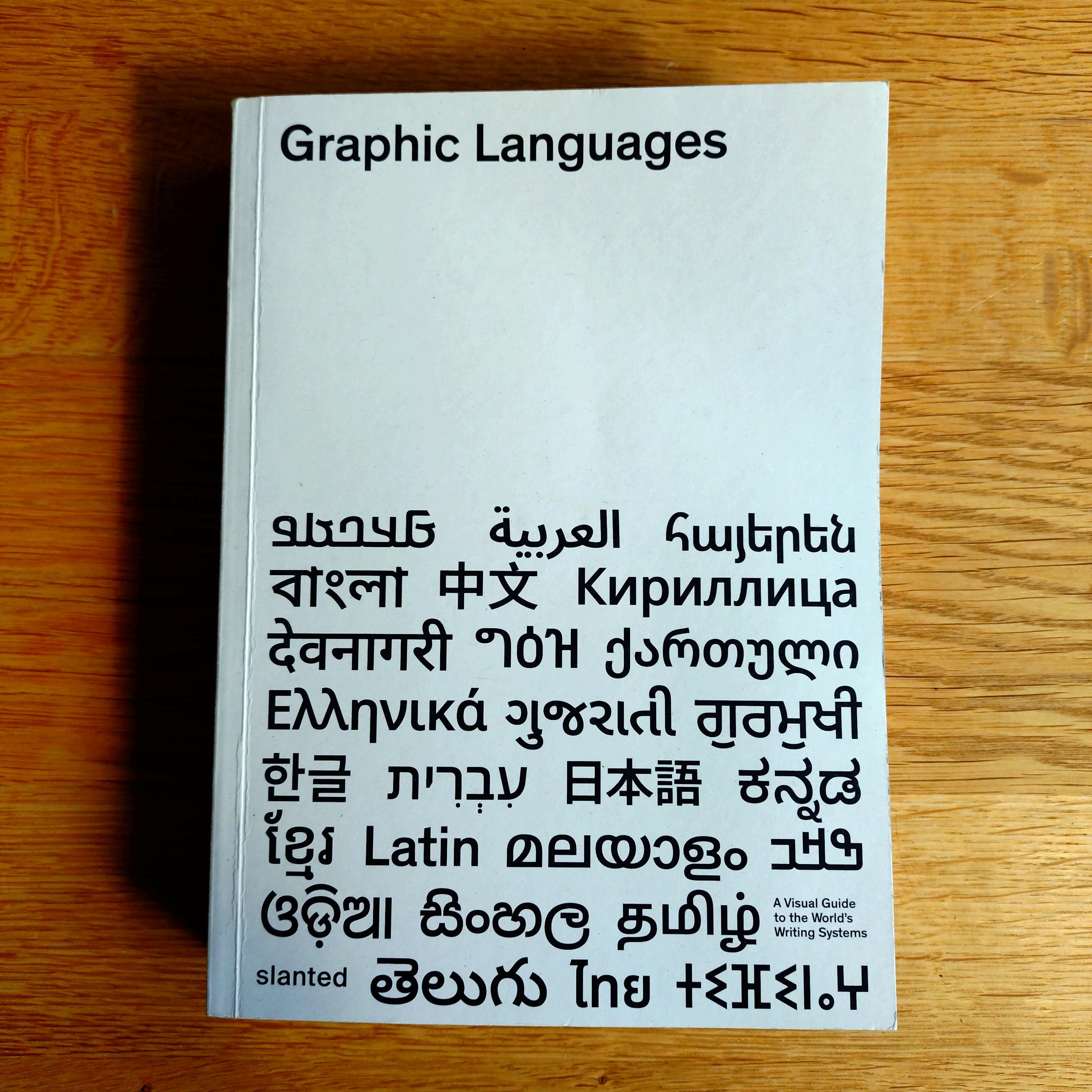
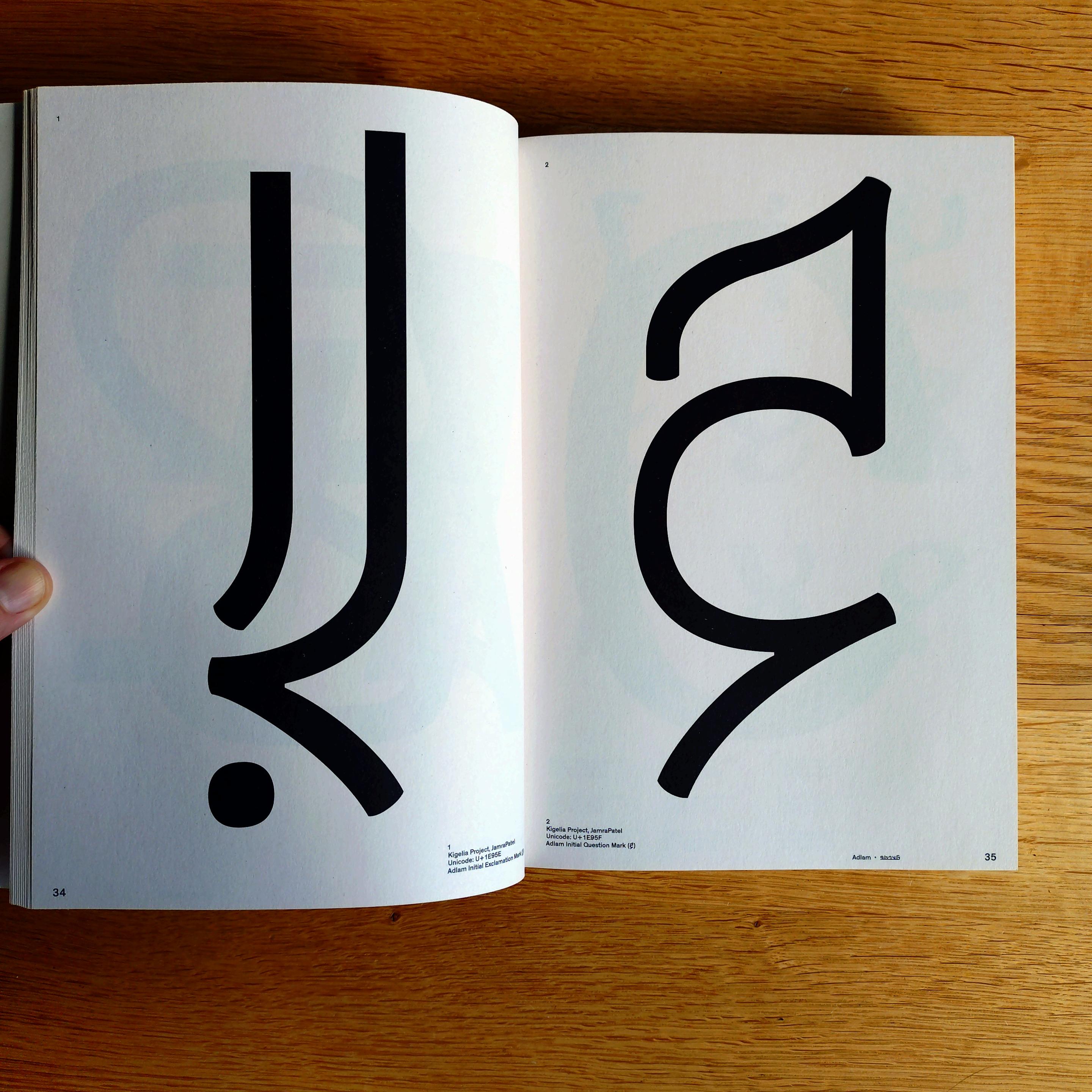
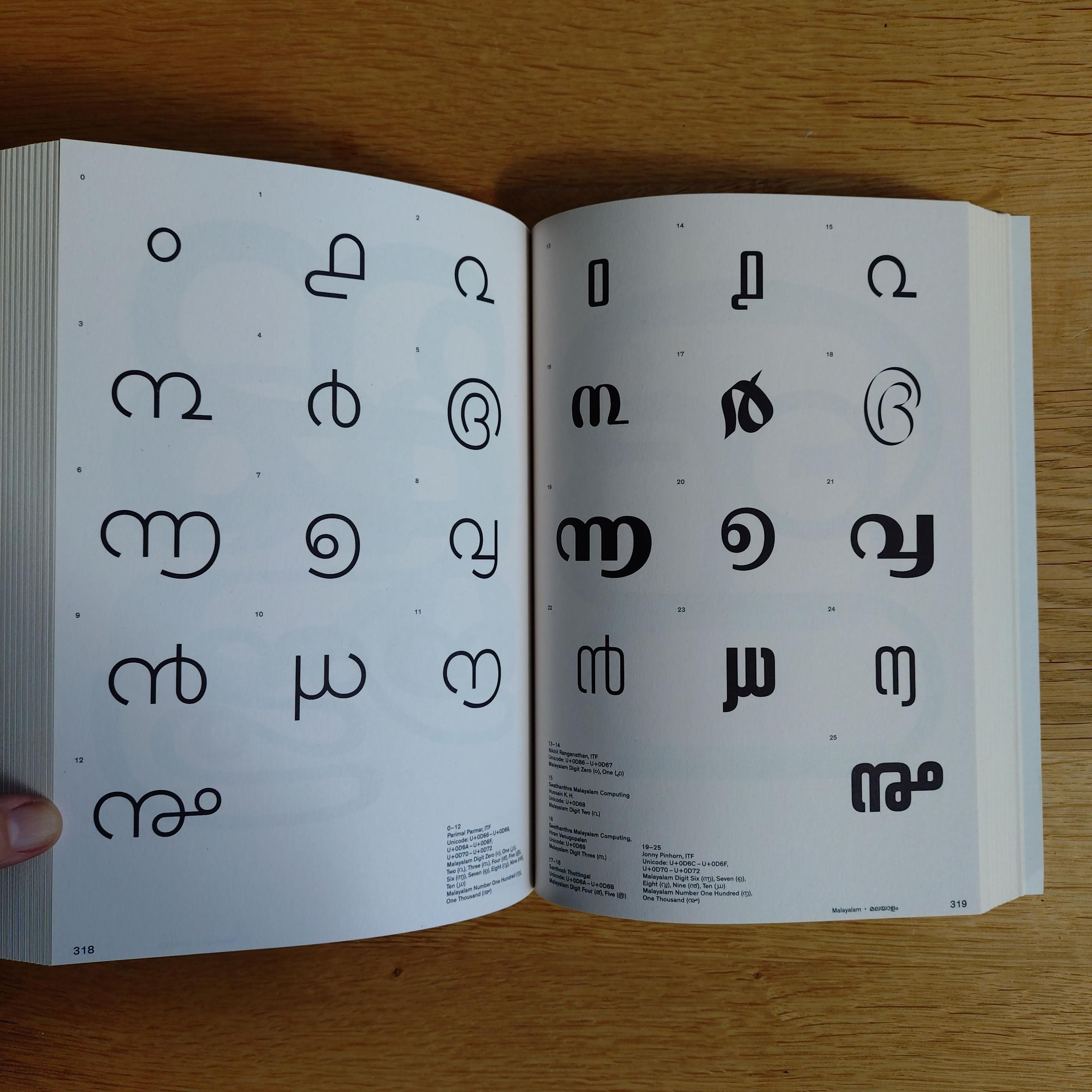
"graphic languages: a visual guide to the world’s writing systems" – ein wunderbares buch für #schrift-nerds wie mich. 😊
https://www.slanted.de/product/graphic-lan

 @heiseonline@social.heise.de
2026-04-27 05:00:35
Einige der zuletzt hier besonders häufig geteilten #News:
Fast perfekte Fälschung: Alte GPUs auf neueren Grafikkarten

 @servelan@newsie.social
2026-02-27 17:00:19
Israel's Supreme Court allows aid groups facing govt ban to keep working in Gaza - France 24
https://www.france24.com/en/middle-east/20260227-israel-s-supreme-court-allows-aid-groups-facing-govt-ban-to-keep-working-in-gaza
 @memeorandum@universeodon.com
2026-02-27 23:31:15
Dems demand records from anti-voting groups on DOGE 'voter data agreement' (Matt Cohen/Democracy Docket)
https://www.democracydocket.com/news-alerts/dems-demand-records-from-anti-voting-groups-on-doge-voter-data-agreement/
http://www.memeorandum.com/260227/p106#a260227p106
 @Techmeme@techhub.social
2026-02-26 07:36:08
Analysis: super PACs for and against AI regulation have raised $265M ahead of the midterms, with pro-AI groups significantly outraising pro-regulation groups (Financial Times)
https://www.ft.com/content/c1823595-d0f6-49a4-8a10-3d91c92da8f6
 @arXiv_mathOA_bot@mastoxiv.page
2026-03-26 07:45:07
Quantum Graph Theory by Example
Gian Luca Spitzer, Ion Nechita
https://arxiv.org/abs/2603.23651 https://arxiv.org/pdf/2603.23651 https://arxiv.org/html/2603.23651
arXiv:2603.23651v1 Announce Type: new
Abstract: Quantum graphs have been introduced by Duan, Severini, and Winter to describe the zero-error behaviour of quantum channels. Since then, quantum graph theory has become a field of study in its own right. A substantial source of difficulty in working with quantum graphs compared to classical graphs stems from the fact that they are no longer discrete objects. This makes it generally difficult to construct insightful, non-trivial examples. We present a collection of non-trivial quantum graphs that can be thought of in discrete terms, and that can be expressed in the diagrammatic formalism introduced by Musto, Reutter, and Verdon. The examples arise as the quantum graphs acted on by increasingly smaller classical matrix groups, and are parametrised by triples of matrices $(A, B, C)$. The parametrisation reveals a clean decomposition of quantum graph structure into classical and genuinely quantum components: $A$ and $C$ are described by a classical weighted graph called the strange graph, while $B$ provides a purely quantum contribution with no classical analogue. Based on this model, we give exact formulas or establish bounds for quantum graph parameters, such as the number of connected components, the chromatic number, the independence number, and the clique number. Our results provide the first large, parametric families of quantum graphs for which standard graph parameters can be computed analytically.
toXiv_bot_toot
@heiseonline@social.heise.de2026-04-27 04:17:00

 @heiseonline@social.heise.de
2026-02-27 11:53:00