@crell@phpc.social
2026-09-14 15:07:30
Every time I brainstorm/daydream on how I'd design an ideal type system... I eventually end up with Rust.
It's kind of annoying, really.
#Rust #Programming #Types
@crell@phpc.socialEvery time I brainstorm/daydream on how I'd design an ideal type system... I eventually end up with Rust.
It's kind of annoying, really.
#Rust #Programming #Types
 @frankel@mastodon.top
 @alexanderadam@ruby.social
Everything of relevance will eventually be (re-)written/generated in or extended with #Rust and/or #Typescript unless we come up with something more efficient.
Other languages won't "die" but it makes no sense to do anything else.
C's memory unsafeties have always been critical …
@frankel@mastodon.top @chrysn@chaos.social
I've been waiting for more powerful const generics in #RustLang for since 2020 (blog post at <https://christian.amsuess.com/blog/website/2020-09-24_rust_2021/>). Se…
 @mgorny@social.treehouse.systems
So if you're wondering how great #RustLang is, let's talk about #mypy. Mypy introduced its own Rust - #Python package, ast-serialize. This package had a deep crate dependency that was broken on PowerPC. The issue was fixed a month ago but everything is still blocked on a deep chain of dependencies being updated and released.
https://github.com/mypyc/ast_serialize/issues/68
EDIT: yes, I know, it's not Rust, it's Cargo. Because obviously Rust without Cargo makes so much sense for that one project using it.
@alexanderadam@ruby.socialAaaaaaand the #TypeScript compiler was ported to #Rust.
Let's see whether this is getting adapted. 🍿
https://github.com/pingdotgg/ts-rust…
@frankel@mastodon.toprustkyll, a fast, drop-in replacement for #Jekyll, written in #Rust
https://github.com/alexeygrigorev/rustkyll
 @michabbb@social.vivaldi.net @crell@phpc.social
RE: #Rust finally gets asymmetric visibility, two years after
 @niklaskorz@rheinneckar.social
I'm giving an actual Rust university lecture next semester and I can't shake the idea of bringing the obligatory Rust cat ears for the first day.
#RustLang
@frankel@mastodon.topPrimitive Type never
#rust
 @tschundler@leds.social @michabbb@social.vivaldi.net @alexanderadam@ruby.social
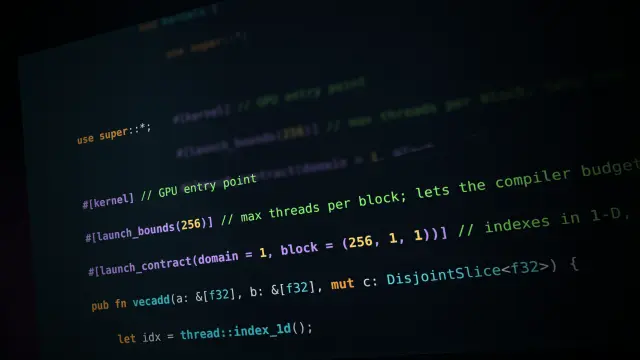
Who would've thought that #Rust becomes native for GPU kernels:
https://developer.nvidia.com/blog/introducing-cuda-rust-two-tracks-for-writing-gpu-kernel…
 @cyrevolt@mastodon.social
Ooooooooh noice, #binwalk did the awesome thing:
They rewrote it in #Rust!
https://github.com/ReFirmLabs/binwalk…
 @stsquad@mastodon.org.uk
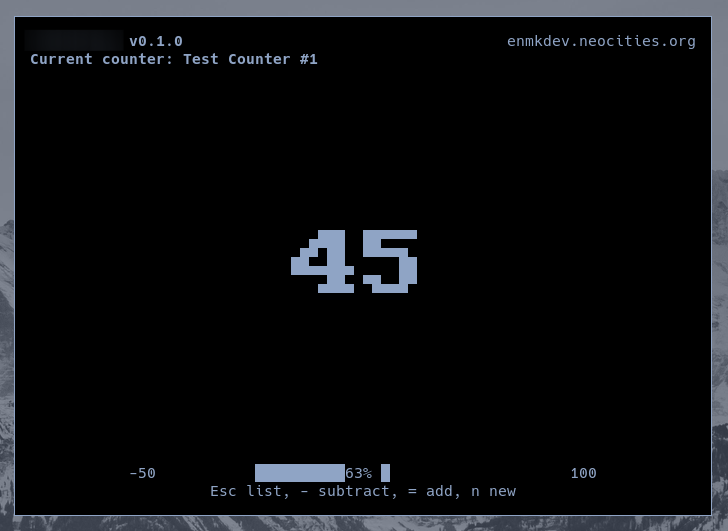
 @enmkdev@social.linux.pizza @mgorny@social.treehouse.systems
Zero days since #RustLang wanted to kill a platform.
https://github.com/rust-lang/rust/issues/162011
@cyrevolt@mastodon.social @mgorny@social.treehouse.systemsAlso, zero days (well, minus a lot of days because I've been slacking) since a random #Python package got a new #NIH dependency on another Python package which is actually a "fastest" #RustLang package which cannot be built because the author thinks it a great idea to require a nightly Rust compiler.
…and of course it's full of "unsafe" calls. Because Rust is obviously such a great language for making secure code.
https://github.com/awolverp/cachebox/issues/62
@cyrevolt@mastodon.socialQuite an interesting read on the HashMap implementation in #Rust
https://morestina.net/1843/the-stable-hashmap-trap
@tschundler@leds.socialBack from #BurningMan where I had some recently completed #LED projects.
My #rust code for LED graph patterns entirely on the #esp32

 @enmkdev@social.linux.pizza @michabbb@social.vivaldi.net
⚡ #Harper is an offline, privacy-first #grammar checker for developers, written in #Rust and maintained by #Automattic
 @mgorny@social.treehouse.systems
Finally reported the abusive behavior of #Cargo #jobserver: #RustLang
@mgorny@social.treehouse.systems @michabbb@social.vivaldi.net🖥️ Desktop app built with #Tauri #React, gateway binary in #Rust. Auto-detects 20 AI clients including #ClaudeCode
 @castarco@hachyderm.io
If you are developing in #Rustlang then you should check this post: #cybersecurity #infosec #supplychain #supplychainattack
 @smurthys@hachyderm.io
I wish people don't hang padlocks on bridges, but the orange body and the rusted shackle on this old lock look beautiful together. 🔒 🌉
(June 01, 2026, on a bridge over River Inn, Austria)
#photography #padlock #lock #orange #rust #photoMonday #FotoMontag #Austria
 @castarco@hachyderm.io
A short video showcasing the current state of the #SoulCrafted Slicer I'm working on.
#3dPrinting #Resin3dPrinting #SoulCraftedSlicer #FLOSS #OpenSource #Rust #Rustlang