@cosmos4u@scicomm.xyz
2026-09-14 21:51:23
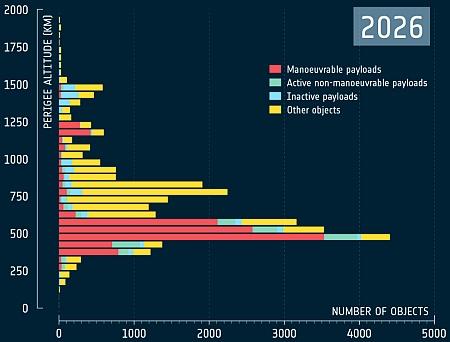
Since 2017, ESA’s #SpaceDebris Office has published an annual Space Environment Report to provide a transparent overview of global space activities and determine how well international debris-reduction measures are improving the long-term sustainability of spaceflight: https://www.esa.int/Space_Safety/Space_Debris/ESA_Space_Environment_Report_2026 -> "The number and scale of commercial satellite constellations continue to increase each year. Not enough satellites leave heavily congested orbits at the end of their lives, creating a growing collision risk. More than three intact satellites or rocket bodies are reentering the Earth’s atmosphere every day on average. At the same time, ten new payloads are launched daily. A new trend has constellations change altitude significantly year-on-year. New report metric added in 2026: on-ground casualty risk of reentries. Even though the numbers are low compared to everyday risks in life, the chance of a casualty increased in recent years due to increased traffic."