2025-11-07 20:53:15
Der #Comet-Browser von #Perplexity wirkt wie ein Stern am KI-Himmel – leuchtet aber eher schwach, wenn es um den Umgang mit hochgeladenen Dateien geht. Räume sichtbar, Inhalte unzugänglich. Bis zur technischen Gleichwertigkeit mit der Webversion bleibt der Browser ein Versprechen mit Warteschleife.…
60 years ago #OTD (or tomorrow) #comet #IkeyaSeki showed a dramatic tail: https://solarviews.com/cap/comet/ikeya.htm - and this chemical 'raw' picture proves it beyond doubt ... while nowadays creepy 'astrophotographers' past high-end stacks of the faint tails of comet Lemmon into landscape pictures creating similar "photographs" which then get likes galore. Sigh ...
The Ongoing Decline in Activity of #Comet 103P/Hartley 2: #CitizenScience #Unistellar
And here is now also a spectrum of #comet #3I/ATLAS taken during the #ShadowTheScientists session on 26 November, from https://www.astronomerstelegram.org/?read=17561 - CN (388 nm), C3 (402 nm) and C2 (474 nm/517 nm) are detected. Meanwhile the paper https://arxiv.org/abs/2512.18341 concludes from the non-gravitational acceleration that the diameter of the comet's nucleus is 820 to1050 m.
The JWST has looked at #comet C/2025 K1 (ATLAS) again, in four filters yesterday and today: from the raw images - https://yuval-harpaz.github.io/astro/jwst_latest_release.html - comes this false color image, https://www.flickr.com/photos/197464132@N05/55012773369/
High resolution Near IR images of fragmenting #comet C/2025 K1 (ATLAS) on 19 December from the JWST: on the left one of two raw images which just appeared on https://yuval-harpaz.github.io/astro/jwst_latest_release.html, on the right two false-color images from both images published in https://www.reddit.com/r/jameswebb/comments/1prolrq/fragmented_comet_c2025_k1_atlas_nircam/ and
https://bsky.app/profile/cheribliss.bsky.social/post/3mahu4to7ss2f (and further processed by me).
There is also a #PUNCH video showing only #comet #Lemmon and its tails in https://science.nasa.gov/blogs/punch/2025/12/19/nasas-punch-spies-comet-lemmon/ - unfortunately too faint so much tail structure gets lost which can be glimpsed in the full video. But the data are there, waiting for someone to process them for science.
After a complicated and one good sighting of #comet #Lemmon from #Bochum, Germany, on 20 and 24 October - see the thread https://mastodon.social/@PlanetariumBochum/115430462668539532 - more cloudy evenings followed ... but here is the comet again on 30 October, picked blindly out of a suuuuper-crappy sky with 4 seconds at f/2.8 and ISO 1600, right above 9 Herculis. Detection #3 ... and there would be one more today (see the following boost).
60 years ago #OTD #comet #IkeyaSeki reached perihelion, -10 mag., was visible in daylight and showed a spectacular tail in the following weeks: https://groups.io/g/comets-ml/message/32770 and https://www.astronomy.com/today-in-the-history-of-astronomy/sept-18-1965-discovery-of-comet-ikeya-seki/ and https://noirlab.edu/public/images/noao-01854/
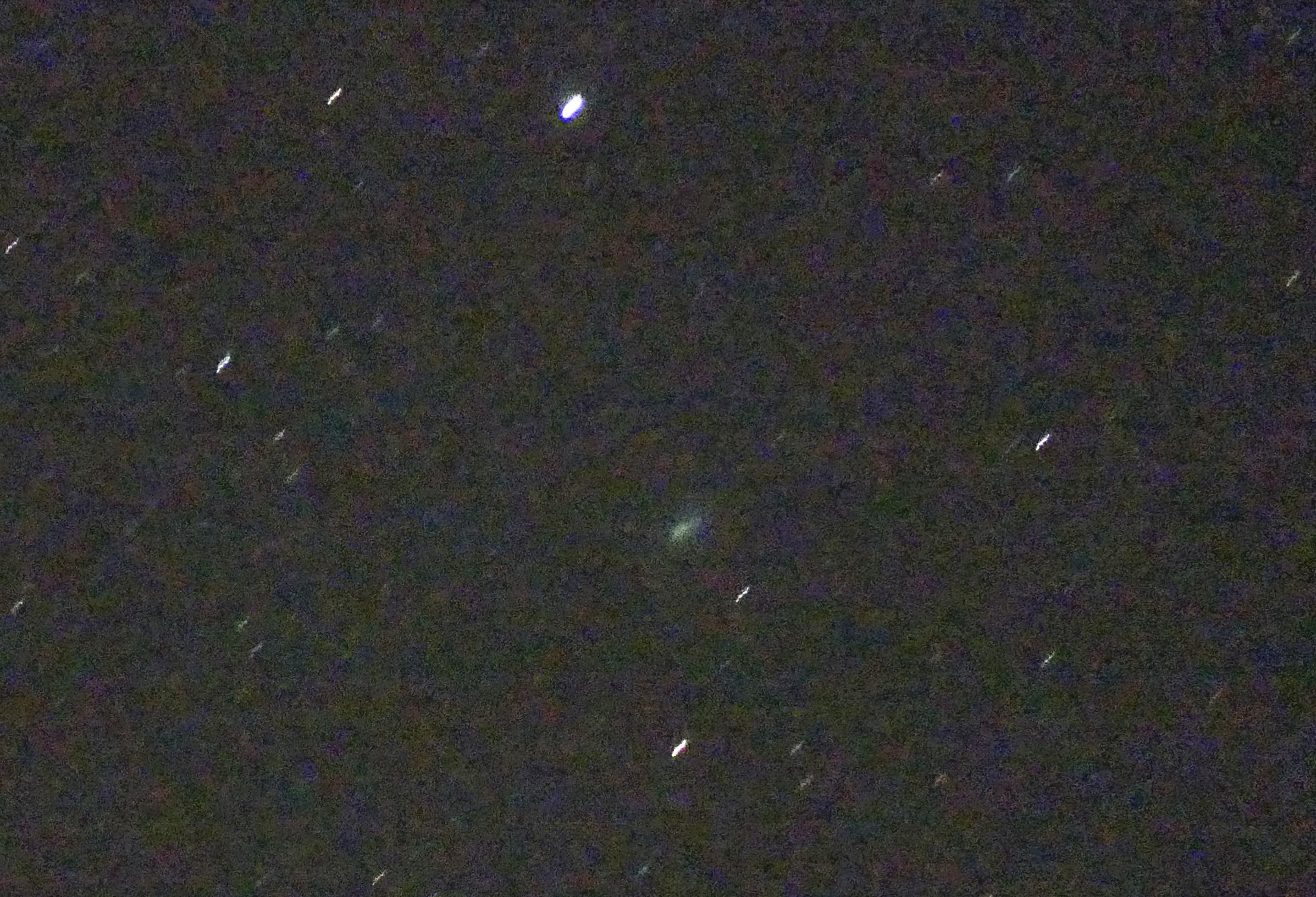
The clouds over Bochum, Germany, cleared too late this evening, so instead of Lemmon I tried #comet C/2025 R2 (SWAN) for a change - here it is: both pictures with a bridge camera on a tripod, 5 seconds at f/2.8 and ISO 3200. It's fading: according to https://cobs.si/obs_list?id=2659 the brightness is 6.7 mag. right now.
Not only Lemmon but also #comet #SWAN has been imaged by Kimiya Yui from the #ISS: in https://x.com/Astro_Kimiya/status/1982242913389015085 it's peeking through the space station's solar arrays. (AFAIK this is a first, *two* comets getting imaged from the ISS at the same time.)
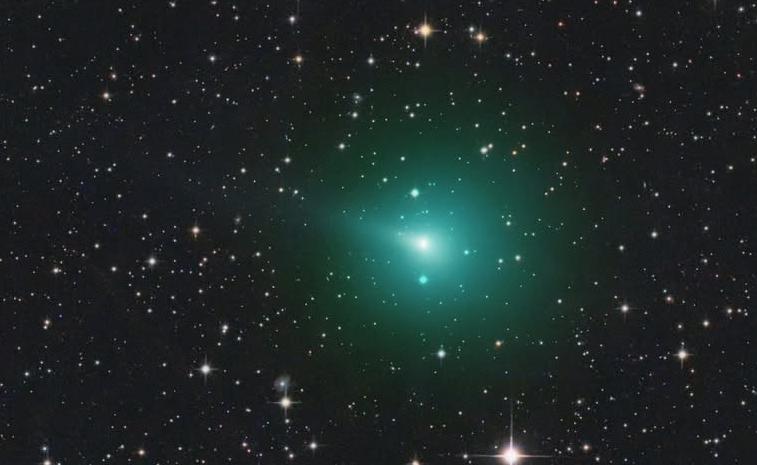
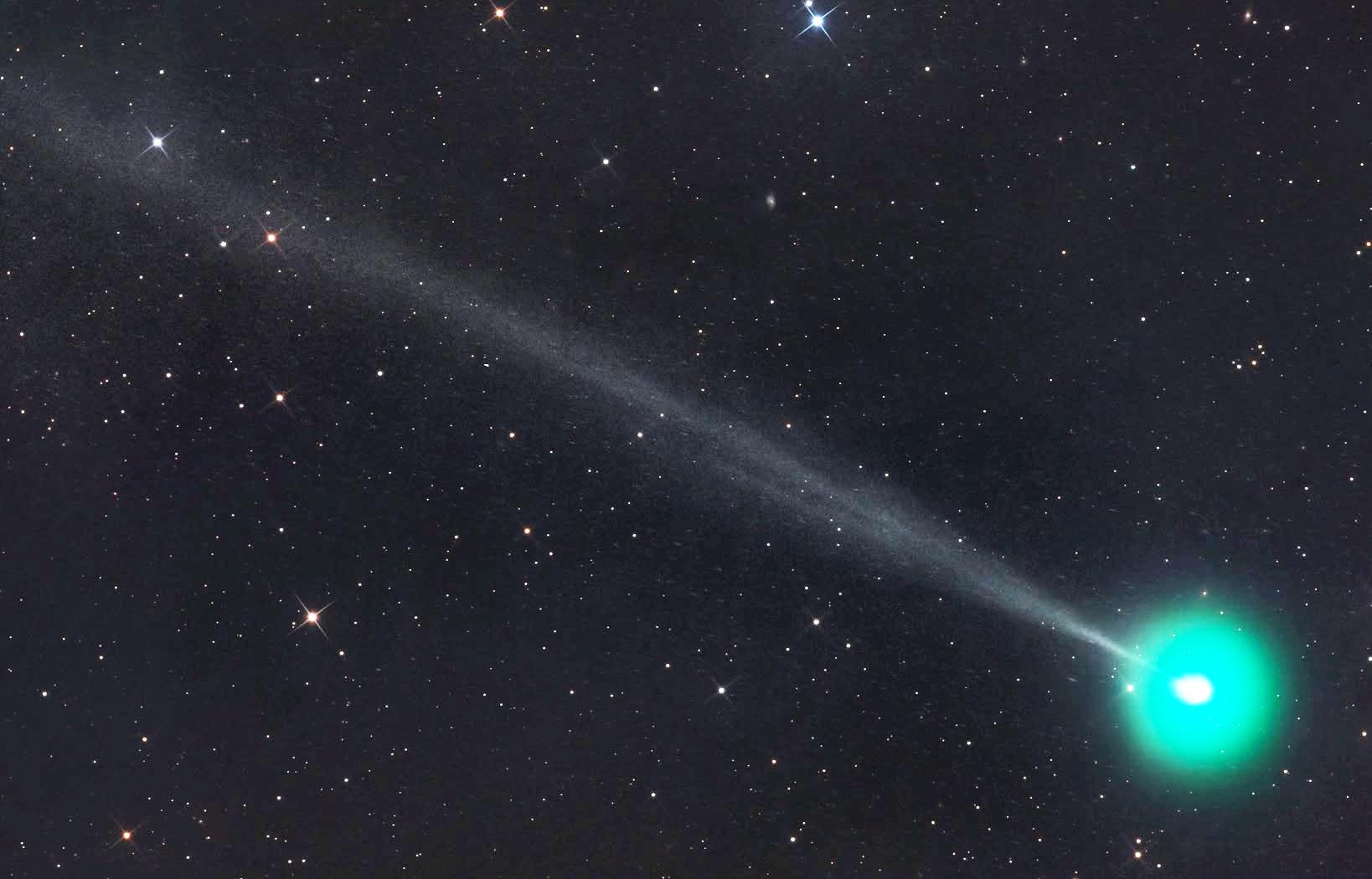
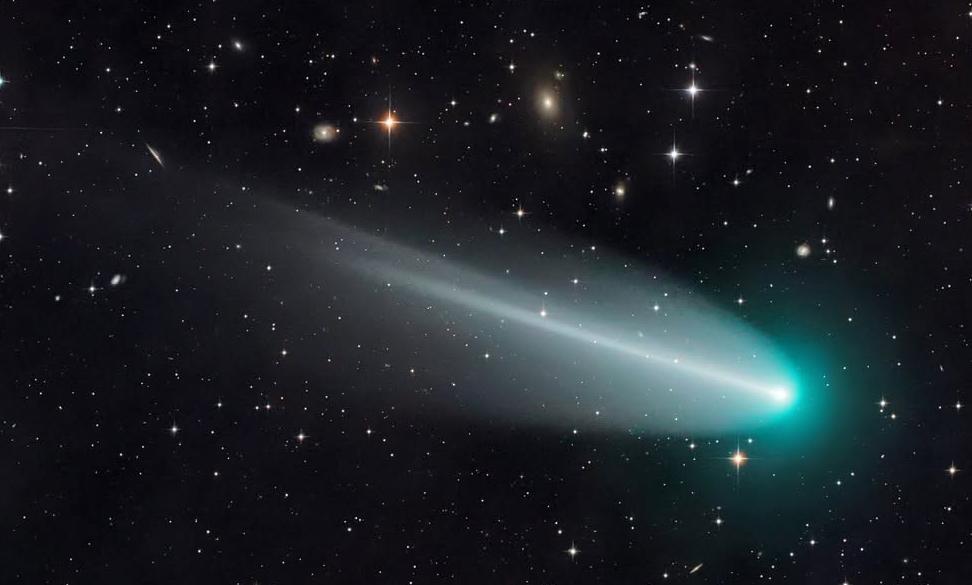
First the nucleus of #comet SWAN split - https://skyweek.wordpress.com/2025/11/02/allgemeines-live-blog-ab-dem-2-november-2025/#Nov06 ("Der Kern des Kometen C/2025 R2 (SWAN) ist zerbrochen ...") - and now C/2025 K1 (ATLAS) has suffered the same fate: a 2-meter-telescope image from https://www.astronomerstelegram.org/?read=17487 ("Multiple Fragmentation Observed"), also https://groups.io/g/comets-ml/topic/116216567 (several amateur observations) and https://www.astronomerstelegram.org/?read=17488 (Hubble detections of more fragments, sadly no pictures included).