Tootfinder

Opt-in global Mastodon full text search. Join the index!

@adulau@infosec.exchange
2026-10-10 08:53:24

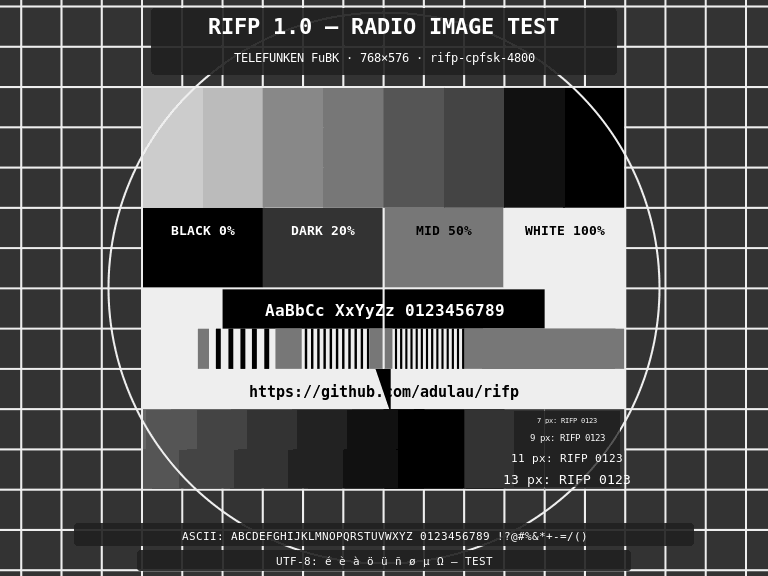
The Radio Image Framing Protocol (RIFP) is an experimental, extensible standard for sending images over low-rate radio links. I did a new version 1.1 with an extension to authenticate the images.
The extension is now published as an Internet-Draft.
#rifp #radio #opensource #openstandard
πŸ”— RIFP source code github.com/adulau/rifp#optiona
πŸ”— RIFP Standard datatracker.ietf.org/doc/draft
πŸ”— RFIP Authentication Extension datatracker.ietf.org/doc/draft

@adulau@infosec.exchange
2026-08-13 15:21:01

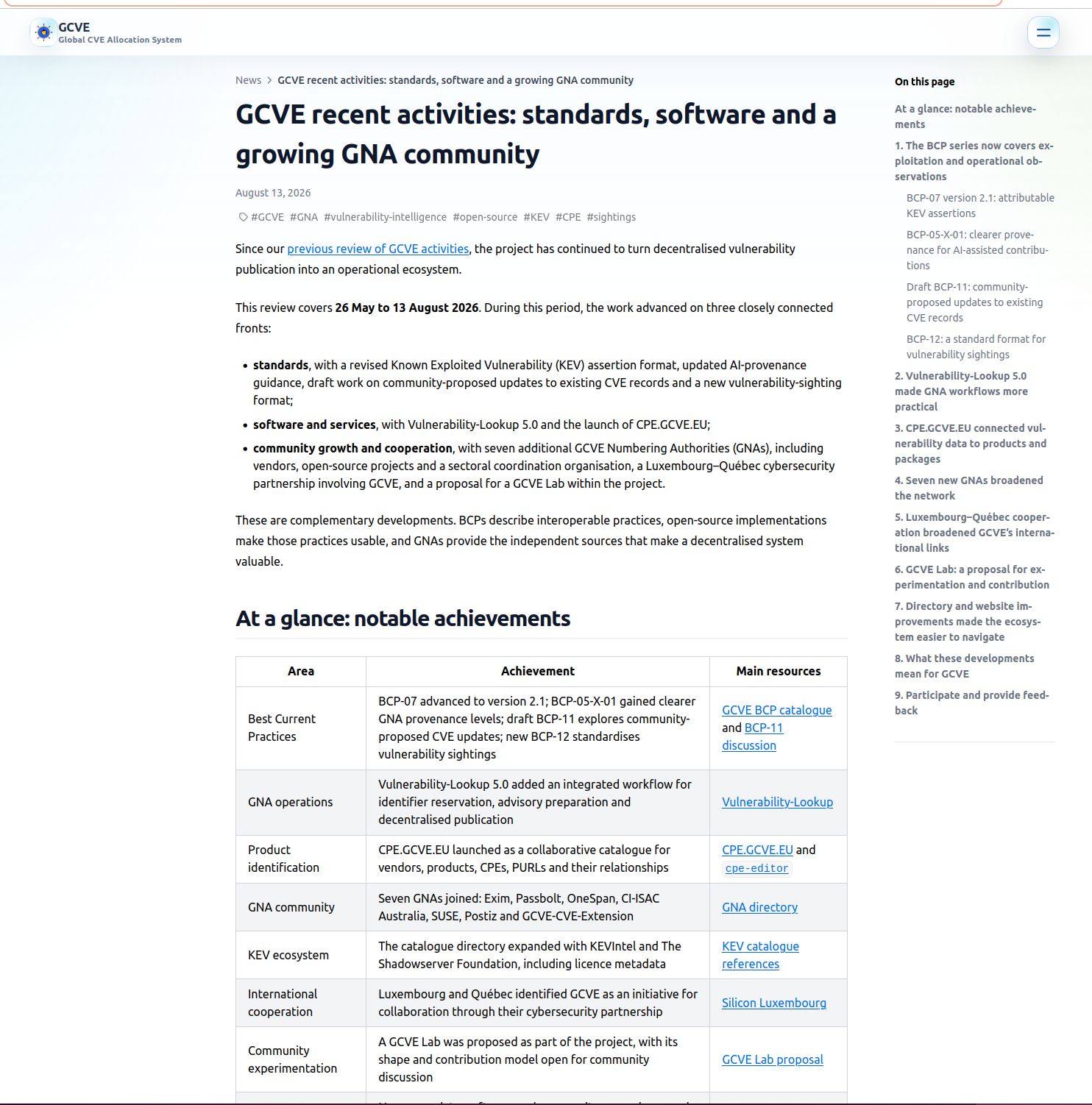
If you are curious about (nearly) everything we did the past months at the GCVE.eu initiative:
#gcve #cve #vulnerability #vulnerabilitymanagement #cra #cybersecurity #openstandard #opensource

@adulau@infosec.exchange
2026-10-04 08:50:55

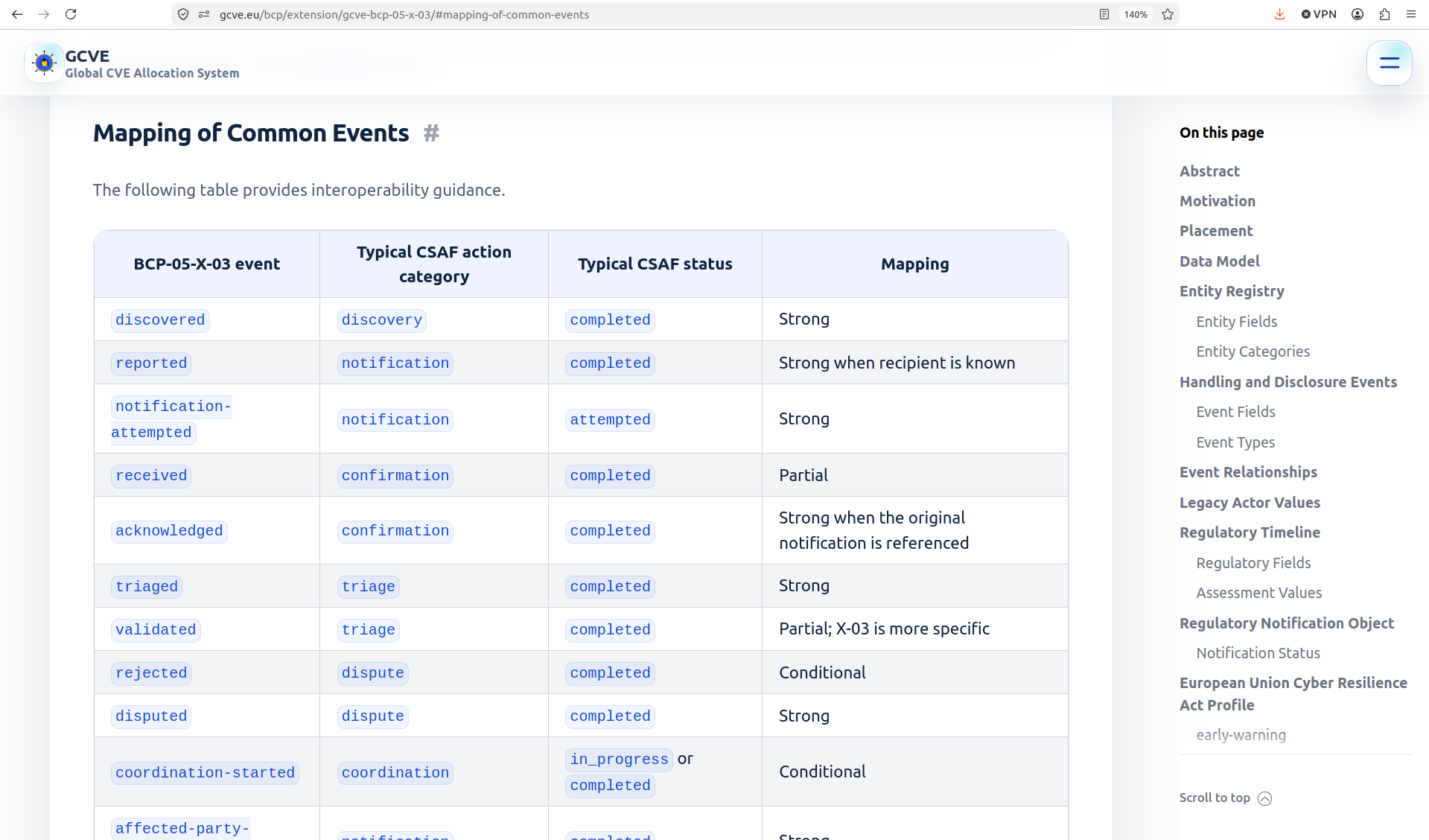
We did some improvements in GCVE extension - GCVE BCP-05-X-03 - Vulnerability Handling and Disclosure Timeline.
We also review the alignment and interoperability with CSAF 2.1.
Now there is a new object field entities to represent the entities in the handling timeline.
πŸ”— GCVE BCP-05-X-03 #csaf #gcve #cve #vulnerabilityManagement #vulnerability #openstandard #cra

@adulau@infosec.exchange
2026-08-01 08:20:08

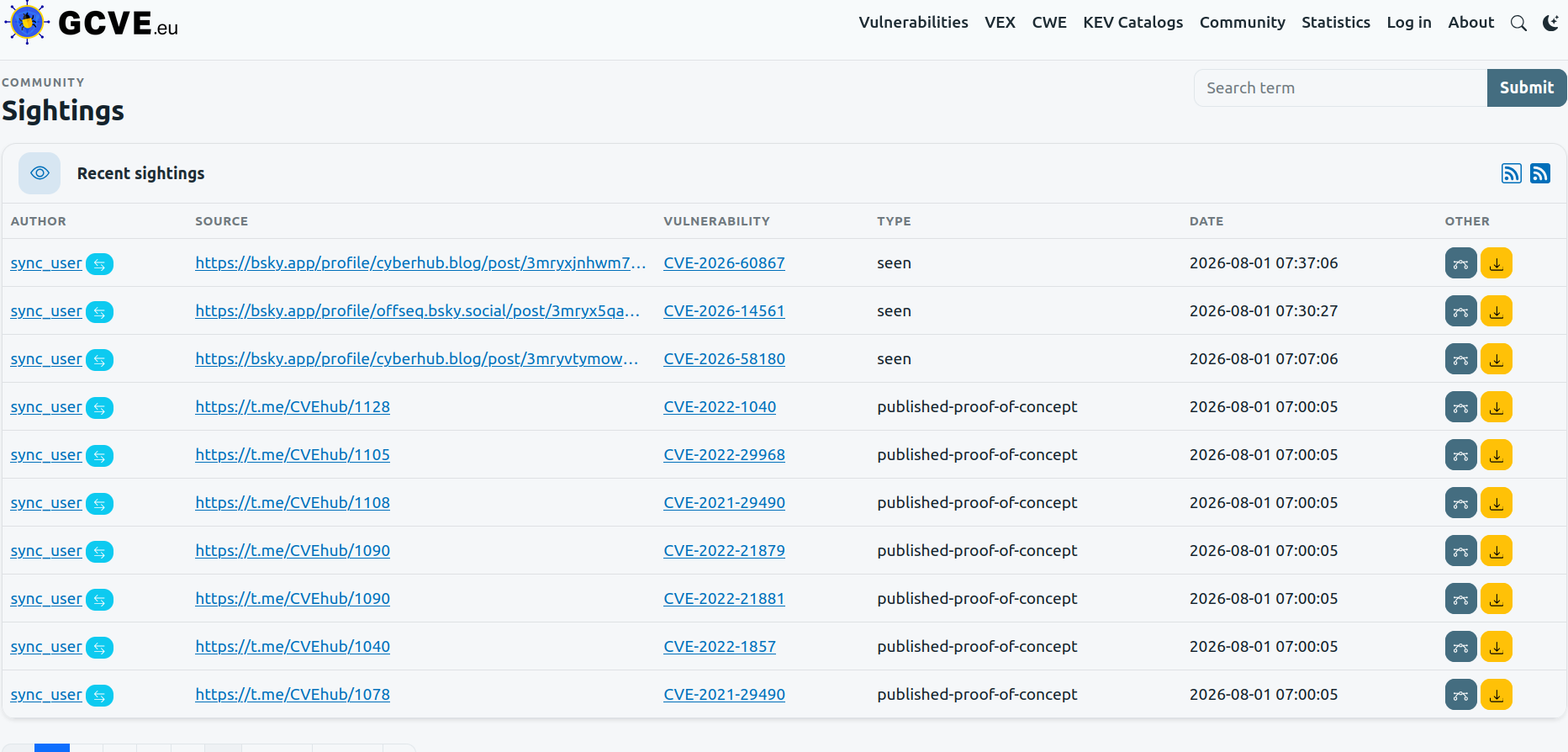
Sightings have long been a major topic of discussion in the CTI community, particularly in the field of vulnerability management. We have now published a GCVE BCP to standardise the format that has been implemented, tested and used operationally in Vulnerability-Lookup for some time.
Thanks to everyone (CΓ©dric Bonhomme, Γ‰ireann Leverett, Andras Iklody, Sami Mokaddem and many more) who participated in discussions and worked on the implementation details of sightings over the past several years. These efforts had a strong focus on practical implementation, while BCP-12 specifically addresses sightings in the context of vulnerability management.
BCP-12 is still a draft open for review, but it already provides a strong foundation for existing implementations.
#cve #cra #gcve #vulnerabilitymanagement #cybersecurity #openstandard

@adulau@infosec.exchange
2026-10-05 14:45:05

We are pleased to announce the publication of GCVE BCP-07 version 3.0, extending the Known Exploited Vulnerability (KEV) Assertion Format with support for No Known Exploitable Vulnerability (NKEV) assessments. BCP-07 was initially designed to provide a structured, open and federated way to express exploitation assertions, including who made the assertion, when exploitation was observed or declared, what evidence supports it, and with what level of confidence. Version 3.0 keeps this KEV model intact while adding a complementary, product-oriented mechanism to assess whether known vulnerabilities are exploitable in a specific product context.
The distinction between KEV and NKEV is fundamental. A KEV assertion states that a producer has observed or otherwise asserts exploitation of a vulnerability. An NKEV assessment approaches the problem from a different direction: a specific product or product version is evaluated against explicitly identified vulnerability knowledge sources to determine whether known vulnerabilities are exploitable in the assessed context. The assessment takes into account the product, its configuration, the defined assessment scope, the knowledge sources consulted and a precise knowledge cut-off time. Its result can be pass, fail or inconclusive, making both the outcome and its limitations explicitly machine-readable.
πŸ”— #kev #bcp #gcve #cve #nkev #vulnerabilityManagement #cybersecurity #openstandard

@adulau@infosec.exchange
2026-10-01 12:42:44

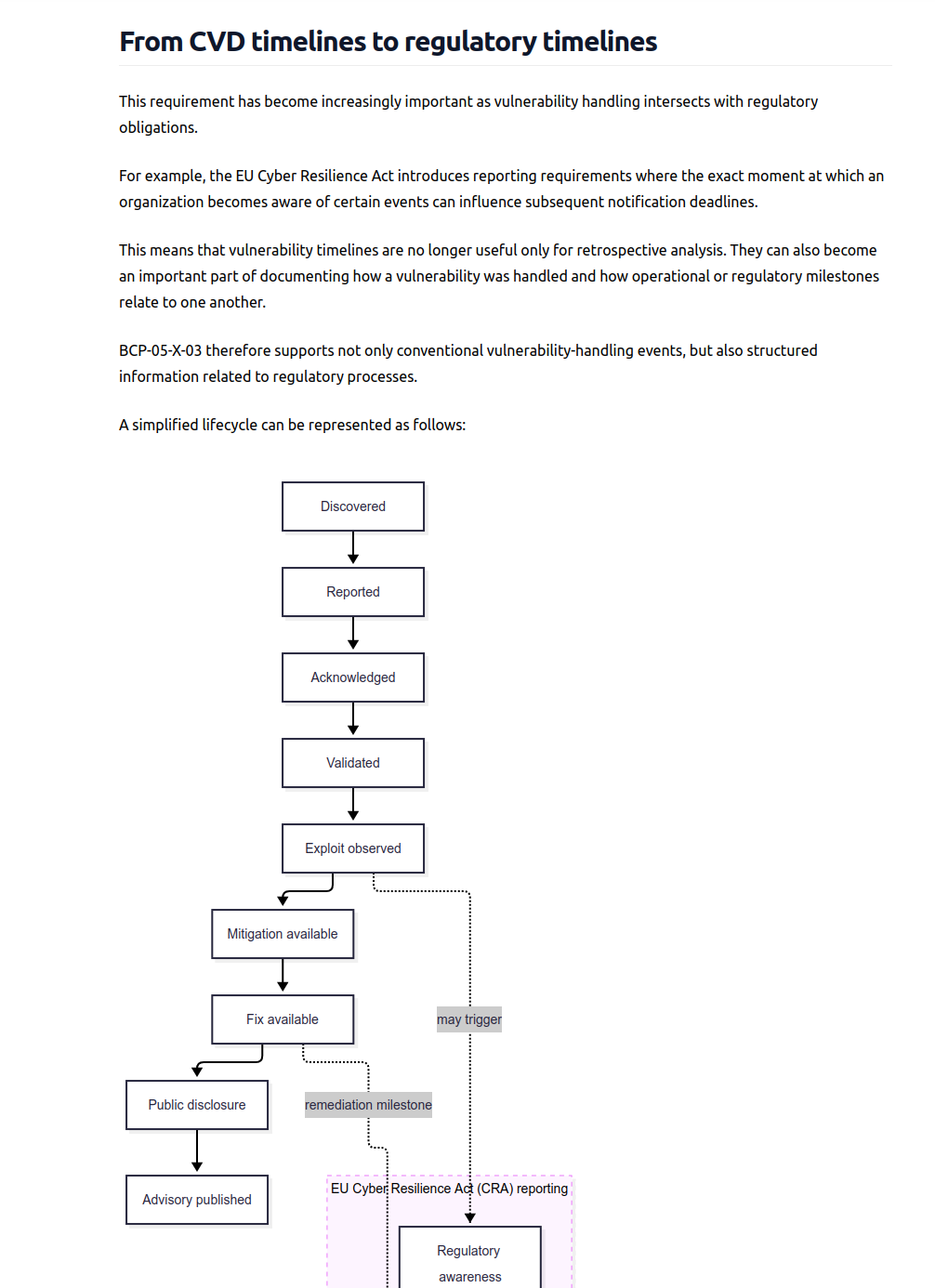
GCVE BCP-05-X-03: Bringing Vulnerability Handling Timelines into Vulnerability Records.
Vulnerability records usually provide a good description of what a vulnerability is, which products are affected, how severe it may be, and where additional information can be found.
They are often much less effective at describing what happened, when it happened, and who was involved during the vulnerability handling and disclosure process.
Following many discussions during VulnOptiCON 2026 in Luxembourg, this limitation became particularly clear. Vulnerability analysts, coordinators, vendors and other participants repeatedly discussed how difficult it can be to reconstruct a reliable timeline during vulnerability analysis and coordinated vulnerability disclosure.
To help address this, the GCVE initiative has published a new extension:
GCVE BCP-05-X-03 - Vulnerability Handling and Disclosure Timeline.
The extension provides a structured and machine-readable way to represent the lifecycle of a vulnerability from discovery and reporting through acknowledgement, validation, remediation and public disclosure. It's already live in our open-source tool-set.
πŸ”— Blog post #opensource #openstandard #cve #gcve #cra #cybersecurity #vulnerability