@cosmos4u@scicomm.xyz
2026-03-26 03:16:48
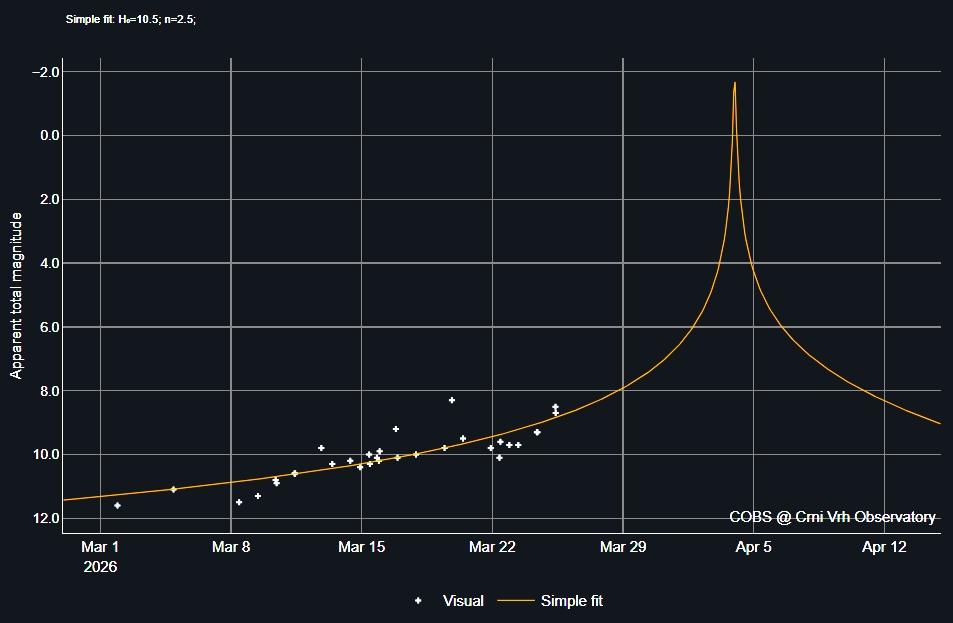
Two attempts to simply extrapolate the brightness of #Kreutz comet C/2026 A1 (MAPS) from what happened in the past few weeks, from all visual observations reported to COBS (left) and from all CCD observations of the past month which would have the brightness climb a bit faster. But as the previous post in the thread has shown even in the geometrically preferred southern hemisphere MAPS is lost in twilight from about March 30 to April 7 - and even in the optimistic model the comet has reached only 6th magnitude when it is lost and is down again to 5th when it is recovered: unless something drastic would happen *all* hope for an interesting show rests on a possible post-perihelion dust tail. Good luck ...
 @cosmos4u@scicomm.xyz
2026-03-25 20:19:33
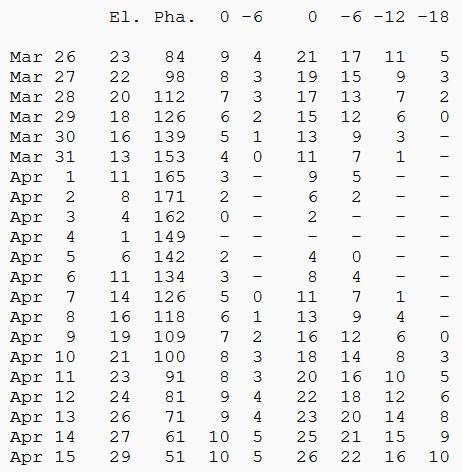
The uncertain brightness and tail(s) development of #Kreutz #comet C/2026 A1 (MAPS) is one thing - see the curves in https://astro.vanbuitenen.nl/comet/2026A1 and https://aerith.net/comet/catalog/2026A1/2026A1.html for guesses and https://cobs.si/obs_list?id=2688 for the current value which is ~8.5 mag. - but the viewing geometry is the other: here it is for 51.5° North (my place Bochum) and 22.5° South (Windhoek) as the view is much better from the southern hemisphere.
The table first gives the elongation (angle between comet and Sun in the sky) and the phase angle (the angle Sun - comet - Earth) which nearing 180° can lead to significant boost of brightness by forward scattering on dust.
And this is followed by the altitude of the comet at the solar depressions given in the top line, for Bochum and Windhoek: sunset and end of civilian twilight and for the latter also the end of nautical and astronomical twilight, i.e. the onset of night. Also of importance is the angle of a hypothetical dust tail (simulated in https://hdr-astrophotography.com) after perihelion, also much better in the South: https://britastro.org/section_news_item/c-2026-a1-maps-a-kreutz-group-sungrazer - but first MAPS has to survive the latter *and* release a lot of dust at the right time ...
 @cosmos4u@scicomm.xyz
2026-03-22 14:51:12
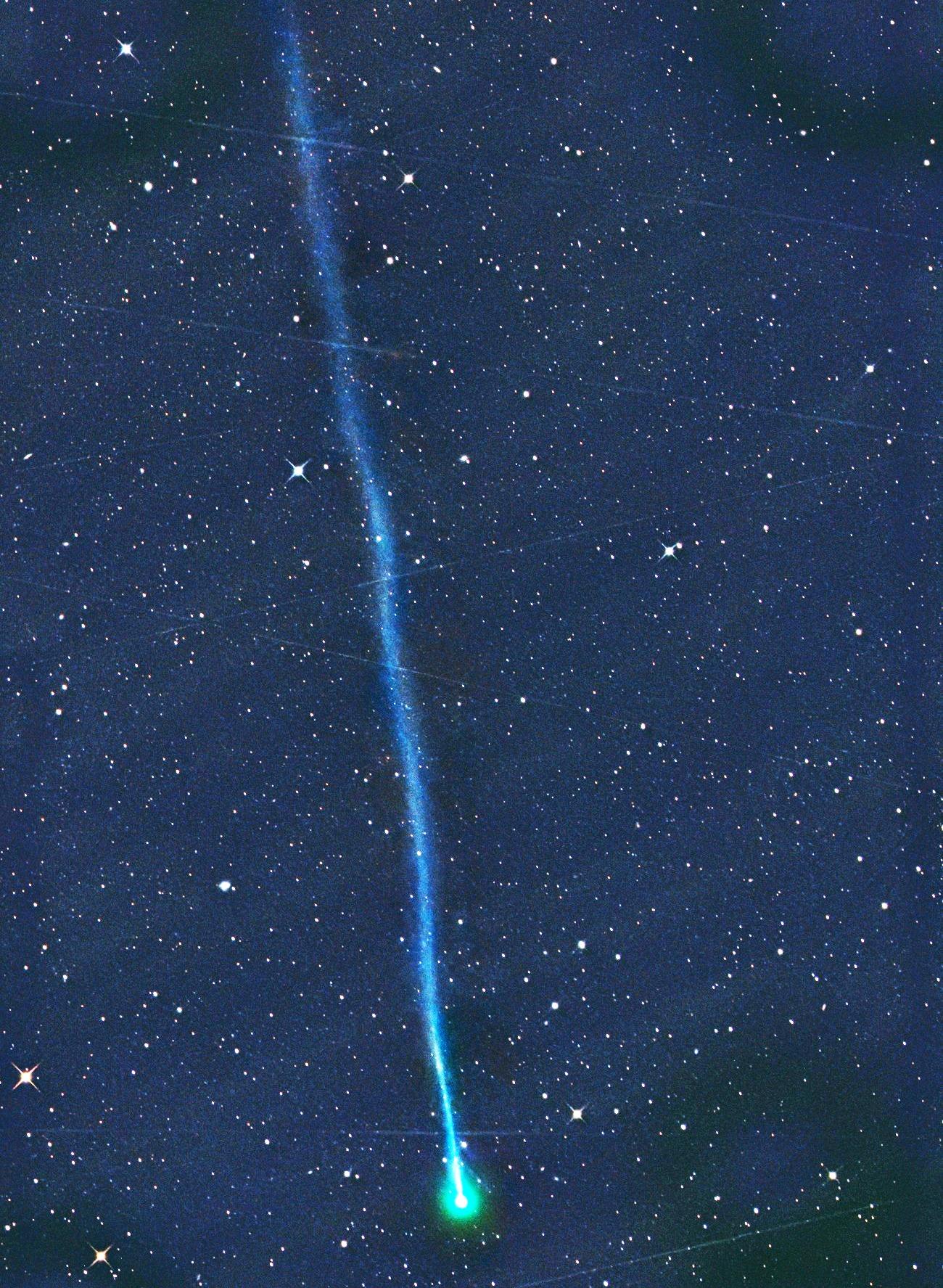
Whatever eagerly awaited #Kreutz #comet C/2026 A1 (MAPS) is up to - see also https://groups.io/g/comets-ml/topic/118409957 and https://nitter.net/JAtanackov/status/2035718257060036738 and https://scicomm.xyz/@qicheng@cometary.org/116262858373488354 - less than two weeks from perihelion, it has developed a long plasma tail now: https://www.facebook.com/photo/?fbid=25816609931372735 (Rhemann & Jäger yesterday with a 12 inch telescope; full and detail).
 @cosmos4u@scicomm.xyz
2026-04-15 23:13:16
A post-perihelion constraint on the CO2/H2O ratio of interstellar comet 3I/ATLAS from [O I] forbidden lines: #3IATLAS Composition Change: https://subarutelescope.org/en/results/2026/04/14/3701.html
@cosmos4u@scicomm.xyz2026-03-04 23:25:41
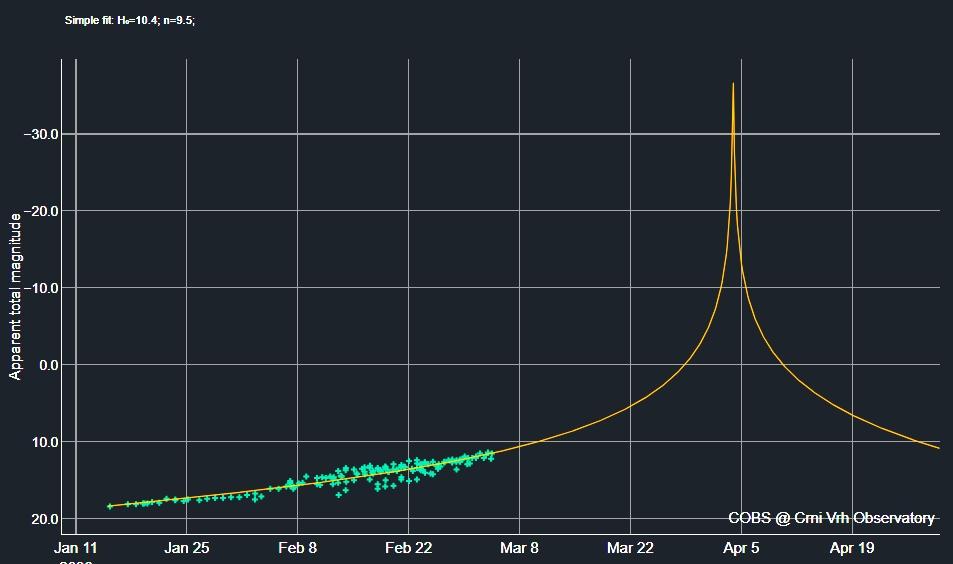
So the new #Kreutz #comet #MAPS is *still* following the constant rapid rise in brightness it has shown since discovery: a dumb extrapolation - https://cobs.si/analysis/?comet=2688&from_date=2026-01-15 00:00&to_date=2026-04-30 00:00&observation_type=V&observation_type=C&plot_x_value=1&plot_y_value=1&fit_option=1&exclude_faint=on&exclude_issue=on&observer=&association=&country=&compare_values=compare - has it get 10,000-times brighter than the Sun at its extremely close perihelion which makes so sense at all, of course, physically.
"It must therefore be assumed that this increase in activity will level off significantly in the near future," writes https://fg-kometen.vdsastro.de/koj_2026/c2026a1/26a1eaus.htm: "More likely are parameters m m0=12.0 mag / n=4 (or even lower), which would still result in a (very short-term) maximum brightness of about –9 mag (but this would probably still be significantly too bright) – always assuming that the comet survives its perihelion passage unscathed."
For other views see http://www.cbat.eps.harvard.edu/iau/cbet/005600/CBET005663.txt and https://arxiv.org/abs/2602.17626 and https://www.facebook.com/photo?fbid=10236580364221799 and https://cometografia.es/cometa-kreutz-2026-a1-maps-analisis/ - and the actual brightness is tracked at https://cobs.si/obs_list?id=2688 where it has reached ~11.5 mag. now.
 @cosmos4u@scicomm.xyz
2026-04-04 08:37:20
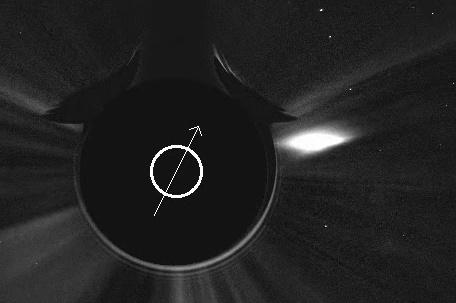
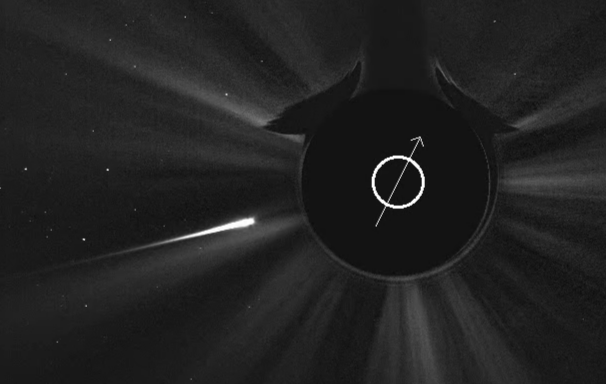
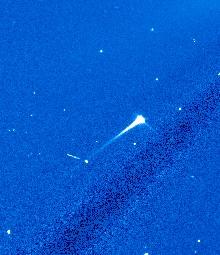
Six hours till perihelion for #Kreutz comet MAPS ... and in the CCOR-1 view from 7:45 UTC it's still doing great!
 @cosmos4u@scicomm.xyz
2026-04-04 02:27:16
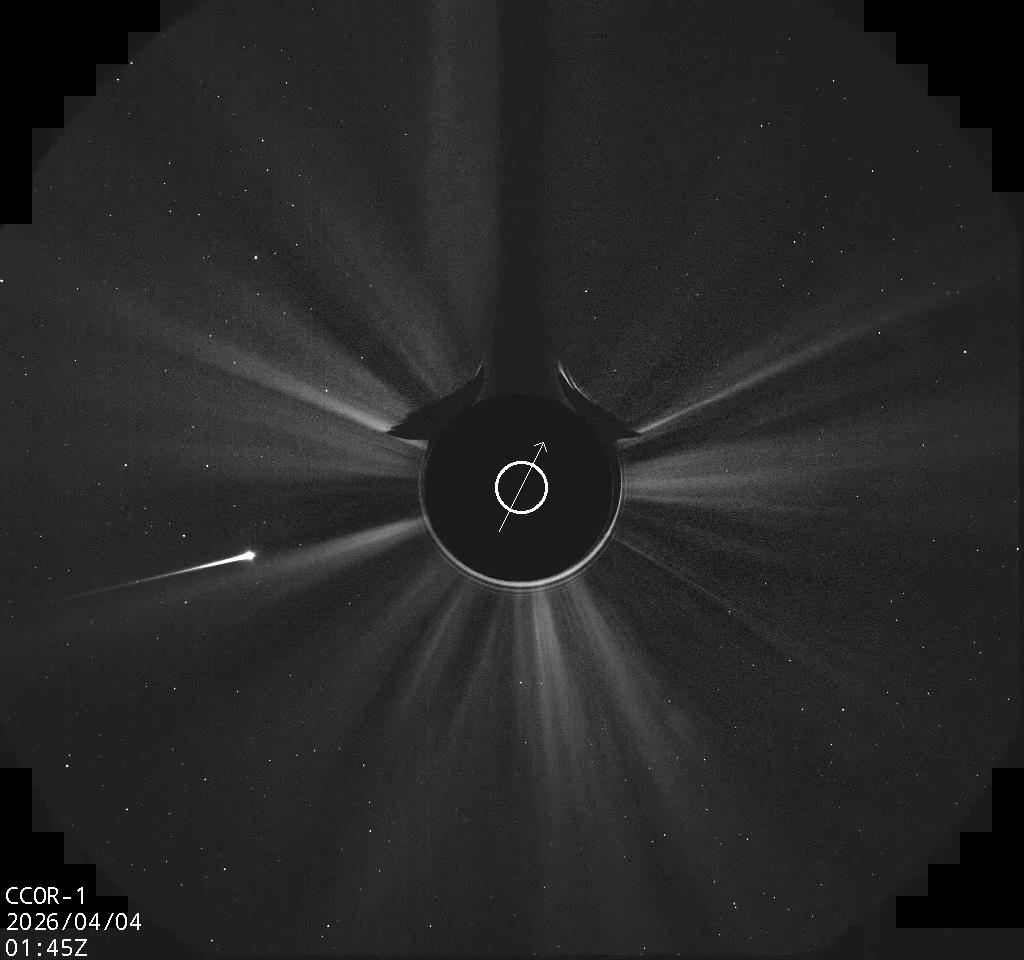
Twelve hours to go till #Kreutz comet C/2026 A1 (MAPS) reaches its perihelion - and it's still healthy for CCOR-1 in this image from 1:45 UTC today. Fresh ones at https://ccor.nrl.navy.mil/ccor_realtime/last_image_MinBckgnd.png every 15 minutes - and (uplifting) assessments of what's going on in https://www.facebook.com/groups/633346904255340/posts/2004738737116143 and https://www.facebook.com/photo/?fbid=10233680923429250
 @cosmos4u@scicomm.xyz
2026-03-10 00:31:43
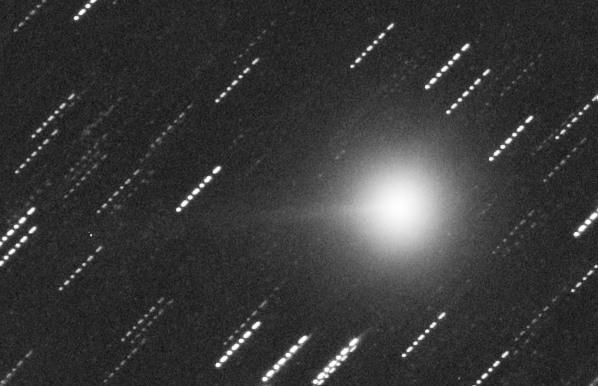
The #Kreutz #comet #MAPS "has become more than 1 mag brighter between March 6 and 9" and stands at 10.5 mag. right now: https://groups.io/g/comets-ml/message/35019 and https://www.facebook.com/photo/?fbid=2374472359736249 with the latest picture by Jäger & Rhemann here - less than 4 weeks til perihelion, and the brightness continues to rise with a strong n~8 ...
 @cosmos4u@scicomm.xyz
2026-04-03 20:38:37
How #Kreutz comet C/2026 A1 (MAPS) is doing: LASCO and CCOR images from 19:30 and 20:00 UTC respectively. Under 18 hours til perihelion now ...
 @cosmos4u@scicomm.xyz
2026-04-05 03:18:55
The dust cloud born out of the demise of #Kreutz comet MAPS yesterday continues to evolve dramatically in https://ccor.nrl.navy.mil/ccor_realtime/last_image_MinBckgnd.png images, here from 0:45 and 2:30 UTC Sunday - most think it's a former dust tail the comet formed hours before perihelion, with particles being pushed away from the Sun by radiation pressure far enough that they survived their personal perihelia while the comet itself did not. At least for this coronagraph the surface brightness looks pretty high ...