 @datascience@genomic.social
2026-02-24 11:00:01
Primer to get you started with Optimization and Mathematical Programming in R #rstats

 @NFL@darktundra.xyz
2026-02-12 16:41:09
NFL's top regression candidates: Why Patriots, Bears and others are poised for major fall in 2026
https://www.cbssports.com/nfl/news/nfl-regressi…
 @azonenberg@ioc.exchange
2026-01-17 04:25:28
The joys of working on an open source project that interfaces to obscure, sometimes obsolete hardware: regression testing is almost impossible.
Sure, we can catch regressions in the GUI easily. But if a big fix to a driver breaks things for a different scope supported by that driver, there's no way to test without having one of those scopes around to validate things against.
And there's way too many models of instrument out there for building any kind of CI cluster to be …
 @EarthOrgUK@mastodon.energy
2025-12-28 12:45:58
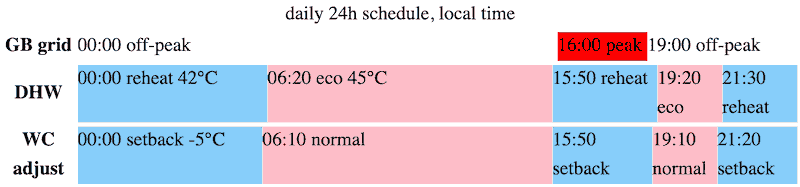
Interestingly a simple kWh/HDD regression for our full electricity imports fits reasonably well R^2>0.75) and gives a total year prediction close to that of our electricity supplier #Ecotricity partly because almost all imports are in winter for space heat...
 @arXiv_csLG_bot@mastoxiv.page
2026-02-25 10:45:01
Statistical Query Lower Bounds for Smoothed Agnostic Learning
Ilias Diakonikolas, Daniel M. Kane
https://arxiv.org/abs/2602.21191 https://arxiv.org/pdf/2602.21191 https://arxiv.org/html/2602.21191
arXiv:2602.21191v1 Announce Type: new
Abstract: We study the complexity of smoothed agnostic learning, recently introduced by~\cite{CKKMS24}, in which the learner competes with the best classifier in a target class under slight Gaussian perturbations of the inputs. Specifically, we focus on the prototypical task of agnostically learning halfspaces under subgaussian distributions in the smoothed model. The best known upper bound for this problem relies on $L_1$-polynomial regression and has complexity $d^{\tilde{O}(1/\sigma^2) \log(1/\epsilon)}$, where $\sigma$ is the smoothing parameter and $\epsilon$ is the excess error. Our main result is a Statistical Query (SQ) lower bound providing formal evidence that this upper bound is close to best possible. In more detail, we show that (even for Gaussian marginals) any SQ algorithm for smoothed agnostic learning of halfspaces requires complexity $d^{\Omega(1/\sigma^{2} \log(1/\epsilon))}$. This is the first non-trivial lower bound on the complexity of this task and nearly matches the known upper bound. Roughly speaking, we show that applying $L_1$-polynomial regression to a smoothed version of the function is essentially best possible. Our techniques involve finding a moment-matching hard distribution by way of linear programming duality. This dual program corresponds exactly to finding a low-degree approximating polynomial to the smoothed version of the target function (which turns out to be the same condition required for the $L_1$-polynomial regression to work). Our explicit SQ lower bound then comes from proving lower bounds on this approximation degree for the class of halfspaces.
toXiv_bot_toot
 @bici@mastodon.social
2026-02-25 03:18:19
“Tahoe is the worst regression in the entire history of MacOS. There are many reasons to prefer MacOS to any of its competition, but the one that has been the most consistent since System 1 in 1984 is the superiority of its user interface. There is nothing about Tahoe’s new UI that is better than its predecessor…. Fundamental principles of computer-human interaction — principles that Apple itself forged over decades — have been completely ignored.”
—John Gruber
 @arXiv_csGR_bot@mastoxiv.page
2026-02-03 08:20:05
OFERA: Blendshape-driven 3D Gaussian Control for Occluded Facial Expression to Realistic Avatars in VR
Seokhwan Yang, Boram Yoon, Seoyoung Kang, Hail Song, Woontack Woo
https://arxiv.org/abs/2602.01748 https://arxiv.org/pdf/2602.01748 https://arxiv.org/html/2602.01748
arXiv:2602.01748v1 Announce Type: new
Abstract: We propose OFERA, a novel framework for real-time expression control of photorealistic Gaussian head avatars for VR headset users. Existing approaches attempt to recover occluded facial expressions using additional sensors or internal cameras, but sensor-based methods increase device weight and discomfort, while camera-based methods raise privacy concerns and suffer from limited access to raw data. To overcome these limitations, we leverage the blendshape signals provided by commercial VR headsets as expression inputs. Our framework consists of three key components: (1) Blendshape Distribution Alignment (BDA), which applies linear regression to align the headset-provided blendshape distribution to a canonical input space; (2) an Expression Parameter Mapper (EPM) that maps the aligned blendshape signals into an expression parameter space for controlling Gaussian head avatars; and (3) a Mapper-integrated Avatar (MiA) that incorporates EPM into the avatar learning process to ensure distributional consistency. Furthermore, OFERA establishes an end-to-end pipeline that senses and maps expressions, updates Gaussian avatars, and renders them in real-time within VR environments. We show that EPM outperforms existing mapping methods on quantitative metrics, and we demonstrate through a user study that the full OFERA framework enhances expression fidelity while preserving avatar realism. By enabling real-time and photorealistic avatar expression control, OFERA significantly improves telepresence in VR communication. A project page is available at https://ysshwan147.github.io/projects/ofera/.
toXiv_bot_toot
 @cowboys@darktundra.xyz
2025-12-10 03:02:12
'Real' Cowboys' D needs to stand up, declare itself with 4 games left https://cowboyswire.usatoday.com/story/sports/nfl/cowboys/2025/12/09/temporary-regression-dallas-cowboys-defense-stand-up/8769023…
 @michabbb@social.vivaldi.net
2025-12-25 17:15:42
⚡ Escape hatch exists: #[AllowDynamicProperties] attribute opts into old behavior. Use ONLY for legacy vendor code or gradual migration with a removal plan. Never use for new code.
📊 Timeline: PHP 8.1 = allowed | PHP 8.2 = deprecated warning | PHP 9.0 = fatal error. Start fixing now!
🎯 Migration strategy: Run PHPStan/Psalm analysis, fix domain models first (critical), then controllers/services, then DTOs. Add static analysis to CI pipeline to prevent regression.
@datascience@genomic.social2026-01-14 11:00:00
Use multi level models with {parsnip}: http://multilevelmod.tidymodels.org/ #rstats #ML