Tootfinder

Opt-in global Mastodon full text search. Join the index!

No exact results. Similar results found.
@davidaugust@mastodon.online
2026-07-22 14:22:30

#maha #USpol #health

[over a photo, that's had its colors skewed purple, of RFK Jr.] 

The following diseases have surged as RFK Jr. and Trump have cut public health and pushed vaccine disinformation: 

• Measles 
• Flu 
• Rotavirus 
• Whooping Cough 
• Ebola 
• Hantavirus 

• Cyclosporiasis 
• E. coli 
• Campylobacteriosis 
• Listeria 
• Cryptosporidiosis 
• Infant botulism 


Measles: https://www.cdc.gov/measles/data-research/index.html 
Flu (Influenza): https://www.nejm.org/outbreaks 
Rotavirus: https://www.cdc.…

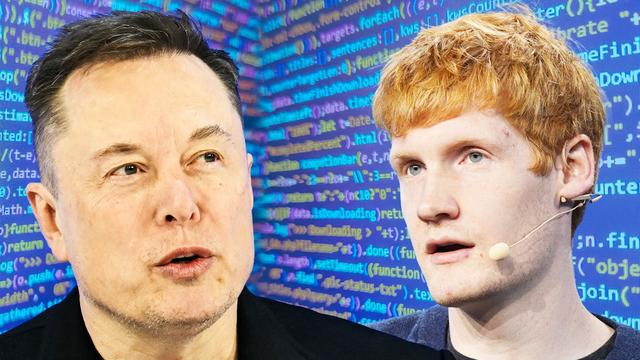
The IPO prospectus SpaceX dropped last night revealed how much the world’s largest public offering is underpinned by a founder firmly in control.
Elon Musk, who previously complained he didn’t have a big enough say in Tesla,
will control 85% of the vote at SpaceX through special shares
(and will get another billion shares if SpaceX puts a million-person colony on Mars).
The filing raised speculation that after SpaceX goes public, a purchase of Tesla isn’t far off.

@arXiv_physicsfludyn_bot@mastoxiv.page
2026-05-19 10:06:18

Replaced article(s) found for physics.flu-dyn. arxiv.org/list/physics.flu-dyn
[1/1]:
- On the stability of an in-line formation of hydrodynamically interacting flapping plates
Monika Nitsche, Anand U. Oza, Michael Siegel
arxiv.org/abs/2410.04626 mastoxiv.page/@arXiv_physicsfl
- Side-wall wetting and linear stability of falling films
Hammam Mohamed, J\"orn Sesterhenn
arxiv.org/abs/2504.13300 mastoxiv.page/@arXiv_physicsfl
- An Omni-Temporal Theory for Hydrodynamic Dispersion and Reaction in Porous Media
Md Abdul Hamid, Kyle C. Smith
arxiv.org/abs/2505.06063 mastoxiv.page/@arXiv_physicsfl
- Confirming Wave Turbulence Predictions in Rotating Turbulence
Omri Shaltiel, Omri Gat, Eran Sharon
arxiv.org/abs/2510.25446 mastoxiv.page/@arXiv_physicsfl
- Using Physics Informed Neural Network (PINN) and Neural Network (NN) to Improve a $k-\omega$ Turb...
Lars Davidson
arxiv.org/abs/2511.12493 mastoxiv.page/@arXiv_physicsfl
- Oscillating Detonation of Liquid Ammonia
Wenhao Wang, Zongmin Hu, Peng Zhang
arxiv.org/abs/2511.14167 mastoxiv.page/@arXiv_physicsfl
- On the Poisson-Source Basis of Logarithmic Wall-Pressure-Variance Growth
Jonathan M. O. Massey, Joseph C. Klewicki, Beverley J. McKeon
arxiv.org/abs/2511.16776 mastoxiv.page/@arXiv_physicsfl
- Convolutional causal learning for aerodynamic flows
Ryo Koshikawa, Ryo Araki, Qiong Liu, Kai Fukami
arxiv.org/abs/2601.19104 mastoxiv.page/@arXiv_physicsfl
- Assessing engineering wake models against operational data: insights from the Lillgrund wind farm...
Siguenza-Alvarado, Harrison, Mohammadi, Vishwakarma, Bossanyi, Landberg, Bastankhah
arxiv.org/abs/2601.21035 mastoxiv.page/@arXiv_physicsfl
- Neural equilibria for long-term prediction of nonlinear conservation laws
Benitez, Hegazy, Guo, Dokmani\'c, Mahoney, de Hoop
arxiv.org/abs/2501.06933 mastoxiv.page/@arXiv_csLG_bot/
- Self-similar rupture of thin films of power-law fluid
Michael C Dallaston, Steven A Kedda, Scott W McCue
arxiv.org/abs/2509.05383 mastoxiv.page/@arXiv_condmatso
- Instability and self-propulsion of flexible autophoretic filaments
Ursy Makanga, Akhil Varma, Panayiota Katsamba
arxiv.org/abs/2509.10153 mastoxiv.page/@arXiv_condmatso
- Analytical response functions for a compressible thin fluid layer with odd viscosity
Abdallah Daddi-Moussa-Ider, Yuto Hosaka, Shigeyuki Komura
arxiv.org/abs/2602.18136 mastoxiv.page/@arXiv_condmatso
toXiv_bot_toot

@arXiv_physicsaoph_bot@mastoxiv.page
2026-05-22 07:54:20

From Licensing to Open Access: Designing a Sustainable Transition in Operational Weather Data
Emma Pidduck, Umberto Modigliani, Victoria L. Bennett, Fabio Venuti, Florian Pappenberger, Florence Rabier
arxiv.org/abs/2605.21673 arxiv.org/pdf/2605.21673 arxiv.org/html/2605.21673
arXiv:2605.21673v1 Announce Type: new
Abstract: This translational article documents the European Centre for Medium-Range Weather Forecasts (ECMWF) transition from a restricted data licensing model to open access under CC BY 4.0, completed in October 2025. The policy context included EU open data requirements and alignment with international data exchange frameworks. The transition was implemented through a tiered service model that kept core forecast data open while offering operationally supported delivery as a cost-recovered service. Between 2020 and 2025, ECMWF executed an iterative planning cycle: setting an annual target for revenue reduction, specifying additions to the open tier under that target, provisioning infrastructure, and assessing outcomes to update assumptions. Drawing on internal administrative records (2014 - 2025), we describe design choices, operational constraints, and early outcomes. In the six months following the end of the transition, more than 93% of previously paying organisations retained a Service Agreement, while open endpoint download volumes increased substantially. We discuss trade-offs in defining the open tier (resolution, parameters, schedule), the reduction of compliance overheads formerly associated with redistribution restrictions, and the scalability implications of global distribution. We note an emerging sustainability question as AI-based forecast products become freely available. The early evidence is consistent with the view that a tiered service model can be designed to reconcile open-access obligations with operational sustainability, subject to monitoring over longer contract renewal cycles (typically annual).
toXiv_bot_toot

@Techmeme@techhub.social
2026-05-21 01:41:06

Filing: SpaceX set aside $530M for potential litigation losses, including lawsuits involving Grok's "Spicy" mode, which it described as a "heightened risk" (Wired)
wired.com/story/spacex-ipo-gro

@NFL@darktundra.xyz
2026-04-23 16:02:16

Falcons' James Pearce could have charges dropped if he completes intervention program nytimes.com/athletic/7222116/2

@fanf@mendeddrum.org
2026-07-21 11:42:04

from my link log —
Tech ain't that deep - and that's a problem.
deadsimpletech.com/blog/tech-a
saved 2026-07-20

@seav@en.osm.town
2026-06-19 22:23:12

Happy 5th birthday to #Wordle!
According to Wordle’s stats, I’ve played 1601 times. And because I first started playing on 5 January 2022, I missed playing 26 times.

Screenshot of Wordle’s 5 for 5 Challenge badge featuring a green shield with five haphazardly arranged stars on it and the text “5 Years” at its top, the text “Earned Jun. 19, 2026” above, the title “5 for 5 Challenge” below, followed by the following sentence “You earned this badge by successfully completing all 5 Wordle puzzles from June 15 - June 19, 2026, in celebration of 5 years of the game.” Finally, there’s a button below with the label “View all badges in the Game App”
@hex@kolektiva.social
2026-05-19 07:09:57

Logistics in the technical sense (part of supply chain management) is a subset of logistics in the vernacular sense ("the handling of the details of an operation"). You can explore this second and more general sense, and thereby build an understanding of the first and more technical sense, by iteratively asking the question, "how does one make that happen" and follow questions from there.
A big part of organizing is figuring out the (vernacular) logistics (and helping others figure it out). You want to organize a seed swap? Ok. How does one make that happen? Well, you need seeds, people, a place, and perhaps a time. How does one make that happen? You can forage seeds or you can buy seeds for a garden and swap extras. How do you get people to come? Well, figure out where you want people to come from and choose an accessible place. What's the easiest thing to do? Get people from your neighborhood. How does one make that happen? Well, maybe put up flyers. How does one make that happen? Well, print them on your printer if you have one, or at a library, then go post them up. Etc.
Keep asking questions until you either find a roadblock that you can't find a way around, or you find things you can do yourself (one of those things you can do yourself is asking friends to help).
If you practice the exercise of thinking about how things happen, you can start to find things that you can do yourself. You can start to understand what exists now, and you can imagine what's possible. By thinking about logistics, you can figure out how to replace things when they collapse or are dismantled. You can also identify things that can't easily be replaced, and try to figure out alternatives.
This practice is good for figuring out how to build, but it can also be a valuable practice for figuring out how to resist. Concentration camps and ethnic cleansing also require logistics. Mass displacement means moving people. How does one do that? People are generally going to be moved in planes or buses. How does one do that? Well, people get loaded on to planes or buses in specific places. Planes and buses need fuel. Planes are fueled at their airports, which may well be the same places where people are loaded on to them. There is a fuel depo and a fuel truck that makes flying people out of a specific place possible. How does the fuel get to that fuel depo? Well, that fuel is probably also delivered by truck. Someone drives those trucks. Someone fuels those planes. Someone clears the planes for takeoff. Someone fuels those busses. Someone drives those busses. And so on.
Logistics networks can be highly complex. The more complex the operation, the more possible points of failure and more possible points where pressure can be applied, where operations can be disrupted. Ethnic cleansing is a complicated operation. The logistics of disrupting complicated things tend to be much less complicated than the logistics of the complicated things themselves.
The Right has exploited this fact for a long time. Centralized social services are logistically complex. Public infrastructure is logistically complex. By destroying these things, they can loot public resources by privatizing the infrastructure and functionality.
But the things that support the Right are even more logistically complex. Oil, cars, AI data centers, internal paramilitary, these are extremely complicated and fragile. There are numerous pressure points, all of which can respond to numerous strategies.
If we want to win, we should reduce the influence of politics over the things we care about. We should focus on building distributed mutual aid networks that don't rely on state funding and aren't subject to the whims of politicians. This is also known as "dual power." That is, creating counter-institutions outside of the dominant political system. The Right already does this in the form of churches and corporations.
As we reduce our complexity, we can then press our complexity advantage against the things for which the Right *needs* the state: the apparatus of violence needed to maintain capital and enforce the dominant order.

As Iran braced for conflict with the U.S., a key regime financier built a secret payment network to keep money flowing to its military forces.
At its core was Binance.
Until as recently as December, the network, run by Babak Zanjani, an Iranian who is a self-described “antisanction” operator made
$850 million in transactions over two years on the world's largest cryptocurrency exchange