 @Techmeme@techhub.social
2026-08-21 16:21:14
Walmart, which has long resisted contactless Tap to Pay payments, says it will soon start rolling out the tech, which supports Apple Pay, Google Pay, and more (Sarah Perez/TechCrunch)
https://techcrunch.com/2026/08/21/walmart-to-finally-start-ac…

 @aral@mastodon.ar.al
2026-07-16 06:57:34
Donno what’s worse, the verse itself or DuckDuckGo’s generated explanation of it. @… https://partyon.xyz/@nando161/116925119988965039


 @cdarwin@c.im
2026-09-18 16:13:07
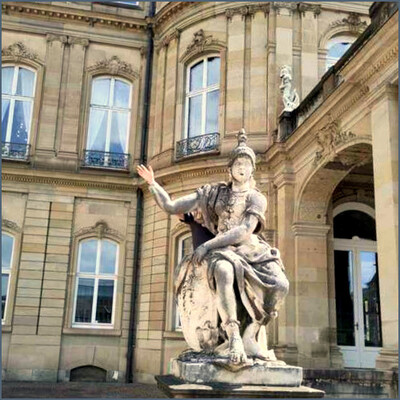
Australia may have had a much larger Indigenous population before the arrival of Europeans than previously thought, a new study has found.
The research, based on computer modelling, suggests that about
⭐️93 per cent of the pre-European population was removed in under 80 years
following the arrival of the First Fleet in 1788.
And this population, researchers at Flinders Universityestimated, was
⭐️up to seven times larger than previously thought.
“Understan…

 @cyrevolt@mastodon.social
2026-07-10 15:17:52

 @arXiv_csPL_bot@mastoxiv.page
2026-07-22 07:37:04
Formal Verification of an Out-of-Order Multiprocessor against an In-Order Weak-Memory ISA
Janggun Lee, Jeehoon Kang
https://arxiv.org/abs/2607.18727 https://arxiv.org/pdf/2607.18727 https://arxiv.org/html/2607.18727
arXiv:2607.18727v1 Announce Type: new
Abstract: Out-of-order multiprocessor is a critical piece of modern hardware, and their verification must solve the following challenges. First, inter-core interleaving, in which the order their reads and writes reach shared memory is unrestricted. Second, intra-core out-of-order execution, in which instructions fire out of program order. The combination of the two yields weak outcomes, which no sequential execution explains, and modern ISA allows such behaviors to account for them. However, the microarchitecture even exhibits excess out-of-order executions, temporarily entering states forbidden by the ISA. While discarded later, such states complicate reasoning about the core in full-system verification. Prior works verify a range of processor designs, while none have performed unbounded verification for out-of-order multiprocessor exhibiting such weak outcomes.
We present the first formal verification of an out-of-order multiprocessor against an in-order, weak-memory ISA. Our key idea is a well-designed core specification, which captures the essence of excess executions in a single list of instructions. Building upon this, we decompose the proof into two steps. The first is a core refinement, proving a core implementation against this specification, abstracting away every microarchitectural state except those necessary to reason about excess executions and the core interface. The second is a system inclusion, serializing the out-of-order memory executions and inter-core interleaving into the ISA, easily removing excess executions thanks to the core specification. All of our proofs are mechanized in Rocq, heavily utilizing large language model (LLM) agents to write proofs automatically.
toXiv_bot_toot
 @arXiv_csGR_bot@mastoxiv.page
2026-07-21 07:34:31
Text2Villa: Hierarchical Generation of 3D Indoor Environments with Physics-Aware Analysis-by-Synthesis
Xiang Tang, Ruotong Li, Xiaopeng Fan
https://arxiv.org/abs/2607.17145 https://arxiv.org/pdf/2607.17145 https://arxiv.org/html/2607.17145
arXiv:2607.17145v1 Announce Type: new
Abstract: Generating 3D indoor scenes from natural language holds tremendous potential, yet existing methods predominantly fail to generate multi-room structures with vertical connectivity and arbitrary polygonal boundaries. Furthermore, they lack a deep grounding in continuous 3D physical laws, leading to severe geometric penetrations and floating artifacts. In this work, we propose Text2Villa, a novel hierarchical generative framework. At the macro level, we construct a multi-story dataset to fine-tune an autoregressive layout generator, ensuring the direct parsing of text into 3D building foundations featuring polygonal boundaries and multi-story connectivity. To enforce physical laws during micro-level asset arrangement, we introduce the Affordance-driven Physical-Semantic Scene Graph (A-PSSG) to explicitly abstract physical affordances (such as support surfaces and containment cavities) into node attributes, establishing strict geometric and semantic edge constraints. Guided by the A-PSSG, we formulate scene instantiation as a constrained closed-loop optimization problem following the analysis-by-synthesis paradigm. By integrating an underlying geometric collision detection engine with the high-level semantic reasoning of multimodal large language models (MLLMs), our heuristic solver dynamically executes physics-aware actions under the observation-evaluation-modification mechanism to effectively resolve mesh collisions, floating artifacts, and fine-grained cavity containment failures. Extensive experiments demonstrate that Text2Villa outperforms previous methods across various metrics, robustly generating high-fidelity and physically plausible villa-level 3D environments from text, thereby providing a reliable and interactive 3D content foundation for downstream applications.
toXiv_bot_toot
 @Cognessence@social.linux.pizza
2026-09-17 13:02:21
Forgive these sleep-deprived rantings - they come from a happy, people-appreciating place! :D
It has become freshly amazing to me, the many ways of framing or encountering music. As a child it almost always provoked narrative experience; travel escapades - personalities arriving, things happening, a world generating itself. This disappeared fairly quickly from around ten onwards, and went to abstraction: sound as sound, music as music. In feeling out metaphors to try and give it langua…




 @detondev@social.linux.pizza
2026-07-14 19:01:01
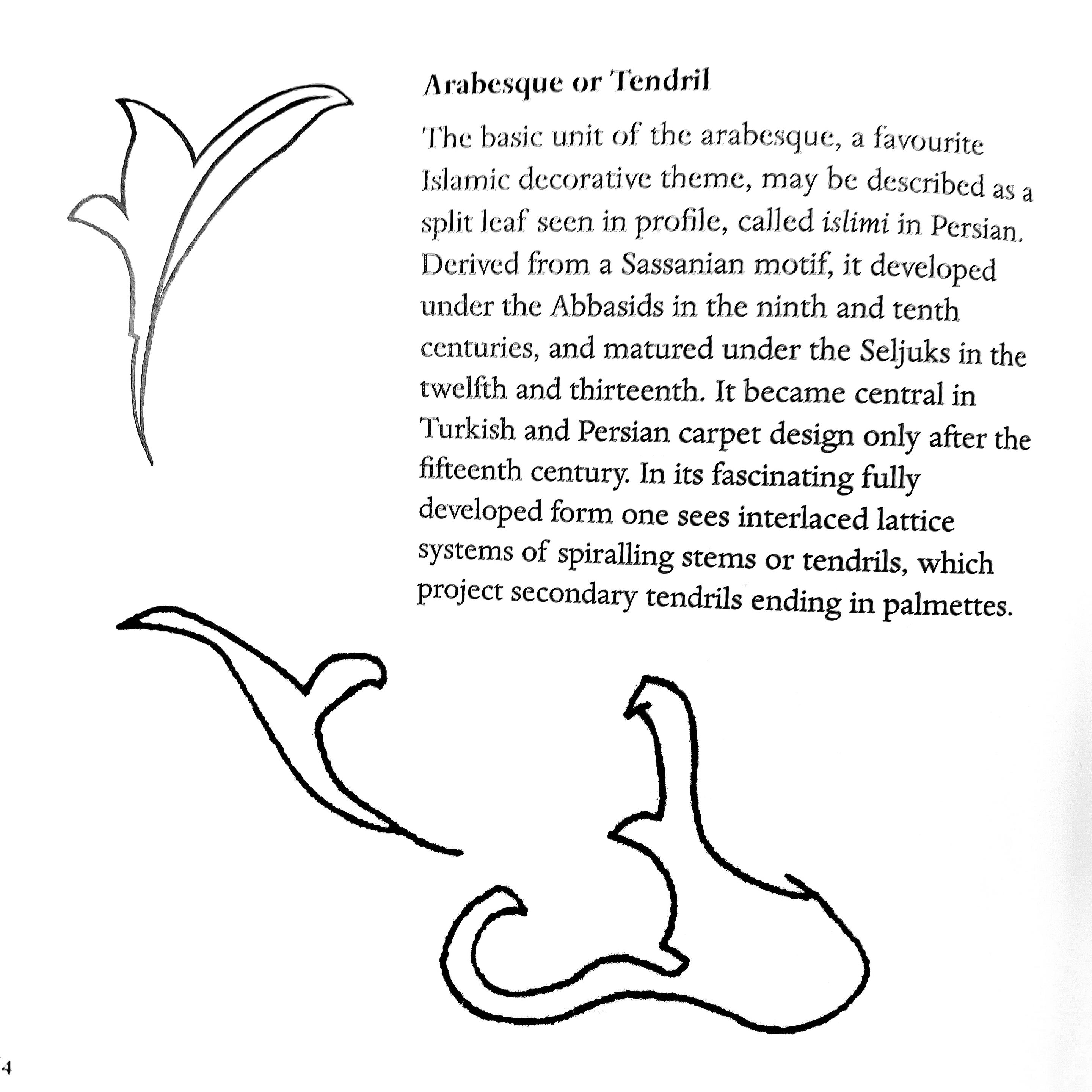
A few highlights from the Turkish-Persian section of a random carpet symbolism book I skimmed while stopped at a random library in New Jersey a couple days ago



 @bourgwick@heads.social
2026-07-11 18:27:24
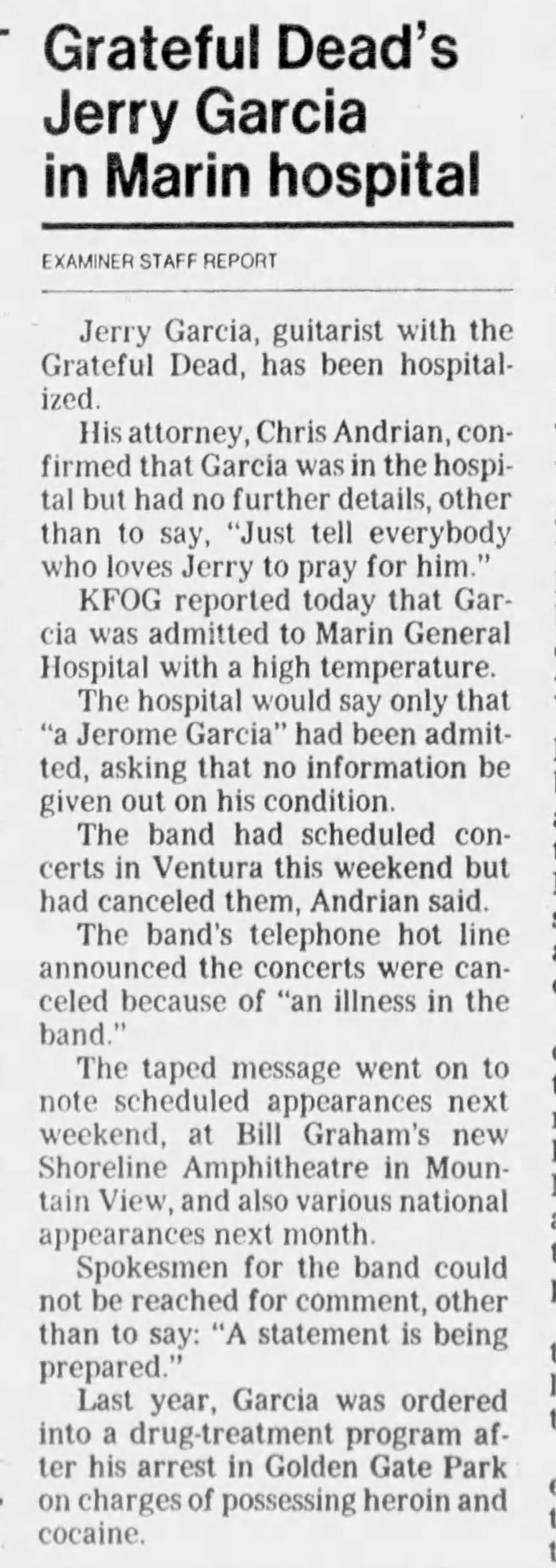
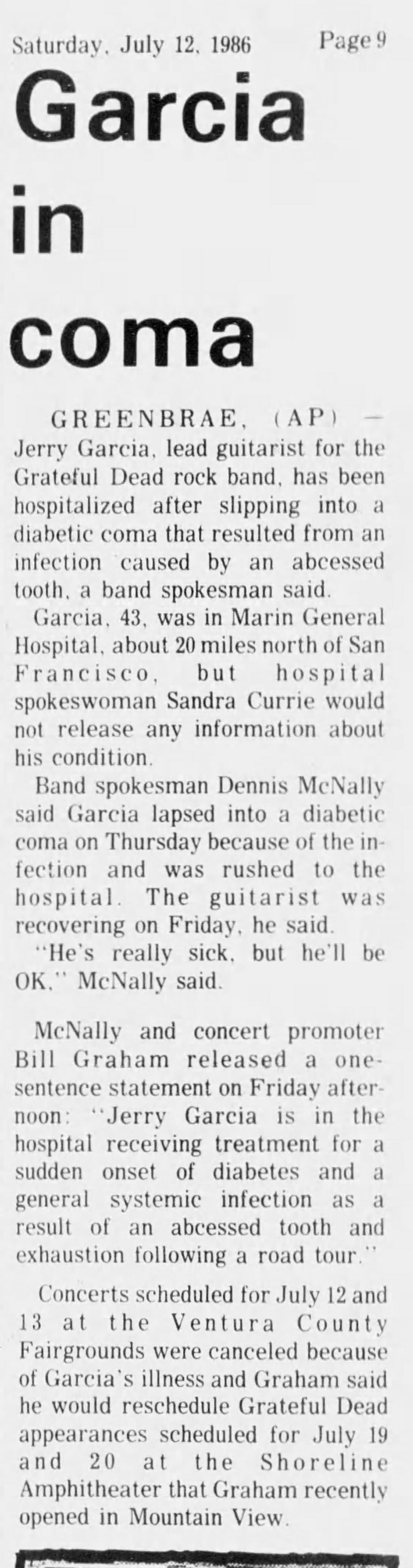
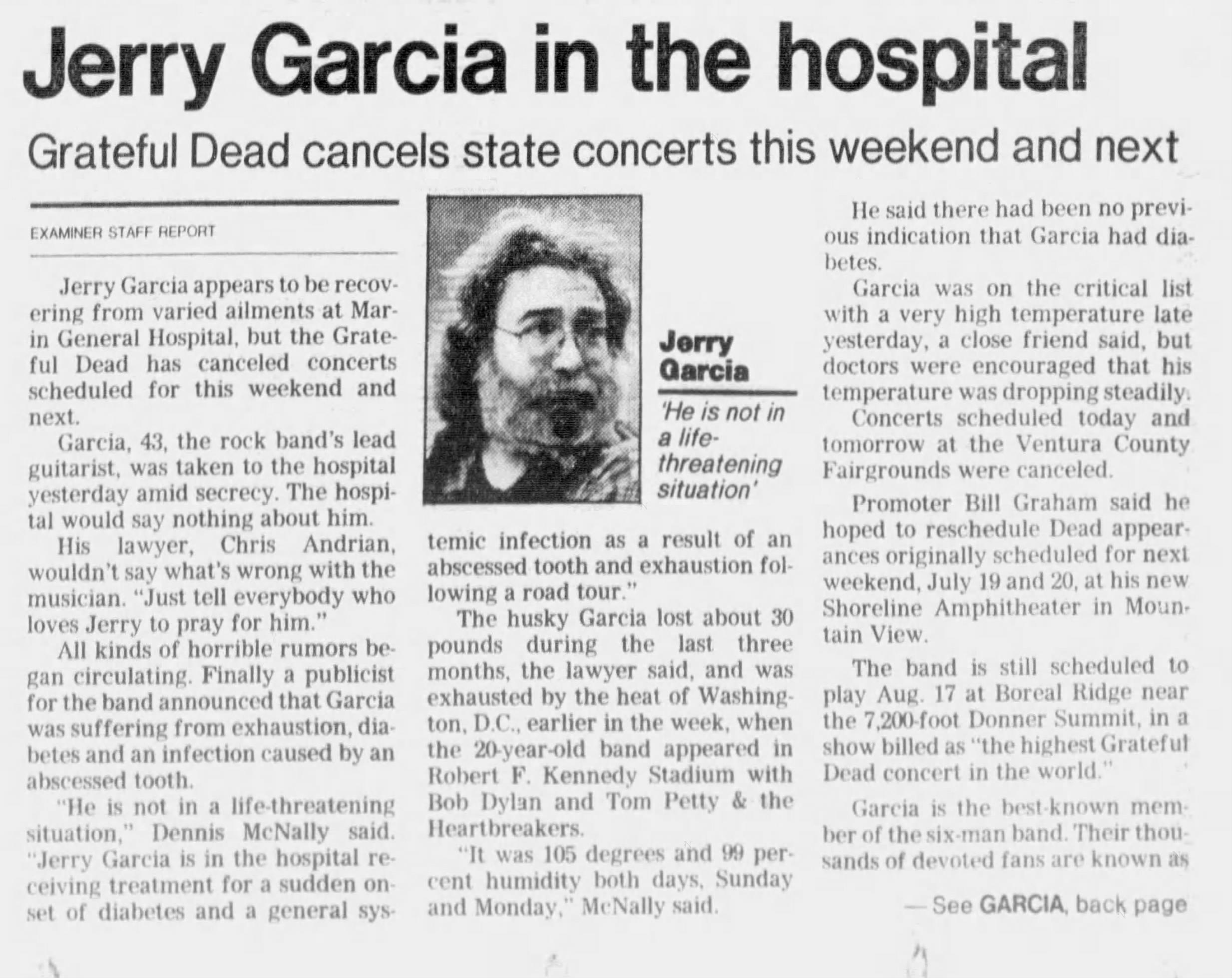
40 years ago this weekend, jerry garcia falls into a diabetic coma & nearly dies. in the hospital, his heart stops following an allergic reaction when doctors give him valium. the dead will cancel 30 dates through fall. he relearns to play guitar & is performing again by october.

 @arXiv_physicsmedph_bot@mastoxiv.page
2026-07-21 07:55:04
Theoretical derivation of blood velocity from TOF-MRA based artery centerline
Abrar Faiyaz
https://arxiv.org/abs/2607.16498 https://arxiv.org/pdf/2607.16498 https://arxiv.org/html/2607.16498
arXiv:2607.16498v1 Announce Type: new
Abstract: Time-of-flight magnetic resonance angiography (TOF-MRA) is widely used for structural vascular imaging, but extracting functional hemodynamics like blood velocity typically requires supplementary phase-contrast scans. This study proposes a novel, physics-informed computational framework to extract variable fluid velocity directly from standard TOF-MRA signal profiles. We analytically expand the Bloch equations into Bloch-McConnell flow equations, establishing a mathematical relationship between the spatial decay of longitudinal magnetization and fluid velocity. To validate this derivation and overcome the limitations of constant-velocity assumptions, a MATLAB simulation framework was developed to model fluid flow in two variable-geometry flowing tube cases i.e continuous tapering and focal stenosis -under synthetic scanner noise. A global inverse optimization approach utilizing Dual-Tikhonov regularization was deployed to stably invert the ill-posed transit time integral, actively penalizing high-frequency numerical ringing while preserving structural curve stiffness. The computational sim-ulations successfully recovered ground-truth point-wise velocities, accurately tracking gradual hemodynamic accelerations and sharp stenotic jets. This theoretical framework provides a robust mathematical proof-of-concept that quantitative, localized functional hemodynamic metrics can be extracted from standard structural MRA imaging, estab-lishing a foundation for advanced flow quantification without requiring additional scan time.
toXiv_bot_toot