 @markrsmith@smithtodon.org
2026-07-16 01:57:21
This quote from a fantasy book describes being a chaplain so well.
#chaplain #listening #PaulaLester

 @leftsidestory@mstdn.social
2026-07-14 01:36:54
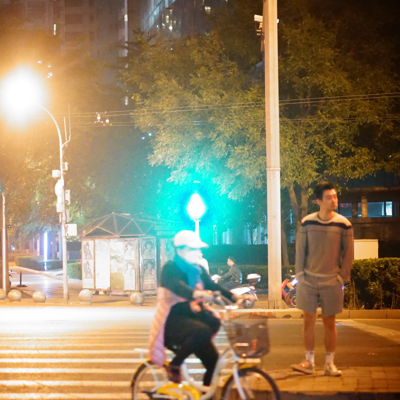
Inside Outside V 🔲
中间 V 🔲
📷 Pentax MX
🎞️ Fujifilm Neopan F, expired 1993
If you like my work, Support by buying me a coffee or a roll of film from
PayPal https://www.paypal.com/paypalme/ydcdingsite
Wise




 @primonatura@mstdn.social
2026-08-06 13:00:58
"Wildfires: Why disposable BBQs are being banned from some parks and beaches"
#Wildfires #BBQ #Environment

 @tiotasram@kolektiva.social
2026-08-16 23:32:08
Just finished reading "The Beast Player" by Nahoko Uehashi. I had already watched the anime, but it had been so king I didn't remember all the details. While the anime was great, the book is even better, and it's going to be high on my list of things to recommend to my children when they're old enough to read for fun.
The neurodivergent representation is cool, as is the deep central question of interspecies bonds and the political possibilities and dangers they entail. Uehashi handles the exploration of that question well in my judgment, including appropriate ambiguity without muddying moral clarity. Elin is a truly fantastic protagonist, not without flaws but nevertheless a excellent role model and a very sympathetic figure without being pitiful.
One thing I really love about Uehashi's writing is that she's not shy about using interior narration to tell the reader directly what a variety of characters are feeling, but when she does this she focuses on human contradictions, quirks, and weaknesses that make those characters feel much richer, and that remind the reader of all the ways our weird and sometimes contradictory or inexplicable quirks guide our actions just as much as both logical thought and predictable/expected feelings. None of the characters is an unerring source of wisdom, with every grand principle presented shown to have its weaknesses and biases, and even the wisest characters making mistakes and learning from them.
Overall, a wonderful book, and having also seen the "Seirei no Moribito" anime but not read the books, I'm excited to dig into more of Uehashi's extensive catalog.
#AmReading #ReadingNow #Bookstodon
 @cdarwin@c.im
2026-07-23 04:35:02
When we encounter something that promises enjoyment or discovery, the brain’s reward system becomes active.
One important pathway runs from the ventral tegmental area,
a dopamine-producing region in the midbrain involved in motivation,
to the nucleus accumbens, a structure that helps generate feelings of reward.
Dopamine is often described as a pleasure chemical, but that is too simple.
One of its key roles is helping the brain identify opportunities worth pursu…

 @sean@scoat.es
2026-09-03 14:45:48
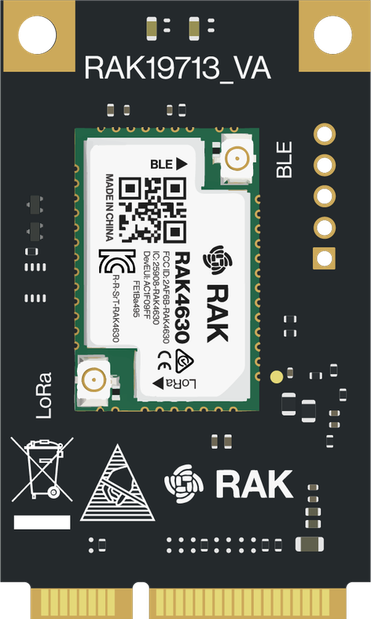
Had quite an adventure in hardware debugger land at @… Mesh Night, last night, but we managed to get the bootloader onto this board by way of a Pi Pico Zero and the debugprobe firmware (after failing to make the Tigard do what we needed—certainly our fault, not Tigard’s).
Fun little project. Really rewarding to see it work, despite being way out of our depth on …
 @yrlaNor@social.tchncs.de
2026-08-02 10:17:57
finally, a fair review of morgoth's "feel sorry for the fanatic". this has always been a great album, when it came out it really depressed me that i felt like the only one who appreciated this bold and successful step into something so different. a true work of art. you can hear they are feeling it.
any past review of this album not even mentioning killing joke as a reference was not getting it at all.
the self-fulfilling album title is gold.
 @pre@boing.world
2026-09-09 17:40:31
So the wave of spam-registrations I figured wouldn't really affect us here on the tiny server with registrations closed and clear instructions that only users who know us personally are welcome and we will check.
Turns out no. Our server has run out of email credits from sending lots of email-validation messages.
Hope everyone remembers their passwords, coz password-reset emails and notification emails and whatnot won't be going out for a little while.
All .jp addresses and about half of them bounced as not real email anyway.
Started 10am yesterday, not an hour gone by without some since.
Nothing even clicking those activation links I don't think, certainly nothing filling in the "So who do you know then?" form to create an account.
With email notifications not working, replies to moderation actions could be slower. Not that there's ever much really.
I've turned registration off entirely. Probably should be that way anyhow really here. If you want an account, ask someone who has one personally.
#spam #mastodon
 @inthehands@hachyderm.io
2026-07-06 03:02:48
I have a half-formed half-idea that I’m not really prepared to articulate or defend well, but that runs something like this:
- Creative work keeps taking roughly the same amount of human labor / attention / care, even as new technologies accelerate or remove things that used to take time.
- This is because creativity is fundamentally not an efficiency problem; process is not just the means of producing output, but rather a labor vessel that holds the near-invisible work that is truly important.
- One can •feel• the care that goes into creative work without being aware of that work, or even being aware that work of that type exists at all. This feeling is approximate, loose, vague, but cumulative and eventually all-important; work with no care behind it wears thin and tends to fade as people live with it over time.
@tiotasram@kolektiva.social2026-08-22 00:59:57
People who don't mind driverless cars will find all sorts out reason to brush off this kind of news:
https://flipboard.social/@TechDesk/117135628617386440
It was moving slowly already to be safe, it did brake before the collision, the injuries were minimal, the child is at fault, etc.
In the end, a lot of people will shrug and say: human drivers also make mistakes like this, so what's the big deal if a robot does? Maybe the robot even has a better safety record on average than humans. You can't ask for perfection!
Here are three related reasons why you shouldn't buy these arguments:
1. The crash statistics for the "average human driver" include (and are probably significantly driven by) impaired human drivers, like drunk drivers or people on their phones. When driverless car companies put "as good as the average human driver" as the goal, they're saying that they're okay with their systems being just as bad as drunk or distracted drivers sometimes. That's not the right goal at all! We should demand that driving robots perform at least as well as non-distracted human drivers, which is significantly *better* than the average human driver when it comes to things like crashes.
2. Mistakes made by a robotic system are fundamentally different in nature from mistakes made by humans, because the robot mistakes ate *systematic* across all robots in similar-enough situations. If a human looking at their phone slows down too late and hits a child, that's tragic, but it doesn't mean that *every* human driver put into the same situation would make the same mistake. In fact, many of them probably wouldn't be looking at their phone and thus would avoid the accident, *even given the exact same situation in which to react.* In contrast, *every Waymo taxi running the same software* will make exactly the same mistake in that situation. In other words, this kind of event will definitely repeat whenever a similar-enough situation arises around a Waymo taxi. That's why news like this should be scary, even though the accident was a minor one.
3. Some might claim that it's good that a software upgrade could potentially fix the issue that caused this accident. It's sort of true that there's an upside there (although any behavior updates can cause errors in other situations). But the question we should be asking is: why wasn't this already fixed before the vehicle was approved for testing on real roads with real children and people in harm's way? Why wasn't there a stimulation scenario for this exact kind of situation, so that the system already knew what to do? Why should it take a child getting injured for a fix to be developed v(if one in fact will be)? In theory, of course, it's possible that this was a truly exceptional situation where even an alert human couldn't have done better. I'm sure what's what the company is telling the investigators. It's also possible that the designers are following the Silicon Valley motto of "move fast and break things", which reaches an entirely new level of frightfulness when the thing that's moving fast is a car and the thing being broken is a child. "I'll just deploy it now and as test cases when I see what really breaks in production" is an attitude I've been guilty of, but then I make videogames, not deadly robots.