And you don't need to accept the trap of authoritarian masculinity on logic alone, the proof is right there in male influencers like Andrew Tate and their followers. These dipshits get so obsessed with gatekeeping they don't realize that the gates they're tending keep them in, that the more walls they put up to protect their privilege, the smaller their identity can be. They huddle in tiny pens, terrified of crossing imaginary bounds that they imposed *on themselves.*
They have built their own torture chambers and locked themselves inside, and for what? They turn themselves into dragons, hoarding what they see as valuable while repressing every emotion including joy. And if they let themselves experience joy, they would, perhaps, realize that all these privileges are inconsistent with it. They might, perhaps, recognize that they have built up these privileges so they don't have to admit that their suffering and fear are not, in fact, admirable. They might have to face the fact that they have lived lives that are deeply pathetic, might have to face the fact that only empathy can give one access to deep satisfaction, might have to face the fact that they have lived their whole lives on a treadmill, going nowhere.
But I assume that they won't ever do that, because to do so would force them to face the enormity of the emotional debt, the pain and suffering they have inflicted on the world, and those are big feelings. It's far easier to hide in a hole, forever alone, making up silly rules to keep everyone inside scared and keep everyone outside from seeing in.
I have the distinct impression that we could use most American "sci-fi" TV series (which seem to have a kink for post-apocalyptical scenographies) as a diagnostic tool for the autism spectrum.
For a moment, let's leave aside the tons of right-wing propaganda "hidden" in plain sight, and their excessive reliance on boring & worn out tropes (religious & cultish bullshit, irrational lack of communication & excess of anti-social behaviour, all vs all, ultra-low-iq characters*, psychotic & irrationally treacherous characters*, ultra-inconsistent character development used to justify "unexpected" plot twists, rampant anti-intellectualism...).
What could be used as a diagnosis tool is the incredible amount of strong inconsistencies that we can find in them**. It throws me out of the story every single time; and I suspect that it takes a certain kind of "uncommon personality" to feel that way about it, because otherwise these series wouldn't be so popular without real widespread criticism beyond cliches like "too slow", "it loses steam towards the end of the season", etc.
Many of those plots start in a gold mine of potentially powerful ideas... yet they consistently provide us with dirt & clay instead, while side-lining the "good stuff" as if it was too complicated for the populace.
Do you feel strongly about it? Do you feel like you can't verbalize it without being criticised as "too negative", or "too picky", or an "unbearable snob"? Do you wonder why it seems like nobody around shares your discomfort with these stories?
* : I feel this is a bit like the chicken & egg problem. Has the media conditioned part of American society to behave like dumb psychopaths as if it was something "natural", or is the media reflecting what was already there? Also, could we use other societies as models for these stories... just for a change? Please?
** : Just a tiny example: a "brilliant" engineer who builds a bridge out of fence parts and who doesn't bother to perform the most basic tests before trying it in a real setting and suffer the consequences: the bridge failing and her falling into the void. Bonus points for anyone who knows what I'm talking about.
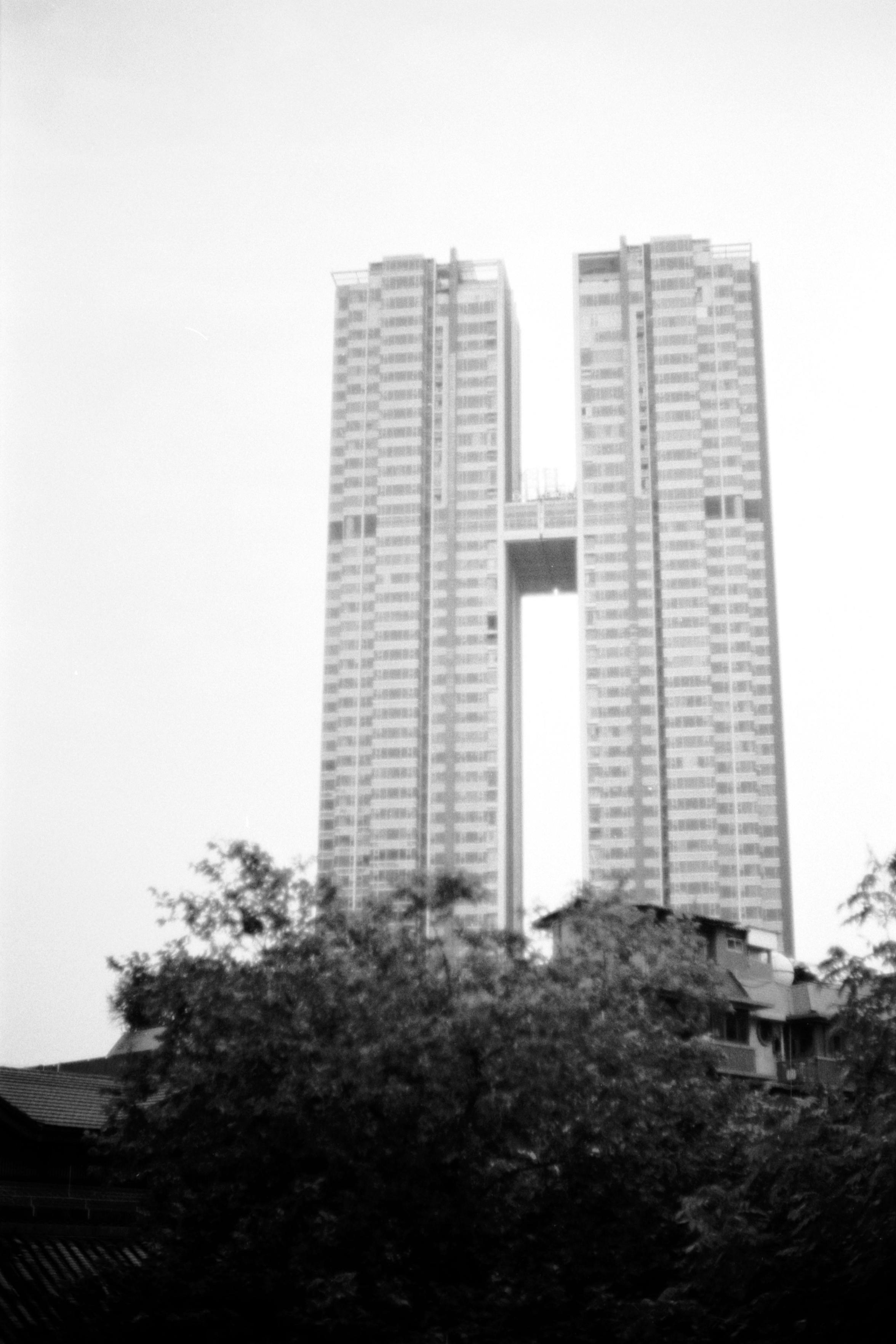
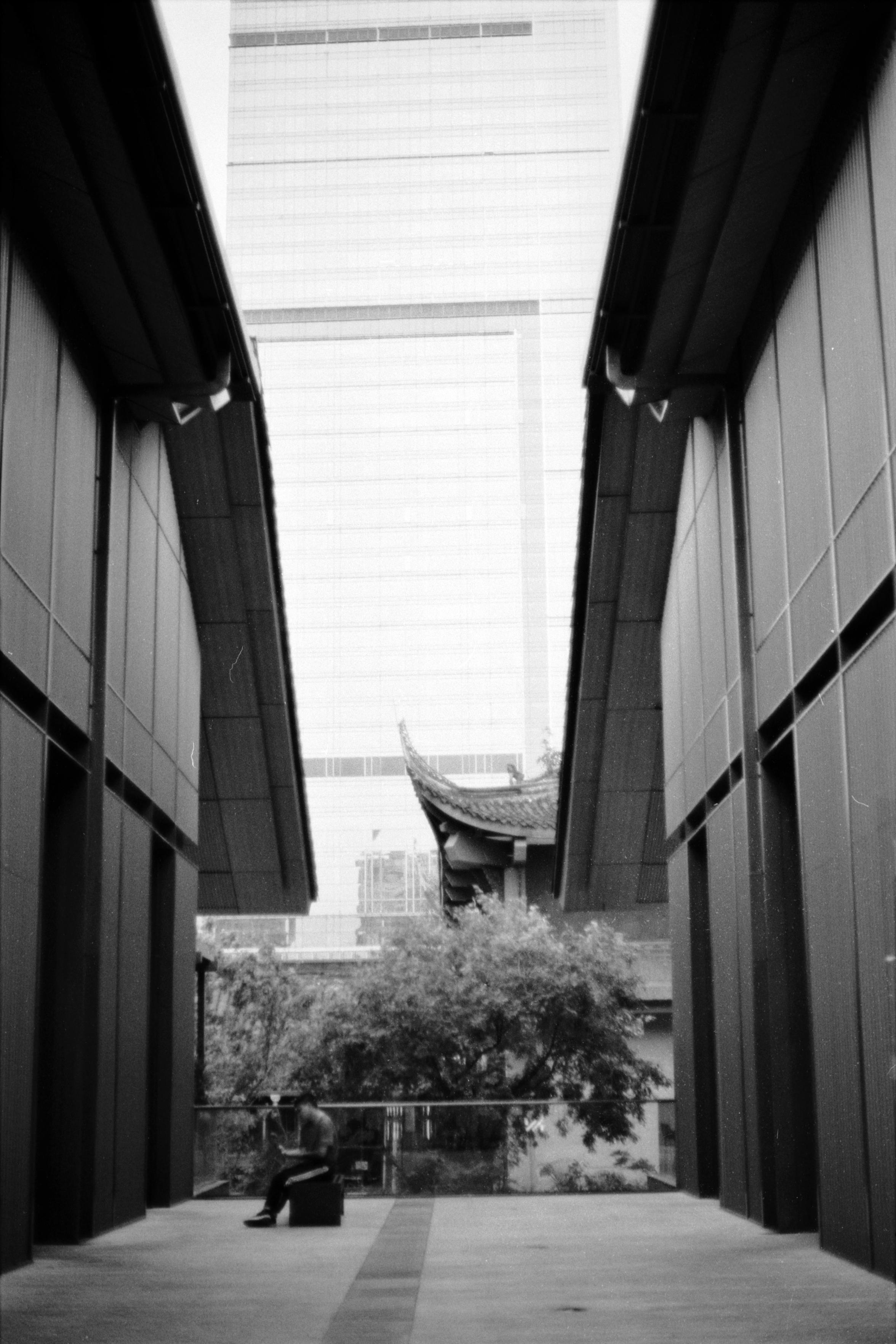
Urban Adventure 🏞️
城市探险 🏞️
📷Zeiss Ikon Super Ikonta 533/16
🎞️Ilford HP5, expired 1993
#filmphotography #Photography #blackandwhite
When people say they need hope about climate change, what are they really asking for?
New piece breaks down why hope collapses so easily and what stronger feelings can replace it.
Not prediction. Participation.
Read it here: [link]
https://www.b…
I always know @… wil have a clear view.
https://www.readtpa.com/p/the-rules-of-grief?publ…
Just finished "Beasts Made of Night" by Tochi Onyebuchi...
Indirect CW for fantasy police state violence.
So I very much enjoyed Onyebuchi's "Riot Baby," and when I grabbed this at the library, I was certain it would be excellent. But having finished it, I'm not sure I like it that much overall?
The first maybe third is excellent, including the world-building, which is fascinating. I feel like Onyebuchi must have played "Shadow of the Colossus" at some point. Onyebuchi certainly does know how to make me care for his characters.
Some spoilers from here on out...
.
.
.
I felt like it stumbles towards the middle, with Bo's reactions neither making sense in the immediate context, nor in retrospect by the end when we've learned more. Things are a bit floaty in the middle with an unclear picture of what exactly is going on politics-wise and what the motivations are. Here I think there were some nuances that didn't make it to the page, or perhaps I'm just a bit thick and not getting stuff I should be? More is of course revealed by the end, but I still wasn't satisfied with the explanations of things. For example, (spoilers) I don't feel I understand clearly what kind of power the army of aki was supposed to represent within the city? Perhaps necessary to wield the threat of offensive inisisia use? In that case, a single scene somewhere of Izu's faction deploying that tactic would have been helpful I think.
Then towards the end, for me things really started to jumble, with unclear motivations, revelations that didn't feel well-paced or -structured, and a finale where both the action & collapsing concerns felt stilted and disjointed. Particularly the mechanics/ethics of the most important death that set the finale in motion bothered me, and the unexplained mechanism by which that led to what came next? I can read a couple of possible interesting morals into the whole denouement, but didn't feel that any of them were sufficiently explored. Especially if we're supposed to see some personal failing in the protagonist's actions, I don't think it's made clear enough what that is, since I feel his reasons to reject each faction are pretty solid, and if we're meant to either pity or abjure his indecision, I don't think the message lands clearly enough.
There *is* a sequel, which honestly I wasn't sure of after the last page, and which I now very interested in. Beasts is Onyebuchi's debut, which maybe makes sense of me feeling that Riot Baby didn't have the same plotting issues. It also maybe means that Onyebuchi couldn't be sure a sequel would make it to publication in terms of setting up the ending.
Overall I really enjoyed at least 80% of this, but was expecting even better (especially politically) given Onyebuchi's other work, and I didn't feel like I found it.
#AmReading
LA County has declared a state of emergency BECAUSE OF the federal government.
The Feds, LA County is (correctly) saying, have CAUSED the emergency.
This is a striking political moment of internal collapse. Local govts feeling compelled to protect their ppl from … their own govt.
☑️ Los Angeles County declares state of emergency over immigration raids - ABC News
With the emergence of more processors with 64 cores or more, I'm thinking more about whether it makes sense to implement a hypercube virtualised on a single chip with a single vector of memory, or as a literal hypercube of 64 (say) RP2350s. I understand the problems of transferring data across a hypercube, but I don't have a good feeling of how the bus contention on a multicore processor scales. What should I read?
Perhaps the most interesting thing about the Nacirema people is their insistence that they do not participate in practices of which they clearly do. Equally unusual is the fact that, unlike other sacrificial cultures who raid neighboring tribes for victims, both slaves and victims for human sacrifice are only taken from within the society. In fact, there is a very strong cultural taboo against sacrificing or enslaving those from other tribes.
They are aware of the rituals of human sacrifice in other tribes, but claim such rituals to be inconsistent with their society. Yet their human sacrifice rituals are some of the most elaborate in the world. These rituals are so important that there is a whole part of Nacirema society dedicated specifically to arguing about who should and should not be sacrificed, restraining and feeding the potential victims for the years during which these arguments take place, and ultimately preparing and administering the ritual poison.
This is strangely similar to their approach to slavery. Both human sacrifice and slavery were once a much larger part of Nacirema society. Their human sacrifice rituals now take far longer and happen far less often, but at no point have they ever recognized these ritual sacrifices as such. Meanwhile, the Nacirema do acknowledge that slavery was part of their culture once. During the time when they did recognize their practice of slavery, they did raid other tribes for slaves. Now they follow the same complex ritual for slavery as they do for human sacrifice.
It is strange that, by following this ritual and only choosing victims from within their society, they seem to become incapable of seeing their behavior for what it is.
Violent mergers can explain the inflated state of some of the fastest stars in the Galaxy
Aakash Bhat, R\"udiger Pakmor, Ken J. Shen, Evan B. Bauer, Abinaya Swaruba Rajamuthukumar
https://arxiv.org/abs/2510.12197