 @arXiv_physicsfludyn_bot@mastoxiv.page
2026-02-26 09:01:51
Large eddy simulation of turbulent swirl-stabilized flames using the front propagation formulation: impact of the resolved flame thickness
Ruochen Guo, Yunde Su, Yuewen Jiang
https://arxiv.org/abs/2602.21940 https://arxiv.org/pdf/2602.21940 https://arxiv.org/html/2602.21940
arXiv:2602.21940v1 Announce Type: new
Abstract: This work extends the front propagation formulation (FPF) combustion model to large eddy simulation (LES) of swirl-stabilized turbulent premixed flames and investigates the effects of resolved flame thickness on the predicted flame dynamics. The FPF method is designed to mitigate the spurious propagation of under-resolved flames while preserving the reaction characteristics of filtered flame fronts. In this study, the model is extended to account for non-adiabatic effects and is coupled with an improved sub-filter flame speed estimation that resolves the inconsistency arising from heat-release effects on local sub-filter turbulence. The performance of the extended FPF method is validated by LES of the TECFLAM swirl-stabilized burner, where the results agree well with experimental measurements. The simulations reveal that the stretching of vortical structures in the outer shear layer leads to the formation of trapped flame pockets, which are identified as the physical mechanism responsible for the secondary temperature peaks observed in the experiment. The prediction of this phenomenon is shown to be strongly dependent on the resolved flame thickness, when the filter size is used for modeling sub-filter flame wrinklings. Without proper modeling of the chemical steepening effects, the thickness of the resolved flame brush is over-predicted, causing the flame consumption rate to be under-estimated. Consequently, the flame brush detaches from the outer shear layer, resulting in a failure to capture the flame pockets and the associated secondary temperature peaks.
toXiv_bot_toot
 @Techmeme@techhub.social
2026-01-22 10:10:52
Filing: PhonePe reports H1 FY 2026 revenue up 22% YoY to ~$427.5M, a ~$157M loss, and 657.6M users; the payments company plans to sell 50.7M shares in its IPO (Rajesh Mascarenhas/Bloomberg)
https://www.bloomberg.com/news/articles/20
 @Mediagazer@mstdn.social
2026-01-20 19:55:43
A jury has found Edo, a TV ad measurement company, liable for breach of contract and says Edo must pay $18.3M in damages to rival iSpot; Edo plans to appeal (Dade Hayes/Deadline)
https://deadline.com/2026/01/edward-norton-ad-tech-fir…

 @mgorny@social.treehouse.systems
2026-01-27 09:49:48
 @Speckdaene@nrw.social
2026-03-14 15:35:33
Der #AfD-Kreistagsabgeordnete im Kreis #Schleswig - #Flensburg Bent Lund SŸrensen, wurde 2023 mit einem Messer angegriffen.
@arXiv_physicsfludyn_bot@mastoxiv.page2026-02-27 08:29:00
On the spatial structure and intermittency of soot in a lab-scale gas turbine combustor: Insights from large-eddy simulations
Leonardo Pachano, Daniel Mira, Abhijit Kalbhor, Jeroen van Oijen
https://arxiv.org/abs/2602.23155 https://arxiv.org/pdf/2602.23155 https://arxiv.org/html/2602.23155
arXiv:2602.23155v1 Announce Type: new
Abstract: This work presents a numerical investigation of soot formation in the Cambridge lab-scale gas turbine combustor. Large-eddy simulations (LES) of a swirl-stabilized ethylene flame are performed using the flamelet generated manifold method coupled with a discrete sectional model to account for soot formation, growth, and oxidation. The study aims to elucidate the mechanism governing the spatial structure and intermittency of soot, supported by comparisons with experimental data. The predicted soot distribution agrees well with measurements, with peak concentrations near the bluff body. Flow recirculation is identified as the key mechanism driving soot accumulation in fuel-rich regions, where surface reactions dominate soot mass growth. Soot intermittency arises from fluctuations in the flow field driven by interactions between the flame front and the recirculation vortex. Two soot modeling approaches are evaluated, differing in their treatment of soot model quantities: the first approach employs on-the-fly computation of source terms (FGM-C), while the second uses fully pre-tabulated source terms (FGM-T). Their predictive performance and computational cost are compared in the context of unsteady, sooting flames in swirl-stabilized combustors.
toXiv_bot_toot
 @servelan@newsie.social
2026-03-04 01:15:47
"after the Israeli military said its troops had begun operating in the south of the country following Hezbollah attacks."
Macron warns Israel against Lebanon invasion | Israel-Iran conflict | Al Jazeera
https://www.aljazeera.com/video/newsfeed/2026/3/4/macron-warns-israel-against-lebanon-invasion?traffic_source=rss
 @fanf@mendeddrum.org
2026-03-06 09:42:01
from my link log —
Measuring C std::unordered_map badness.
https://artificial-mind.net/blog/2021/10/09/unordered-map-badness
saved 2021-10-24
 @mgorny@social.treehouse.systems
2026-02-18 08:41:29
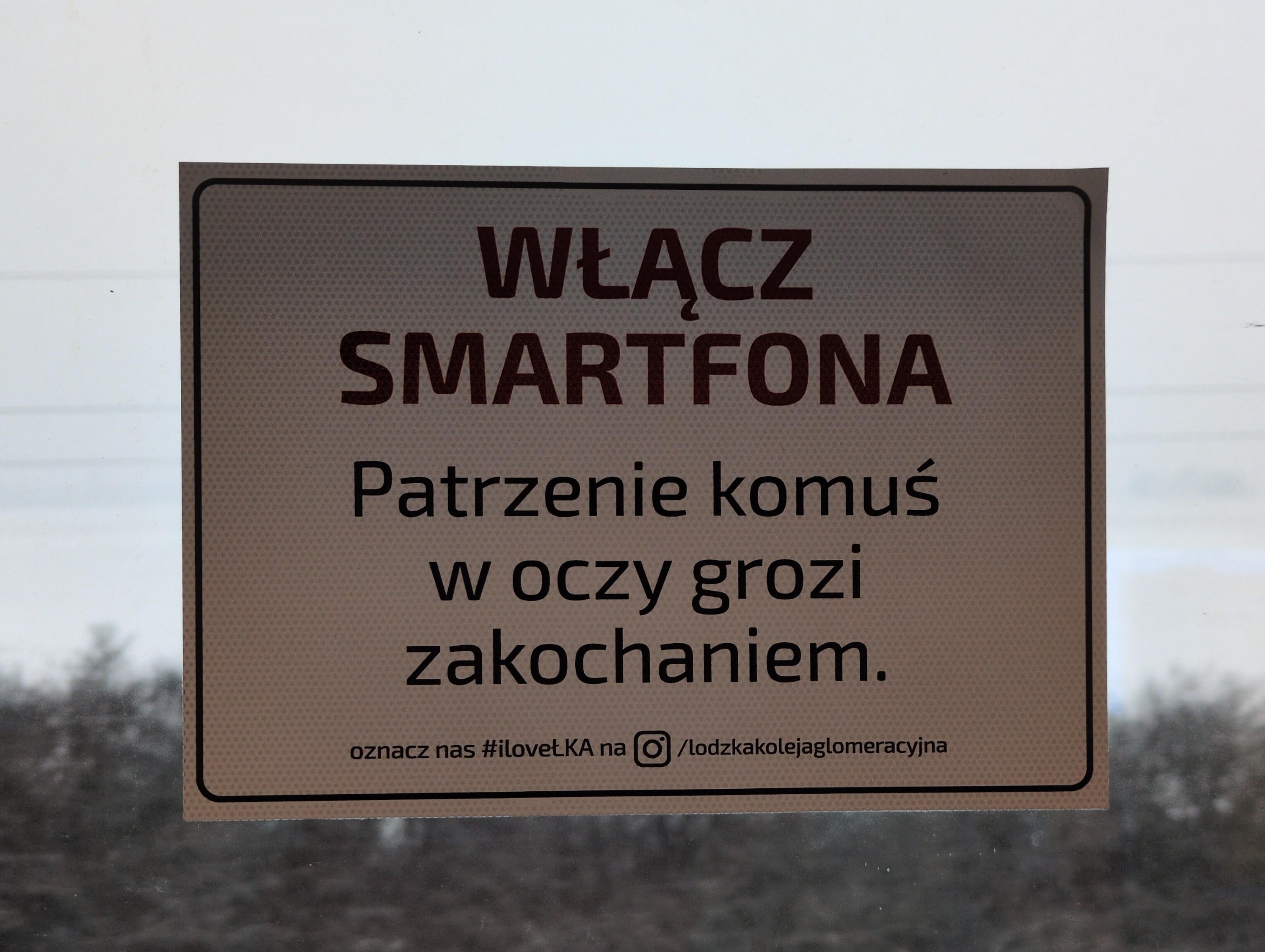
I see that the #Łódź region railways play hard.
It says: "Turn your smartphone on. By looking someone in the eyes, you risk falling in love."
 @arXiv_physicsfludyn_bot@mastoxiv.page
2026-02-26 09:23:30
A minimal wake-vortex model explains formation flight of flapping birds
Olivia Pomerenk, Kenneth S. Breuer
https://arxiv.org/abs/2602.22043 https://arxiv.org/pdf/2602.22043 https://arxiv.org/html/2602.22043
arXiv:2602.22043v1 Announce Type: new
Abstract: Collective patterns of motion emerge across biological taxa: insects swarm, fish school, and birds flock. In particular, large migratory birds form strikingly ordered V-shaped formations, which experiments and direct numerical simulations have demonstrated provide substantial energetic benefits during long-distance flight. However, the precise aerodynamic and morphological mechanisms underlying these benefits remain unclear. In this work, we develop a reduced-order model of the wake-vortex interactions between two flapping birds flying in tandem. The model retains essential unsteady flapping dynamics while remaining computationally tractable. By optimizing over a six-dimensional state space, which comprises the follower's three-dimensional relative position and three independent flapping parameters, we identify the energetically optimal leader-follower configuration of northern bald ibises. The predicted optimum agrees quantitatively with live-bird measurements. Because of its simplicity, the model allows for direct interrogation of the physical mechanisms responsible for this optimum. In particular, it isolates precisely how the follower's wing kinematics interact with the leader's wake to enhance aerodynamic efficiency. The model predicts an 11% reduction in total mechanical power for a follower in formation flight -- consistent with experimental estimates -- and shows that this saving arises from reductions in both induced and profile power, dominated by decreased profile power enabled primarily through reduced flapping amplitude and, secondarily, reduced upstroke flexion. These results provide a mechanistic explanation for the structure of V-formations and offer new insight into the aerodynamic principles governing collective flight.
toXiv_bot_toot