 @Techmeme@techhub.social
2026-03-22 03:55:55
Hands-on with Gemini task automation on mobile: it's super impressive despite being very slow and failing at some tasks; it can order food, book Ubers, and more (Allison Johnson/The Verge)
https://www.theverge.com/tech/898282/gemini-task-automation-uber…

 @tiotasram@kolektiva.social
2026-04-16 00:44:21
Just finished Iveliz Explains It All by Andrea Beatriz Arango. Once I picked it up I couldn't put it down till I finished it, in less than a day. A really tender and entrancing novel-in-verse about a kid Puerto Rican kid struggling with some deep stuff. I loved the way that the journal focalization let deep feelings flow while also giving the reader a bit of a puzzle in the beginning to understand what exactly was going on. Deals with friendship, loss, and mental health (including depression, anxiety, panic attacks, and flashbacks).
#AmReading #ReadingNow
@Techmeme@techhub.social2026-02-17 20:12:50
Google schedules I/O 2026 for May 19 to 20 in Mountain View, teasing the "latest AI breakthroughs and updates" in Gemini, Android, and more (Abner Li/9to5Google)
https://9to5google.com/2026/02/17/google-io-2026-date/

 @aral@mastodon.ar.al
2026-03-26 15:27:03
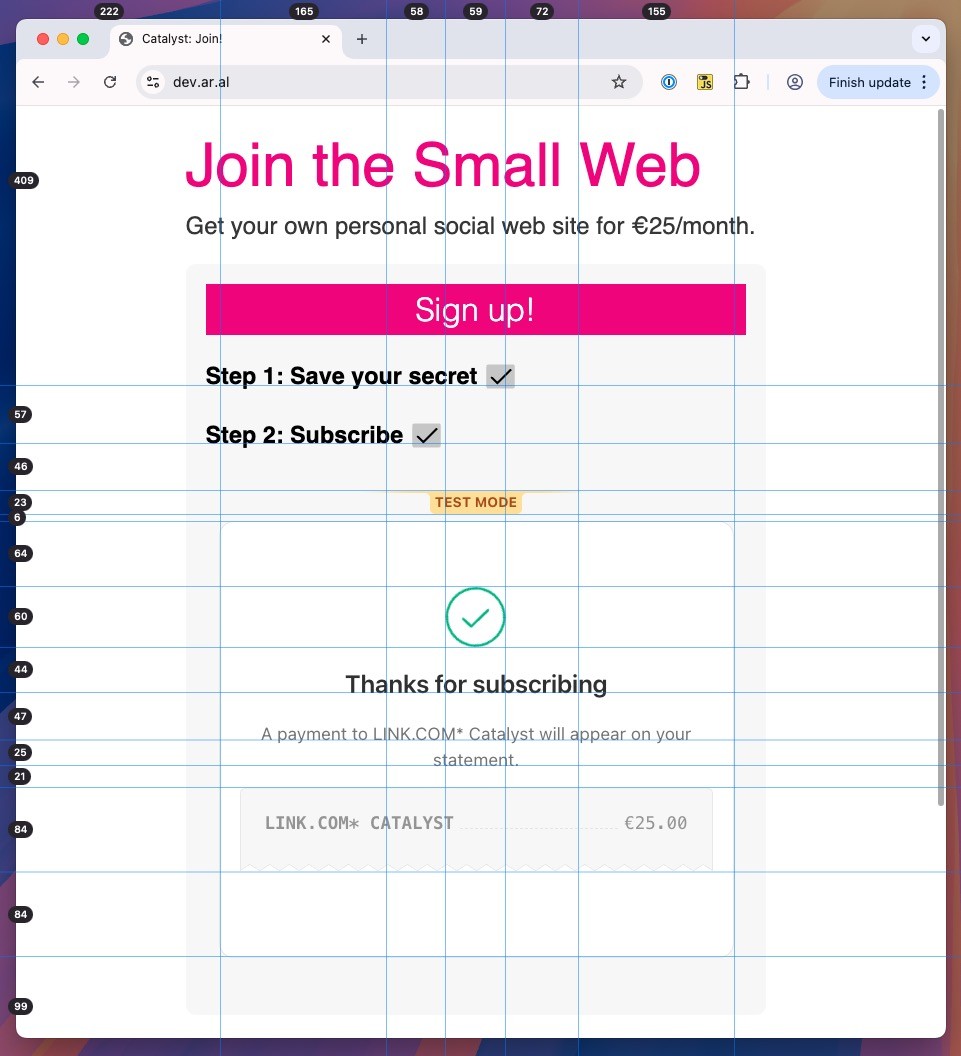
You know how you’re in the middle of a process and you refresh a web page and it loses state?
So that sucks.
With Kitten¹ – when using the new state-maintaining/class-based and event model-based component model – it’s easy to have flowing interfaces that animate between states, etc., that don’t lose state if you refresh the page (or open another tab).
What you can’t do on the Web, however, is restore the state of any cross-origin iframes. (As you have no visibility into th…
 @nohillside@smnn.ch
2026-02-03 19:51:05
Let me translate that: Musks boosts the value of xAI by integrating it into SpaceX and claiming that the future of AI is in space, in two years. That’s the same Musk who is flying to Mars „real soon now“.
https://pxlnv.com/linklog/musk-spacex-xai/
 @theodric@social.linux.pizza
2026-03-05 21:36:41
Just in case anyone was hoping GrapheneOS would support face unlock, even as an option disabled by default, even for the Google Pixel devices with busted-by-design fingerprint sensors: lol keep fuckin' dreaming, noob. Much like Linux in 2026, GrapheneOS isn't about choice. It's about you quietly falling in line and adjusting your expectations, you ungrateful fuckhead leach deserving of mockery and derision and the questioning of your virility and political alignment.
 @seav@en.osm.town
2026-03-31 16:48:51
👏 to the NYT Games team for this banger of a puzzle within a puzzle! 🧩
#NYTConnections #puzzles #wordplay #AprilFools
![Screenshot of the Connections puzzle for April 1, 2026 featuring the following 16 tiles:
1. “DAY” in green
2. “STRIPE” in red
3. “APPLE” in big letters
4. “EHT OT ERUTUF”
5. “MOON” in blue
6. “THE [SINGIN’] RAIN”
7. “MILE” on the top left and “CITY” on the right
8. Three “DOORS” written top to bottom
9. “EQUIS” twice
10. “EASY” in big letters
11. “FLOYD” in pink
12. “VELVET” in blue
13. “1. CITY” followed by “2. CITY” underlined
14. “MILLER” on the left and “LIFE” on the top right
15. “U” twic…](https://cdn.masto.host/enosmtown/media_attachments/files/116/324/781/015/516/820/original/08245f07948b4e8f.png)
 @teledyn@mstdn.ca
2026-03-30 06:50:15
this is exceedingly strange and the only obvious symptom is gtk-keystores failing to open, and a search on those can only suggest creating fresh accounts and copying over from all previous, which is far more work than blowing away #Ubuntu and starting over with #Debian13, but this SHOULDN"T be so mysterious and require such drastic measures! All that happened was perhaps an auto-update, but gdm3 rejects the first login then accepts none further, and gnome-shell --wayland will run, but highly crippled, hotkeys disabled, and many programs will not run.
Today's tech puzzle I did not ask for 😞