 @netzschleuder@social.skewed.de
2026-01-31 15:00:05
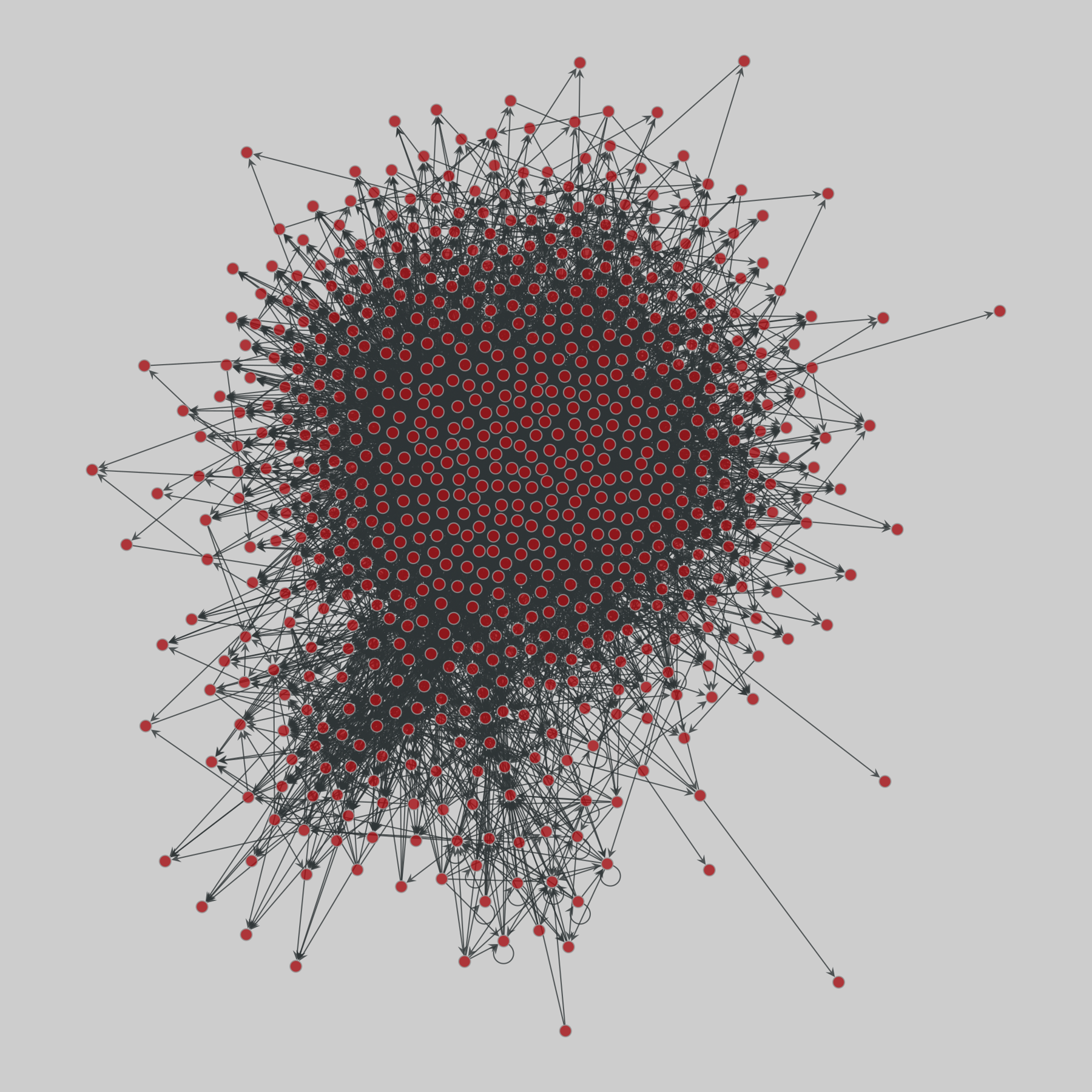
messal_shale: Messel Shale food web (2014)
A network of feeling links among taxa based on the 48 million years old uppermost early Eocene Messel Shale. Edge property 'certainty' denotes the certainty of the edge. Metadata include evidence, habitat, and trophic roles. The edge direction goes from consumer to resource.
This network has 700 nodes and 6444 edges.
Tags: Biological, Food Web, Uncertain, Weighted, Metadata
 @hikingdude@mastodon.social
2026-02-28 15:34:28

 @cosmos4u@scicomm.xyz
2026-02-21 21:04:27
NASA is taking steps to potentially roll back the #ArtemisII rocket and Orion spacecraft to the Vehicle Assembly Building (VAB) at the agency’s Kennedy Space Center in Florida after overnight Feb. 21 observing interrupted flow of helium to the SLS (Space Launch System) rocket’s interim cryogenic propulsion stage: https://www.nasa.gov/blogs/missions/2026/02/21/nasa-troubleshooting-artemis-ii-rocket-upper-stage-issue-preparing-to-roll-back/ - the upper stage uses helium to maintain the proper environmental conditions for the stage’s engine and to pressurize liquid hydrogen and liquid oxygen propellant tanks; the systems worked during NASA’s Artemis II wet dress rehearsals, but teams were not able to properly flow helium during normal operations and reconfigurations following the wet dress rehearsal that concluded Feb. 19.
 @arXiv_physicsfludyn_bot@mastoxiv.page
2026-02-26 09:01:51
Large eddy simulation of turbulent swirl-stabilized flames using the front propagation formulation: impact of the resolved flame thickness
Ruochen Guo, Yunde Su, Yuewen Jiang
https://arxiv.org/abs/2602.21940 https://arxiv.org/pdf/2602.21940 https://arxiv.org/html/2602.21940
arXiv:2602.21940v1 Announce Type: new
Abstract: This work extends the front propagation formulation (FPF) combustion model to large eddy simulation (LES) of swirl-stabilized turbulent premixed flames and investigates the effects of resolved flame thickness on the predicted flame dynamics. The FPF method is designed to mitigate the spurious propagation of under-resolved flames while preserving the reaction characteristics of filtered flame fronts. In this study, the model is extended to account for non-adiabatic effects and is coupled with an improved sub-filter flame speed estimation that resolves the inconsistency arising from heat-release effects on local sub-filter turbulence. The performance of the extended FPF method is validated by LES of the TECFLAM swirl-stabilized burner, where the results agree well with experimental measurements. The simulations reveal that the stretching of vortical structures in the outer shear layer leads to the formation of trapped flame pockets, which are identified as the physical mechanism responsible for the secondary temperature peaks observed in the experiment. The prediction of this phenomenon is shown to be strongly dependent on the resolved flame thickness, when the filter size is used for modeling sub-filter flame wrinklings. Without proper modeling of the chemical steepening effects, the thickness of the resolved flame brush is over-predicted, causing the flame consumption rate to be under-estimated. Consequently, the flame brush detaches from the outer shear layer, resulting in a failure to capture the flame pockets and the associated secondary temperature peaks.
toXiv_bot_toot
 @NFL@darktundra.xyz
2026-01-24 13:24:15
How NFL players prepare for the coldest games of the year https://www.espn.com/nfl/story/_/id/47601439/2026-nfl-playoffs-how-players-prepare-coldest-games-year
@hikingdude@mastodon.social2026-01-29 16:51:38
While I'm settling now at home and think about having a walk in the dark to prevent just falling asleep right now - I enjoy the memories from a recent hike.
As you can see at the frosty cross, it was a bit chill. -- Actually .. I'm quite undecicive whether I like summer or winter more? Summer is green and all, but in winter I like the chill and the cold ...
Maybe I don't have to prefer a season? Yes, I guess I just call myself lucky that I can enjoy every season.
 @netzschleuder@social.skewed.de
2026-01-29 05:00:05
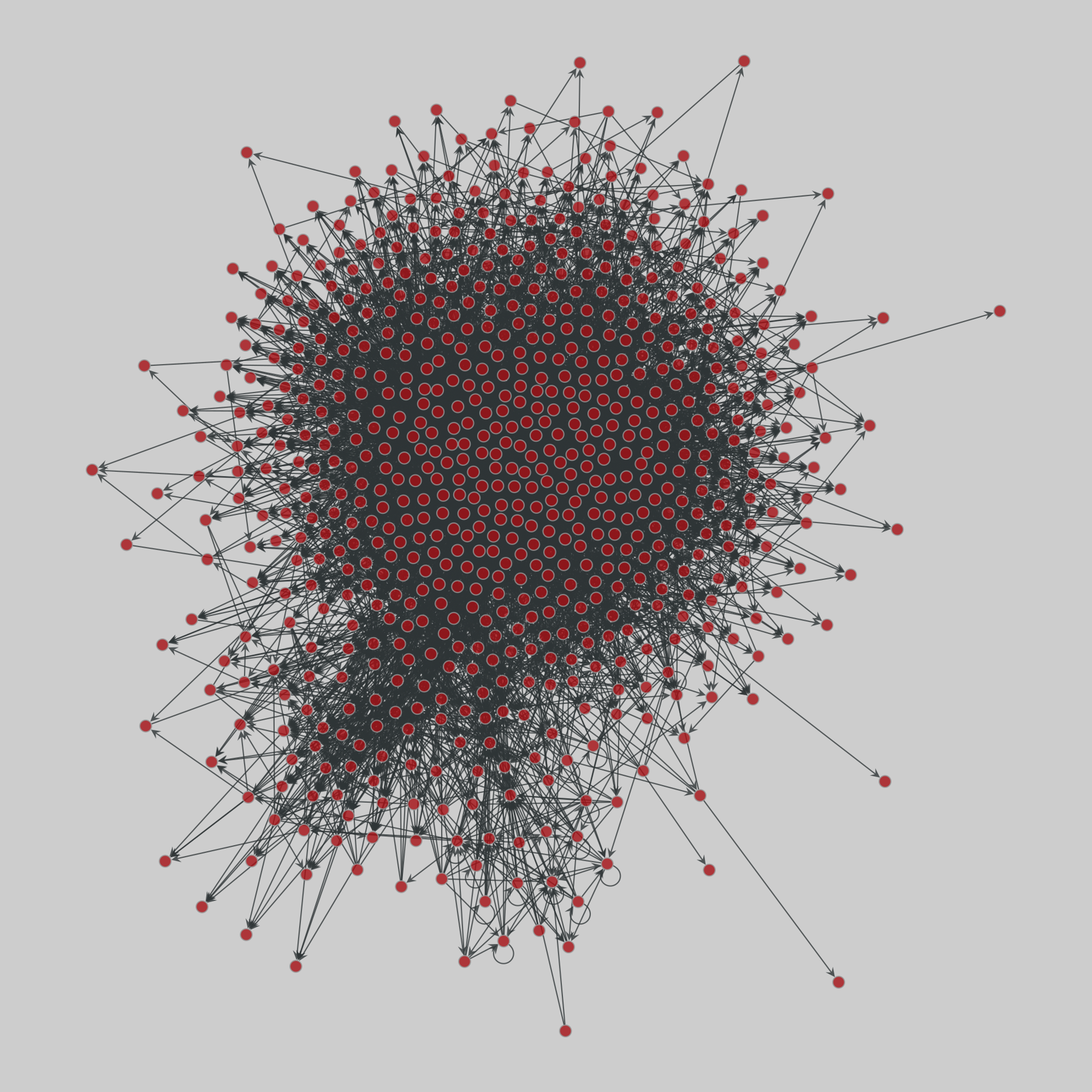
messal_shale: Messel Shale food web (2014)
A network of feeling links among taxa based on the 48 million years old uppermost early Eocene Messel Shale. Edge property 'certainty' denotes the certainty of the edge. Metadata include evidence, habitat, and trophic roles. The edge direction goes from consumer to resource.
This network has 700 nodes and 6444 edges.
Tags: Biological, Food Web, Uncertain, Weighted, Metadata
 @arXiv_physicsfludyn_bot@mastoxiv.page
2026-02-27 08:29:00
On the spatial structure and intermittency of soot in a lab-scale gas turbine combustor: Insights from large-eddy simulations
Leonardo Pachano, Daniel Mira, Abhijit Kalbhor, Jeroen van Oijen
https://arxiv.org/abs/2602.23155 https://arxiv.org/pdf/2602.23155 https://arxiv.org/html/2602.23155
arXiv:2602.23155v1 Announce Type: new
Abstract: This work presents a numerical investigation of soot formation in the Cambridge lab-scale gas turbine combustor. Large-eddy simulations (LES) of a swirl-stabilized ethylene flame are performed using the flamelet generated manifold method coupled with a discrete sectional model to account for soot formation, growth, and oxidation. The study aims to elucidate the mechanism governing the spatial structure and intermittency of soot, supported by comparisons with experimental data. The predicted soot distribution agrees well with measurements, with peak concentrations near the bluff body. Flow recirculation is identified as the key mechanism driving soot accumulation in fuel-rich regions, where surface reactions dominate soot mass growth. Soot intermittency arises from fluctuations in the flow field driven by interactions between the flame front and the recirculation vortex. Two soot modeling approaches are evaluated, differing in their treatment of soot model quantities: the first approach employs on-the-fly computation of source terms (FGM-C), while the second uses fully pre-tabulated source terms (FGM-T). Their predictive performance and computational cost are compared in the context of unsteady, sooting flames in swirl-stabilized combustors.
toXiv_bot_toot