Five years after the Taliban took power, an increasing number of countries are renewing ties or scaling up diplomatic contacts with the hardline Islamists, who seized power in Kabul in 2021 after 20 years of brutal insurgent warfare.
Campaigners fear that the individual contacts by different countries risk undermining “coherent, consistent” demands for an improvement in human rights in return for any diplomatic concessions.
The United Nations described a recent “cascade of [Talib…
And this "Save to Recollect" browser extension makes my replacement of Raindrop complete!
https://chromewebstore.google.com/detail/save-to-recollect/fbmplkcoeijdokdlidejallnpcmiobjk
I used the importer to bulk add from Ra…
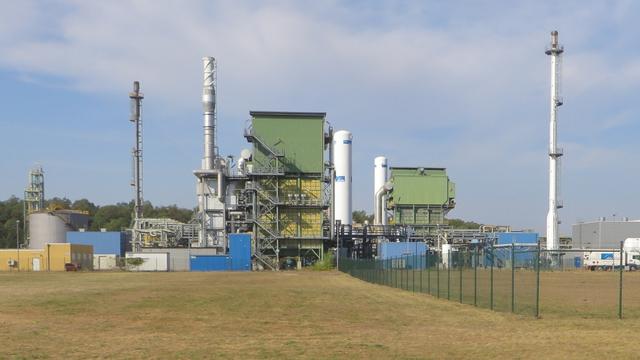
Sicherheitsbedenken, umfangreiche Umbauten und ein Unfall Ende 2025 haben Lindes Produktion von grünem #Wasserstoff im Chemiepark #Leuna um Jahre verzögert.
Der 2021 angekündigte PEM-Elektrolyseur sollte bereits 2022 starten und jährlich rund 3.200 Tonnen Wasserstoff produzieren. Bund und Sa…
Organizational Technology Ladders: Remote Work and Generative AI Adoption
Gregor Schubert
https://arxiv.org/abs/2608.11626 https://arxiv.org/pdf/2608.11626 https://arxiv.org/html/2608.11626
arXiv:2608.11626v1 Announce Type: new
Abstract: This study proposes that firms move along an "organizational technology ladder": adopting one technology transforms hiring and work processes and builds skills and organizational capital that change the cost of adopting subsequent technologies. I study how firms' adoption of remote work technology during the COVID-19 period shaped later uptake of generative AI. Using U.S. job-posting data and an instrumental-variables strategy based on predicted differences in labor-market pressure to offer remote work, I estimate that a 10 percentage point increase in remote hiring in 2021-2022 increases the share of job postings mentioning generative AI in 2023-2024 by 0.4 percentage points across firms and 0.7 percentage points across occupations within firms. I provide evidence on mechanisms consistent with a technology-ladder channel: remote work adoption shifts hiring toward technical and managerial capabilities that predict faster conversion of generative AI exposure into adoption. Firms with return-to-office mandates---interpreted as revealing low remote productivity---exhibit a substantially larger response of generative AI adoption to remote work, consistent with an organizational frictions channel.
toXiv_bot_toot
Estimated Demand for Mega-Constellation Internet Service
Akhil Rao
https://arxiv.org/abs/2608.08851 https://arxiv.org/pdf/2608.08851 https://arxiv.org/html/2608.08851
arXiv:2608.08851v1 Announce Type: new
Abstract: The near-term growth of the commercial space economy and sustainability of the low-Earth orbit (LEO) environment depends on the commercial prospects of large LEO satellite telecommunications constellations (``mega-constellations''). If successful, mega-constellations can spur competition between launch providers, which may lead to lower launch prices. They may also demand orbital sustainability services and/or generate additional collision risk, which may in turn affect space sustainability interests. Consumer demand for mega-constellations' internet services is critical to their commercial success. This analysis presents a method to estimate consumer demand for mega-constellations' internet services, using SpaceX's Starlink over December 2021--November 2023 as an example. This analysis finds that Starlink users are highly concentrated in the wealthiest countries. It also finds that consumer demand for Starlink is growing more slowly than orbital capacity is being added and more slowly than demand for non-Starlink internet overall. Continuation of these trends may indicate that the market for mega-constellation internet is less lucrative than previous forecasts have indicated.
toXiv_bot_toot
🔊 #NowPlaying on #BBCRadio3:
#ComposerOfTheWeek #COTW
- Stephen Sondheim (1930-2021)
Donald Macleod reflects back on the life and work of Titan of Musical Theatre, Stephen Sondheim.
Relisten now 👇
https://www.bbc.co.uk/programmes/m0030w28
 @cdarwin@c.im