 @gfp@mastodon.trueten.de
2026-07-30 19:26:17
Rezension: Innere Zeitenwende https://www.german-foreign-policy.com/news/detail/10500
@gfp@mastodon.trueten.deRezension: Innere Zeitenwende https://www.german-foreign-policy.com/news/detail/10500
 @phpmacher@sueden.social
Ein Wert, der mein Fahren besser beschreibt als Kilometer:
Anteil der Zeit, die ich auf Tour stehe statt fahre.
2022: 36 %
2024: 48 %
2026: 56 %
Mehr als die Hälfte der Zeit stehe ich inzwischen. Pausen, Fotos, Kaffee, Schauen.
Das ist keine Verschlechterung. Das ist der eigentliche Punkt am Reisen.
#Bikepacking

 @philip@mastodon.mallegolhansen.com
Over the past couple of nights I've been setting up my Mastodon server on a new Ubuntu 26.04 VM (The original server was set up using Digital Ocean's "One click install" on 20.04 back in 2022).
I feel like a teenager again, in a good way. I haven't had this much fun messing with computers in a long time.
 @roelgrif@mstdn.social @phpmacher@sueden.social
An wie vielen Tagen im Jahr ich überhaupt aufs Rad steige:
2020: 20 %
2022: 64 %
2023: 88 %
2024: 99 %
2025: 97 %
2026: 100 %
Das ist der Wandel, der mir selbst am wenigsten aufgefallen ist. Nicht weiter, nicht schneller. Nur keine Lücken mehr.
Irgendwann hat es aufgehört, eine Entscheidung zu sein.
#Radfahren

 @NuclearDisorder@mastodon.social
Heute vor 61 Jahren: Am 24. Juli 1965 zündeten die #USA im Rahmen von Operation Whetstone die Atombombe "Trogon". Whetstone war eine Serie von #Kernwaffentests bei der 1964/65 insgesamt 46 Bomben größtenteils im Testgebiet in
 @waidler@bayerwald.social
Mixl (AfD) postet: 206.600 Wohnungen 2025, –18 %, Baupreise 5 %. „Dank SPD und Union."
Die Zahlen stimmen. Nur: Was 2025 fertig wurde, wurde 2022/23 genehmigt – Zinsschock. Der ZDB nennt es „direkte Folge des Genehmigungseinbruchs ab 2022". Die Regierung ist seit Mai 2025 im Amt.
Und: Beim Bau-Turbo (§246e BauGB, 9.10.2025) – Genehmigung in 2 Monaten – stimmte die AfD dagegen.
Er fordert, was er abgelehnt hat.
Quellen: destatis.de, bundestag.de Drs. 21/781neu…

 @fanf@mendeddrum.org
from my link log —
What is PL research and how is it useful?
http://www.pl-enthusiast.net/2015/05/27/what-is-pl-research-and-how-is-it-useful/
saved 2022-09-28
 @tinoeberl@mastodon.online
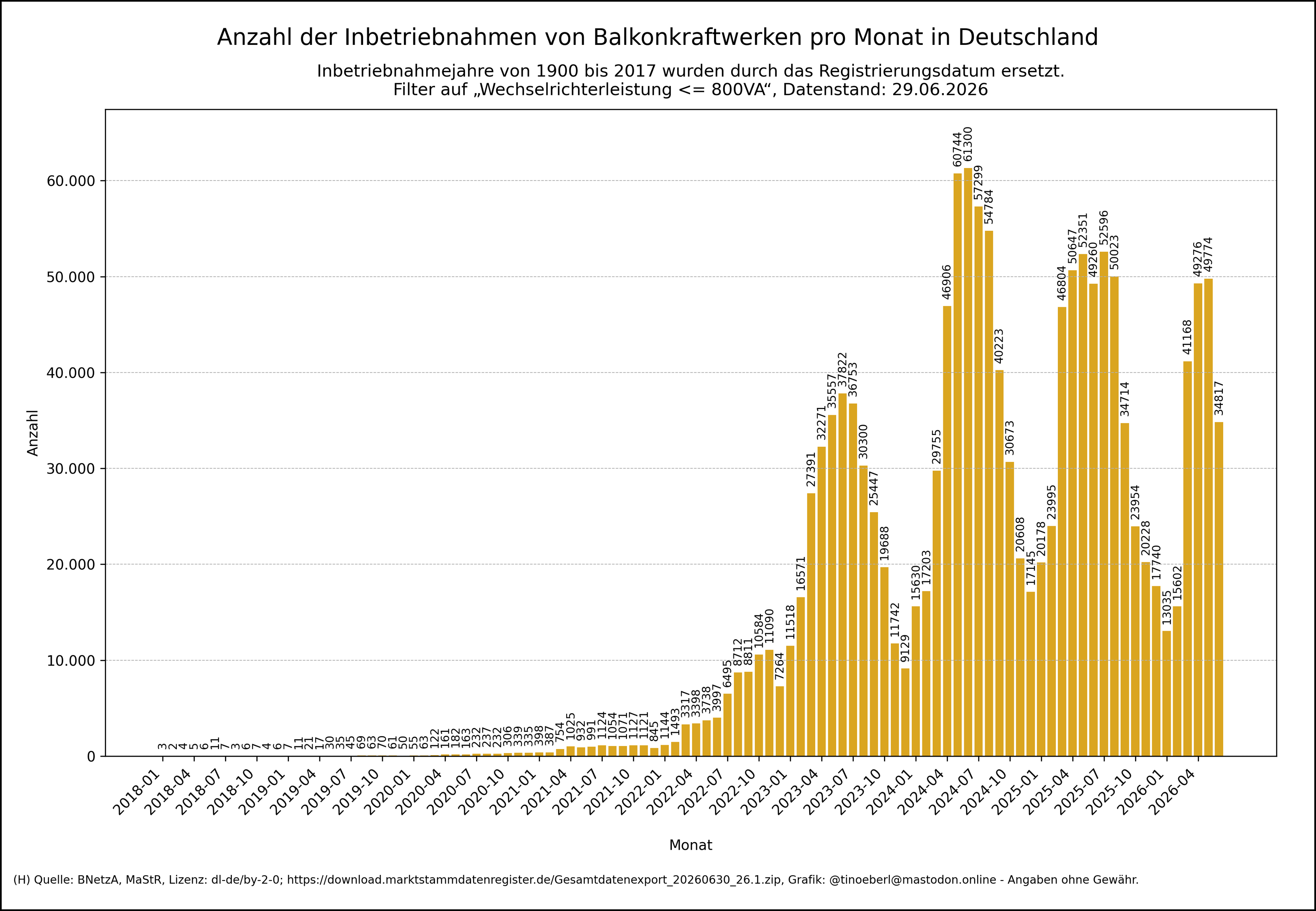
Anzahl der Inbetriebnahmen von #Balkonkraftwerken pro Monat in #Deutschland mit Stand vom 29.06.2026.
Unplausible Inbetriebnahmejahre von 1900 bis 2017 wurden durch das Registrierungsdatum der