@paulwermer@sfba.social
2026-10-19 14:11:27
Amazing how governments can agree that something is a major problem, and something needs to be done, and the proceed to do nothing significant. Why? The corrupting influence of ¢£¥€₹₱?
It seems the #ecoosystem #COP fares no better than
 @PaulWermer@sfba.social
2026-10-19 14:11:27
Amazing how governments can agree that something is a major problem, and something needs to be done, and the proceed to do nothing significant. Why? The corrupting influence of ¢£¥€₹₱?
It seems the #ecoosystem #COP fares no better than
 @Techmeme@techhub.social
2026-08-17 17:20:51
Google wins a bankruptcy auction with a $10M bid to acquire deidentified business data, software code, and more from Spirit Airlines to improve its AI models (James Nani/Bloomberg Law)
https://news.bloomberglaw.com/business-an…

 @krone@frawas.de
2026-09-17 20:45:15
Chaos bei Jubiläum - Wirt schmiss Musikanten und Pilger aus Gasthaus #News #Nachrichten
 @lschiff@mastodon.sdf.org
2026-10-14 17:47:54
Civic engagement is the long-term answer to so many of the challenges we are facing right now. Kudos to these researchers for running for office! https://www.314action.org/
 @david_colquhoun@mstdn.social
2026-09-09 22:06:57
Please read this superb post by @deevybee.bsky.social
I agree with every word of it.
Science is endangered by the demand for speed and by AI slop.
https://deevybee.blogspot.com/2025/10/a-leap-into-future-or-off-cliff.html
 @curiouscat@fosstodon.org
2026-08-14 11:57:21
"If you’re someone who somehow lost their inner voice along the way (maybe without even realizing it) give yourself a shot. Don’t play anything in the background, don’t turn on your favorite show. Just sit in silence for a moment and see what happens. You might actually like it."
I agree. I do this by default. I am more likely to let myself think than fill my attention with some noise.
I do also rest my mind with mindless but enjoyable streaming... at times.

 @luca@social.luca.run
2026-08-05 11:06:14
Edit: Ist weg.
Möchte jemand 168 Seiten „Einführung in den Fallschirmsport“ von circa 1981? Herausgegeben im Eigendruck von P. Seifried aus Graz.
Wird hier gerade aussortiert. #antiquariat #fallschirmspringen


 @metacurity@infosec.exchange
2026-08-17 15:24:26
Never a weekend slowdown in cybersecurity news, so check out today's Metacurity for the most critical infosec developments you might have missed since Friday, including
--Alibaba’s Qwen races past Meta, Google with 3 billion AI model downloads,
--AI agent exploits Snowflake flaw introduced by Copilot,
--US tells allies to pick sides in AI race with China,
--China pushes to reshape the world’s AI training data,
--China’s Zhipu claims AI edge over Anthropic in cyber test,
--Pentagon scrambles to keep pace with AI’s military risks,
--France holds crisis meeting over massive tax agency hack,
--Iran targets Israeli journalists with phishing attacks,
--Election officials blast CISA over lack of cyber support,
--AI deepfake scams surge in Australia,
--SafePal breach exposes data of nearly 40k customers,
--Bits of Gold breach exposes customer data,
--Hackers exploit Mac flaw to mine cryptocurrency,
--Seven arrested over $35m German bank hack,
--Hong Kong university probes ransomware breach claims,
--Fake GitHub site spreads Mac infostealer,
--US courts to disclose government spyware use,
--Sogang University breach exposes 180k people,
--DDoS attacks hammer secure messaging service Threema,
--Hackers hawk millions of records stolen from Azure tenants,
--London police expose emails of Al Fayed accusers,
--Microsoft kills Windows tool long abused by malware,
--French court blocks social media ban for children,
--AI can’t seem to produce any tech heroes,
--AI makes data breaches even more expensive,
--Amazon used to sell books, not destroy them
https://www.metacurity.com/alibabas-qwen-races-past-meta-google-with-3-billion-ai-model-downloads/
@Techmeme@techhub.social2026-08-28 03:31:26
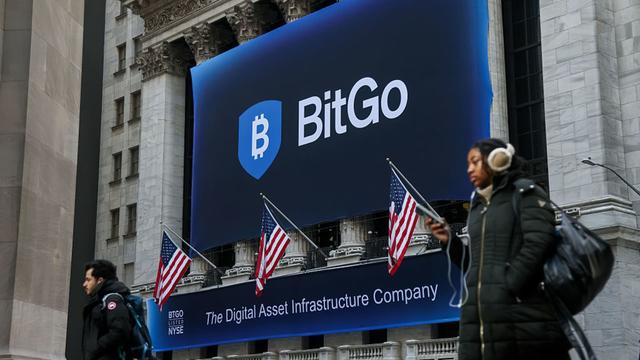
BitGo agrees to buy NYDIG's institutional trading business and related assets, expanding BitGo's derivatives offerings; ~30 NYDIG employees are joining BitGo (Tanaya Macheel/CNBC)
https://www.cnbc.com/2026/08/27/bitgo-to-a